Skip to content

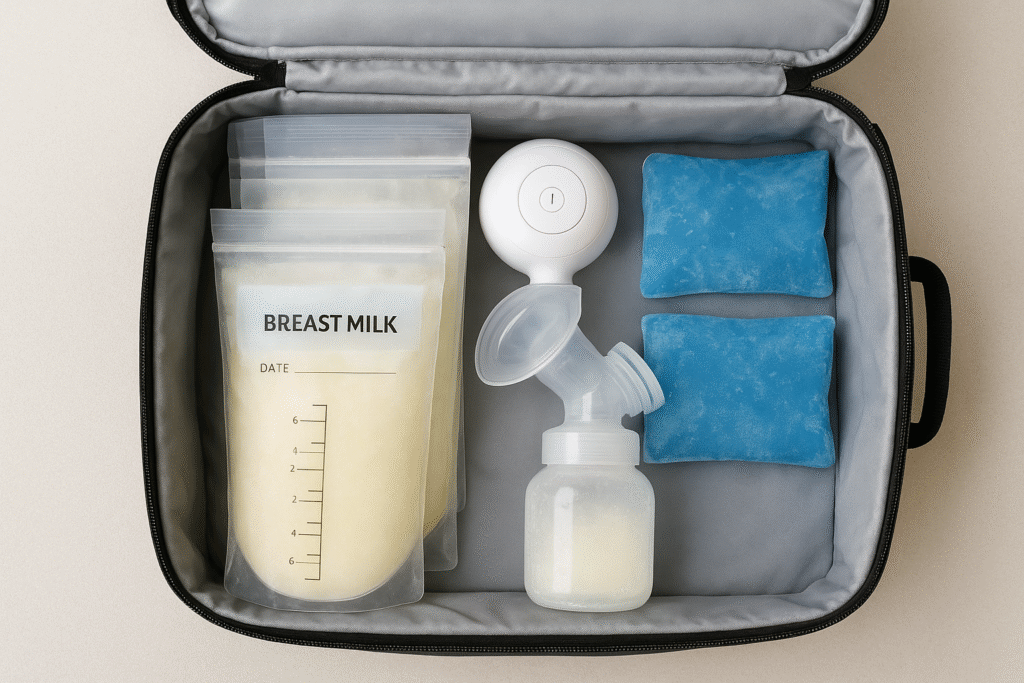
Why Traveling Moms Need Special Breast Milk Rules
Whether you’re a new mom flying for work or a family trip, traveling with breast milk can feel stressful — especially when you’re unsure about TSA rules, storage safety, and temperature control.
The good news? U.S. TSA (Transportation Security Administration) allows you to carry breast milk, even when you’re not traveling with your baby.
This guide will show you exactly how to pack, store, and pass through airport security without stress — all while keeping your milk safe, fresh, and leak-free.
Quick Summary for Busy Moms
Traveling with breast milk is TSA-approved in the U.S., even without your baby. Use insulated coolers, frozen gel packs, leak-proof storage bags, and declare milk separately at airport screening.
This guide covers flights, car travel, frozen milk, thawed milk, warm milk safety, and TSA rules for 2026.
TSA Breast Milk Rules 2026: What Moms Need to Know
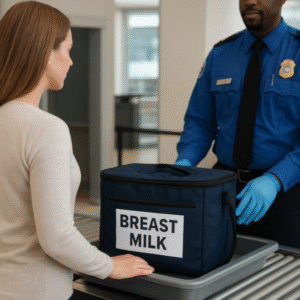
According to the TSA’s official guidelines, breast milk is considered a medically necessary liquid, so you can bring it in quantities greater than 3.4 oz (100 mL).
The current TSA breast milk policy classifies breast milk as a medically necessary liquid, allowing quantities above standard liquid limits when properly declared at screening.
Here’s what you need to know:
- You do not have to travel with your baby to carry milk.
- You can bring frozen, thawed, or fresh milk in your carry-on.
- You must declare the milk at security and separate it from other liquids during screening.
- TSA officers may test the containers but will never ask you to open or taste the milk.
👉 Official TSA reference: TSA – Traveling with Breast Milk, Formula, and Juice.
How to Pack Breast Milk for Flights (Step-by-Step for Moms)
- Use TSA-approved cooler bags.
Choose insulated coolers that fit under your seat. Brands like Medela, Sarah Wells, and PackIt are TSA-friendly. - Include ice packs or frozen gel packs.
- Frozen gel packs are allowed in carry-on.
- If partially melted, TSA officers might inspect them — so keep them fully frozen until screening.
- Store milk in leak-proof containers.
Breast milk storage bags should be double-sealed and placed in a zip-top bag to prevent spills. - Label everything clearly.
Write your name, date, and the word “Breast Milk” on each bag or bottle. - Separate your cooler for screening.
When approaching security, simply inform the officer:
“I’m traveling with expressed breast milk and frozen ice packs.”
Pro Tip: Keep printed TSA guidelines on your phone in case a newer officer is unfamiliar with the policy.
👉 If you’re a pumping mom who’s often on the move, you may also find our guide on how to store breast milk on the go? helpful for short trips or daily commutes.
How to Travel with Breast Milk by Car?
Travel breast milk by car using an insulated cooler bag with ice packs, keeping milk cold below 39°F (4°C) and minimizing cooler opening during transit.
Details:
- Use insulated cooler or mini portable fridge
- Keep cooler away from sunlight
- Replace ice packs during long drives
- Store milk upright to prevent leaks
For shorter road trips, daily outings, or commuting, you may also find our guide on how to store breast milk on the go helpful for keeping milk safe outside the home.
How to Safely Travel with Warm Breast Milk?
Freshly pumped warm breast milk can travel safely for short periods, but should be cooled or refrigerated as soon as possible.
Details:
- room temp max 4 hours
- cooler preferred immediately
- avoid heat exposure
According to the CDC breast milk storage guidelines, freshly expressed breast milk can typically stay at room temperature for up to 4 hours, but cooling it sooner is recommended during travel to maintain freshness and reduce bacterial risk.
How to Travel with Breast Milk in Diaper Bag?
Short trips allow breast milk storage in a diaper bag using insulated bottle compartments and frozen gel packs for temporary cooling.
Details:
- Use insulated diaper bag pockets
- Add small ice pack
- Separate milk from warm food/snacks
- Best for short outings or airport transitions
If you are carrying milk for several hours, read our guide on how long does breast milk last to understand safe storage time limits during travel.
Temperature Control During Long Flights
Keeping breast milk at a safe temperature (below 39°F / 4°C) is the top priority.
Here’s how you can maintain that:
- Use frozen gel packs or dry ice (check airline policy first).
- Avoid opening your cooler frequently.
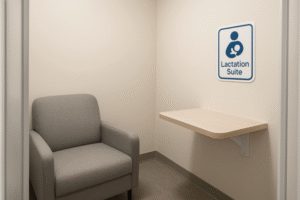
- If you have a long layover, find airport nursing rooms or family lounges — many U.S. airports now include Mamava pods or lactation suites with outlets and sinks.
👉 For detailed freezing timelines, check our related guide on how long does breast milk last in a deep freezer? (U.S. storage guide 2026).
How to Travel with Frozen or Thawed Breast Milk?
Frozen breast milk should remain fully frozen with gel packs or dry ice, while thawed milk must stay cold and be used within 24 hours.
Details:
Frozen milk
- fully frozen preferred
- dry ice possible (check airline rules)
- declare if carrying dry ice
Thawed milk
- do not refreeze
- refrigerate immediately
- use within 24h
Using Dry Ice for Frozen Breast Milk Travel
Traveling with breast milk in dry ice is possible on some airlines, but dry ice quantity limits and declaration rules vary by carrier.
Details:
- Check airline first
- Label cooler clearly
- Ventilated container preferred
- Never fully seal dry ice container
Storing Milk After Arrival
Once you reach your destination:
- Transfer milk to a refrigerator immediately.
- If the milk partially thawed during travel, use it within 24 hours.
- Never refreeze completely thawed milk.
If you’re staying at a hotel, request a mini fridge or ask the front desk to store it in a staff freezer (most U.S. hotels are accommodating for breastfeeding moms).
How to Travel with Breast Milk from Fridge?
Refrigerated breast milk should be transferred into an insulated cooler with frozen packs before travel to maintain a safe cold temperature.
Details:
- move directly from fridge to cooler
- minimize room temp exposure
- use cold packs on both sides
According to CDC breast milk storage guidelines, refrigerated milk should be kept consistently cold during transport and moved to refrigeration again as soon as possible after arrival.
Cleaning and Hygiene Tips for Traveling Moms
- Bring a small cleaning kit with bottle brushes, pump wipes, and dish soap.
- If you’re pumping in-flight, use battery-powered or manual pumps for convenience.
- Pack multiple small storage bottles instead of one large container to avoid spoilage.
According to the CDC Breast Milk Handling Guidelines, milk can stay at room temperature for up to 4 hours — but when traveling, colder is always safer.
Extra Tip: Know Your Airline’s Policy
Some airlines, like Delta and Alaska Airlines, provide extra freezer space or outlets for moms pumping onboard.
Always check their website before flying — every airline has slightly different rules for handling ice packs and cooler bags.
For instance:
- Delta Air Lines: Allows gel packs and offers onboard storage if space permits.
- United Airlines: Recommends pre-frozen packs but no dry ice without declaration.
Expert Insight: Keep a Backup Plan
Even with all preparation, delays can happen.
That’s why experienced moms carry a mini travel pump, extra bags, and sterile wipes.
If milk gets too warm or questionable in texture, it’s safer to discard it than risk feeding spoiled milk.
For a quick spoilage check, read our post how to tell if frozen breast milk is bad.
Traveling with Breast Milk Internationally
International travel with breast milk is generally allowed, but customs, liquid rules, and milk import policies vary by country.
Details:
- check destination rules
- airline liquid policies differ
- customs declaration may be required
- carry documentation if needed
Why Trust Fooder Ghor?
At Fooder Ghor, we provide educational resources focused on understanding the safe use, handling, and storage of different types of milk, including breast milk, cow’s milk, goat milk, and raw milk, based on publicly available guidance from trusted sources such as the CDC, FDA, USDA, and AAP. Some milk-related articles, particularly those involving maternal and infant feeding topics, are reviewed for clarity and presentation by nursing students with academic training in maternal and child health to help make information easier to understand. This content is provided for learning purposes only and does not offer medical advice.
Most Common Questions About Breast Milk When Travelling
It’s allowed, but not recommended — baggage compartments often get too warm. Carry milk with you in the cabin instead.
There’s no specific limit for medically necessary liquids like breast milk, but keep it reasonable (under 1–2 liters is best).
No — as long as it follows the TSA medical liquid rule and is declared properly.
Always check your destination country’s import policy — some nations have restrictions on bringing milk across borders.
Conclusion: Fly Confidently, Pump Smartly
Traveling with breast milk doesn’t have to be stressful.
With the right packing system, TSA-approved coolers, and up-to-date knowledge of airline policies, you can fly anywhere with peace of mind — knowing your milk stays safe for your baby.
👉 For full freezing and thawing safety, you may visit our detailed blog Breast Milk Storage: Complete U.S. Moms’ Guide (2026 Edition).
👉 For official U.S. travel updates, refer to TSA’s Travel Guidance for Nursing Mothers and CDC’s Breast Milk Storage Guidelines.