 Skip to content


Dairy choices in the United States have expanded significantly over the last few years. Today, many parents and young families look for options that are easy to digest while still being delicious. When browsing the grocery store aisles, you have likely noticed cartons labeled as A2 milk. This product has gained immense popularity in many homes as a premium alternative to traditional dairy. In this ultimate guide, we will explain exactly what this beverage is and discover its natural origin. We will also analyze its processing methods, explore its taste profile, and cover essential safety standards.
Quick Summary
Definition: Milk that naturally contains only the A2 type of beta-casein protein.
Source: Produced by specifically selected cows, such as Guernsey and Jersey breeds.
Digestion: Highly favored because it does not break down into the digestive irritant BCM-7.
Availability: Commonly sold in both pasteurized and unpasteurized forms depending on state laws.
What is A2 Milk and What is A2 Cow Milk?
This natural dairy beverage contains only a specific type of beta-casein protein and completely lacks the common protein variant that often causes digestive discomfort in sensitive stomachs.
In many homes, families find that this product provides a much lighter option than traditional store-bought cartons. Since it is real cow dairy, it offers the same essential nutrients without introducing the problematic protein structure. It serves as a reliable dairy choice for daily use in everyday family breakfasts. You can read more about its unpasteurized variation in our detailed guide on what is a2 raw milk.
Where Does A2 Milk Come From?
This premium farm beverage comes directly from older, heritage breeds of dairy cattle that naturally possess a specific double-gene genetic profile.
Guernsey and Jersey cows are highly famous for naturally yielding this pure protein in their daily milk. Research indicates that the A2 beta-casein protein is the original form of beta-casein in cattle, with the A1 variant developing later through a natural genetic mutation. Over centuries, a natural genetic change occurred in European cattle, which introduced a different protein structure to the general food supply. Today, farmers selectively test their animals using DNA samples to build pure herds.
According to The a2 Milk Company, a2 Milk comes from cows that have been genetically tested to naturally produce only the A2 beta-casein protein.
What is A2 Certified Milk?
This label indicates that the milk comes from cows that have been genetically tested to produce only the A2 beta-casein protein.
To maintain this standard, dairy producers use genetic testing to identify cows with the A2/A2 beta-casein genotype before including their milk in A2 milk production. This helps ensure the milk contains only the naturally occurring A2 protein, giving families greater confidence when choosing it for everyday use.
What is A2 Milk Made From and How is It Made?

This product is made from 100% real, natural animal dairy collected directly from certified cows, rather than being manufactured from plant sources or artificial ingredients.
The entire production process relies on natural genetics and careful animal selection on the farm. First, farmers identify cows that carry two copies of the specific gene through simple DNA tests. Next, these certified cows are kept in dedicated herds and milked using completely separate dairy equipment. Finally, the collected liquid is filtered, processed, and bottled under strict quality controls to maintain its purity. For details on the nutritional components of this drink, feel free to view our article on a2 milk nutrition facts.
What is So Special About A2 Milk?
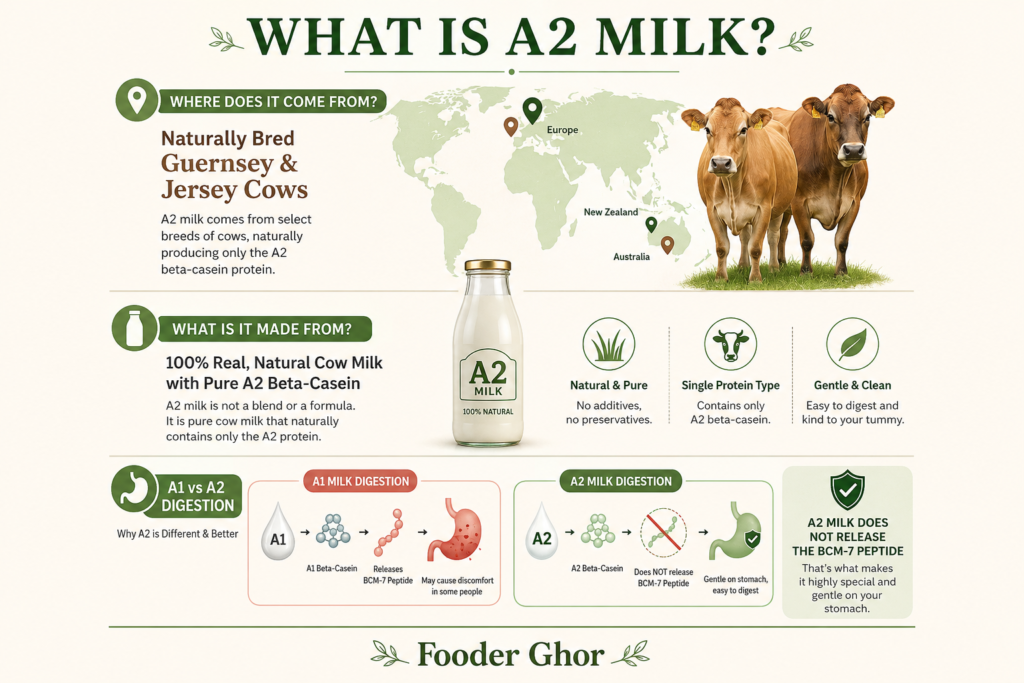
This beverage is highly unique because its protein breaks down easily during human digestion without releasing the irritating compounds that cause common stomach issues.
When we drink standard commercial dairy, our bodies process regular proteins into a peptide called BCM-7. This specific peptide can cause slow digestion, stomach irritation, and minor inflammation in many individuals. Since this certified drink lacks that specific segment entirely, it does not release BCM-7 in your stomach. This single biological difference explains why many people report fewer symptoms of bloating, gas, and abdominal pain. To discover more about these physical advantages, feel free to read our post on a2 milk benefits.
What Does A2 Milk Taste Like?
This drink tastes exactly like traditional, rich, and creamy whole cow milk with a sweet aroma and a clean finish that works well in hot coffee.
Since it is real dairy, it retains all the natural fats and minerals that give farm milk its classic profile. Many blind taste tests show that consumers cannot tell the difference based on flavor alone. It provides a familiar, comforting taste that children love.
Many parents keep A2 milk in the fridge for everyday use, so knowing how long A2 milk lasts can help reduce waste.
Does A2 Milk Taste Good and Does the Taste Come Naturally?
The delicious flavor of this beverage is completely natural and comes directly from the cow’s diet and genetics without any artificial additives or sweeteners.
Many families prefer this beverage because it lacks any chemical aftertaste. It functions perfectly as a standard kitchen ingredient for baking, making hot drinks, or pouring over cereal. Its pleasant, mild flavor makes it an incredibly easy transition for children who are accustomed to regular store-bought options.
While many families enjoy it every day, it’s also helpful to understand the possible A2 milk side effects before making it part of your routine.
Is A2 Milk Pasteurized or Unpasteurized?
You can buy this specialized dairy product in both heat-treated and fresh raw forms, depending on your local state agricultural laws and retail options.
In everyday markets, most of the cartons you find on store shelves have undergone standard heating. However, local farm shops and specialty markets often sell raw, unheated versions directly to consumers. The core protein benefits remain identical in both styles of the product.
The FDA states that most milk available in retail stores is pasteurized, although raw milk may be sold in some states under specific regulations.
Does A2 Milk Need to be Pasteurized?
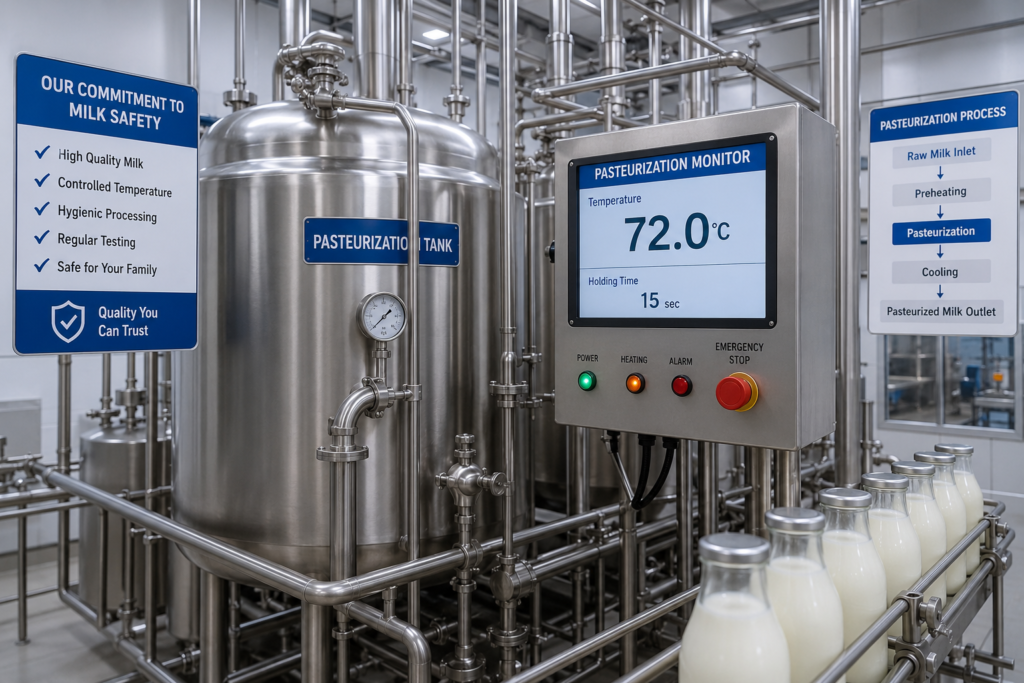
While heat treatment is not required to preserve the unique protein structure, federal health agencies strongly recommend pasteurization to eliminate any potential pathogens.
This standard process involves heating the liquid to a specific temperature to destroy harmful bacteria like Salmonella and E. coli. Pasteurized versions are highly common in standard supermarkets because they offer a longer shelf life and maximum safety. That said, raw unpasteurized versions are also sold directly on some local farms for traditional use. You can read a complete direct comparison of these options in our guide on A2 Raw Milk vs Pasteurized A2 Milk.
According to the CDC, pasteurization kills harmful germs in milk without significantly affecting its nutritional benefits. Pasteurized A2 milk still contains the naturally occurring A2 beta-casein protein, making it a safe and practical choice for most families. To learn more about keeping your purchase fresh, review our practical guide on how to store a2 milk.
Should You Switch to A2 Milk?
Making this change can be highly useful if you struggle with mild digestive discomfort after consuming standard dairy but still want real nutrients.
Many people who believe they are lactose intolerant actually suffer from simple protein sensitivity. However, this product still contains natural milk sugars, so you should understand its composition fully. To learn whether this option fits your dietary needs, check out our report on is a2 milk lactose free.
Why Trust Fooder Ghor?
At Fooder Ghor, we provide educational resources focused on understanding the safe use, handling, and storage of different types of milk, including breast milk, cow’s milk, goat milk, and raw milk, based on publicly available guidance from trusted sources such as the CDC, FDA, USDA, and AAP. Some milk-related articles, particularly those involving maternal and infant feeding topics, are reviewed for clarity and presentation by nursing students with academic training in maternal and child health to help make information easier to understand. This content is provided for learning purposes only and does not offer medical advice.
Most Common Frequently Asked Questions
A: No, this beverage is 100% real animal dairy produced by cows. It contains the exact same natural calcium, fats, and vitamins as standard whole milk but features a unique protein structure.
A: According to the CDC, children 12 months and older can drink pasteurized whole cow’s milk. Since A2 milk is a type of cow’s milk, pasteurized A2 milk can be a suitable choice for most toddlers.
A: Producing this beverage requires farmers to perform DNA testing on their cows and maintain completely separate herds. These extra steps and safety controls naturally increase the total cost of production.
A: No. Pasteurization only uses heat to eliminate potential pathogens and does not change the physical shape of the A2 beta-casein. Both raw and pasteurized versions provide the same easy-to-digest advantages.
Conclusion
A2 milk is a wonderful, natural option that combines the rich taste of traditional dairy with excellent digestive comfort. By focusing on selective cow genetics, farmers have brought back the original, easy-to-digest protein structure. Whether you prefer a pasteurized carton from the store or a raw bottle from a local farm, this drink serves as a nutritious addition to any family kitchen. Always prioritize pasteurized options for young children to ensure maximum safety.
Good storage helps preserve both flavor and quality. See how long cow milk lasts for simple storage tips every family can use.











