Skip to content

Almond milk has quickly become a highly popular choice in many homes across the United States. Many families use this because it offers a distinct flavor profile and a wealth of natural properties that work well in everyday cooking. If you are a parent looking for a simple, family-friendly alternative to traditional dairy, learning how to make almond milk at home gives you complete control over the ingredients entering your children’s breakfast bowls.
In simple terms, knowing how to make almond milk allows you to skip the synthetic gums, emulsifiers, and heavy preservatives found in commercial grocery store cartons. This ultimate guide breaks down the exact water-to-nut ratios, soaking schedules, and high-speed blending techniques needed to create a perfectly smooth batch. We will also share clever kitchen variations for making thick plant-based creamers and heavy whipping alternatives with absolute confidence.
Quick Summary: Homemade Blending Workflow
Nut Preparation: A thorough soaking phase is absolutely required to soften the raw kernels and secure a creamy texture.
Ratio Calculations: The consistency of your liquid depends directly on counting the exact weight of nuts per cup of fresh water.
Blending Equipment: Utilizing high-speed kitchen appliances ensures maximum extraction and minimizes wasteful leftover pulp.
Straining Necessity: Passing the blended slurry through a fine mesh fabric bag creates a smooth, silk-like pouring experience.
Once your homemade batch is ready, it’s also important to understand how long does almond milk last so you can store it properly and avoid spoilage.
How to Make Almond Milk
The foundational method for how to make almond milk at home requires blending soaked raw almonds with clean, filtered water at a high speed and straining out the fibrous pulp.
Because this DIY method avoids high-heat factory processes, the finished liquid holds a beautifully fresh, vibrant flavor that store cartons simply cannot replicate. Many families use this beverage as a clean daily fluid because it offers refreshing nourishment without hidden additives. If you want to know exactly how this homemade plant fluid behaves on the tongue compared to ancestral dairy options, reading our review on what does camel milk taste like helps you balance your family’s flavor preferences perfectly.
Step-by-Step Almond Milk Recipe

Creating a fresh, creamy batch right on your kitchen counter is an incredibly simple process that takes under 15 minutes of active preparation. Follow this clear, step-by-step guide to achieve a perfect pour every single time:
The Master Blending Process
Step 1: The Soaking Phase: Place your raw almonds into a clean glass bowl, cover them completely with tap water, and leave them on the counter. Knowing how long to soak almonds to make almond milk is critical; they need to rest for at least 8 to 12 hours (or overnight) to break down phytic acid and soften the nut meat for blending.
Step 2: Rinsing and Draining: Discard the gray soaking water completely and rinse the plump almonds thoroughly under cold, running tap water to remove any lingering debris.
Step 3: Blending High-Speed: Transfer the rinsed nuts directly into your appliance jar. Whether you are mastering how to make almond milk in blender setups or learning how to make almond milk in vitamix machines, pour in fresh filtered water and run the motor on high for exactly 2 minutes until the liquid looks chalky and completely uniform.
Step 4: Straining the Slurry: Drape a clean nut milk bag or a double layer of cheesecloth over a large glass pitcher. Pour the blended mixture into the fabric, gather the edges tightly, and squeeze firmly with clean hands to express every drop of smooth, pulp-free liquid.
The FDA emphasizes that proper food handling practices, including clean preparation surfaces, safe water use, and hygienic processing methods, are essential when preparing homemade food and beverage products to reduce contamination risks.
Almond-to-Water Kitchen Ratio Calculator
To get the exact thickness you want for your family’s cereal bowls and cooking projects, you need to use the right measurements of nuts and water.
Many parents wonder how much water does it take to make almond milk that doesn’t taste thin or watery. A standard, highly successful recipe uses a basic 1:4 ratio—meaning 1 cup of raw almonds paired with 4 cups of filtered water. To help you manage bulk batches for a busy week, check this quick household measurement guide:
Volume Scaling Metrics
How many almonds does it take to make almond milk (Standard Batch): You need roughly 90 to 100 individual raw almonds to create 1 quart (4 cups) of standard milk.
How many almonds to make 1 litre almond milk: You will need approximately 1 cup to 1.25 cups of raw almonds (around 120 nuts) combined with 4.2 cups of fresh filtered water.
How many almonds to make a gallon of almond milk: To scale up for a large household, you will need a full 4 cups of raw almonds (roughly 400 to 450 total nuts) blended with 16 cups of water.
The FDA notes that using safe preparation practices and clean ingredients is essential when making homemade foods, including proper measurement, clean water use, and hygienic handling to reduce contamination risks.
Once you prepare larger batches at home, it’s also important to know does almond milk go bad so you can store it safely and avoid using it after it starts to spoil.
Advanced Kitchen Upgrades: Creamers and Heavy Cream

Once you master the basic recipe, you can easily modify your blending ratios to create rich, dairy-free alternatives for your morning coffee and baking pans.
How to Make Almond Milk Creamer
If you want a thick, luxurious addition for your morning coffee cups, you must lower the water volume significantly. To execute how to make almond milk creamer formulas successfully, drop your water ratio down to a tight 1:2 blend (1 cup of soaked nuts to 2 cups of water). Adding a single pitted medjool date or a splash of vanilla extract during the blending phase creates a gorgeous, rich creamer that matches the texture of store-bought options seamlessly.
👉 If you’re exploring different ways to use homemade versions in your diet, almond milk benefits explains why many people choose it as a healthier dairy alternative.
How to Make Heavy Cream with Almond Milk
When learning how to make heavy cream with almond milk for savory sauces or dairy-free desserts, the plant fluid requires an added source of healthy fat to achieve the right viscosity. Blend 1 cup of unsweetened homemade milk with 2 tablespoons of melted, neutral coconut oil or a handful of raw, soaked cashews. This extra fat injection stabilizes the fluid perfectly, allowing it to mimic the cooking performance of heavy dairy cream. For households looking to compare how traditional concentrated dairy behaves in home recipes, reading our comprehensive analysis on how to use evaporated milk provides excellent culinary benchmarks.
The Express Method: Using Nut Butters
If you forget to soak your raw kernels overnight but still need a quick glass of milk before the school bus arrives, you can use a clever pantry shortcut.
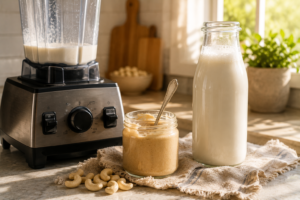
Learning how to make almond milk from almond butter is an absolute lifesaver for busy mornings. Simply add 2 tablespoons of pure, single-ingredient smooth almond butter directly into your blender jar along with 2 cups of warm, filtered water. Run the motor on high for 30 seconds, and you will instantly have a fresh, rich beverage with absolutely zero straining required.
To explore how the nutritional value of this quick-blend method holds up against commercial options, checking our master data sheets on almond milk nutrition facts ensures your quick shortcuts remain highly nutritious.
Nutritional Adjustments and Comparisons
Managing a healthy household table requires looking closely at how different homemade fluids interact with your family’s overall nutritional goals.
While homemade almond milk is incredibly clean and free from chemicals, it lacks the heavy protein density found in animal products. If your main goal for the family breakfast table is muscle-building or growth support, evaluating camel milk nutrition provides a wonderful look at a protein-rich alternative.
Why Trust Fooder Ghor?
At Fooder Ghor, we provide educational resources focused on understanding the safe use, handling, and storage of different types of milk, including breast milk, cow’s milk, goat milk, and raw milk, based on publicly available guidance from trusted sources such as the CDC, FDA, USDA, and AAP. Some milk-related articles, particularly those involving maternal and infant feeding topics, are reviewed for clarity and presentation by nursing students with academic training in maternal and child health to help make information easier to understand. This content is provided for learning purposes only and does not offer medical advice.
Frequently Asked Questions
A: Never throw it away! Spread the dry pulp onto a baking sheet, dry it inside a low oven, and blend it into a fine, gluten-free almond flour for baking cookies.
A: You can pasteurize it gently at home, but because it lacks commercial stabilizers, excessive boiling can cause the natural nut particles to separate and clump slightly.
A: Separation is completely natural and proves your beverage is 100% pure! Since it contains zero synthetic emulsifiers, a simple 5-second shake brings it back together perfectly.
Conclusion
In summary, learning how to make almond milk at home is a simple, highly rewarding kitchen skill that guarantees a clean, preservative-free drink for your loved ones. By mastering the 1:4 blending ratio, keeping your soaking times at a steady 8 to 12 hours, and adapting your recipes to create thick creamers, you can customize your plant-based dairy routine effortlessly. Pair your fresh batches with smart kitchen habits to ensure your family enjoys a premium, wholesome breakfast experience every day.
While homemade almond milk is a great clean option, it’s also important to understand almond milk side effects so you can consume it in a balanced and informed way.