Skip to content

Almond milk has quickly become a highly popular choice in many homes across the United States. Many families use this because it offers a distinct flavor profile and a wealth of natural properties that work well in everyday cooking. If you are a parent looking for a simple, family-friendly alternative to traditional dairy, keeping your plant-based cartons fresh, safe, and nutritious for your children requires a clear understanding of its shelf life limits.
In simple terms, knowing how long does almond milk last allows you to minimize grocery waste while protecting your household from accidental spoilage. This ultimate guide covers exact room temperature limits, refrigeration timelines for popular commercial brands, and the science of freezing plant liquids safely. We will also share crucial organizational strategies to help you manage your kitchen routine with absolute confidence.
Quick Summary: Shelf Life Breakdown
Refrigerated Cartons: Unopened shelf-stable packages outlast traditional dairy by months, while opened containers require strict cooling.
Homemade Freshness: Pure, DIY batches spoil significantly faster than store-bought brands due to the lack of preservatives.
Freezing Dynamics: Freezing extends structural longevity but alters the smooth visual texture upon thawing.
Creamer Care: Concentrated plant-based creamers follow specific, tighter storage windows once the seal is broken.
👉 If you’re comparing different dairy options, how long does goat milk last breaks down its shelf life in the fridge, freezer, and after opening for better storage planning.
How Long Does Almond Milk Last?
An unopened shelf-stable package of almond milk can naturally last between 1 to 2 months past its printed date when kept inside a cool, dark pantry.
However, the moment that seal is broken, the expiration clock changes completely for every brand on the market. Many families use this beverage as a dependable kitchen companion because its sealed longevity makes bulk buying incredibly convenient. To see how these timeline dynamics compare to premium animal alternatives, exploring our comprehensive guide on how long does camel milk last helps you balance your total refrigerator space effectively.
Master Almond Milk Longevity Reference Chart
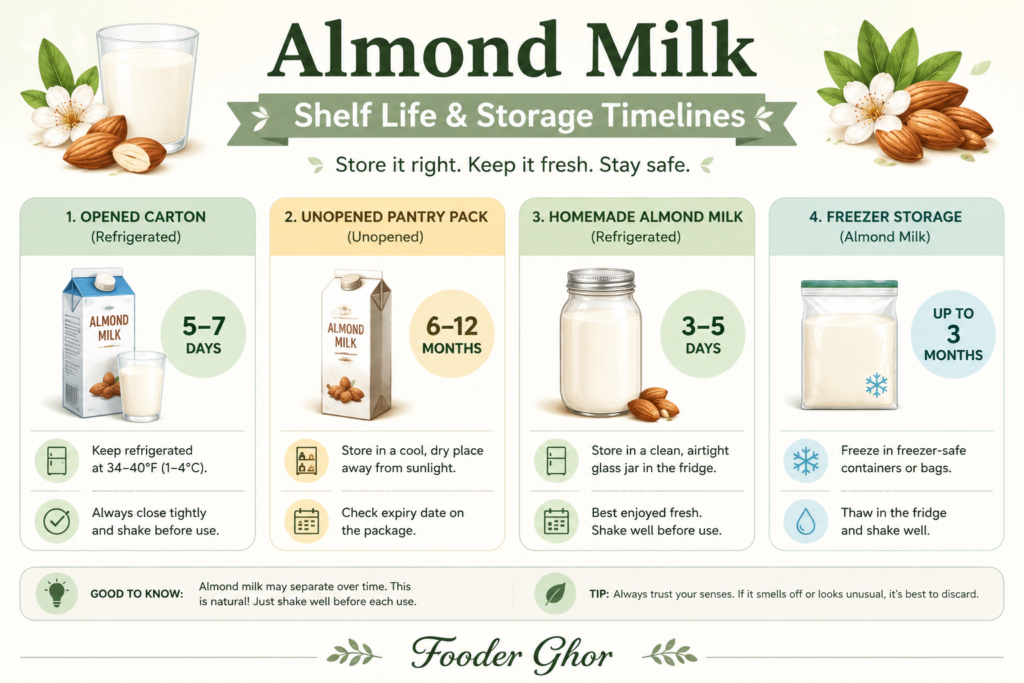
To help busy parents scan storage timelines instantly during a hectic morning routine, here is a quick-reference guide mapping out exact shelf life expectations:
Master Shelf Life Metrics
| Variety & Storage Condition | Safe Duration Limit | Specific Brand Notes |
| How long does unopened almond milk last (Pantry) | 1 Month – 2 Months past date | Applies to shelf-stable cartons only |
| Unopened Refrigerated Carton | 1 Week – 2 Weeks past date | Must be kept chilled constantly |
| How long does almond milk last after opening (Fridge) | 7 Days – 10 Days | Includes Silk, Califia, and Blue Diamond |
| How long does homemade almond milk last (Fridge) | 3 Days – 5 Days Maximum | Spoilage happens quickly without additives |
| How long does almond milk last at room temperature | 2 Hours Maximum | Leaving it out on the counter triggers bacteria |
| Opened Almond Milk Creamer (Fridge) | 2 Weeks | Concentrated formulas last slightly longer |
The FDA explains that proper storage temperature, handling practices, and refrigeration timing play a critical role in maintaining the safety and quality of perishable food and beverage products after opening.
How Long Does Almond Milk Last After Opening?
Once opened, both shelf-stable and refrigerated commercial almond milk last strictly between 7 to 10 days inside a well-chilled refrigerator.
When looking at how long is almond milk good for after opening parameters, popular household brands like Silk, Califia Farms, Blue Diamond Almond Breeze, and Alpro all share this identical cooling window. This means that tracking how long does silk almond milk last after opening or measuring how long does almond breeze milk last once opened lines always lands on the same 7-to-10-day safety limit. To protect your household, follow these 3 critical open-carton rules:
The 10-Day Rule: Discard any commercial carton where the seal has been broken for more than 10 days, even if it passes a quick sniff test.
The Temperature Standard: Ensure your main refrigerated almond milk last after opening zone stays strictly at or below 38°F (3°C).
The Cap Check: Screw the lid down completely after every single pour at the breakfast table to limit airborne exposure.
If you’re curious beyond storage and want to understand its sensory profile, what does almond milk taste like breaks down its mild, nutty flavor and how it changes in different varieties.
How Long Does Homemade Almond Milk Last?
Freshly strained, homemade almond milk lasts for only 3 to 5 days and must be kept continuously inside your main refrigerator unit from the moment it is blended.
When evaluating how long does homemade almond milk last in the fridge, the timeline is significantly shorter than store-bought options because kitchen recipes omit pasteurization and natural stabilizers. This pure, artisan liquid lacks the protective chemical barrier found in commercial cartons, making it highly susceptible to rapid separation and early fermentation. For active parents, blending small batches that your children can finish within a 72-hour window is the best way to enjoy its clean, nutty profile safely.
Since homemade versions spoil quickly, it’s also important to understand does almond milk go bad so you can recognize early signs of spoilage and avoid consuming unsafe batches.
How to Store Almond Milk
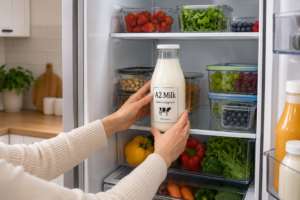
To store almond milk correctly, you must position your opened cartons inside the deep back sections of your primary refrigerator shelves rather than using the appliance door racks.
The temperature inside refrigerator doors rises and falls drastically every single time your kids open the appliance for snacks, which drastically reduces how long does califia almond milk last or ruins how long does silk almond milk last in the fridge arrays. To keep your plant-based fluids crisp and fresh, implement these basic household storage habits:
Dark Pantry Placement: Keep your unopened, shelf-stable packages completely away from hot stove steam or direct window sunlight.
Sterilized Glass for DIY: Store your homemade batches inside thoroughly scalded glass mason jars with tight rubber seals.
Shake Before Serving: Natural plant oils separate under cold conditions; a vigorous 5-second shake recombines the liquid perfectly.
The FDA explains that keeping perishable beverages at consistent refrigerator temperatures and avoiding temperature fluctuations is essential for maintaining product safety and preventing early spoilage.
👉 If you’re also interested in preparing it at home instead of buying packaged versions, how to make almond milk shows a simple step-by-step method for fresh homemade batches.
Can You Freeze Almond Milk?

Yes, you can freeze almond milk for up to 6 months to extend its structural shelf life, but doing so will permanently destroy its smooth, creamy consistency upon thawing.
When parents look up can you freeze almond milk lines, manufacturers like Blue Diamond and Silk almost universally advise against it. The main reason why can’t you freeze almond milk smoothly comes down to chemical separation; during the freezing process, the natural almond fats, water molecules, and stabilizers separate completely. When you thaw the block, the liquid turns highly grainy, watery, and separated, meaning it will no longer look appealing in a standard drinking glass or a child’s cereal bowl.
The USDA explains that freezing food can extend its storage life, but it may also cause changes in texture, separation, and overall quality after thawing.
Quick Guide to Freezing Different Almond Milk Varieties
However, freezing remains a highly effective kitchen hack if you plan to use the liquid for specific cooking projects. To execute this correctly across different varieties, use this helpful household guide:
Can you freeze almond milk after opening: Yes, but you must pour the fluid out of its original container first.
Can you freeze almond milk in the carton: No, never freeze it inside the original cardboard container because the expanding liquid will crack the seams and cause a mess.
Can you freeze silk almond milk or almond breeze milk: Yes, both commercial styles can be frozen cleanly if poured directly into heavy-duty silicone freezer bags.
Can you freeze unsweetened & sweetened almond milk: Both freeze identically, though sweetened versions hold their flavor profile slightly better in cold storage.
Can you freeze almond milk creamer: Yes, but the thawing separation is even harsher due to the higher fat density.
Can you freeze almond milk for popsicles: This is the absolute best use for frozen plant milk! Blending the liquid into fruit purees or chocolate popsicles hides the visual graininess perfectly.
If you want to better understand what you’re consuming before freezing or using it in recipes, almond milk nutrition breaks down its calories, vitamins, and mineral content in detail.
Why Trust Fooder Ghor?
At Fooder Ghor, we provide educational resources focused on understanding the safe use, handling, and storage of different types of milk, including breast milk, cow’s milk, goat milk, and raw milk, based on publicly available guidance from trusted sources such as the CDC, FDA, USDA, and AAP. Some milk-related articles, particularly those involving maternal and infant feeding topics, are reviewed for clarity and presentation by nursing students with academic training in maternal and child health to help make information easier to understand. This content is provided for learning purposes only and does not offer medical advice.
Frequently Asked Questions
A: Yes, when unopened, shelf-stable plant options outlast traditional cow dairy by months because ultra-pasteurization and sterile packaging prevent bacterial growth.
A: The liquid should be discarded immediately; leaving plant fluids at room temperature for over 2 hours allows environmental bacteria to multiply to unsafe levels.
A: No, you should always thaw the cubes slowly inside the refrigerator overnight, then give the liquid a high-speed blend to fix the separated texture.
Conclusion
In summary, how long does almond milk last? It provides excellent kitchen flexibility, staying perfectly fresh for 1 to 2 months unopened in the pantry, and 7 to 10 days in the fridge once the seal is broken. By keeping your opened cartons away from fluctuating refrigerator doors, drinking homemade batches within 5 days, and utilizing ice trays for smoothie-bound freezing, you can manage your household inventory seamlessly. Always trust your senses and track opening dates carefully to secure a safe, premium culinary experience for your entire family.
👉 If you’re also comparing other dairy alternatives for your family, is goat milk good for you explains its nutritional benefits and how it differs from plant-based and cow milk options.