Skip to content
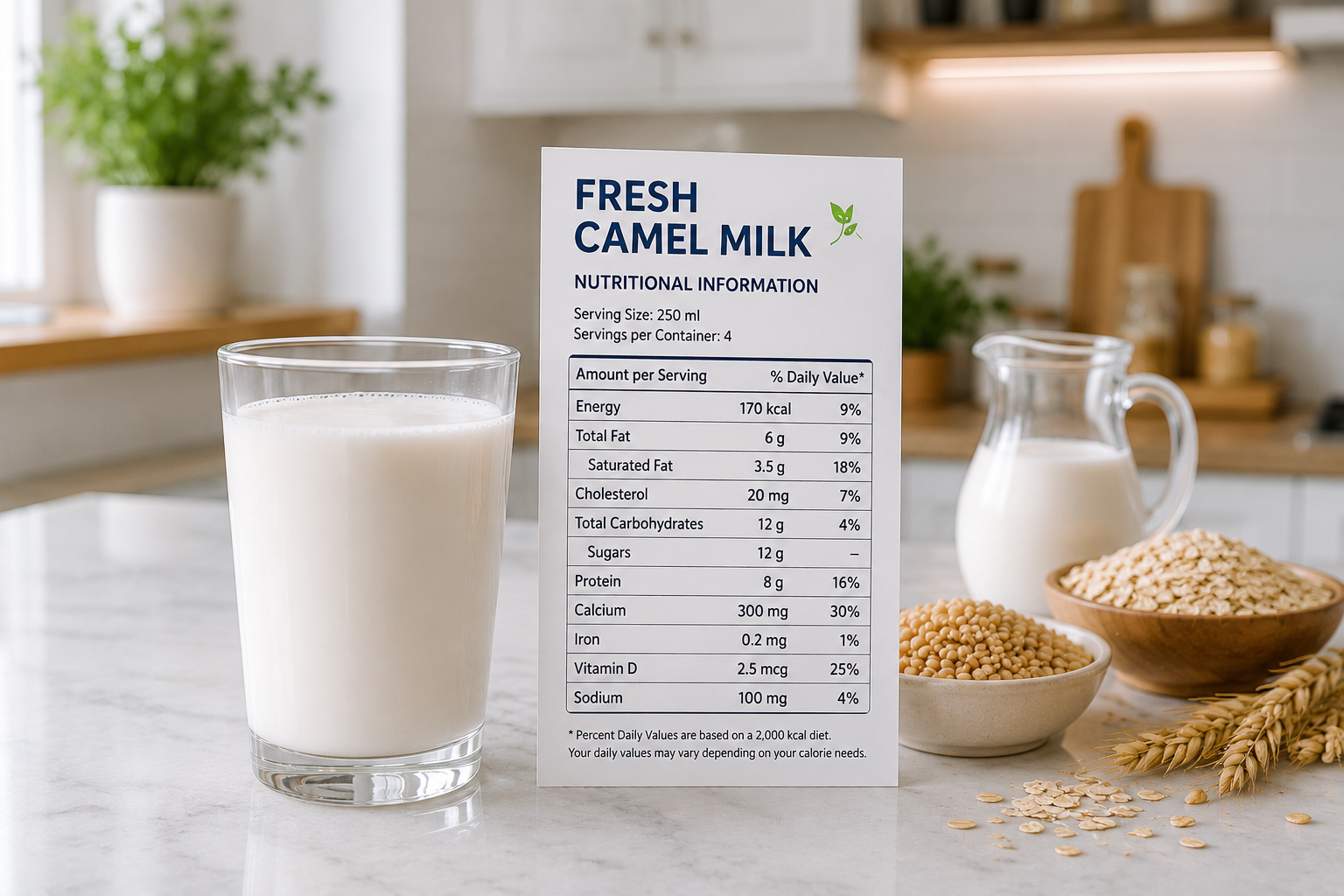
Camel milk has quickly become a highly popular choice in many homes across the United States. Many families use this because it offers a distinct flavor profile and a wealth of natural properties that work well in everyday cooking. If you are a parent looking for a simple, family-friendly alternative to traditional dairy, you might be wondering about its precise macronutrient counts and structural properties.
In simple terms, checking camel milk nutrition facts helps you track exactly what enters your children’s growing bodies during breakfast routines. This ultimate guide covers everything from exact carbohydrate and lipid ratios to protein variations found in both liquid cartons and dry storage pouches. We will also share crucial mineral fortification and allergen insights to help you manage your household meal plans with absolute confidence.
Quick Summary: Nutrient Profile Overview
Protein Diversity: It supplies a rich amount of high-quality plant-foraged animal proteins, particularly unique whey and healing immunoglobulins.
Calcium Matrix: The natural calcium levels are exceptionally high and easily absorbed by growing bones and teeth.
Lipid Blueprint: It features a lower overall fat percentage compared to whole cow milk, consisting mostly of beneficial long-chain fatty acids.
Sugar Composition: It carries significantly lower lactose levels than standard dairy, making it highly gentle on sensitive tummies.
If you want a deeper breakdown of how raw dairy compares nutritionally, raw milk nutrition explains its full vitamin, mineral, and protein profile in detail.
Camel Milk Nutrition
The primary profile of camel milk nutrition delivers a powerful blend of immune-supporting proteins, essential minerals, and clean metabolic energy.
Because this ancestral drink is packed with natural protective properties, analyzing its baseline structure ensures your family receives balanced nutrition at the breakfast table. Many families use this beverage as a clean daily fluid because it offers clean nourishment without heavy cellular processing. To understand how other alternative fluids compare in their macro profiles, reviewing our guide on oat milk nutrition helps you coordinate your weekly pantry goals smoothly.
Master Camel Milk Nutrition Facts Table

To help busy parents scan metrics instantly, here is a comprehensive breakdown of camel milk nutrition value & information across standard household kitchen measurements:
Camel Milk Nutritional Value per 100ml, 100g & 1 Cup
| Nutrient Component | Value Per 100ml / 100g | Value Per 1 Cup (8 oz / 240ml) |
| Calories | 48 kcal – 50 kcal | 115 kcal – 120 kcal |
| Carbohydrates | 4.0g – 4.2g | 9.6g – 10g |
| Natural Sugars (Lactose) | 3.8g | 9.1g |
| Camel milk protein | 3.2g | 7.6g – 8g |
| Does camel milk have fat | 1.8g – 2.5g | 4.3g – 5g |
| Does camel milk have calcium | 120mg | 290mg – 300mg |
| Potassium | 156mg | 375mg |
| Sodium | 56mg | 135mg |
Overall, camel milk provides a balanced combination of protein, calcium, healthy fats, and carbohydrates while remaining lower in fat than many traditional whole-milk varieties.
The USDA notes that nutrient values in milk-based products such as calories, protein, fat, and minerals can vary depending on species and serving size, making standardized nutrition databases essential for accurate dietary comparison.
For parents comparing different dairy alternatives, our guide on goat milk nutrition provides a detailed breakdown of its vitamins, minerals, and overall nutritional profile.
Raw Camel Milk Nutrition Facts, Information and Value
Pure, unpasteurized camel milk holds its native biochemical matrix exactly as harvested, maintaining raw structural enzymes and delicate immunoglobulins completely intact.
When reviewing raw camel milk nutrition, facts, information and value data, the thermal shifts of standard processing are absent, which keeps natural heat-sensitive vitamins at their peak. However, parents must balance these natural metrics with strict household safety standards. The FDA explicitly notes that serving unpasteurized animal milks can lead to unexpected food safety risks for young children. If you want to safely treat farm-fresh batches right inside your kitchen, reading our step-by-step breakdown on how to pasteurize camel milk at home keeps your family perfectly secure.
Camel Milk Protein Content
The total protein found in camel milk sits at a robust 3.2 grams per 100ml, which matches the general muscle-building capacity of traditional dairy.
For parents counting daily macros, knowing exactly how much protein in camel milk cups enters your child’s routine helps you build balanced lunches easily. To see how these protein totals compare to grain-based on the market, checking our analysis on whether is camel milk healthy provides a great comparative reference.
Camel Milk Whey Protein
The primary structural advantage of this fluid is its unique camel milk whey protein balance, which contains a different whey protein profile than cow’s milk and naturally does not contain beta-lactoglobulin, one of the major whey proteins found in cow milk.
This specific molecular difference ensures the liquid remains light and highly digestible for sensitive stomachs. For active individuals, utilizing a clean camel milk protein powder blend helps support tissue recovery without triggering the standard bloating associated with bovine supplements. It serves as a gentle, non-reactive compound that supports total body repair smoothly.
To better understand its origin and overall composition, you can also read our guide on what is camel milk.
Camel Milk Calcium Content
A single cup delivers an impressive 300 milligrams of pure organic calcium, supplying approximately 30% of an average child’s required daily value.
Reviewing calcium levels in camel milk shows that its structural availability is exceptionally high due to optimal phosphorus ratios within the fluid. Checking the exact camel milk calcium in per 100ml & 100g markers reveals a steady 120mg concentration that easily rivals any standard grocery store option. This makes it an invaluable kitchen companion for parents looking to secure strong bone development for their kids without using standard dairy.
The USDA notes that calcium content in milk and dairy-based foods varies by source and serving size, and standardized nutrition databases are essential for accurately comparing mineral intake across different dietary options.
👉 For families exploring plant-based calcium sources, our guide on does oat milk have calcium provides a clear comparison of its mineral content and nutritional value.
Camel Milk Vitamins and Minerals
Camel milk naturally contains a variety of essential vitamins and minerals that support normal body functions. Along with calcium and potassium, it provides vitamin C, phosphorus, magnesium, and small amounts of B vitamins. The exact nutrient levels can vary depending on the camel’s diet, breed, and production conditions.
These nutrients work together to support bone health, immune function, energy metabolism, and overall nutritional balance. Commercial nutrition labels may also differ slightly depending on whether the product is fresh, pasteurized, or fortified.
👉 To compare another popular dairy alternative, explore our complete guide on Soy Milk Nutrition Facts for a detailed breakdown of its vitamins, minerals, protein, and overall nutritional profile.
Does Camel Milk Have Fat?
Yes, camel milk naturally contains fat, but its overall camel milk fat percentage is remarkably low, averaging between 1.8% to 2.5% per batch.
Unlike the heavy saturated lipids found in full-fat cow products, these globules are smaller and contain a higher ratio of healthy polyunsaturated fatty acids. This lighter composition means the liquid flows smoothly without forming a thick cream layer at the top of your container. It offers a clean, heart-forward option for everyday family cooking. To see how long these delicate fats stay perfectly fresh on your refrigerator shelves, reviewing our safety guide on how long does camel milk last helps prevent early spoiling.
Does Camel Milk Have Lactose?
Yes, it does contain natural lactose sugar, but the overall levels are significantly lower than those found in traditional bovine options.
When tracking how much lactose in camel milk flows through each cup, it holds roughly 4 grams per 100ml compared to the much higher levels found in whole dairy. Because the structural molecular links are loose, the human digestive tract breaks them down effortlessly without generating painful gas or stomach cramps. This makes it an ideal real-milk alternative for families managing lactose sensitivities.
The FDA notes that lactose is a natural sugar found in milk and dairy products, and individuals with lactose intolerance may experience digestive discomfort when consuming foods containing lactose.
👉 For parents comparing different dairy options, our guide on is skim milk lactose free explains how lactose levels change across various types of milk.
Does Camel Milk Have Cholesterol?
Yes, it contains a very minimal, safe level of natural cholesterol, averaging roughly 5 milligrams per 100ml of fresh fluid.
Parents often ask does camel milk increase cholesterol lines or worry about long-term heart health when introducing a new animal product. Clinical tracking shows that the unique long-chain fatty acids in this fluid actually help support healthy lipid profiles rather than inflating bad markers. This keeps the cholesterol level in camel milk completely safe for daily household cooking.
The American Heart Association explains that dietary cholesterol and saturated fat intake can influence blood lipid levels, and overall heart health is best maintained through balanced nutrition and healthy food choices.
What Is in Camel Milk?
A deep chemical look reveals that camel milk is an intricate biological fluid composed of pure water, protective immunoglobulins, vital minerals, and powerful antioxidants.
The USDA confirms that the unique combination of high vitamin C, low saturated fat, and easily absorbable minerals places this drink in a special nutritional category. It offers an incredible blend of traditional heritage and modern wellness attributes. For families looking to diversify their liquid options, it stands as a premium, reliable, and deeply nourishing staple for the daily table.
Is Camel Milk Nutritious for Everyday Diets?
Camel milk can be included as part of a balanced diet for many healthy individuals. Like other dairy foods, it provides protein, calcium, and several essential nutrients that contribute to overall nutrition. The right amount depends on a person’s age, dietary needs, and guidance from a healthcare professional.
👉 Looking for another nutritious alternative? Explore our complete guide on Almond Milk Benefits to learn how it can support a balanced everyday diet.
Why Trust Fooder Ghor?
At Fooder Ghor, we provide educational resources focused on understanding the safe use, handling, and storage of different types of milk, including breast milk, cow’s milk, goat milk, and raw milk, based on publicly available guidance from trusted sources such as the CDC, FDA, USDA, and AAP. Some milk-related articles, particularly those involving maternal and infant feeding topics, are reviewed for clarity and presentation by nursing students with academic training in maternal and child health to help make information easier to understand. This content is provided for learning purposes only and does not offer medical advice.
Frequently Asked Questions
A: No, standard heating and pasteurization do not damage the calcium content, keeping the mineral fully available for bone health.
A: No, the American Academy of Pediatrics (AAP) states that infants should rely strictly on breast milk or infant formula for their primary nutrition.
A: No, the fat percentage remains identical because commercial processors do not heavily skim camel milk like they do with cow dairy.
A: Yes. Camel milk naturally provides about 3.2 grams of protein per 100ml, making it a good source of high-quality dairy protein that supports normal growth, muscle maintenance, and everyday nutrition.
A: Generally, yes. Camel milk usually contains slightly less fat than whole cow’s milk while still providing healthy fatty acids that contribute to a balanced nutritional profile.
A: Yes. Camel milk naturally contains vitamin C, and its concentration is generally higher than that of cow’s milk, although the exact amount can vary depending on production conditions.
A: Yes. Camel milk naturally contains calcium, providing approximately 120 mg per 100ml, making it an excellent source of this essential mineral for normal bone and teeth health.
Conclusion
In summary, diving into camel milk nutrition facts reveals an exceptionally balanced, low-fat, and protein-rich dairy alternative that supports daily family wellness easily. With its high whey protein quality, substantial calcium levels, and lower lactose density, it stands out as an incredibly functional choice for growing bodies. Stick to clean, verified sources to ensure your household enjoys these premium biochemical advantages safely at every single meal.
If you’re curious about other dairy choices, evaporated milk nutrition is worth checking out for comparison.