Skip to content



Almond milk is a rich and smooth dairy alternative widely used in modern kitchens. Many home cooks wonder does almond milk go bad over time or inside a sealed package. Understanding the physical signs of spoilage protects your family health and keeps your meals tasting fresh.
This practical safety guide explains how to identify bad plant milk quickly. You will learn clear sensory tests, safe usage rules, brand comparison timelines, and what happens if spoiled liquids are accidentally consumed.
Short Summary
- Spoilage Factors: All varieties of plant milk, including full-fat, light, canned, and homemade versions, eventually go bad.
- Clear Indicators: Spoiled liquid exhibits sour odors, clumpy textures, visual mold, or bulging containers.
- Boiling Safety Myth: Boiling spoiled almond milk does not destroy heat-resistant bacterial toxins or make it safe to consume.
- Health Risks: Consuming bad plant liquid can cause foodborne illness and gastrointestinal distress.
- Knowing if does almond milk goes bad protects your family from accidental food poisoning.
For a complete breakdown of its storage timelines, read our guide on how long does almond milk last.
Does Almond Milk Go Bad?
Yes, almond milk goes bad over time as exposure to air, heat, and active bacteria triggers spoilage, souring, and fat oxidation.
Different types of almond milk deteriorate for different reasons depending on their formulation, moisture, and processing methods. The quick summary table below outlines how each variety breaks down and the main driving factors behind its spoilage:
| Almond Milk Variety | Can It Go Bad? | Primary Cause of Spoilage |
| Shelf-Stable Carton | Yes | Airborne bacterial entry after opening and pantry heat |
| Refrigerated Carton | Yes | Microbial multiplication and fluctuating cold temperatures |
| Fresh Homemade | Yes | Natural active bacteria and absence of preservatives |
| Cooked Almond Dishes | Yes | Moisture accumulation and ambient spore contamination |
| Canned Almond Milk | Yes | Container degradation, rust, or oxidation after opening |
Understanding how different formulations decay prevents kitchen accidents. Unopened packages remain stable longer due to commercial flash-pasteurization. However, breaking the inner seal exposes the liquid to airborne microorganisms.
In many cases, temperature instability speeds up microbial growth inside containers. Keeping your kitchen fridge set to 40°F (4°C) or below helps slow down bacterial growth.
Does Homemade Almond Milk Go Bad?
Yes, homemade almond milk goes bad rapidly because it lacks added preservatives, stabilizing gums, and industrial pasteurization.
Natural unpasteurized liquids contain live enzymes and active microbes that break down plant fats quickly. Without heat treatments or natural additives like lecithin to neutralize these agents, fresh homemade batches spoil much faster than commercial brands.
The FDA recommends keeping refrigerators at 40°F (4°C) or below to slow the growth of harmful bacteria and help keep perishable foods safe.
If you enjoy preparing non-dairy alternatives at home, explore our step-by-step tutorial on how to make almond milk.
Does Almond Milk Go Bad in the Fridge?
Yes, almond milk eventually goes bad in the fridge because cold temperatures only slow microbial growth rather than stopping it completely.
Refrigeration delays microbial activity, but cold-tolerant microorganisms slowly multiply in opened liquid packages even at safe fridge temperatures. The U.S. Food and Drug Administration (FDA) recommends keeping refrigerators at or below 40°F (4°C) to slow the growth of harmful bacteria and help keep perishable foods safe.
If you use other dairy alternatives in your routine, learn about shelf timelines in our article how long does coconut milk last.
Can Almond Milk Go Bad If Unopened?
Yes, unopened almond milk can go bad if container seals are dented, punctured, exposed to extreme heat, or kept past their expiration threshold.
Commercial pasteurization destroys active microbes inside sealed shelf-stable boxes. However, physical package damage or storage in pantries above 80°F (27°C) permits microscopic air leaks or structural breakdown that allow bacterial growth inside the sealed container.
The FDA advises consumers to discard food in damaged containers, including packages that are swollen, leaking, punctured, or otherwise compromised. Consumers should never taste food from a container that appears damaged or unusual.
For comparisons with other shelf-stable dairy items, review our guide on how long can evaporated milk last.
Does Cooked Almond Milk Go Bad?
Yes, cooked dishes containing almond milk go bad as moisture and airborne spores encourage rapid microbial growth.
Boiling or cooking destroys active bacteria initially, but airborne spores land on meals as they cool. Leftover soups, oatmeal, or sauces made with almond milk usually go bad after 3 to 4 days in the refrigerator.
For recipe adjustments using non-dairy alternatives, see our guide on is evaporated milk dairy free.
Does Full Fat Almond Milk Go Bad?
Yes, full fat almond milk goes bad easily, developing rancid fats, sharp sour smells, and curdled textures when exposed to air.
Full fat versions contain higher levels of natural almond oils. When exposed to oxygen, these lipid compounds undergo oxidation, creating a sharp rancid aroma alongside typical bacterial decay. If you want to compare fat stability in other plant options, read our guide on cashew milk vs coconut milk.
Is Boiled Almond Milk Go Bad?
Yes, boiled almond milk still goes bad after cooling down because new airborne bacteria and mold spores contaminate the liquid.
Heating milk eliminates active bacteria present at that exact moment. However, once the liquid cools back down, it becomes vulnerable to new ambient contamination and spore growth. To learn more about heat stability in other dairy liquids, see our article on can you freeze cow milk.
Does Boiling Spoiled Almond Milk Make It Safe?
No, boiling spoiled almond milk does not make it safe because heat-resistant bacterial toxins remain active in the liquid.
Many people assume heating sour milk destroys all dangers. While extreme heat kills live bacteria cells, it fails to eliminate heat-stable toxins produced by multiplying microbes like Bacillus cereus. Consuming boiled bad milk can still cause severe sickness.
The USDA explains that some heat-resistant toxins produced by bacteria may not be destroyed by cooking, so food that has been improperly handled should not be assumed safe simply because it is reheated.
Proper storage is one of the best ways to reduce the risk of spoilage and keep almond milk fresh. For practical storage guidance, read our how to store almond milk guide.
How to Tell If Almond Milk Is Bad?
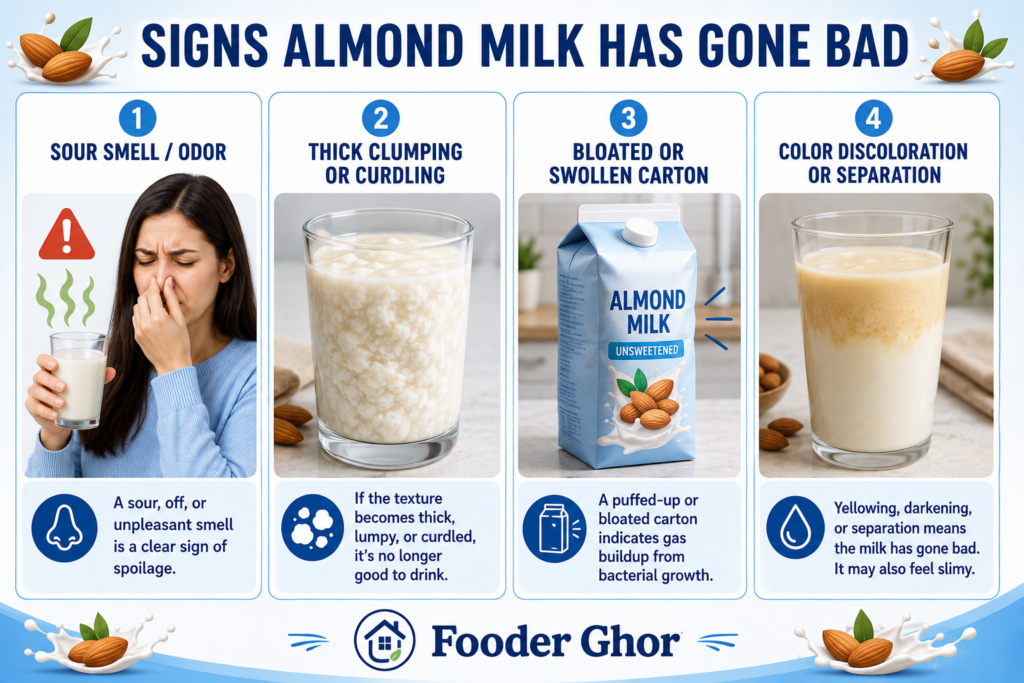
You can tell almond milk is bad by looking for a sharp sour odor, heavy clumping, visual mold spots, or a bulging container.
- Smell Test: A sharp, sour, vinegary, or yeast-like odor replaces the pleasant natural nutty almond scent.
- Texture Test: The liquid develops heavy clumping, curdled masses, or slimy residue that does not smooth out upon stirring or shaking.
- Visual Test: Discoloration appears as yellow, gray, or dark mold spots along the inner container rim, spout, or cap.
- Container Check: Cartons or cans show visible bulging, puffiness, heavy deformation, or leaks along the seams.
In everyday cooking, performing these basic sensory checks prevents ruined meals. Never taste liquid that exhibits suspicious odors or visual mold spots.
The FDA advises consumers to pay attention to changes in a food’s color, consistency, and texture and to avoid foods that appear spoiled or questionable. Consumers should not taste food to determine whether it is safe.
Spoiled almond milk should not be consumed, especially when noticeable changes in smell, texture, or appearance occur. For more information about possible reactions and concerns, read our almond milk side effects guide.
Can Almond Milk Spoil Inside the Container?
Yes, almond milk can spoil inside a sealed container if airborne microbes enter during prior use or if stored in warm environments.
Every time you open a container, microscopic spores enter the bottle. If you touch the container rim or leave it unsealed on warm kitchen counters, bacteria multiply rapidly inside the reclosed container. Opened almond milk can change in quality or spoil if it is not handled and stored properly after opening.
For a similar guide to recognizing spoilage in another concentrated milk product, read our does evaporated milk go bad article.
Does Almond Milk Spoil If Left Out?
Yes, opened almond milk spoils rapidly if left out at room temperature above 40°F (4°C) for more than 2 hours.
Room temperature conditions (40°F – 140°F) provide the optimal environment for harmful bacteria to double in number every 20 minutes. Leaving opened packages out on kitchen tables creates high contamination risks.
For details on oat milk room temperature limits, read our article how long does oat milk last after opening.
Does Canned Almond Milk Expire?
Yes, canned almond milk eventually expires and goes bad if the metal lining degrades or if stored in hot pantry conditions.
Commercial cans carry “Best By” markers rather than strict safety expiration dates. However, if the inner lining breaks down or moisture causes external rust, the contents inside will spoil regardless of the date.
Does Homemade Almond Milk Expire?
Yes, fresh homemade almond milk expires very fast because active natural enzymes and wild bacteria break down plant nutrients without industrial treatments.
Without industrial pasteurization or quality date stamps, home cooks must monitor fresh glass jars closely. Labeling your jar with the preparation date ensures you use it within 3 to 5 days before microbial decay begins.
Homemade almond milk is a fresh, minimally processed beverage, so its nutritional profile can differ from commercial varieties. For a closer look at its calories, fats, carbohydrates, and other nutrients, read our almond milk nutrition facts guide.
Can Opened Almond Milk Spoil Quickly?
Yes, opened almond milk can spoil quickly after breaking the seal and should be consumed within 7 to 10 days in the fridge.
Exposure to oxygen accelerates lipid oxidation and bacterial growth. Storing opened containers on refrigerator door shelves exposes liquid to frequent warm air blasts every time the door opens.
Opened almond milk can spoil more quickly after the seal is broken, so proper refrigeration and handling are important. For information about possible unwanted reactions to another concentrated milk product, read our evaporated milk health side effects guide.
Can You Use Spoiled or Bad Almond Milk?
No, you should never use or consume spoiled almond milk because it harbors harmful pathogens that cause foodborne illness.
Some online recipes suggest using sour dairy for baking, but spoiled plant liquids carry dangerous bacterial loads that ruin recipe taste and pose infection risks. The risks of severe stomach upset far outweigh any desire to avoid kitchen waste.
If you are also wondering whether other plant based milks can spoil, read our guide on does coconut milk go bad to learn about spoilage signs, storage, and food safety.
Is It OK to Use Expired Canned Almond Milk?
Unopened expired canned almond milk is safe only if the container remains undamaged, shows no rust, and smells fresh upon opening.
If an unopened can shows no swelling, rust, or deep dents, the contents often retain acceptable quality past the date. However, always inspect the liquid visually after opening. To explore long-term safety guidelines for other beverages, check our article on how long does soy milk last.
Almond Milk Brand Comparison
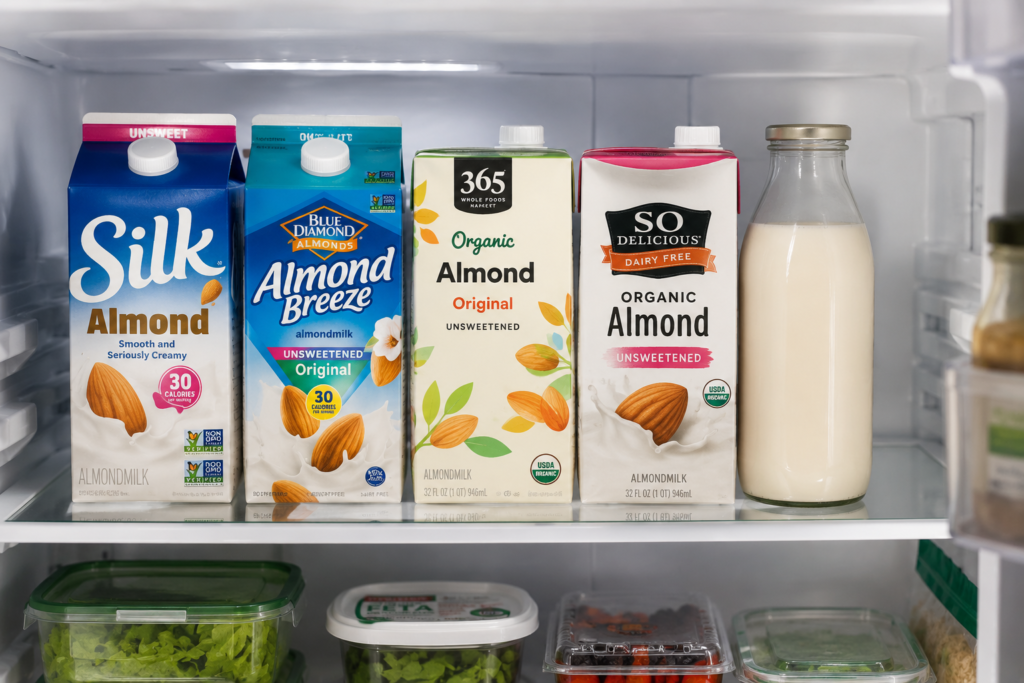
Commercial almond milk brands feature variations in spoilage behaviors depending on whether they are shelf-stable, refrigerated, chocolate-flavored, or packaged in metal cans.
In general, store-bought options offer predictable shelf behavior. The following comparison table outlines how popular almond milk brands behave, whether they go bad after opening, and their primary spoilage indicators.
| Brand or Variety | Can It Go Bad? | Unopened Packaging Status | Primary Spoilage Indicators |
| Silk Almond Milk | Yes | Perishable / Refrigerated | Sour scent, thick curdling, separated layer |
| Alpro Almond Milk | Yes | Shelf-Stable Pantry | Carton swelling, vinegary taste, off-odor |
| Califia Farms | Yes | Perishable / Refrigerated | Rapid oil separation, sharp sour off-flavor |
| Blue Diamond (Almond Breeze) | Yes | Shelf-Stable or Refrigerated | Sour odor, thick lumping, package bloating |
| Light Almond Milk | Yes | Perishable / Refrigerated | Watery phase separation, sour aroma |
| Chocolate Almond Milk | Yes | Perishable / Refrigerated | Heavy cocoa clumping, sour gas expansion |
| Trader Joe’s Almond Beverage (Carton) | Yes | Shelf-Stable Pantry | Sour smell, curdled texture, carton swelling |
Always transfer unused canned almond milk into a glass or plastic container before refrigeration to maintain flavor and prevent early oxidation.
To see how almond beverages compare directly with tropical options, view our almond milk vs coconut milk comparison.
Almond Milk Spoiling vs. Going Bad: Is There a Difference?
Fat separation is a natural phase change, whereas true going bad involves bacterial decay, foul smells, and curdled textures.
Separation occurs when natural almond oils and water detach at cool temperatures, which is completely normal and fixed by shaking the container. True spoilage involves bacterial decomposition, resulting in foul smells, curdling, and mold growth. Understanding the difference between normal phase separation and actual decay prevents unnecessary food waste in your home.
Normal oil separation does not necessarily mean almond milk has spoiled, while unusual odors, mold, or persistent texture changes can indicate that the product should be discarded. For more information about possible reactions and concerns related to plant-based milk, read our soy milk health side effects guide.
Can Spoiled Almond Milk Make You Sick?
Yes, consuming spoiled almond milk can make you sick by causing gastrointestinal distress, nausea, severe cramps, and diarrhea.
Microbes like Bacillus cereus or mold spores multiply rapidly in bad plant liquids. Ingesting these organisms triggers gastrointestinal distress within hours of consumption.
What Happens If You Eat Spoiled Almond Milk?
Eating spoiled almond milk irritates the digestive tract, causing acute stomach pain, nausea, vomiting, and food poisoning. Concentrated plant liquids offer rich nutrients for bacterial growth. When spoiled, these liquids harbor high bacterial loads that irritate the stomach lining rapidly.
For a fresh homemade batch, learning the proper preparation method can help you control the ingredients and achieve the desired texture. For a step-by-step guide, read our how to make almond milk.
⚠️ Medical Disclaimer: While mild symptoms from spoiled almond milk usually resolve within 24 to 48 hours, severe dehydration, persistent vomiting, or a high fever require immediate attention. Always consult a healthcare professional if symptoms worsen, especially for young children, pregnant individuals, or those with weakened immune systems.
Common Almond Milk Side Effects From Spoilage
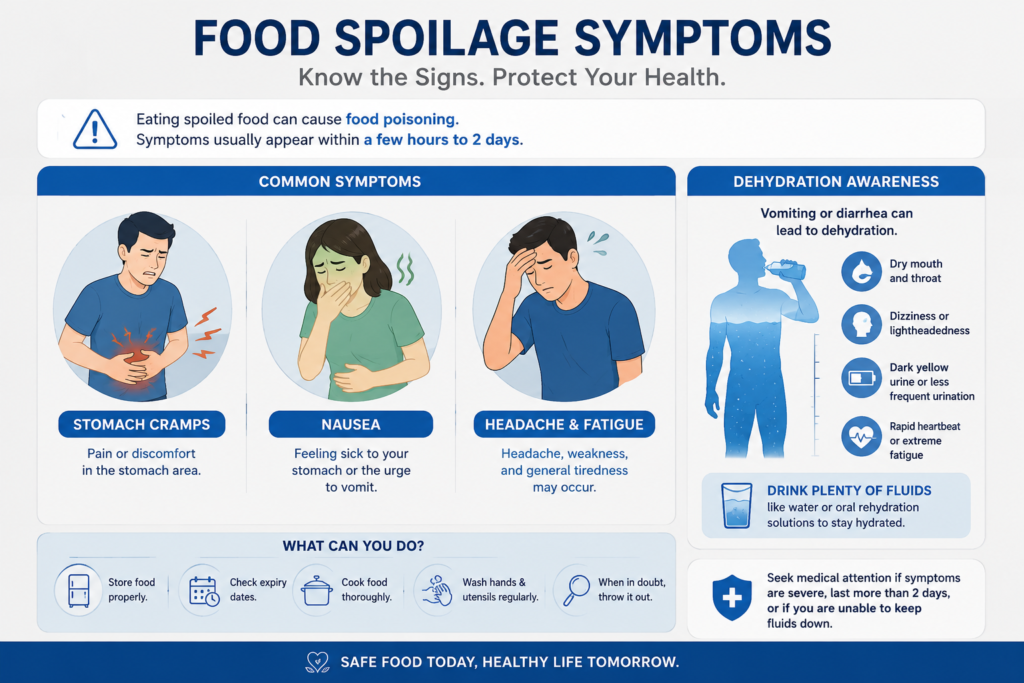
Consuming spoiled or contaminated almond milk may cause foodborne illness symptoms such as nausea, vomiting, abdominal cramps, and diarrhea, and some illnesses may also cause fever.
- Nausea and Vomiting: The stomach reacts quickly to bacterial toxins by attempting to purge the bad liquid.
- Severe Abdominal Cramps: Sharp stomach pain occurs as intestinal walls react to active bacterial contamination.
- Diarrhea: Toxins disrupt normal bowel function, leading to rapid fluid loss and digestive discomfort.
- Mild Fever or Headache: Immune responses trigger mild systemic symptoms when fighting off ingested foodborne pathogens.
In most cases, these symptoms resolve within 24 to 48 hours with adequate rest and fluid hydration. Seek medical advice if severe symptoms persist.
The CDC notes that foodborne illness commonly causes symptoms such as nausea, vomiting, stomach cramps, and diarrhea. Drinking plenty of fluids can help prevent dehydration. Seek medical care for bloody diarrhea, diarrhea lasting more than three days, a high fever over 102°F (38.9°C), frequent vomiting, or signs of dehydration.
For more information about general nutritional reactions and concerns, read our almond milk side effects for health guide.
Why Trust Fooder Ghor?
At Fooder Ghor, we provide comprehensive, research-backed educational resources on all types of milk including breast milk, dairy (cow, goat, camel, sheep, buffalo), and plant-based alternatives (oat, soy, almond). Our guides cover everything from nutrition, taste, and health benefits to proper storage, shelf life, and safety handling, aligned with official guidance from the CDC, FDA, USDA, and AAP. To maintain the highest standards of scientific accuracy, this article has been medically reviewed by a Public Health Expert (MPH). This content is for educational purposes only and does not substitute for professional medical advice.
Frequently Asked Questions
Yes, bad liquid harbors harmful bacteria and toxins that can cause food poisoning, including nausea, stomach cramps, and diarrhea.
Lumpiness in unopened cans is usually harmless fat separation. If it smells clean and fresh, gentle stirring or shaking recombines the smooth texture.
Inspect the package for physical signs like bulging lids, swollen carton sides, deep dents, rust spots, or leaks along the container seams.
If the unopened container is intact and shows no spoilage signs upon opening, it is generally safe. However, compromised packages past their date can cause illness.
Drink plenty of fresh water to stay hydrated and monitor your symptoms. Seek medical advice if you experience severe cramps or continuous vomiting.
Both varieties spoil quickly once exposed to air. Light versions contain more water, which can cause faster visual separation, while full-fat versions oxidize faster.
Natural separation is common for plant-based milks. A quick shake usually fixes the issue. However, if it remains clumpy or thick after shaking, it has gone bad.
Conclusion
Does almond milk go bad? Yes, all canned, carton, and homemade varieties spoil over time or when exposed to air and heat. Always inspect older containers for sour odors, heavy curdling, or rim mold before cooking. Never attempt to boil sour liquid to make it safe, as bacterial toxins survive heat treatments. Discard suspect packages immediately to keep your kitchen safe and healthy.
To learn more about dairy alternatives and plant milk safety, visit our guide on how long does goat milk last.