Skip to content

A2 raw milk has become a popular choice in the United States for families seeking natural dairy products. Many parents look for options that offer rich nutrients and a creamy texture for daily breakfast recipes. However, choosing the right milk requires clear facts about its biological makeup, nutritional values, and safety standards. In this comprehensive guide, we will break down everything you need to know about this dairy option. We will cover the core science behind A2 protein, explore official food safety guidelines, and analyze its true wellness advantages.
Quick Summary
Definition: Unpasteurized milk containing only the A2 beta-casein protein type.
Nutrition: High in healthy fats, calcium, vitamins, and contains 8 grams of protein per serving.
Safety Status: Unpasteurized dairy carries bacterial risks according to official US health agencies.
Main Benefit: Many families report better digestive comfort compared to regular store-bought options.
Best Uses: Works well in traditional baking, homemade desserts, and morning cereal bowls.
What Exactly is A2 Raw Milk?
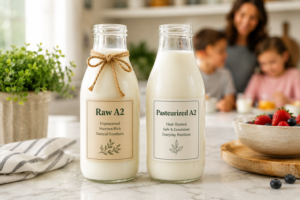
In simple terms, A2 raw milk is fresh milk that comes straight from cows bred to produce only a specific type of protein. Unlike standard grocery store milk, this product does not undergo the pasteurization process or homogenization fluid treatment. Many families choose it because they want to consume dairy in its most natural, unchanged state. It is highly valued in many homes for its rich taste and traditional farmhouse quality.
The Core Difference: A1 vs. A2 Beta-Casein Protein
To understand this beverage completely, we must look at the hidden structure of dairy proteins. Regular cow milk contains two primary types of beta-casein proteins, which are known as A1 and A2. When you look at A2 raw milk, it contains 100% A2 beta-casein without the presence of the common A1 variant. This difference matters because the human digestive system processes these two protein shapes in entirely unique ways. You can learn more about general dairy varieties by reading our guide on what is raw milk.
Why It Lacks the Traditional A1 Protein Segment
For most people, regular milk contains A1 proteins due to historical genetic changes in dairy herds over centuries. Certain breeds, including Guernsey and many Jersey cows, have a higher likelihood of producing A2 milk. Farmers often use genetic testing to identify cows that carry only the A2 beta-casein gene. Farmers selectively test their cattle using modern genetic mapping to ensure the herd only passes down the clean A2 gene. This careful breeding ensures the resulting raw product remains purely filled with the preferred protein type.
According to research from the National Institutes of Health (NIH), the difference between A1 and A2 milk comes from a genetic variation in the beta-casein protein found in dairy cows.
A2 Raw Milk Nutrition Facts: Calories, Fat, and Vitamins
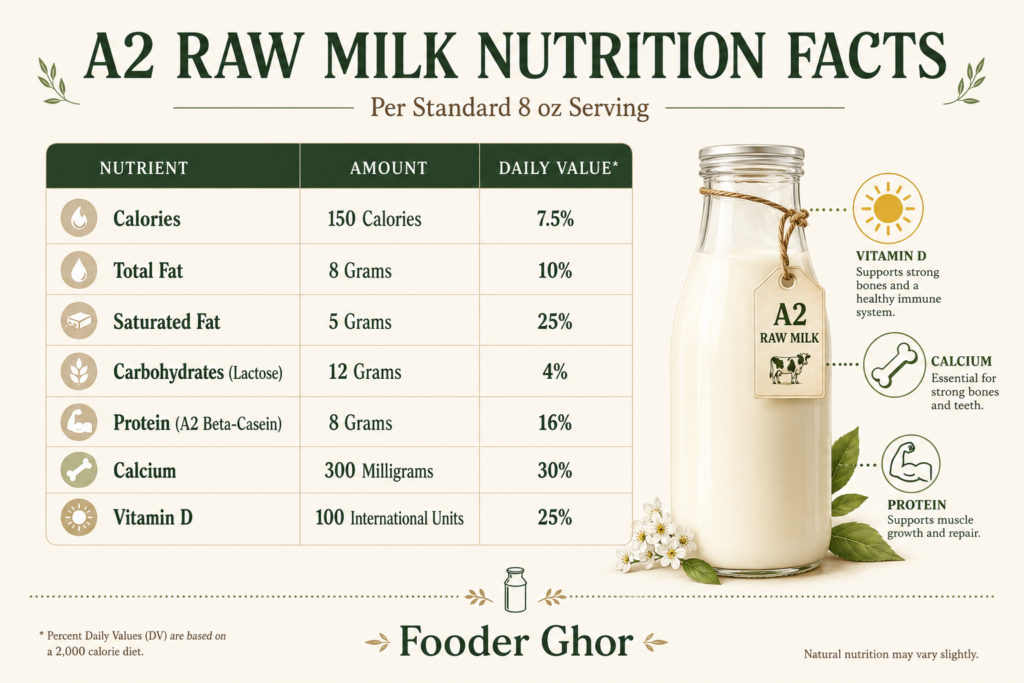
When evaluating daily dietary choices, reviewing the exact structural components of your food is highly helpful. Raw dairy from grass-fed cows provides an excellent balance of macronutrients and essential fat-soluble vitamins.
Here is a practical nutritional profile for one standard 8-ounce cup of this fresh beverage.
| Nutritional Component | Amount Per 8 oz Serving | Daily Value Percentage |
| Calories | 150 Calories | 7.5% |
| Total Fat | 8 Grams | 10% |
| Saturated Fat | 5 Grams | 25% |
| Carbohydrates (Lactose) | 12 Grams | 4% |
| Protein (A2 Beta-Casein) | 8 Grams | 16% |
| Calcium | 300 Milligrams | 30% |
| Vitamin D | 100 International Units | 25% |
Note: The protein amount shown is based on USDA data for whole cow’s milk. In milk from certified A2 cows, most or all of this protein consists of A2 beta-casein rather than A1 beta-casein, depending on the cows’ genetics.
According to nutrition information published by the USDA FoodData Central, whole cow’s milk provides high-quality protein, calcium, vitamin D, and other essential nutrients that support a balanced diet. For more details on standard values, check out our deep dive into raw milk nutrition.
Is A2 Raw Milk Safe to Drink? (Health Considerations)
The question of safety is a major topic of discussion among modern parents and health professionals today. While the specific protein type offers distinct physical advantages, the unpasteurized nature of the drink requires careful evaluation. The FDA recommends that consumers understand the potential health risks associated with drinking raw, unpasteurized milk before choosing to consume it.
The Risk of Harmful Bacteria in Unpasteurized Dairy
The FDA states that raw milk may contain harmful bacteria, including Salmonella, E. coli, Listeria, and Campylobacter, which can cause serious foodborne illness. These micro-organisms live naturally in farm environments and can accidentally contaminate fresh milk during the regular milking process. Pasteurization uses controlled heat to destroy these pathogens effectively without altering the core nutritional value of the liquid. Without this heating step, bacteria can multiply quickly if the product is kept at improper kitchen temperatures. You can protect your family by reviewing our guidelines on how to store raw milk and learning how long does raw milk last on the counter.
Who Should Avoid Drinking Raw A2/A2 Milk?
Health guidance from the CDC recommends that pregnant women, young children, older adults, and people with weakened immune systems avoid drinking raw milk because they are at greater risk of severe foodborne illness. Pregnant women, young infants, elderly grandparents, and individuals with weakened immune systems should completely avoid unpasteurized dairy items. For these vulnerable groups, a bacterial infection can lead to severe health complications or hospital visits. Safe alternatives are widely available, and you can explore options in our comprehensive article detailing what is a2 milk.
Real Health Benefits of Raw A2 Milk for Digestive Comfort
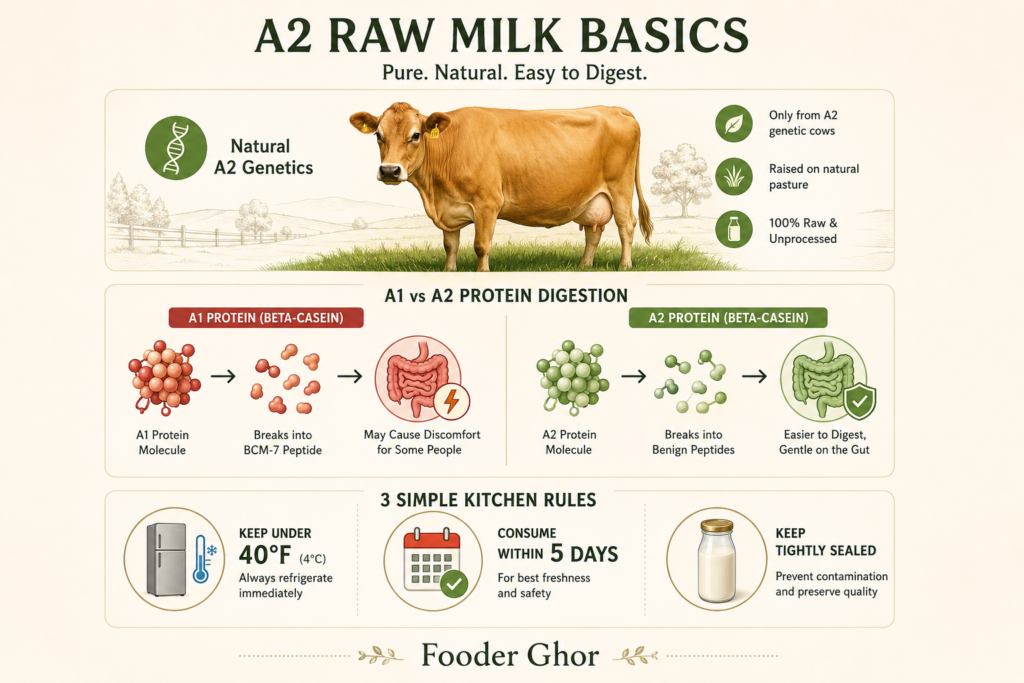
Many people prefer this natural option because it supports their overall wellness goals without causing stomach upset. Consumers frequently report that switching away from standard store milk helps them enjoy their favorite meals again. These positive experiences have made the product a popular choice in alternative wellness communities across the country.
Why Many Consumers Report Preferring A2 Dairy Products
According to research published by the National Institutes of Health (NIH), A1 beta-casein digestion can release the peptide BCM-7, while A2 beta-casein does not produce BCM-7 in the same way. This particular compound can sometimes slow down bowel movements and cause uncomfortable inflammation in sensitive digestive tracts. Because A2 dairy lacks the A1 segment, it does not create BCM-7 inside your stomach during regular digestion. As a result, some people report fewer digestive discomforts, such as bloating or gas, although more research is needed to confirm these effects. Discover additional positive impacts by reading our breakdown of raw milk benefits.
How It Forms a Family Friendly Choice for Daily Breakfast Recipes
In everyday cooking, this creamy liquid serves as a versatile ingredient for a wide variety of household meals. It works beautifully when mixed into warm morning oatmeal, blended into fruit smoothies, or poured over whole-grain cereal. The rich texture adds a smoother consistency to homemade baked goods, traditional custard desserts, and simple savory sauces. It provides a familiar and reliable way to feed growing children their daily requirements of calcium and fat.
Want to learn more about its nutritional value? Read our detailed A2 Raw Milk Nutrition Facts guide for a complete breakdown of calories, protein, vitamins, minerals, and other essential nutrients.
Should You Switch to A2 Raw Milk?
Making the final decision depends on your personal health priorities, comfort level, and nutritional preferences. If you suffer from frequent digestive discomfort but love real dairy, this unique protein variety might be helpful. At the same time, you must remain mindful of the safety risks associated with unpasteurized farm products. For a balanced approach, many shoppers decide to buy pasteurized versions instead to enjoy the protein benefits safely. For further safety contexts, check out our reports on how long does a2 milk last and potential a2 milk side effects.
Why Trust Fooder Ghor?
At Fooder Ghor, we provide educational resources focused on understanding the safe use, handling, and storage of different types of milk, including breast milk, cow’s milk, goat milk, and raw milk, based on publicly available guidance from trusted sources such as the CDC, FDA, USDA, and AAP. Some milk-related articles, particularly those involving maternal and infant feeding topics, are reviewed for clarity and presentation by nursing students with academic training in maternal and child health to help make information easier to understand. This content is provided for learning purposes only and does not offer medical advice.
Most Common Frequently Asked Questions
A: The short answer is no. This beverage contains the exact same amount of lactose sugar as regular cow milk. However, many people who think they are lactose intolerant actually have trouble breaking down the classic A1 protein.
A: The American Academy of Pediatrics (AAP) explains that raw or unpasteurized milk should never be fed to infants. Young babies have developing immune systems that cannot safely handle the potential bacterial risks found in raw dairy.
A: In most households, you can easily test freshness using your basic senses of smell, sight, and texture. Spoiled milk will develop a sharp sour odor, a chunky or curdled consistency, and a yellowish color.
A: Yes, this liquid freezes well and can be kept in a standard home freezer for up to three months. You should always leave extra space at the top of the container because the liquid expands when frozen.
Conclusion
A2 raw milk offers a unique combination of natural nutrients, rich taste, and real digestive advantages for many families. By providing only the A2 beta-casein protein, it allows many sensitive consumers to enjoy dairy without stomach pain. That said, it is vital to balance these benefits against the safety risks highlighted by federal health agencies. Always practice proper storage methods to keep your family safe and healthy. You can read a complete comparison in our upcoming guide, A2 Raw Milk vs Pasteurized A2 Milk.