Skip to content



Goat milk has gained widespread popularity in many American homes as a gentle, nutrient dense alternative to traditional dairy. For most people, finding a wholesome milk that supports daily wellness without causing stomach discomfort can feel like a challenge. In simple terms, goat milk offers an impressive profile of essential minerals, easy to digest proteins, and beneficial fatty acids that fit effortlessly into a balanced routine.
In everyday cooking and morning routines, families often prefer this rich beverage for its smooth consistency and natural goodness. When considering whether this natural drink aligns with a healthy diet, exploring its core therapeutic capabilities provides clear answers for everyday wellness. In this guide, we will learn goat milk health benefits for health, including its role in bone strength, kidney care, digestion, and other essential wellness areas so you can make informed decisions for your family.
Short Summary
- Easy Digestibility: Naturally smaller fat globules and low alpha-S1-casein protein make goat milk exceptionally gentle on sensitive stomachs.
- Bone Health Support: Packed with bioavailable calcium and phosphorus to maintain strong bone density and cellular uptake.
- Gut Microbiome Booster: High levels of natural oligosaccharides act as prebiotics to nourish beneficial gut bacteria.
- Heart and Blood Pressure Care: Abundant potassium helps balance sodium levels for optimal heart function.
- Enhanced Absorption: Improves the natural bioavailability of essential minerals like iron, copper, and magnesium.
- Kidney and Pasteurization Safety: Pasteurization is critical to destroy harmful bacteria, while high potassium levels require medical guidance for kidney patients.
For a balanced understanding of potential drawbacks and safety considerations, read our guide to goat milk side effects to explore possible digestive reactions, allergies, and other health concerns.
Goat Milk Benefits for Health

Goat milk benefits for health stem from its distinct structural composition, featuring smaller fat molecules, protective prebiotics, and essential vitamins that nourish your entire body. In general, switching to this traditional dairy staple provides comprehensive structural support for everyday living.
For most people, integrating pasteurized goat milk into morning smoothies, oatmeal, or baking recipes offers a simple way to upgrade daily nutrition. Research consistently highlights how its unique protein matrix aligns with human digestive needs, making it a reliable choice for families seeking a wholesome kitchen staple that supports long term health.
To keep pasteurized goat milk fresh after opening, explore our guide to best milk storage containers to compare suitable materials, secure lids, and practical options for refrigerator storage.
1. Goat Milk Benefits for Bones
Goat milk provides calcium and phosphorus, two essential minerals that help maintain strong bones and teeth. According to the USDA FoodData Central, goat milk contains these minerals along with protein and other nutrients that contribute to a balanced diet. The exact nutrient amounts can vary depending on the product and whether it is fortified.
Research published in scientific journals has investigated how goat milk and goat milk-based formulations affect calcium and phosphorus absorption and bone health. However, some of these findings come from animal studies, so more human research is needed before concluding that goat milk improves bone density or prevents bone loss in people. The NIH Office of Dietary Supplements explains the role of calcium in maintaining bone health and describes how calcium absorption varies among food sources.
For more on about goat milk shelf life and safety guide, you can also read our complete guide: How long does goat milk last.
2. Goat Milk Benefits for Digestion
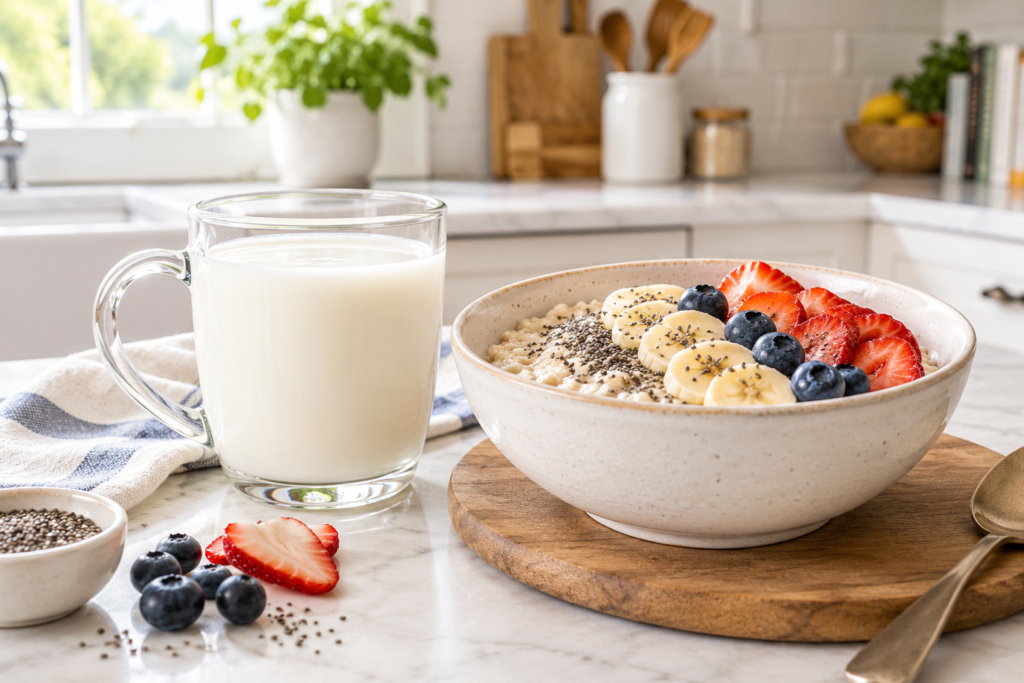
Goat milk has a different protein and fat composition from cow milk, which may influence how it behaves during digestion. Some goat milk varieties contain lower levels of alpha-S1-casein than cow milk, although the amount varies by breed and product. Laboratory research suggests that goat milk can form a softer curd under certain conditions, but this does not prove that everyone will digest it more easily or experience less stomach discomfort.
People with lactose intolerance may still experience symptoms after drinking goat milk because it naturally contains lactose. Goat milk is also not a safe alternative for people with a cow’s milk protein allergy, as its proteins can cross-react.
This gentle curd formation allows digestive enzymes to break down the milk rapidly and smoothly through the gastrointestinal tract. That said, the natural structure prevents heavy stomach weight, providing a comfortable, easy option for everyday morning drinks. For individuals managing routine kitchen prep, following proper goat milk storage tips ensures that fresh liquid dairy retains its digestive benefits over time.
3. Goat Milk Benefits for Gut Health
Goat milk benefits for gut health are closely linked to its unique concentration of specialized carbohydrates that feed beneficial digestive bacteria. Research published in PubMed-indexed studies has examined the oligosaccharide content of goat milk and its potential role in supporting beneficial gut bacteria, although evidence of specific health benefits in humans remains limited. These prebiotic compounds resist early stomach acid digestion and travel directly into the intestinal tract.
Once inside the intestine, these natural oligosaccharides act as functional prebiotics, supplying crucial nourishment to the probiotic microbiome. Maintaining a balanced gut flora promotes overall digestive comfort, strengthens the intestinal lining, and keeps your internal ecosystem thriving naturally. Exploring variations like sheep milk vs goat milk demonstrates how specific prebiotic profiles across different animal milks impact digestive longevity.
4. Goat Milk Benefits for Heart Health and Blood Pressure
Goat milk benefits for heart health and blood pressure center around its rich supply of vital electrolytes, particularly potassium. Based on USDA data, a single cup of fresh goat milk delivers a strong dose of natural potassium, which plays a fundamental role in helping the human body balance excess dietary sodium. This natural electrolyte balance helps maintain relaxed blood vessel walls during daily activity.
The CDC explains that potassium helps counter the effects of sodium, and getting enough potassium as part of a balanced diet may help lower blood pressure. Furthermore, the natural medium-chain fatty acid balance supports overall cardiovascular wellness without placing unnecessary strain on your metabolic system. For households planning long term meal stocking, knowing can you freeze goat milk makes it simple to preserve these cardiovascular benefits without losing quality.
5. Goat Milk Benefits for Nutrient Absorption

Goat milk benefits for nutrient absorption highlight how its organic matrix improves the body’s capacity to utilize essential dietary minerals. According to a PubMed-indexed study, goat milk improved iron and copper utilization compared with cow milk in rats, but further research is needed to determine whether similar effects occur in humans.
This enhanced uptake occurs because the specific lipid and protein composition of goat dairy creates a favorable environment in the digestive tract. For individuals prone to nutritional gaps or conditions like iron deficiency, integrating this mineral rich drink into regular meals offers a reliable way to boost natural absorption. Convenient shelf stable options such as powdered goat milk can also provide easy daily mineral access for busy routines.
6. Goat Milk Benefits for Allergy Management
Goat milk benefits for allergy management offer a gentle alternative for individuals with mild sensitivities to standard cow milk proteins. In simple terms, many people who experience minor bloating or skin reactions from cow dairy tolerate goat milk much better because of its different protein structure, which resembles A2-type casein.
The American Academy of Allergy, Asthma & Immunology explains that goat milk proteins are similar to cow milk proteins and may trigger allergic reactions in people with cow milk allergy, so goat milk should not be assumed to be a safe alternative. Because cross-reactivity can occur between animal milks, anyone with a severe dairy allergy should consult a healthcare professional before adding goat milk to their diet. Understanding the fundamental structural difference between goat milk and cow milk helps families make safe, informed choices for their household needs.
7. Goat Milk Benefits for Skin
Goat milk benefits for skin have made this rich liquid a classic ingredient in natural soaps, lotions, and holistic beauty routines. According to the FDA, lactic acid is one of the alpha-hydroxy acids used in skincare products, where its effects depend on the product’s concentration and formulation; however, evidence that goat milk itself improves the skin barrier remains limited.
In everyday skincare, lactic acid acts as a gentle exfoliant, breaking down dead skin cells on the surface while locking in deep moisture. Consuming goat milk or applying topically formulated goat milk products helps maintain a smooth texture, supports natural skin hydration, and protects the delicate skin barrier from daily environmental dryness. Comparing these advantages with traditional dairy like raw milk benefits illustrates how natural animal milks contribute positively to skin care regimens.
Beyond skincare, the biotin, protein, and essential fatty acids in goat milk help nourish the scalp and strengthen hair strands from the root. Regular consumption provides the necessary structural elements to reduce hair breakage and support strong, healthy nails over time.
8. Goat Milk Benefits for Kidney and Safety Warnings
In terms of renal health, goat milk naturally contains a lower oxalate level compared to many other plant and animal beverages. Consuming lower oxalate foods can help minimize the formation of certain renal stones in healthy individuals. Additionally, its balanced potassium content helps maintain regular fluid balance, relieving operational strain on the kidneys.
Goat milk benefits for kidney health and general wellness require careful adherence to official food safety and pasteurization standards. The CDC recommends choosing pasteurized milk and dairy products because pasteurization kills harmful germs that can cause foodborne illness. Raw, unpasteurized goat milk can carry dangerous foodborne pathogens such as Salmonella, E. coli, and Listeria, making proper heat treatment essential for family health.
The NIDDK explains that people with chronic kidney disease may need to monitor their potassium and phosphorus intake because impaired kidney function can make it harder to maintain healthy mineral levels. Anyone with kidney disease should ask their healthcare professional or renal dietitian whether goat milk fits their individual diet. High mineral loads can place extra workload on impaired kidneys, so kidney patients should always seek personalized medical advice before drinking goat milk. Understanding safety timelines using guide resources like how long does fresh cow milk last helps prevent accidental spoilage in home kitchens.
9. Goat Milk Benefits for Weight Management and Metabolism
Goat milk benefits for weight management and metabolic health stem from its favorable fat molecule distribution. According to a research review published in PMC, goat milk contains a higher proportion of certain medium-chain fatty acids than cow milk, but evidence that drinking goat milk directly promotes weight loss or improves metabolism in humans remains limited.
Unlike long-chain fats that are easily stored in adipose tissue, these medium-chain fats are absorbed rapidly and transported straight to the liver. Here, they are burned immediately as clean energy, boosting natural metabolic rates and promoting sustained satiety, which can assist in maintaining a balanced weight over time. Evaluating how this compares with other options like A2 milk vs goat milk gives health conscious individuals clear clarity for weight goals.
10. Goat Milk Benefits for Immune System
Goat milk benefits for immune system function lie in its rich array of protective cellular antioxidants and essential trace minerals. Studies highlight that goat milk naturally supplies significant amounts of natural vitamin A and selenium, a powerful antioxidant trace mineral that supports cellular defenses.
The NIH Office of Dietary Supplements explains that selenium supports normal immune function and helps protect cells from oxidative damage, although evidence that increasing selenium intake improves immunity in people who already get enough is limited. Goat milk contains proteins and micronutrients that contribute to its nutritional value, but there is insufficient human evidence that drinking goat milk enhances seasonal immunity or prevents common colds.
For another perspective on the nutritional value of concentrated dairy, explore our guide to evaporated milk health benefits to learn about its key nutrients, potential benefits, and dietary considerations.
Goat Milk Benefits for Eye Health
Goat milk benefits for eye health stem from its naturally rich supply of vitamin A. In simple terms, getting enough vitamin A helps prevent night blindness and supports overall macular function. For busy parents who spend long hours in front of screens, drinking pasteurized goat milk provides a simple, gentle way to protect daily visual clarity naturally.
If you’re exploring plant-based alternatives to dairy, read our guide to soy milk health side effects to understand potential drawbacks, allergy concerns, and nutritional considerations.
11. Goat Milk Benefits for Toddlers and Children
Goat milk benefits for toddlers and growing children provide a nutrient dense, easily digestible beverage option once early infancy milestone stages are complete. The American Academy of Pediatrics explains that ordinary goat milk should not replace breast milk or infant formula during the first 12 months because it does not provide the appropriate nutritional balance for infants.
Once a child reaches 1 year of age, pasteurized goat milk may be included in a balanced diet if it meets the child’s nutritional needs. However, its nutrient content can differ from cow milk, and there is insufficient evidence that it consistently causes less gas or bloating or provides superior support for growth and development. The CDC recommends discussing your child’s milk choices with their healthcare professional.
Why Trust FooderGhor?
At Fooder Ghor, we provide educational resources focused on understanding the safe use, handling, and storage of different types of milk, including breast milk, cow’s milk, goat milk, and raw milk, based on publicly available guidance from trusted sources such as the CDC, FDA, USDA, and AAP. Some milk-related articles, particularly those involving maternal and infant feeding topics, are reviewed for clarity and presentation by nursing students with academic training in maternal and child health to help make information easier to understand. This content is provided for learning purposes only and does not offer medical advice.
Frequently Asked Questions
A: Yes, many people find goat milk easier to digest because its fat globules are smaller and it forms a softer curd in the stomach due to lower alpha-S1-casein protein levels.
A: No, the FDA and CDC strongly advise against drinking raw goat milk due to severe bacterial contamination risks. Pasteurized goat milk provides all essential health benefits safely. If you want to pasteurize fresh goat milk at home, explore our guide to best milk pasteurizer machine to compare available equipment and features.
A: Goat milk naturally contains lactose, though slightly less than whole cow milk. People with mild sensitivities often tolerate it well, but those with severe lactose intolerance may still require lactase enzyme support.
A: No, the American Academy of Pediatrics (AAP) warns that plain goat milk lacks crucial infant nutrients like folate and iron and should only be introduced after 12 months of age. For parents comparing suitable options for older children, explore our guide to best goat milk formula for toddlers to review available products and their nutritional features.
A: Goat milk contains lactic acid and vitamin A, which hydrate and exfoliate skin naturally. Drinking pasteurized goat milk or using goat milk soaps can support skin hydration, though it is not a direct medical treatment.
A: Goat milk is rich in medium-chain fatty acids (MCTs) that go directly to the liver to be burned as immediate energy, which boosts metabolism and aids satiety. If you’re comparing powdered goat milk options to help meet your daily calorie needs, explore our guide to best goat milk powder for weight gain to review available products and their nutritional profiles.
A: Individuals with chronic kidney disease should consult their physician before drinking goat milk due to its elevated potassium and phosphorus levels. For more information about potential dietary concerns with concentrated dairy products, read our guide to evaporated milk side effects to understand possible drawbacks and nutritional considerations.
Conclusion
Goat milk benefits for health make this traditional dairy choice an exceptional option for supporting digestive comfort, bone density, heart wellness, and immune resilience. By choosing pasteurized products, your household can safely enjoy its bioavailable minerals, prebiotic oligosaccharides, and healthy MCT fats as part of a balanced lifestyle. Always follow proper refrigeration guidelines to maintain optimal kitchen safety and freshness.
If you’re exploring alternatives to dairy milk, read our guide to cashew milk side effects to understand its potential drawbacks, allergy concerns, and nutritional considerations.
If you want to understand its natural taste profile in detail before buying, you can read our guide on what does goat milk taste like.