Skip to content


Cotija cheese is a traditional Mexican cow’s milk cheese known for its dry, firm texture and distinctively bold, salty taste. Often referred to as the Parmesan of Mexico, this aged dairy product is widely used to enhance everyday cooking, adding a rich savory profile to a variety of familiar dishes.
In this comprehensive guide, we will explore everything you need to know about cotija cheese, including its flavor profile, ingredients, pasteurization standards, different varieties, and popular culinary uses based on official food safety guidelines.
Quick Summary
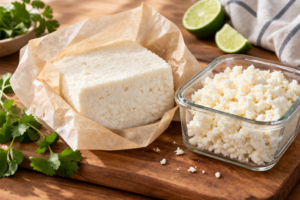
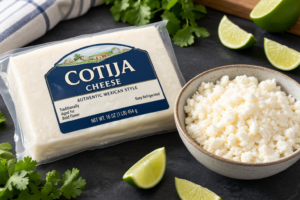
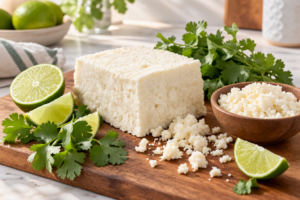
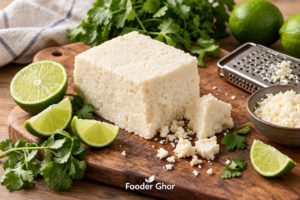
Origin and Texture: Cotija is an aged Mexican cow’s milk cheese featuring a firm, dry, and crumbly body with a milky white color.
Taste Profile: It delivers a bold, sharp, and salty flavor profile similar to aged Parmesan or dry feta cheese.
Melting Behavior: It softens when exposed to heat but does not melt completely, making it an ideal finishing garnish.
Pasteurization Standards: Commercial varieties sold in US stores are produced with pasteurized milk according to FDA safety guidelines.
Common Uses: Popularly used as a topping for Mexican street corn (elotes), tacos, enchiladas, soups, and fresh salads.
If you want to understand its health advantages or potential dietary limits, you can read our detailed guides on cotija cheese health benefits.
What Is Cotija Cheese?

Cotija cheese is a classic Mexican artisan cheese made from cow’s milk, prized for its salty flavor, firm body, and versatile crumbly texture.
In everyday cooking, cotija cheese serves as a reliable finishing touch for many traditional and modern recipes. Originating from the town of Cotija in Michoacan, Mexico, this cheese undergoes a natural aging process where liquid whey drains out, leaving behind a dense milk fat and protein structure.
According to food production data published by the USDA, authentic cotija cheese features a low moisture content that provides a prolonged shelf life and a strong, savory flavor in even small serving sizes.
For proper refrigeration and storage guidelines to keep it fresh, read our complete guide on how to store cotija cheese.
What Does Cotija Cheese Taste Like?
Cotija cheese tastes sharply salty, robust, and milky, offering a vibrant flavor profile similar to feta or aged Parmesan.
When young, cotija cheese has a slightly milder flavor and a semi-firm texture. As it ages, the flavor turns much more pungent and salty, while the body becomes increasingly dry and firm.
In most kitchens, people prefer cotija cheese because a small sprinkle delivers a powerful taste boost to warm dishes, balancing rich or spicy ingredients effortlessly.
To keep your cotija fresh and flavorful, read our guide on how long does cotija cheese last for storage tips and advice on how long it stays fresh in the refrigerator.
What Color Is Cotija Cheese?
Cotija cheese is naturally pale white to creamy off-white in color, lacking the yellow hue found in many cheddar-style cheeses.
The natural milky white color comes directly from cow’s milk and the traditional fermentation process. It does not contain added artificial colorings or annatto dye.
This clean, white appearance makes cotija cheese an attractive garnish for vibrant red salsas, green guacamole, and golden grilled corn. If you’d like to compare cotija with another popular white cheese, read our guide on what is feta cheese to learn about its taste, texture, ingredients, and common uses.
What Is in Cotija Cheese?
The natural components of finished cotija cheese consist primarily of milk fat, milk proteins, essential minerals like calcium and sodium, water, and beneficial dairy cultures.
During the aging process, most of the liquid whey drains away, leaving behind a concentrated blend of nutrients.
Casein Protein: Provides structural firming and essential amino acids.
Milk Fat: Delivers a rich texture and mouthfeel.
Sodium: Added during processing for preservation and flavor enhancement.
Calcium and Phosphorus: Key dietary minerals naturally present in cow’s milk.
If you’re curious about the ingredients in other types of cheese, our guide on what is in cream cheese explains its main ingredients and how they contribute to its creamy texture and flavor.
What Is Cotija Cheese Made Of?
Cotija cheese is made of simple main ingredients including fresh cow’s milk, salt, bacterial starter cultures, and rennet.
The brief production process involves curdling fresh cow’s milk using starter cultures and rennet to separate the curds from the liquid whey. The curds are then salted, milled, pressed into firm molds, and left to age.
According to research published in the Journal of Dairy Science, traditional Cotija cheese is made by curdling milk, draining the whey, salting the curds, pressing them, and allowing the cheese to ripen. Salting and moisture reduction contribute to its characteristic firm texture and salty flavor.
For a comparison with another fresh cheese, read our guide on what is cottage cheese made of to discover its main ingredients and how it is produced.
Is Cotija Cheese Pasteurized?

Commercially distributed cotija cheese sold in the United States is almost always pasteurized to ensure safety and prevent bacterial growth.
Under U.S. federal regulations, milk and milk products sold in final package form for direct consumption generally must be pasteurized or made from pasteurized dairy ingredients, with specific regulatory exceptions for certain cheeses. Because production methods can vary, check the product label to confirm whether your cotija cheese is made from pasteurized milk.
Consumers should check the product label or contact the manufacturer to confirm whether cotija cheese is made from pasteurized milk. If you also enjoy mozzarella, read our guide on is mozzarella cheese pasteurized to learn how to check whether it is made from pasteurized milk.
Does Cotija Cheese Need to Be Pasteurized?
Cotija cheese does not always have to be made with pasteurized milk under every U.S. regulatory provision, but pasteurization is an important food safety consideration. The rules depend on the cheese type and applicable regulations.
Some U.S. regulations allow certain cheeses made from raw milk to be sold if they meet specific aging requirements. However, aging for 60 days does not guarantee that all harmful bacteria have been eliminated, so it should not be treated as proof that a cheese is safe.
The FDA warns that harmful bacteria, including Listeria monocytogenes, can contaminate cheese made with either pasteurized or unpasteurized milk if the product becomes contaminated during production. Check the label to confirm whether the cotija cheese is made from pasteurized milk, and follow the manufacturer’s storage instructions.
For a related comparison, read our guide on does cheddar cheese need to be pasteurized to understand the pasteurization and food safety considerations for cheddar cheese.
Types of Cotija Cheese Pasteurization
Understanding pasteurization standards across commercial brands and restaurant chains helps consumers make safe dining choices:
Is Mexican Cotija Cheese Pasteurized? Authentic cotija made on small farms in Mexico may use raw milk, but imported or Mexican-style cotija produced for US markets is legally required to be pasteurized.
Is Torchy’s Cotija Cheese Pasteurized? Yes, major restaurant chains like Torchy’s Tacos source commercial dairy products that use pasteurized milk to comply with US food safety standards.
Is Cafe Rio Cotija Cheese Pasteurized? Yes, Cafe Rio uses commercially prepared, pasteurized cotija cheese across all its store locations.
If you’re curious about another popular cheese, read our guide on what is ricotta cheese to learn how it is made, what it tastes like, and how it differs from other cheeses.
Types of Cotija Cheese
Cotija cheese comes in several distinct varieties and formats based on age, texture, and fat content:
What Is Queso Cotija Cheese? Queso cotija is simply the full Spanish name for cotija cheese, widely used in authentic Mexican grocery markets.
What Is Crumbled Cotija Cheese? Crumbled cotija is pre-grated or crumbled cheese that offers a convenient, dry topping for quick family meals.
What Is Aged Cotija Cheese? Aged cotija cheese, often called Cotija Anejo, is cured for several months, resulting in a very hard, grating texture similar to dry Parmesan.
What Is Full Fat Cotija Cheese? Full fat cotija cheese is made from whole cow’s milk without skimming, yielding a richer flavor and smoother mouthfeel.
If you’re exploring other varieties of cheese, read our guide on what is goat cheese to learn how it’s made, what it tastes like, and how it compares with cow’s milk cheese.
What Is Cotija Cheese Used For?

Cotija cheese is primarily used as a savory finishing garnish on hot or cold dishes, adding a salty bite to Mexican cuisine and everyday recipes.
Because it does not melt into a gooey liquid when heated, it maintains its crumbly body over warm foods. Common culinary uses include:
Street Corn (Elotes): Sprinkled over grilled corn along with mayo, chili powder, and lime.
Tacos and Enchiladas: Crumbled over beef, chicken, or bean fillings for added saltiness.
Salads and Beans: Tossed into fresh green salads or sprinkled over refried black beans.
Soups and Stews: Used as a flavorful topping for tortilla soup and chili.
If you enjoy trying different cheeses in everyday meals, our guide to brie cheese health side effects explains potential concerns to consider when adding Brie to your diet.
Why Trust Fooder Ghor?
At Fooder Ghor, we provide educational resources focused on understanding the safe use, handling, and storage of different types of milk, including breast milk, cow’s milk, goat milk, and raw milk, based on publicly available guidance from trusted sources such as the CDC, FDA, USDA, and AAP. Some milk-related articles, particularly those involving maternal and infant feeding topics, are reviewed for clarity and presentation by nursing students with academic training in maternal and child health to help make information easier to understand. This content is provided for learning purposes only and does not offer medical advice.
Frequently Asked Questions
Feta cheese is the most common substitute for young cotija cheese due to its salty and crumbly nature, while aged Parmesan or Romano works best as a substitute for hard, aged cotija.
Cotija cheese softens when heated, but it does not melt completely or become stringy, making it ideal as a topping that retains its distinct texture. If you’re curious about potential downsides of eating cotija, read our guide to cotija cheese side effects to understand possible concerns related to sodium, saturated fat, and dairy sensitivities.
Cotija cheese is naturally low in lactose because the aging and whey separation process removes most of the milk sugar, though it is not entirely lactose free.
Crumbled cotija cheese should be kept in an airtight glass container in the main compartment of your refrigerator to preserve freshness and prevent moisture buildup. To compare storage times for another popular cheese, read our guide on how long does feta cheese last for practical tips on keeping feta fresh and storing it safely.
Conclusion
So, what is cotija cheese? It is a savory, crumbly Mexican cow’s milk cheese that brings a bold salty flavor and versatile texture to everyday dishes. Whether sprinkled over street corn or tossed into salads, choosing pasteurized varieties ensures a safe and delicious culinary experience.
Also, if you want to learn more about its nutrition facts or dietary benefits, you can read our complete guide on cotija cheese nutrition facts.