 Skip to content


Pumping or expressing breast milk and noticing a faint watery or bluish tint can feel unexpected, but it is a very common occurrence for nursing parents. In simple terms, breast milk usually looks blue because of low-fat foremilk, which naturally has a thinner consistency and high water content. This subtle blue hue is completely normal, nutritious, and safe for your baby.
This comprehensive guide explains why milk turns blue, how foremilk and hindmilk differ, what dietary or medical factors play a role, and when to seek advice from a lactation professional.
Short Summary
- A blue tint in breast milk is most commonly caused by foremilk, which is naturally high in water and lower in fat.
- Foremilk appears at the beginning of a nursing or pumping session to satisfy your baby’s thirst.
- Dietary choices, such as blue food dyes or spirulina, can temporarily give milk a bluish or green tint.
- Blue breast milk is completely normal, safe, and packed with essential hydration, lactose, and antibodies.
- Medical concern is rarely needed for blue milk unless accompanied by severe breast pain, fever, or signs of illness.
Why Is My Breast Milk Blue?
Breast milk is usually blue because it contains a higher ratio of water and lactose during the initial stage of expression. This thinner milk, known as foremilk, naturally reflects light differently than high-fat milk, creating a subtle blue or translucent tint.
In almost all cases, what makes breast milk blue is the natural progression of a feeding or pumping session. As milk rests in the milk ducts between feedings, the fat particles stick to the walls of the ducts. When expression begins, the first milk to flow is lower in fat density, giving it a light blue, clear, or skim-milk appearance.
Dietary intake can also play a minor role. Consuming foods or beverages with blue food dyes, blue sports drinks, or green leafy algae like spirulina can subtly alter the color of your supply. To explore the full spectrum of normal lactation shades, check out our guide on what color breast milk can be.
Blue Breast Milk vs. Regular/Mature Breast Milk: What’s the Difference?
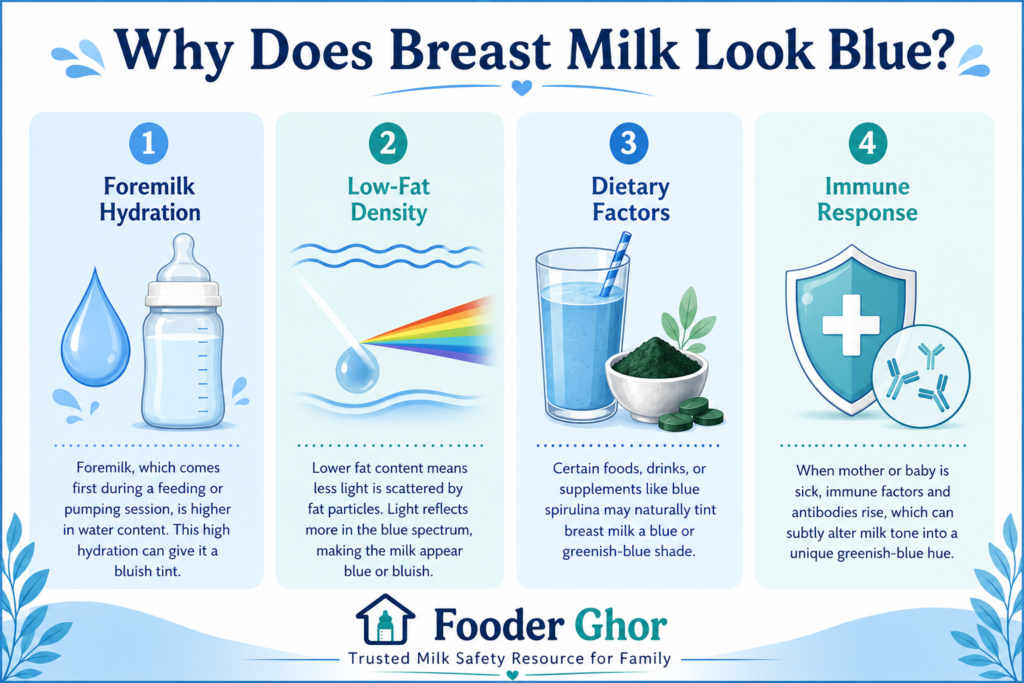
Understanding how bluish foremilk compares to fully mixed mature milk helps parents recognize normal variations in milk composition.
| Milk Feature | Foremilk (Bluish / Clear Tint) | Mature / Mixed Milk (Creamy White) | Hindmilk (Yellowish / Thick) |
| Primary Visual Appearance | Translucent, Light Blue, or Clear | Creamy White or Pale Ivory | Rich Yellow, Cream, or Golden Tint |
| Main Composition | High Water Content, Lactose, Proteins | Balanced Fats, Water, Nutrients | High Fat, Calories, Fat-Soluble Vitamins |
| Feeding Timing | Beginning of Pumping / Feeding Session | Middle of Session | End of Pumping / Feeding Session |
| Primary Purpose | Quenches Infant Thirst & Hydrates | Provides Steady Nutrition & Energy | Promotes Satiety & Weight Gain |
| Safety Status | 100% Safe & Normal | 100% Safe & Normal | 100% Safe & Normal |
Bluish foremilk quenches your baby’s thirst with essential hydration and lactose, while mature milk and hindmilk deliver denser fats needed for growth and caloric satisfaction.
If you want to understand how fat levels change milk texture, read our helpful article on why breast milk looks watery.
Causes of Blue Milk: Foremilk, Diet, Illness, and Color Shifts

Exploring specific reasons why breast milk develops a blue or blue-green tint gives nursing parents total peace of mind.
Foremilk Dynamics and Milk Expression Timing
Milk can appear light blue or bluish-gray at the beginning of a pumping session because early milk generally contains less fat. As the breast is progressively emptied, milk fat content increases, and the milk may become creamier and whiter. Research summarized by the NIH/NCBI explains that foremilk contains less fat and can look bluish-gray, while later milk is richer in fat and appears creamier.
A longer interval between pumping sessions or greater breast fullness can make this bluish appearance more noticeable because breast fullness is associated with lower milk-fat content before milk removal. Research published in Physiological Reports found that milk fat increases as the breast becomes progressively emptied.
To learn more about how fat concentration changes color, visit our article on why breast milk turns yellow.
Why Is My Breast Milk Blue Green or Blue When Sick?
Breast milk can sometimes appear blue-green or distinctly greenish because of dietary pigments or certain supplements. A published case report documented green breast milk after a mother consumed blue-green algae supplements, with the milk returning to its normal appearance after she stopped taking the supplement. According to NIH/PubMed research, this type of color change can be associated with supplement intake rather than an infection itself.
If you are sick, breast milk can still provide important immune protection to your baby, and breastfeeding can usually continue during many common illnesses. According to the CDC, mothers can and should generally continue breastfeeding while sick with illnesses such as flu, COVID-19, or diarrhea, while taking appropriate precautions to reduce the spread of infection.
If you are curious about green color shifts, explore our detailed guide on why breast milk looks green.
Cold Storage and Handling: Does Blue Milk Change in the Fridge or Freezer?
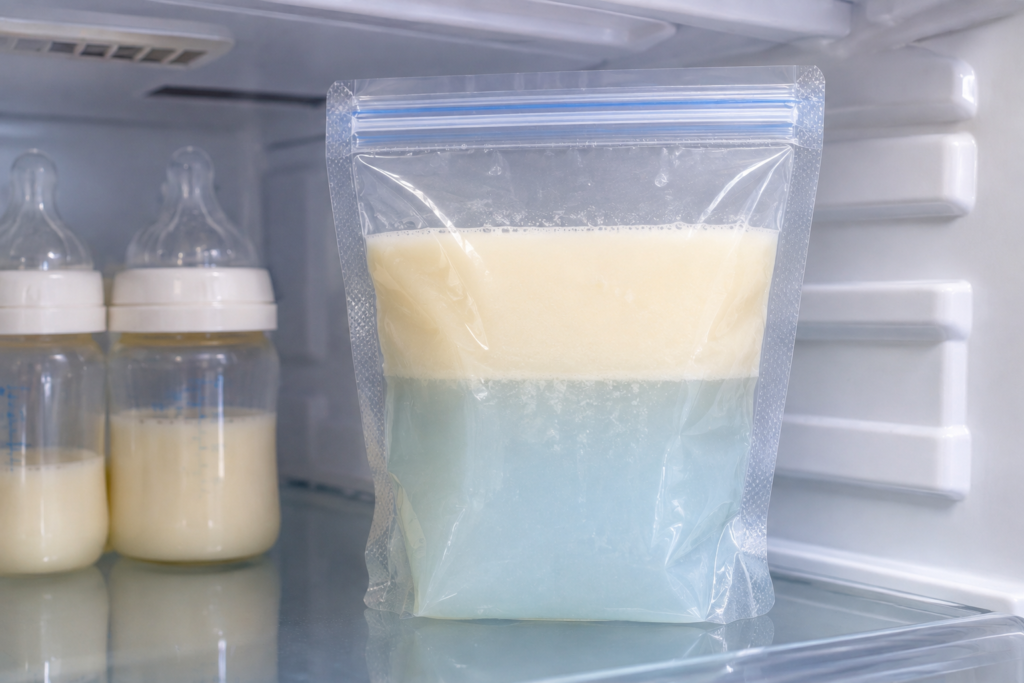
Proper storage methods preserve the quality of foremilk and prevent unnecessary worry during bottle preparation.
For convenient and hygienic storage, choosing a suitable Best Breast Milk Storage Container can also make freezing, thawing, and organizing expressed milk easier.
Storage Separation and Color Appearance
Breast milk does not turn blue solely from being placed in the refrigerator or freezer. However, cold storage causes milk layers to separate, making the watery bluish foremilk settle underneath the yellow fat layer.
When expressed milk rests in cold storage, fat lipids naturally rise to the top as a creamy layer. The remaining liquid at the bottom appears thin, light blue, or clear. Swirling the bottle gently re-emulsified the fat back into the liquid, returning the milk to a uniform creamy white appearance. According to the CDC, separated breast milk fat can be mixed back into the milk by gently swirling the container.
For complete safety guidelines on refrigeration times, review our article on how long breast milk lasts in the refrigerator.
What to Do with Blue Breast Milk and When to See a Doctor
Knowing how to handle bluish milk and when to seek advice helps maintain stress-free pumping routines.
What Should I Do Right Away If I See Blue Milk While Pumping?
If you notice a clear or bluish tint in your pumping bottle, follow these simple, practical steps:
- Continue Pumping: Keep expressing to allow your breasts to drain fully so the rich, yellow hindmilk can mix in.
- Gently Swirl the Bottle: Mix the bottle gently after pumping to blend separated fat layers back into the foremilk.
- Assess Breast Fullness: If milk is consistently blue and thin, ensure your baby fully empties one breast before switching to the other during feedings.
- Review Recent Foods: Check if you recently consumed blue sports drinks, food colorings, or green supplements.
- Feed with Confidence: Offer the milk to your infant without hesitation, as foremilk provides essential hydration and immune factors.
To ensure your stored milk stays fresh in any container, check out our insights on safe breast milk storage guidelines.
What to Do with Blue Breast Milk and Should You Dump It?
No, you should never dump blue breast milk. A blue tint is a sign of healthy, hydrating foremilk and contains vital antibodies, lactose, and water needed by your baby.
Dumping blue milk wastes valuable nutrients. Even if the milk looks thinner than usual, it provides critical hydration and brain-building carbohydrates. The only time breast milk should be discarded is if it has been stored unsanitarily, left out past safe limits, or developed a foul, spoiled odor.
If you’re also wondering how long breast milk remains safe under different storage conditions, see our What Is the 555 Rule for Breast Milk guide for more information.
When Should I Worry About Blue Milk?
You rarely need to worry about blue breast milk unless your baby shows signs of poor weight gain, excessive gas, or frequent watery stools due to a persistent foremilk/hindmilk imbalance.
If a baby receives only foremilk without reaching the calorie-rich hindmilk, they may experience temporary digestive discomfort or struggle with steady weight gain. Consulting a lactation consultant or pediatrician helps optimize nursing sessions. According to the American Academy of Pediatrics, poor weight gain, persistent feeding difficulties, or concerning changes in a breastfed baby’s wet diapers or stools should be discussed with a pediatrician to make sure the baby is receiving enough milk.
If you’re curious about how breast milk can naturally change in color, our guide on Why Is My Breast Milk Pink explains the different shades and what they may mean.
Why Trust Fooder Ghor?
At Fooder Ghor, we provide educational resources focused on understanding the safe use, handling, and storage of different types of milk, including breast milk, cow’s milk, goat milk, and raw milk, based on publicly available guidance from trusted sources such as the CDC, FDA, USDA, and AAP. Some milk-related articles, particularly those involving maternal and infant feeding topics, are reviewed for clarity and presentation by nursing students with academic training in maternal and child health to help make information easier to understand. This content is provided for learning purposes only and does not offer medical advice.
Frequently Asked Questions
No, blue breast milk does not mean you have an infection. A blue tint is a completely normal physical characteristic of foremilk, which is naturally high in water and lower in fat.
Breast milk stays blue during the first few minutes of a nursing or pumping session. As the breast empties and hindmilk mixes in, the color naturally shifts from blue to creamy white or yellow.
No, blue breast milk is not bad at all. It is fresh, highly nutritious, and essential for quenching your baby’s thirst and delivering carbohydrates, proteins, and immune factors.
Yes, blue breast milk is very good for babies. It provides vital hydration, lactose for brain development, and antibodies that protect against common childhood illnesses.
No, blue breast milk is not caused by dehydration. In fact, blue foremilk contains high water volume specifically designed by your body to keep your baby fully hydrated.
No, you should not dump blue breast milk. It is completely safe and nutritious. You should only dump milk if it smells sour, was stored improperly, or exceeded safe storage time limits.
Yes, blue breast milk is 100% normal. Millions of nursing parents notice a blue or translucent tint in their milk every day, especially at the beginning of expression.
No, blue breast milk is not less nutritious. While foremilk has a lower fat percentage than hindmilk, it contains higher concentrations of lactose, water, and essential minerals vital for overall infant health.
Breast milk is light blue because it is foremilk expressed from full milk ducts. Foremilk contains lower fat levels and higher water content, causing it to reflect light with a pale blue or watery hue.
Yes, consuming foods or drinks with strong artificial blue colorings, blue fruit punches, or spirulina supplements can temporarily pass pigments into your milk, giving it a noticeable blue tint.
A: Temporarily, yes. Foremilk contains slightly less fat than hindmilk, but both are essential for baby’s nutrition.
A: It’s very common, especially at the start of a pump session.
Conclusion
Seeing a light blue or translucent tint in your breast milk can be surprising at first, but it is a completely healthy and natural part of lactation. This blue hue simply highlights the hydrating properties of foremilk, delivering essential water, lactose, and immune protection to your growing baby. As long as safe storage practices are followed, blue breast milk is entirely safe, wholesome, and beneficial.
If you also enjoy exploring different types of milk and their storage times, our guide on How Long Does Soy Milk Last can help you understand how long homemade and commercial soy milk stays fresh.











