Skip to content


Expressing a bottle and noticing a distinct lime, olive, or dark green hue can feel alarming, but it is actually a very common occurrence for nursing parents. In simple terms, breast milk usually turns green because of dietary natural pigments like chlorophyll from green leafy vegetables, dietary supplements, or green food dyes. For most people, this color shift is completely harmless, temporary, and safe for your infant.
This essential guide details the primary reasons for green milk, clarifies cold storage observations, explores health or illness factors, and outlines when to consult a medical professional.
Short Summary
Eating leafy green vegetables, seaweed, spirulina, or foods with green food dyes is the most common cause of green breast milk.
Prenatal vitamins containing iron or high doses of vitamin B can also tint expressed milk green or yellowish-green.
Green breast milk is packed with nutrients and essential antibodies, making it completely safe to feed to a healthy baby.
Illness or mastitis can sometimes alter milk color due to increased white blood cells and protective immunoglobulins.
You do not need to dump green breast milk unless it was stored unsanitarily or has a sour, spoiled odor.
Why Is My Breast Milk Green?
Breast milk is usually green because natural chlorophyll or dietary pigments from your meals pass directly into your milk supply. For most people, finding green breast milk is a temporary situation that resolves naturally within a day or two as your diet changes.
In almost all cases, what makes breast milk green is consuming foods rich in green pigments. Spinach, kale, broccoli, seaweed, green smoothies, and sports drinks containing green dye readily alter milk appearance. The fat-soluble pigments mix smoothly into milk lipids, resulting in a light green or dark green tint.
Vitamin supplements and iron pills also contribute to color shifts. To explore the full spectrum of normal milk shades, check out our guide on what color breast milk can be.
Green Breast Milk vs. Regular/Mature Breast Milk: What’s the Difference?

Comparing green-tinted milk to standard mature milk helps parents evaluate safety, visual appearance, and necessary actions.
| Milk Characteristic | Regular / Mature Milk | Green Breast Milk (Diet / Supplements) | Greenish Milk (Infection / Mastitis) |
| Primary Visual Appearance | Creamy White, Yellow, or Blue Tint | Light Green, Olive, or Dark Green | Dark Green, Thick, or Pus-Tinged |
| Main Cause | Normal Lactation & Fat Levels | Spinach, Kale, Spirulina, or Iron | Increased White Blood Cells & Mastitis |
| Safety for Baby | 100% Safe | Safe for Healthy Infants | Consult Doctor (May Taste Salty) |
| Odor & Texture | Fresh, Mild, Smooth | Fresh, Mild, Smooth | Sour, Unpleasant, or Clotted |
| Action Needed | Continue Normal Feeding | Continue Normal Feeding | Treat Mastitis & Seek Medical Care |
Regular mature milk delivers balanced hydration and healthy fats without strong color variations. Green milk from dietary sources carries a natural tint that is rich in vitamins and safe for infants, whereas infection-related green milk requires clinical attention.
If you want to compare other unique milk shades, explore our article on why breast milk turns blue.
Causes of Green Milk: Diet, Vitamins, Illness, and Weaning

Understanding the specific factors that tint your milk green gives you complete peace of mind while nursing or pumping.
Dietary Pigments and Vitamin Supplements
Breast milk can sometimes change color after certain foods or supplements, although the exact cause of a green tint cannot always be identified. A published case report documented green breast milk after a mother consumed blue-green algae supplements, with the milk returning to its usual appearance after she stopped taking the supplement.
According to NIH/PubMed research, supplement intake should be considered when investigating an unexpected change in breast milk color.
The CDC also notes that breastfeeding mothers may need certain vitamin and mineral supplements depending on their diet and nutritional needs, but it does not state that prenatal vitamins, iron, or B-complex supplements routinely turn breast milk green.
If you want to know how dietary choices affect milk consistency, read our guide on why breast milk looks watery.
Why Is My Breast Milk Green When Sick, Weaning, or Due to Mastitis?
Breast milk can sometimes appear green or greenish, but the exact cause is not always clear. Illness or mastitis should not automatically be considered the reason for a green color, because there is not enough authoritative evidence to establish that these conditions routinely turn breast milk green.
When a mother has mastitis, changes in the breast can involve inflammation and increased immune cells in the milk, but this does not mean that the milk will necessarily become green. According to the American Academy of Pediatrics, mothers with mastitis should generally continue breastfeeding or expressing milk, as breastfeeding does not harm the baby and can help keep the breast draining.
According to the CDC, mothers can generally continue breastfeeding while sick with many common illnesses and with breast infections such as mastitis, while seeking appropriate medical care when needed.
If breast milk suddenly develops an unusual green color, consider recent foods, supplements, or other changes before assuming that illness or mastitis is responsible. Persistent or unexplained color changes accompanied by breast pain, swelling, redness, or fever should be discussed with a healthcare professional.
If you are concerned about stored milk quality during illness, read our helpful guide on how to know if breast milk is bad.
Cold Storage and Handling: Does Milk Turn Green in the Fridge or Freezer?
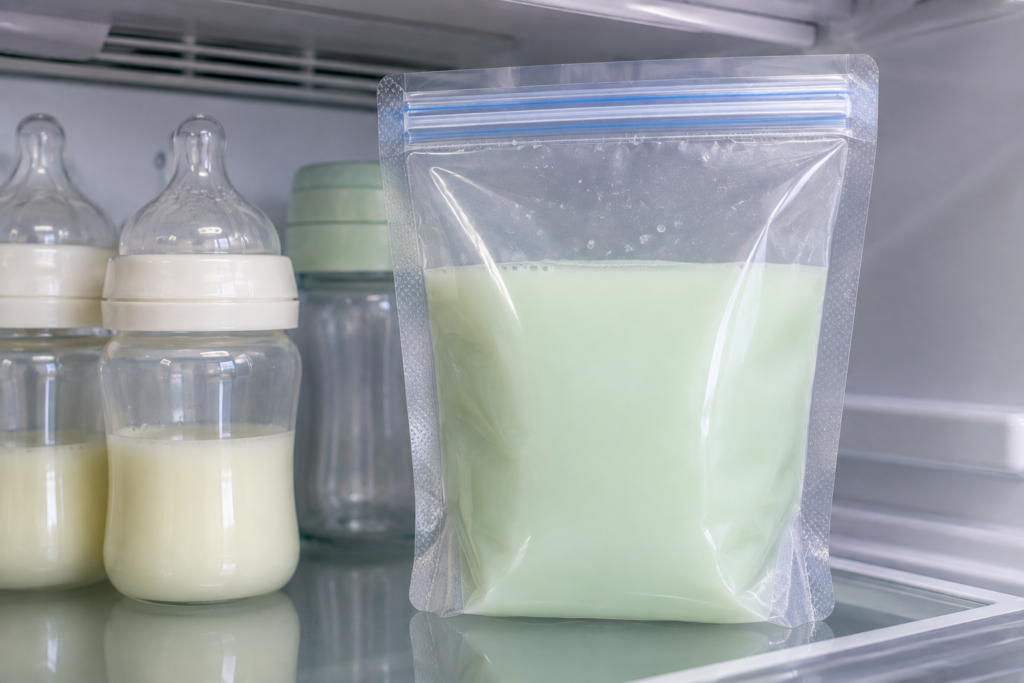
Proper storage and defrosting ensure your green-tinted milk remains safe and nutritious for your infant.
Does Breast Milk Turn Green in the Fridge or Freezer?
No, refrigeration or freezing does not normally cause breast milk to turn green on its own. If milk appears green after being refrigerated or frozen, the color was likely already present or may be related to factors such as natural milk variation, foods, or supplements rather than the cold temperature itself.
Stored breast milk can naturally separate into layers, with fat rising to the top. According to the CDC, gently swirling stored breast milk can mix the separated fat back into the milk.
The CDC recommends storing freshly expressed breast milk in a refrigerator at 40°F (4°C) or below and using it within 4 days. For longer storage, breast milk can be frozen at 0°F (-18°C) or colder; using it within 6 months is best, although up to 12 months is acceptable.
To review proper cold storage timelines, see our detailed article on how long breast milk lasts in the refrigerator.
Why Is My Frozen Breast Milk Green After Thawing?
Yes, frozen breast milk may appear green after thawing, but the green color should not automatically be attributed to the freezing or thawing process itself. Breast milk can naturally vary in color, and dietary or supplement-related pigments can sometimes contribute to unusual shades.
According to NIH research, a published case report documented green breast milk after a mother consumed a blue-green algae supplement, with the milk returning to its usual color after the supplement was discontinued.
According to the CDC, freezing and thawing can cause the natural fat in breast milk to separate, and gently swirling the milk can recombine the separated fat.
If thawed breast milk has an unusual green color, consider recent foods or supplements and any possible contamination before assuming that freezing caused the color change. If the discoloration is persistent or accompanied by other concerning symptoms, consult a healthcare professional.
For parents who want to keep expressed milk safe during this stage, following proper Breast Milk Storage Guidelines can help maintain its quality and safety.
What to Do with Green Breast Milk and When to See a Doctor
Knowing how to handle green milk and recognizing red flag symptoms brings total peace of mind to nursing mothers.
What Should I Do Right Away If I See Green Milk While Pumping?
If you notice a green tint filling your bottle while actively pumping, follow these practical steps:
Assess Your Recent Diet: Recall if you consumed spinach, green smoothies, seaweed, spirulina, or drinks with green dye in the last 24 hours.
Check Your Supplements: Review if you recently took iron pills, multivitamin complexes, or prenatal vitamins.
Inspect the Milk’s Consistency: Ensure the milk is smooth and free of thick pus or clotted lumps.
Evaluate How You Feel: Check for breast redness, warmth, fever, or flu-like body aches that could indicate mastitis.
Feed or Store with Confidence: If the color is due to diet or vitamins and you feel healthy, feed the milk to your infant without worry.
If you want to know about fatty breast milk, you can check our detailed blog about Why is my milk foamy.
What to Do with Green Breast Milk and Should You Dump It?
In almost all cases, you should not dump green breast milk. Green milk caused by vegetables, iron pills, or vitamins is safe, wholesome, and packed with nutrients for your baby.
Dumping green milk wastes valuable nutrition and antibodies. You should only discard green milk if it was left at room temperature past safe handling limits, shows signs of bacterial contamination, or smells sour and spoiled.
For convenient and hygienic storage, choosing a suitable Best Breast Milk Storage Container can also make freezing, thawing, and organizing expressed milk easier.
When Should I Worry About Green Milk?
You should contact a healthcare professional if green breast milk is accompanied by significant breast pain, swelling, warmth, redness, or fever. These symptoms can occur with mastitis and may require medical evaluation.
According to the AAP, mastitis can cause breast swelling, warmth, redness, pain, fever, or flu-like symptoms, and breastfeeding parents should let their doctor know if these symptoms develop.
If you notice a painful, swollen area of the breast, persistent redness, fever, or other symptoms that are getting worse, seek medical advice promptly rather than assuming the color change is simply dietary.
Curious about yellow breast milk? You can also learn from our detailed guide: why does my breast milk look yellow.
Why Trust Fooder Ghor?
At Fooder Ghor, we provide educational resources focused on understanding the safe use, handling, and storage of different types of milk, including breast milk, cow’s milk, goat milk, and raw milk, based on publicly available guidance from trusted sources such as the CDC, FDA, USDA, and AAP. Some milk-related articles, particularly those involving maternal and infant feeding topics, are reviewed for clarity and presentation by nursing students with academic training in maternal and child health to help make information easier to understand. This content is provided for learning purposes only and does not offer medical advice.
Frequently Asked Questions
No, green breast milk usually does not mean you have an infection. It is most commonly caused by eating leafy green vegetables, green dyes, or taking iron supplements. However, if green milk occurs with fever, breast pain, or clotted discharge, it could indicate mastitis and requires medical advice.
Breast milk typically stays green for 24 to 48 hours after consuming green foods, seaweed, or dietary dyes. Once your body processes the pigments, your milk supply naturally returns to its standard white or creamy shade.
Yes, green breast milk is completely normal. Millions of breastfeeding parents experience green-tinted milk after eating green vegetables or taking vitamin supplements.
Yes, green breast milk is very good for babies. It contains all the essential fats, proteins, carbohydrates, and protective antibodies found in regular milk, along with wholesome plant nutrients.
Prenatal multivitamins, iron supplements, and high-dose B-complex vitamins are the primary supplements that turn breast milk light green or yellow-green.
No, you should not dump green breast milk if the color comes from diet, greens, or vitamins. You should only dump milk if it smells sour, was stored unsanitarily, or contains clotted pus from an infection.
No, mastitis does not routinely cause breast milk to turn green. While mastitis involves inflammation and immune cells, there is no strong evidence that it turns milk green. Green milk is almost always linked to diet, greens, or supplements, but any color change accompanied by breast pain or fever should be checked by a doctor.
Breast milk can turn green during weaning because milk stays in the ducts longer, leading to elevated sodium levels, concentrated immunoglobulins, and cellular changes that alter the milk’s tone.
Conclusion
Noticing that your breast milk is green can feel unexpected, but it is almost always a harmless result of eating healthy green vegetables, taking vitamins, or consuming dietary dyes. Green milk remains wholesome, safe, and rich in protective antibodies for your baby. Always practice safe storage habits and consult your doctor if green milk is accompanied by fever or severe breast pain.
If you’re also wondering how long breast milk remains safe under different storage conditions, see our What Is the 555 Rule for Breast Milk guide for more information.