Skip to content



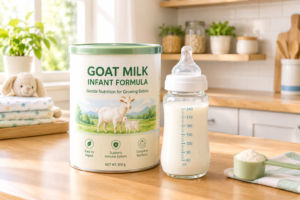
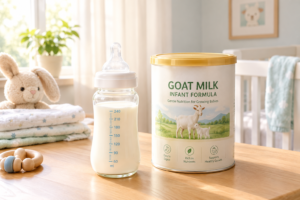
Goat milk formula is a commercially prepared baby food made from pasteurized goat dairy and fortified with essential vitamins to support healthy infant growth. For most parents, finding a gentle feeding option that supports daily digestion without causing excessive stomach discomfort is a top priority. In simple terms, this gentle dairy formula provides an impressive balance of easily digestible proteins, soft curd structures, and beneficial prebiotic oligosaccharides that fit effortlessly into a baby feeding routine.
In everyday parenting, families often prefer this creamy option because it feels easy on a baby’s developing stomach. In this guide, we will explore goat milk formula nutrition facts, health benefits for infants, potential side effects, and important medical warnings to help you make informed feeding choices.
Short Summary
Nutrient Rich Formula: Goat milk formula provides complete infant nutrition through naturally easy to digest A2-like proteins, essential fats, and added vitamins.
Superior Gut Health: Smaller fat particles and soft curd formation help reduce infant gas, bloating, and colic symptoms.
Microbiome and Immunity: Contains four to ten times more natural oligosaccharides than cow milk formula to feed beneficial gut bacteria.
Strong Bone Growth: Fortified with bioavailable calcium, phosphorus, and vitamin D to build strong bones and baby teeth.
Allergy Caution: Not suitable for babies with diagnosed severe cow milk protein allergy due to protein cross reactivity.
To compare available options and ingredients for your baby’s age, explore our guide to best goat milk formula for infants.
Nutritional Profile of Goat Milk Formula
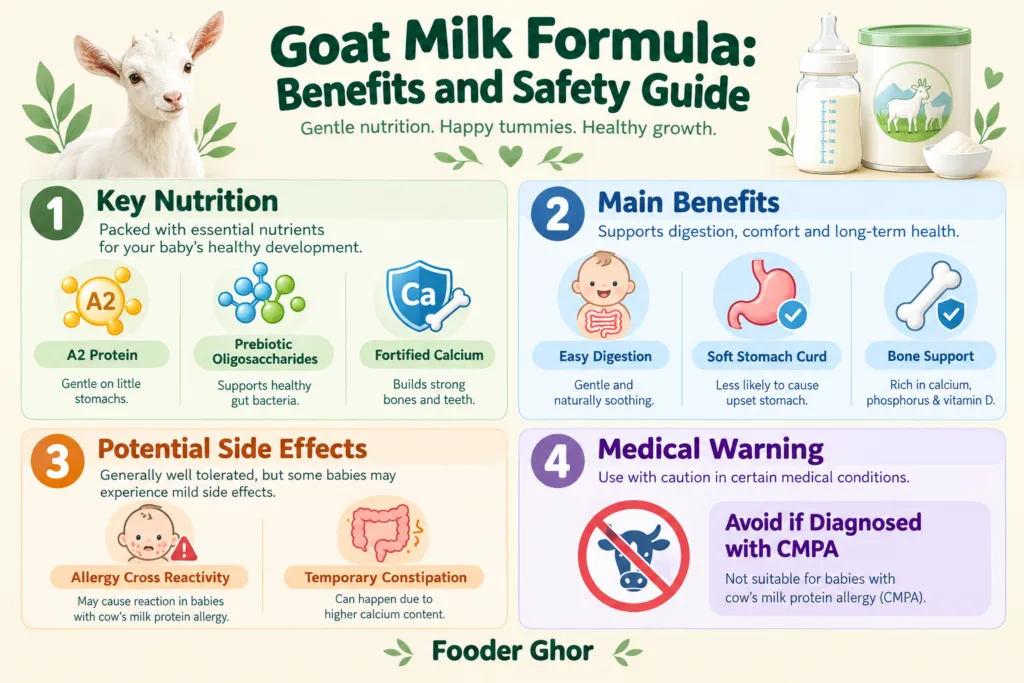
Goat milk formula is commercially fortified to match strict infant nutrition standards, offering naturally high levels of A2-like protein, medium chain fatty acids, and essential vitamins. Like standard baby formulas, it is crafted to supply complete daily calories for growing infants. However, its natural lipid structure and high prebiotic content set it apart from traditional options.
Commercial goat milk formula nutrition features a unique blend of bioavailable nutrients that support early infant development:
A2-like Protein Base: Contains low levels of alpha-S1-casein, creating a delicate protein structure that digests quickly.
Medium Chain Fatty Acids (MCFAs): Provides readily accessible energy that an infant stomach can break down with minimal digestive strain.
Prebiotic Oligosaccharides: Delivers four to ten times more natural prebiotic fibers than raw or processed cow milk formulas.
Fortified Micronutrients: Enriched with iron, folic acid, vitamin D, calcium, and zinc in compliance with federal guidelines.
According to a review published in the Journal of Food Science and indexed in PubMed, goat milk has a distinct nutritional composition, including differences in fatty acids, proteins, and oligosaccharides compared with cow milk. However, commercial goat milk-based infant formula is fortified and formulated to meet infant nutritional requirements, so its final nutrient composition may differ from that of plain goat milk. To learn how formula powder compares to raw milk components, reading our guide on goat milk nutrition offers additional background context for parents.
1. Core Health Benefits of Goat Milk Formula
Goat milk formula benefits infant health by delivering balanced calories, gentle proteins, and bioavailable minerals that support steady weight gain and physical growth. For many bottle fed babies, these nutritional properties translate into consistent daily energy and comfortable bowel movements.
The balanced combination of natural carbohydrates and lipid chains ensures efficient nutrient absorption during early growth stages. According to the FDA’s infant formula nutrient requirements, commercial infant formulas sold in the United States must meet established nutrient specifications to support infants’ nutritional needs. However, individual formulas can differ in composition, and adequate growth depends on a baby’s overall intake and individual needs. Parents interested in broader family dairy options can read about is goat milk good for you to learn how goat dairy supports health across different ages.
2. Promotes Infant Gut Health & Digestion

Goat milk formula promotes infant digestion because its small fat globules and low alpha-S1-casein content form a soft, loose curd inside an infant stomach. This soft curd breaks down rapidly, making it particularly effective at easing infant gas, bloating, and painful colic symptoms.
When baby formula mixes with natural stomach acids, the resulting protein curd determines how easily liquid passes through the digestive tract. Standard cow milk formulas can form firm, dense curds that take longer to digest. In contrast, goat formula creates a loose curd that mimics the gentle digestion of natural breast milk. According to the FDA’s infant formula guidance, some specialized formulas are designed to address specific digestive needs, but evidence does not establish that goat milk-based infant formula reliably prevents gas, bloating, or colic. Research comparing goat and cow milk-based formulas has identified differences in protein digestion under simulated conditions, but further clinical evidence is needed to confirm whether these differences provide meaningful digestive benefits for infants.
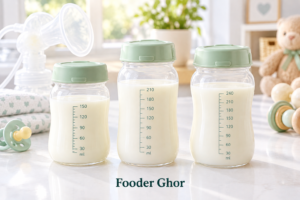
For families managing varied nursery feeding routines, reviewing our safety standards on breast milk storage guidelines helps keep every bottle safe and organized.
3. Boosts Immune System & Gut Microbiome
Goat milk formula boosts immune function by supplying four to ten times more natural prebiotic oligosaccharides than cow dairy to nourish healthy gut bacteria. These beneficial carbohydrate structures protect the intestinal lining and help prevent harmful bacteria like Escherichia coli from attaching to stomach tissues.
A strong gut microbiome serves as the primary foundation for a baby’s developing immune system. Natural oligosaccharides act as targeted food for beneficial bifidobacteria, helping create a balanced digestive ecosystem. Research published in the National Library of Medicine’s PubMed database found that oligosaccharides in goat milk-based infant formula promoted the growth of beneficial bacteria, including bifidobacteria and lactobacilli, and reduced the adhesion of certain pathogens in laboratory testing. However, these findings do not prove that goat milk formula prevents infections or boosts an infant’s overall immune function.
If you are exploring different specialty milks for your family, reading our comparative guide on what does camel milk taste like offers insights into other unique nutrient profiles.
4. Supports Healthy Bone Development

Goat milk-based infant formula contains essential nutrients, including calcium, phosphorus, and vitamin D, that support normal bone growth and development. Vitamin D helps the body absorb calcium and build strong bones, while calcium and phosphorus contribute to bone mineralization. Nutrient levels vary by product, so check the formula’s nutrition label rather than assuming every product provides the same amounts.
According to the FDA’s infant formula nutrient requirements, infant formulas sold in the United States must meet specified nutritional standards. The CDC’s vitamin D guidance also explains vitamin D’s role in building strong bones in infants and children.
Parents who track household feeding supplies can also explore can you freeze goat milk to learn safe preservation techniques for standard family dairy.
5. Potential Side Effects & Disadvantages of Goat Milk Formula
Goat milk formula side effects can include temporary digestive adjustments, minor constipation, or allergic reactions in infants with severe dairy protein sensitivities. While goat formula is gentle for many infants, parents should evaluate potential drawbacks before switching bottle routines.
Here are the main potential side effects and disadvantages:
Cross Reactivity Allergic Risks: Goat milk proteins share a similar amino acid structure with cow milk. If an infant suffers from diagnosed Cow Milk Protein Allergy (CMPA), goat formula can trigger the same allergic reaction.
Temporary Digestive Changes: Switching to any new formula brand can cause mild temporary changes in bowel habits, including short term constipation or altered stool consistency.
Higher Purchasing Cost: Commercial goat formula is often more expensive and less widely available in local supermarkets compared to standard cow formulas.
Understanding potential side effects helps parents spot early warning signs and consult pediatricians promptly. For details on proper formula storage, check our complete guide on goat milk formula storage to protect every prepared bottle.
6. When Should You Avoid Goat Milk Formula
Avoid goat milk-based infant formula if your baby has a diagnosed cow’s milk protein allergy, unless your pediatrician specifically recommends an appropriate alternative. Goat milk proteins are similar to cow milk proteins, so babies with a cow’s milk allergy may also react to goat milk formula. According to the American Academy of Pediatrics’ guidance on choosing infant formula, infants with a cow’s milk allergy should not use goat milk-based formula because of the risk of cross-reactivity.
Plain goat milk, homemade goat milk formula, and ordinary goat milk powder should not replace breast milk or nutritionally complete infant formula during the first 12 months. These products may not provide the right balance of nutrients for an infant and can cause serious nutritional and electrolyte problems. Choose a commercially prepared infant formula designed to meet infants’ nutritional needs, and consult your pediatrician if your baby has an allergy, persistent digestive symptoms, blood in the stool, or poor weight gain. The CDC’s guidance on choosing infant formula explains that babies under 12 months need infant formula specifically designed for their nutritional requirements.
To keep goat milk fresh and maintain its quality, read our guide to how long does goat milk last for storage recommendations and freshness tips.
Why Trust Fooder Ghor
At Fooder Ghor, we provide educational resources focused on understanding the safe use, handling, and storage of different types of milk, including breast milk, cow’s milk, goat milk, and raw milk, based on publicly available guidance from trusted sources such as the CDC, FDA, USDA, and AAP. Some milk-related articles, particularly those involving maternal and infant feeding topics, are reviewed for clarity and presentation by nursing students with academic training in maternal and child health to help make information easier to understand. This content is provided for learning purposes only and does not offer medical advice.
Frequently Asked Questions
A: Yes, many babies with sensitive stomachs digest goat milk formula easily because it forms a soft curd in the stomach and contains smaller fat particles. If your baby has a sensitive stomach, explore our guide to best goat milk formula for sensitive stomach to compare available options and understand what to discuss with your pediatrician.
A: Goat milk formula can cause temporary constipation during the first few days of transitioning from another formula brand while the baby’s digestive tract adapts. If you’re curious about the flavor of goat milk-based formula, read our guide to what does goat milk formula taste like to understand its typical taste and how it may differ from cow milk-based formula.
A: The main difference is that goat formula contains lower alpha-S1-casein, forms a softer digestive curd, and offers higher natural prebiotic oligosaccharides. To understand the nutritional and compositional differences between these two types of milk, read our guide to difference between goat milk vs cow milk.
A: No, the American Academy of Pediatrics (AAP) warns that plain goat milk lacks iron and folate, making commercial formula the only safe option under 12 months. For a better understanding of potential risks, allergies, and digestive concerns associated with goat milk, read our guide to goat milk health side effects.
Conclusion
Understanding goat milk formula nutrition shows that this gentle infant food offers remarkable benefits for digestion, gut health, and bone growth. With its soft curd formation, rich prebiotic content, and bioavailable minerals, it serves as an excellent bottle alternative for many bottle fed babies. However, parents must remember that it is not suitable for infants with severe cow milk protein allergies. Always consult your pediatrician before making changes to your baby’s nutrition routine.
To explore additional gentle dairy topics for your home, read our guide on what does goat milk taste like to understand the natural flavor profile of goat milk products.
If you prefer reusable glass containers for storing and serving milk, explore our guide to best glass milk bottles to compare available options and features.
For smaller storage and serving needs, check out our guide to best small glass milk bottles to compare compact options for everyday use.