Skip to content


Goat milk is a nutritious and versatile dairy option enjoyed by families across the United States. Many parents and home cooks purchase goat milk in bulk or harvest fresh milk from farm animals and wonder how to store it properly for future use. Freezing goat milk is a safe, economical, and convenient way to preserve its nutrient richness without sacrificing quality. Store bought pasteurized options and fresh farm milk both freeze remarkably well when handled with proper care.
In this simple home guide, you will learn the step by step techniques for freezing goat milk safely, the best containers to use, and proper thawing methods recommended by food safety authorities.
Quick Summary
The following summary highlights the essential rules for freezing and thawing goat milk safely in your home kitchen.
- Goat milk can be frozen safely for up to six months in standard home freezers set at zero degrees Fahrenheit.
- You can freeze goat milk in mason jars, silicone storage freezer bags, or food grade ice cube trays.
- Never fill rigid containers to the top because liquid milk expands naturally when it freezes solid.
- The best way to defrost frozen goat milk is placing it in the refrigerator overnight for uniform melting.
- Avoid thawing frozen milk at room temperature on the counter because harmful bacteria grow rapidly in warm environments.
Can You Freeze Goat Milk?
Yes, you can freeze goat milk safely for three to six months without losing its essential nutrients, minerals, or taste quality. Freezing stops bacterial growth and preserves the essential minerals, proteins, and healthy fats found in fresh dairy. When you thaw frozen goat milk, the natural fat globules may separate slightly, but a simple shake or gentle blend restores its smooth and creamy consistency effortlessly.
Goat milk storage duration depends heavily on maintaining a stable freezer temperature of zero degrees Fahrenheit or lower. While freezing extends shelf life significantly, using airtight food safe containers prevents freezer burn and keeps unwanted odor out of your stored milk.
For best results and maximum freshness, freeze milk as soon as you purchase or express it. If you want to understand how long fresh milk remains good before freezing, read our helpful guide on how long does goat milk last.
How to Freeze Goat Milk
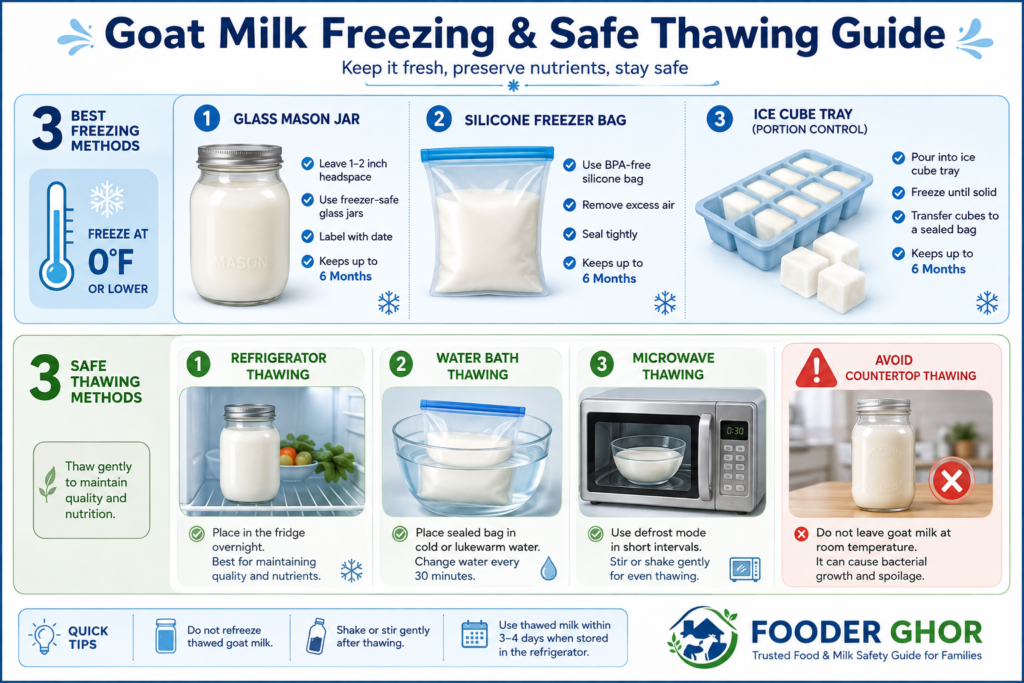
Goat milk can be frozen easily in three practical ways: in glass mason jars, in silicone freezer bags, or in ice cube trays. Choosing the best method depends on your available freezer space, daily consumption, and cooking needs. You can preserve whole batches in glass containers, store flat portions in silicone freezer bags, or make single-serving portions using ice cube trays for daily cooking. Each method offers a convenient solution for keeping goat milk fresh for several months.
Before choosing a method, always ensure your storage items are thoroughly cleaned and sanitized. Proper preparation guarantees high quality milk for your family every single time. According to USDA, foods should be frozen at 0°F (-18°C) or below, and freezer-safe containers should be selected carefully to protect food quality during freezing.
For a similar guide to proper refrigeration, containers, and everyday milk storage, check out How to Store Cow Milk safely.
3 Ways to Freeze Goat Milk Step by Step
How to Freeze Goat Milk in a Glass Container or Mason Jar
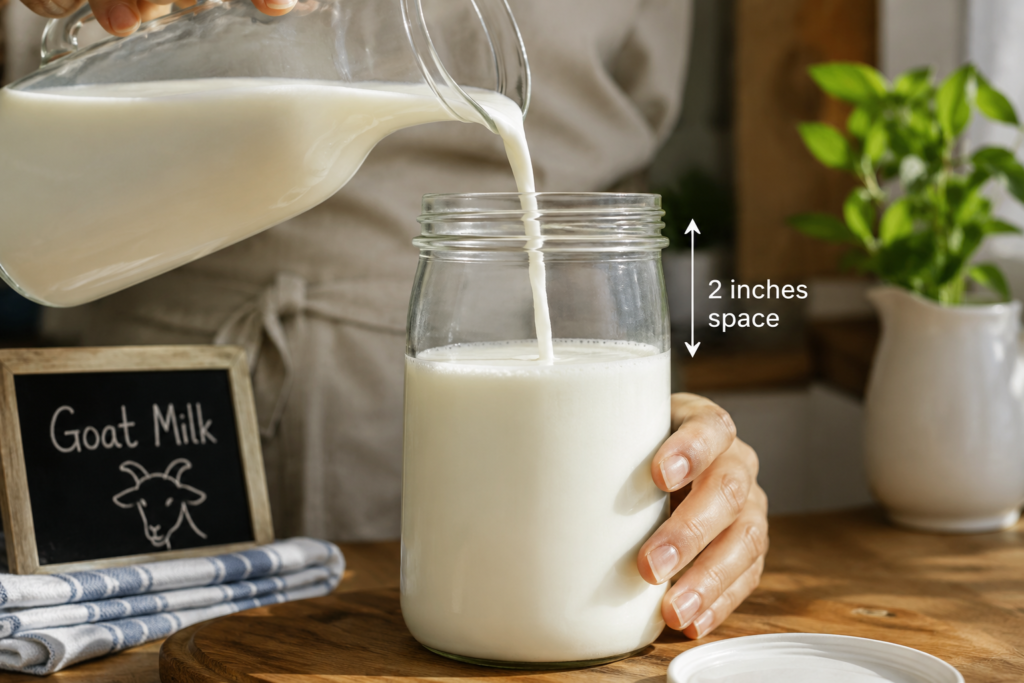
To freeze goat milk in a glass jar, pour fresh milk into a sanitized mason jar while leaving at least two inches of space at the top. Glass provides a non-toxic, eco-friendly storage option that preserves milk flavor without absorbing freezer odors.
In simple terms, glass containers are ideal for storing medium to large portions of goat milk for long term household use.
- Wash and sanitize wide-mouth glass mason jars thoroughly with warm soapy water and let them dry completely.
- Pour fresh goat milk into the jar, leaving a strict two-inch gap below the rim for liquid expansion.
- Screw the lid on loosely at first, freeze the jar upright for six hours, then tighten the lid fully.
For more guidance on choosing suitable containers for storing and freezing milk, check out Best Milk Storage Containers for practical recommendations on freezer-safe glass jars, plastic containers, and other storage options.
How to Freeze Goat Milk in a Plastic Bag or Silicone Bag
To freeze goat milk in a plastic or silicone bag, pour portioned milk inside, squeeze out excess air, and lay it flat in the freezer. This practical approach is ideal for small kitchens and rapid thawing.
For most people, flat freezer bags are the most convenient option for storing measured portion sizes.
- Label food grade freezer bags with the current date and exact liquid measurement using a permanent marker.
- Carefully pour goat milk into the bag, sealing it almost completely while leaving a small opening at the corner.
- Gently squeeze out excess air, seal the bag tightly, and lay it flat on a baking sheet until frozen solid.
To learn more about convenient storage bags for various dairy needs, read our review on how to use breast milk storage bags.
How to Freeze Goat Milk in an Ice Cube Tray
To freeze goat milk in an ice cube tray, pour fresh milk into individual compartments, freeze solid, and transfer the cubes to a freezer bag. Each standard ice cube holds roughly one ounce of liquid milk for precise recipe additions.
In everyday cooking, frozen milk cubes offer a quick option for adding rich texture directly to hot or cold recipes.
- Clean a silicone ice cube tray thoroughly and pour fresh goat milk into each individual compartment.
- Place the tray level in your freezer and allow the milk cubes to freeze solid for four to six hours.
- Pop the frozen cubes out of the tray and transfer them into an airtight freezer storage bag immediately.
For another practical guide to freezing and portioning milk for convenient storage, check out How to Freeze Evaporated Milk to learn how to freeze it in ice cube trays, freezer bags, and airtight containers.
Types of Goat Milk Freezing Guide
Different processing methods dictate how you freeze goat milk, with raw and pasteurized milks freezing well, while canned evaporated options should stay in the pantry. Understanding how raw, pasteurized, cooked, or canned milks react to low temperatures ensures best safety and culinary quality.
Can You Freeze Raw Goat Milk?
Yes, raw goat milk freezes well and remains safe for two to three months when frozen immediately after milking. Freezing raw milk retains its original vitamins, natural enzymes, and healthy fats. Because unpasteurized milk contains naturally occurring microorganisms, freezing should happen immediately after milking to maintain safety.
According to CDC, raw milk can contain harmful germs even when produced under good farm conditions, so choosing pasteurized milk is the safer option. Freezing does not eliminate these microorganisms; it only inactivates them while frozen.
⚠️ Food Safety Note: While freezing raw goat milk pauses bacterial growth, it does not destroy existing pathogens. The FDA and CDC advise consuming pasteurized dairy to avoid foodborne illnesses.
For a related guide on freezing and storing another type of milk, check out Can You Freeze Sheep Milk to learn about safe freezing, storage, and thawing considerations for sheep milk.
Can You Freeze Goat Milk in a Carton?
No, you should not freeze goat milk in its original paper carton because paper can leak, tear, and absorb freezer odors. Furthermore, tightly sealed paper cartons lack adequate expansion space, which often causes paper seams to burst open during freezing.
It’s also worth noting that transferring milk from paper cartons to food-grade bags or glass containers prevents freezer burn and preserves fresh flavor.
For a closer look at the nutritional value of goat milk, including its protein, fat, vitamins, and minerals, check out Goat Milk Nutrition for a detailed breakdown.
Can You Freeze Goat Milk Once Cooked?
Yes, goat milk incorporated into cooked dishes like soups or casseroles freezes safely for two to three months. The cooking process stabilizes proteins and fats, which helps maintain texture after freezing and reheating.
In many cases, preparing creamy dishes with goat milk in advance offers a practical choice for quick family weeknight dinners.
If you enjoy cooking with alternative dairy, discover delicious options in our goat milk recipe collection.
Common Goat Milk US Brands That Freeze Well
Most commercial pasteurized goat milk brands available in U.S. grocery stores freeze exceptionally well when transferred into safe containers. Popular options like Meyenberg, Redwood Hill Farm, Whole Foods 365, and Trader Joe’s private label goat milk undergo pasteurization, making them safe and stable for extended freezer storage.
In general, purchasing trusted national or store brands ensures consistent quality and long shelf life when preserved properly at zero degrees Fahrenheit.
Short-Term Fridge Storage vs. Long-Term Freezing: What’s the Difference?
Understanding the difference between everyday refrigerated storage and long-term freezing helps you manage your goat milk stock efficiently without compromising quality or safety.
- Refrigerated Storage (Short-Term): Keeps liquid goat milk at 35°F to 40°F (1°C-4°C) without freezing it solid. This method preserves the original creamy texture, natural fats, and mild flavor for daily use (up to 5–7 days opened), making it ideal for coffee, cereal, and cooking.
- Frozen Storage (Long-Term): Lowers the milk’s temperature to 0°F (-18°C) or colder to freeze it solid. Freezing completely pauses bacterial activity, extending the safe shelf life up to 3-6 months for pasteurized milk. While it changes the physical texture slightly after defrosting due to fat separation, it remains 100% safe for consumption.
👉 Need daily refrigeration guidance? If you plan to use your milk within a week and want to avoid texture changes from freezing, check out our complete guide on How to Store Goat Milk Safely at Home for optimal fridge placement and container tips.
When You Can’t Freeze Goat Milk
You should not freeze goat milk if it has already been left at room temperature for over two hours or has passed its expiration date. Freezing spoiled or temperature-compromised dairy cannot reverse bacterial growth or restore its safety. Additionally, never refreeze goat milk that has already been thawed; repeated freezing degrades its creamy texture, breaks down nutrients, and increases bacterial risks.
In many cases, inspecting milk for unusual odor or visible spoilage before freezing can help you avoid freezing milk that has already deteriorated. According to USDA, freezing does not destroy bacteria; it only inactivates them, and perishable foods left above 40°F for more than 2 hours should be discarded rather than refrozen.
To learn more about condensed dairy alternatives, explore our article on what is evaporated milk.
Can You Thaw Goat Milk Safely?
Yes, you can thaw goat milk safely by using cold temperature defrosting techniques like refrigerator thawing or cold water baths. Keeping milk cold during defrosting prevents harmful bacterial growth while protecting milk flavor and nutrient quality.
The FDA recommends keeping perishable foods out of the temperature danger zone, which spans between forty degrees and one hundred forty degrees Fahrenheit.
If you are curious about the rich nutritional value of unpasteurized dairy, see our comprehensive guide is goat milk good for you.
How to Thaw Goat Milk
Goat milk can be thawed safely using three distinct kitchen methods: in the refrigerator, in a water bath, or in the microwave. You can thaw milk gradually in the refrigerator, defrost it quickly in a water bath, or warm individual portions instantly in a microwave oven.
In most households, selecting the correct thawing method depends on whether you need milk immediately or are meal planning ahead.
For more information about potential digestive, allergic, and nutritional concerns related to goat milk, check out Goat Milk Side Effects for a detailed overview.
3 Ways to Thaw Goat Milk
Refrigerator Thawing (The Safest & Recommended Method)
To thaw goat milk in the refrigerator, place frozen containers on a lower fridge shelf for twelve to twenty-four hours until fully liquid. This gentle temperature transition minimizes fat separation and preserves wholesome flavor.
For everyday family use, overnight refrigerator defrosting provides a hassle-free, gentle thawing process.
- Remove the frozen container of goat milk from your freezer compartment.
- Place the container on a tray on the lowest shelf of your refrigerator to catch condensation.
- Allow the milk to thaw slowly for twelve to twenty-four hours, then shake vigorously before serving.
According to USDA, thawing frozen food in the refrigerator keeps it at a safe, constant temperature of 40°F (4°C) or below and is the preferred method when you have time to plan ahead.
For a detailed comparison of goat milk and cow milk, including their nutritional composition and other characteristics, check out Difference Between Goat Milk vs Cow Milk.
Cold Water Bath Thawing (The Quick Method)
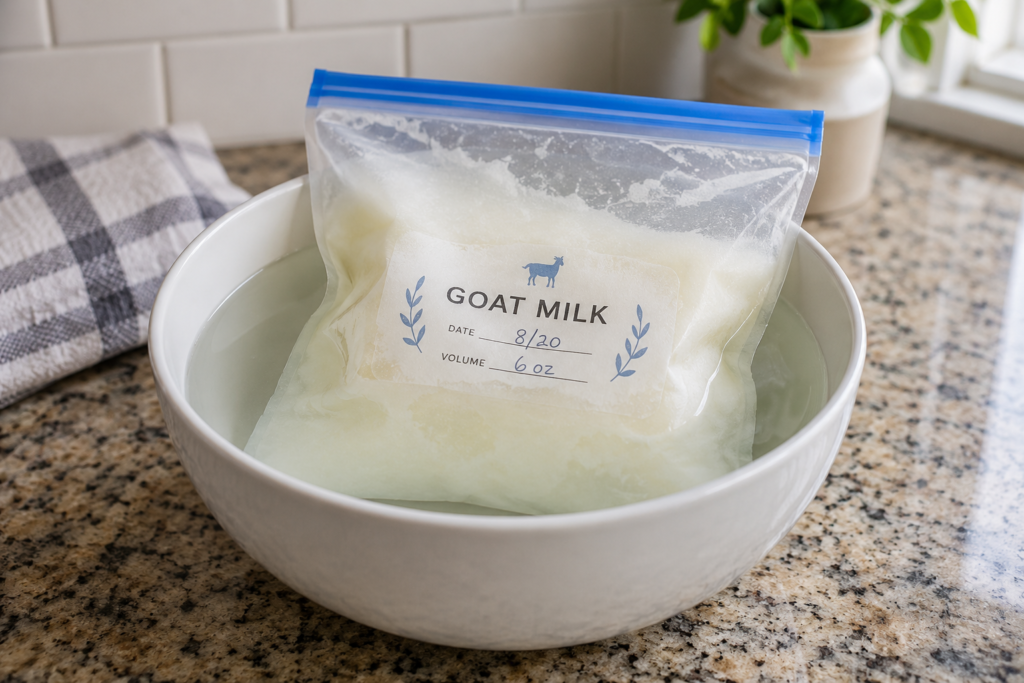
To thaw goat milk in a water bath, submerge sealed freezer bags in cool water for thirty to sixty minutes until melted. This quick approach works well when you forget to move milk into the fridge the night before.
This can be useful when you need fluid milk quickly for morning baking or smoothie preparation.
- Place the tightly sealed container or freezer bag of goat milk into a large clean bowl.
- Fill the bowl with cool tap water, ensuring the sealed bag remains completely submerged.
- Change the water every 30 minutes until the milk thaws, then shake well and refrigerate immediately.
If you want to understand its natural taste profile in detail, you can read our guide on what goat milk tastes like.
Microwave Defrosting (The Instant Method)
If you choose to thaw goat milk in a microwave, use a microwave-safe container, heat it gently in short intervals, and stir between intervals to distribute the temperature evenly. Use the thawed milk promptly rather than leaving it at room temperature.
For fast kitchen preparation, microwaving offers a quick option for cooking or baking recipes.
- Transfer frozen goat milk into a microwave safe glass container, removing all plastic bags or metal lids.
- Set your microwave to thirty percent power or the defrost setting, heating in short thirty-second intervals.
- Stir or swirl the milk between intervals to distribute heat evenly, using the thawed milk immediately.
According to USDA, microwave thawing can cause uneven heating, which may cause portions of the milk to warm up or curdle. Therefore, milk thawed in the microwave should be used immediately rather than left standing or re-refrigerated.
Why You Should Never Thaw Goat Milk on the Counter
You should never thaw goat milk on the counter because room temperatures foster rapid bacterial growth on the outer layers of thawing milk. Leaving frozen goat milk to defrost on your kitchen counter exposes the outer layer of milk to room temperature while the center remains frozen solid. Room temperature environments fall directly into the bacterial growth danger zone, allowing harmful pathogens to multiply rapidly on warm outer layers.
According to USDA, perishable foods should not be thawed on the counter because the outer portions can enter the 40°F–140°F danger zone, where harmful bacteria can multiply rapidly. Perishable food left at room temperature for more than 2 hours should be discarded.
Always choose safe refrigerator or cold water defrosting methods to protect your family’s health and maintain fresh milk quality. For a detailed guide to proper refrigeration and storage time, check out How Long Does Cow Milk Last to learn how long cow milk stays fresh under different storage conditions.
Creative Ways to Use Thawed Goat Milk
If thawed goat milk experiences slight fat separation or a grainier texture, you can easily repurpose it in everyday cooking and baking. Blending thawed milk into breakfast smoothies, stirring it into warm soups, or using it as a liquid base for pancakes and muffins completely disguises texture changes while preserving its natural nutrients.
For most people, using slightly separated milk in cooked dishes is a practical way to avoid kitchen waste while enjoying rich flavor.
Why Trust Fooder Ghor?
At Fooder Ghor, we provide educational resources focused on understanding the safe use, handling, and storage of different types of milk, including breast milk, cow’s milk, goat milk, and raw milk, based on publicly available guidance from trusted sources such as the CDC, FDA, USDA, and AAP. Some milk-related articles, particularly those involving maternal and infant feeding topics, are reviewed for clarity and presentation by nursing students with academic training in maternal and child health to help make information easier to understand. This content is provided for learning purposes only and does not offer medical advice.
Frequently Asked Questions
Thawed goat milk tastes virtually identical to fresh milk, though light natural fat separation may occur. A quick shake restores its smooth, creamy consistency.
Refreezing previously thawed goat milk is not recommended because repeated freezing degrades milk texture, breaks down nutrients, and increases bacterial contamination risks.
Fat molecules in goat milk naturally separate from water when frozen. Shaking the container vigorously or blending the thawed milk briefly recombines the liquid into a smooth texture.
Yes, reconstituted powdered goat milk can be frozen using the exact same methods and guidelines as fresh liquid goat milk. To learn more about the powdered form of goat dairy, visit our detailed guide on powdered goat milk.
Conclusion
Freezing goat milk is a safe, practical, and budget-friendly way to extend the shelf life of your favorite dairy products for up to six months. By using proper containers like glass jars, silicone bags, or ice cube trays, you can store convenient portion sizes for everyday family cooking and baking. Always remember to practice safe thawing techniques in your refrigerator to protect milk quality and prevent harmful bacterial growth.
For another practical guide to proper plant-based milk storage, check out How to Store Soy Milk to learn how to refrigerate, freeze, and handle soy milk safely.