 Skip to content


Goat milk is widely celebrated for its rich nutrient profile and creamy texture, making it a popular alternative to standard cow dairy. However, drinking goat milk or using it on your skin can lead to severe gastrointestinal distress, allergic reactions ranging from mild to severe, or dangerous bacterial infections if consumed incorrectly. Understanding these hidden health hazards helps families make safe dietary choices based on official public health guidelines.
In this clear health guide, you will learn the primary risks of consuming goat milk, including the dangers of unpasteurized milk, risks for babies, pregnancy complications, and severe allergy cross-reactivity.
Quick Summary
The following points outline the essential side effects and health warnings associated with goat milk consumption.
-
Raw goat milk carries severe risks of bacterial contamination that can cause serious foodborne illness.
-
Infants under one year old should never drink goat milk due to high kidney strain and the risk of severe anemia.
-
Pregnant women face heightened risks of miscarriage and fetal infection from unpasteurized goat dairy.
- 60-90% of individuals with cow milk allergies may experience cross-reactivity with goat milk, depending on the specific protein involved.
-
High levels of potassium and natural sugars in goat milk require careful monitoring by individuals with kidney issues or diabetes.
For practical guidance on keeping goat milk fresh, refrigerated, and safely handled at home, check out How to Store Goat Milk for detailed storage recommendations.
The Raw Truth: FDA Warnings on Raw Goat Milk Dangers
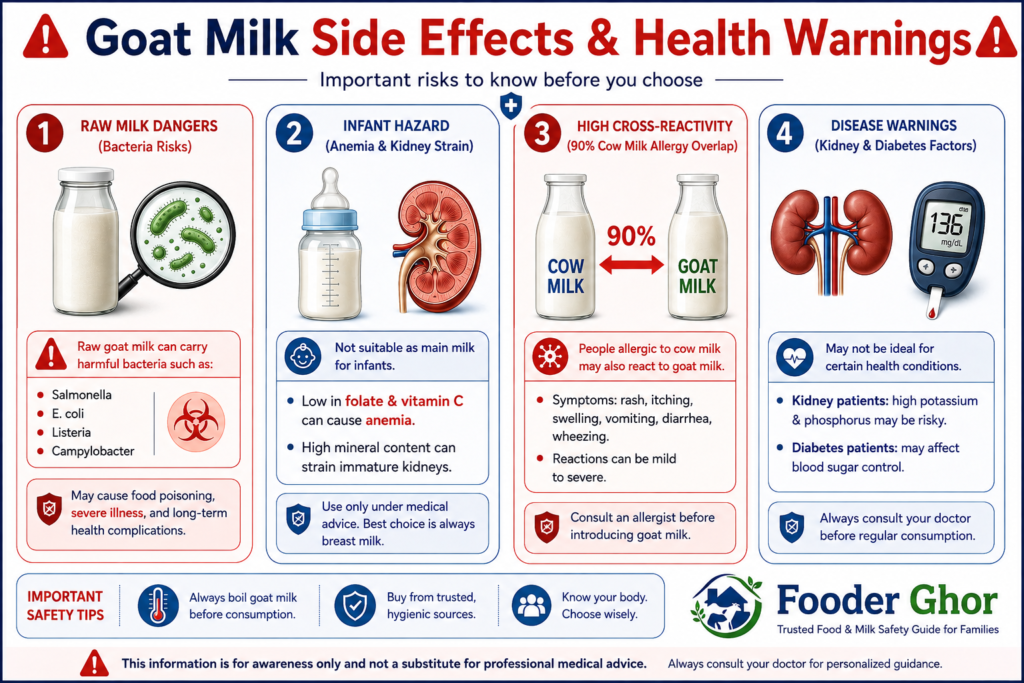
Raw goat milk poses severe health risks because unpasteurized dairy frequently carries dangerous pathogens such as Listeria, Brucella, E. coli, and Salmonella. Drinking unpasteurized goat dairy can result in severe food poisoning, hospitalization, or long-term organ damage.
According to the FDA, raw milk from cows, sheep, and goats can carry dangerous germs such as Salmonella, E. coli, Listeria, and Campylobacter, which can cause serious foodborne illness.
For parents exploring various milk options and safe storage habits, review our full guide on is goat milk good for you.
Goat Milk Side Effects for Babies and Infants
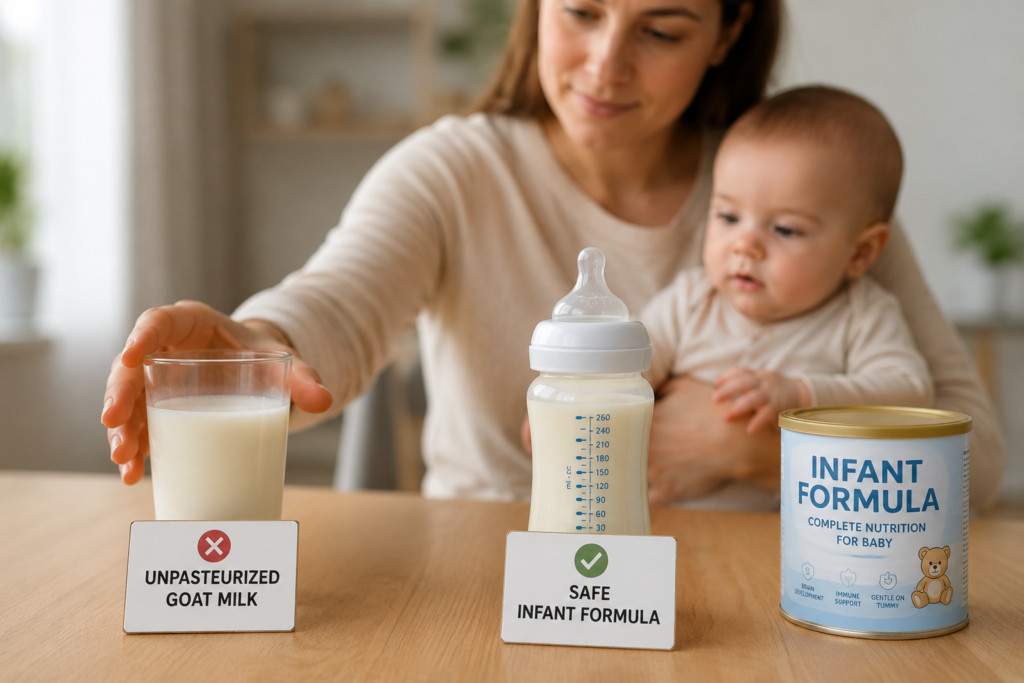
Goat milk is strictly unsafe for babies under twelve months old because its extreme protein and sodium concentration severely taxes an infant’s developing kidneys. Furthermore, goat milk lacks essential amounts of iron, folate, and vitamin C, which rapidly leads to a severe form of infant anemia known as goat milk anemia.
According to CDC, infants younger than 12 months should not be given unmodified animal milk as a substitute for breast milk or iron-fortified infant formula. Animal milk does not provide the nutrient balance infants need and may increase the risk of intestinal bleeding and iron-deficiency anemia.
For a related guide to the risks and nutritional concerns associated with cow milk, check out Cow Milk Side Effects for more detailed information.
Goat Milk Side Effects for Pregnancy and Female Health
Pregnant women face catastrophic health complications from drinking unpasteurized goat milk due to the risk of listeriosis and brucellosis infections. These bacterial pathogens cross the placental barrier easily, leading directly to premature delivery, dangerous pregnancy complications, severe birth defects, or immediate miscarriage.
The FDA advises pregnant women to avoid unpasteurized milk and dairy products and choose pasteurized dairy instead, because Listeria and other harmful pathogens in raw milk can cause serious pregnancy complications.
If you want to understand how different processing methods alter dairy stability, read our helpful article on pasteurized vs unpasteurized milk.
The Myth of Allergy-Free Milk: Cross-Reactivity Risks
Goat milk is not a safe hypoallergenic replacement for cow milk because the structural proteins in both dairy sources are almost identical. Over ninety percent of people who suffer from a diagnosed cow milk protein allergy will experience an identical severe allergic reaction when drinking goat milk.
In simple terms, consuming goat dairy when you have a known cow milk allergy can trigger immediate hives, facial swelling, severe wheezing, or fatal anaphylaxis. FDA information notes that people with cow’s milk allergy may experience cross-reactivity with goat milk proteins, so goat milk should not be assumed to be a hypoallergenic alternative for people with cow’s milk allergy.
For a detailed breakdown of how different animal proteins compare, see our guide on difference between goat milk and cow milk.
Goat Milk Side Effects for Specific Health Conditions
While goat milk provides wholesome nutrients for healthy adults, its dense calorie content, saturated fat, and mineral concentration can worsen specific pre-existing health conditions.
Goat Milk Side Effects for Diabetics
Goat milk contains significant amounts of natural carbohydrates and lactose that can cause sudden blood glucose spikes when consumed in large quantities. While some consider it a lighter option, whole goat milk delivers nearly eleven grams of carbohydrates per cup, which directly affects daily insulin management for diabetic individuals.
In everyday cooking, monitoring portion sizes of goat milk helps prevent unexpected blood sugar surges throughout the day. According to the American Diabetes Association, milk contains naturally occurring lactose and contributes carbohydrates that can affect blood glucose, so people with diabetes should account for milk as part of their overall carbohydrate intake.
To learn about alternative plant-based options that fit low-sugar dietary plans, explore our review on unsweetened almond milk for weight loss.
Goat Milk Side Effects for Liver and Digestion
The high saturated fat content in whole goat milk can exacerbate digestive distress and increase workload for individuals with non-alcoholic fatty liver disease or sluggish gallbladder function. Digestive symptoms often include upper abdominal pain, chronic bloating, severe gas, and greasy diarrhea due to incomplete fat breakdown.
For most people with delicate digestive tracts, drinking heavy amounts of high-fat dairy can slow down gut motility and induce severe indigestion.
For a related guide to digestive concerns and potential reactions to plant-based milk, check out Soy Milk Side Effects for more information.
High Potassium Load and Kidney Risks
Goat milk contains elevated concentrations of potassium and phosphorus, which can lead to life-threatening electrolyte buildup in individuals suffering from chronic kidney disease (CKD) or reduced renal filtration. When impaired kidneys cannot excrete excess potassium effectively, hyperkalemia develops, potentially causing dangerous cardiac arrhythmias or sudden heart failure.
In many cases, patients managing kidney conditions must strictly limit high-potassium animal dairy to maintain stable blood chemistry.
For more information about potential digestive, nutritional, and health concerns related to another milk option, check out Coconut Milk Side Effects for a detailed overview.
Goat Milk Side Effects for Skin and Topical Application

Applying raw goat milk or goat milk soaps directly to broken or sensitive skin can trigger severe contact dermatitis, localized eczema flare-ups, or systemic allergic sensitization. While widely used in homemade beauty recipes, unrefined goat milk proteins can penetrate compromised skin barriers, causing intense itching, redness, and burning sensations.
This can be useful when assessing whether popular DIY cosmetic remedies are truly safe for your specific skin type. According to the FDA, cosmetic products such as soaps can cause allergic reactions in some people, with symptoms including itchy, red rashes and contact dermatitis. People with sensitive skin should check product ingredients and stop using a product if irritation or an allergic reaction develops.
To discover plant-based ingredients widely praised for skin barrier support, read our review on rice milk benefits for skin.
Low Folate Concentration and Megaloblastic Anemia Risks
Consuming goat milk as a primary dairy source without taking folate supplements can cause severe folate deficiency and lead to megaloblastic anemia.
While goat milk is rich in many essential minerals, it contains naturally negligible levels of folate (Vitamin B9) compared to standard cow milk. According to nutritional research from the NIH and American Academy of Pediatrics (AAP), cow dairy contains approximately 2-3 times more folate than goat milk. When individuals especially infants and young children depend heavily on goat dairy as their main milk source without incorporating other Vitamin B9-rich foods or supplements, the body struggles to produce healthy red blood cells. Over time, this deficiency triggers a clinical condition historically known as “goat’s milk anemia” (a form of megaloblastic anemia), leaving affected individuals with persistent fatigue, physical weakness, and compromised immune function.
When considering other concentrated milk products and their potential drawbacks, Evaporated Milk Side Effects provides useful information on related dietary and health considerations.
Full-Fat Dairy Consumption and Acid Reflux (GERD Triggers)
Drinking full-fat goat milk can irritate sensitive stomach linings and trigger painful acid reflux or heartburn in individuals prone to gastrointestinal sensitivity.
Goat milk naturally contains a high concentration of total lipids and distinctive medium-chain fatty acids (such as caproic, caprylic, and capric acids). While these fatty acids make the milk highly digestible for healthy individuals, the high overall fat content of whole, full-fat goat milk can delay gastric emptying and relax the lower esophageal sphincter (LES) muscle.
According to clinical gastroenterology insights aligned with NIH guidelines, a relaxed LES allows stomach acid to flow back up into the esophagus. For people managing Gastroesophageal Reflux Disease (GERD), chronic gastritis, or stomach ulcers, this acid backflow causes sour regurgitation, burning chest tightness, and severe indigestion after meals.
If you want to compare how different types of dairy may affect digestion and reflux symptoms, A2 Milk Side Effects offers a useful comparison of potential concerns and sensitivities.
Why Trust Fooder Ghor?
At Fooder Ghor, we provide comprehensive, research-backed educational resources on all types of milk including breast milk, dairy (cow, goat, camel, sheep, buffalo), and plant-based alternatives (oat, soy, almond). Our guides cover everything from nutrition, taste, and health benefits to proper storage, shelf life, and safety handling, aligned with official guidance from the CDC, FDA, USDA, and AAP. To maintain the highest standards of scientific accuracy, this article has been medically reviewed by a Public Health Expert (MPH). This content is for educational purposes only and does not substitute for professional medical advice.
Frequently Asked Questions
Yes, goat milk can cause acute abdominal gas, bloating, and watery diarrhea in adults who suffer from lactose intolerance or dairy fat malabsorption.
Goat milk lacks adequate iron and folate while containing excessive protein and mineral loads that damage an infant’s delicate kidneys and induce severe anemia.
Yes, whole goat milk contains natural lactose carbohydrates that raise blood glucose levels if consumed in unrestricted quantities by diabetic individuals.
Yes, unpasteurized raw goat milk harbors dangerous pathogens like Brucella and Listeria that trigger severe bacterial infections, organ failure, and severe food poisoning.
Conclusion:
Understanding goat milk side effects allows consumers to make safe, highly informed dietary choices for their families. While pasteurized goat dairy remains a nutrient-rich food for healthy adults, it carries life-threatening risks for infants, pregnant women, allergic individuals, and those with severe kidney or liver conditions. Always select fully pasteurized products, consult your physician before changing infant diets, and consume dairy in balanced portions.
To learn how to handle and store dairy safely at home to prevent spoilage, read our complete guide on how long does goat milk last.
You can also explore Best Goat Milk Powder for Adults when comparing goat milk options for everyday adult use.
For parents considering goat milk-based products for young children, Best Goat Milk Formula for Toddlers provides additional information to consider.
If you are comparing commercially available options, Best Goat Milk Powder Brands in USA covers different goat milk brands and product choices.











