Skip to content



Goat milk has gained widespread popularity in many American homes as a gentle, nutrient dense alternative to traditional dairy. For most people, trying this natural beverage for the first time brings up one simple question: what does goat milk taste like? Fresh goat milk tastes smooth, creamy, and mildly sweet with a clean finish and a subtle earthy undertone when handled properly under cold conditions.
In everyday cooking and morning routines, families often prefer this rich beverage because it tastes remarkably similar to fresh cow milk when kept cold and fresh. In this guide, we will learn what does goat milk taste like, how raw options differ, why bad storage causes a goaty flavor, and practical ways to make goat milk taste better for your family.
Short Summary
- Natural Flavor Profile: Fresh pasteurized goat milk features a smooth, creamy texture with a clean, mild, and slightly sweet flavor.
- The “Goaty” Misconception: Strong goaty or gamey odors develop only when milk is exposed to heat, air, or buck presence during collection.
- Raw vs Pasteurized Taste: Fresh raw goat milk carries a slightly richer herbal note, while pasteurized milk maintains a consistent, clean profile.
- Component Essentials: Rich in naturally homogenized fat globules and water, giving it a light feel without heavy aftertaste.
- Flavor Enhancement: Serving milk ice cold, storing in glass, or blending with cinnamon improves overall everyday taste.
If you prefer a convenient alternative to fresh goat milk, explore our guide to powdered goat milk to compare its flavor, nutritional profile, and everyday uses.
What Does Goat Milk Taste Like

Fresh goat milk delivers a sweet, clean, and mildly earthy flavor with an exceptionally smooth texture that feels lighter on the tongue than whole cow milk. In general, this natural dairy beverage offers a refreshing sensation that lacks any harsh aftertaste when properly chilled. For most people, the flavor is smooth and pleasant, carrying a delicate pasture note that sets it apart from plant milks. Because the fat particles in goat dairy are naturally small, the overall consistency feels rich without leaving a heavy coat inside your mouth.
| Goat Milk Type | Taste and Aroma Profile | Texture and Mouthfeel |
| Fresh Pasteurized Goat Milk | Mild, clean, slightly sweet, minimal earthy notes | Very smooth, naturally rich, uniform consistency |
| Fresh Raw Goat Milk | Rich, herbal, slightly sweet with vibrant farm notes | Full bodied, smooth cream layer on top |
| Aged or Poorly Stored Goat Milk | Strong goaty, gamey, sour, or sharp vinegary tang | Clumpy, separated, thick or slimy consistency |
When served ice cold, high quality goat milk provides a delightful drink that works wonderfully in morning cereal or coffee. Many families use this beverage because it delivers a familiar dairy taste while supporting easy digestion.
According to USDA FoodData Central, goat milk provides nutrients such as protein, fat, and minerals, although its exact nutritional composition varies by product and serving size. To maintain optimal flavor freshness in your home, exploring proper goat milk storage tips helps protect every carton from early flavor spoilage.
1. What Is Goat Milk and What Color Is Goat Milk
Goat milk is a nutrient dense dairy liquid produced by dairy goats, characterized by its bright porcelain white color due to the complete conversion of beta-carotene into vitamin A. Unlike cow milk which often carries a yellowish tint, fresh goat milk appears pure white in every glass. This visual difference makes it easy to recognize in your kitchen.
Understanding what is in goat milk helps clarify why its texture feels so smooth. Finished goat milk consists primarily of pure water, milk fats, proteins, natural lactose, and bioavailable minerals. In terms of what is goat milk made of, the natural production process involves milking healthy dairy goats, filtering the liquid, and cooling it rapidly below 40°F. According to the USDA, perishable foods such as milk should be refrigerated promptly and kept at 40°F (4°C) or below to help slow bacterial growth and maintain food safety.
To understand possible digestive reactions, allergy concerns, and other potential drawbacks of goat milk, read our guide to goat milk side effects.
2. Why Does Goat Milk Taste Goaty or Gamey
Goat milk tastes goaty or gamey mainly when natural caproic, caprylic, and capric fatty acids break down due to poor chilling, warm exposure, or keeping male bucks near milking does. When fresh milk is handled with care and kept cold immediately after milking, these strong odors never develop.
That said, does goat milk taste beef or does goat milk taste gamey under normal conditions? No, properly processed milk should never taste beefy, bitter, or sour. When bucks are kept separate from milking does, the milk remains clean and sweet. Research published in the Journal of Dairy Science identifies certain branched-chain fatty acids as contributors to goat milk’s distinctive goaty flavor. Proper milking hygiene, careful handling, and prompt refrigeration can help reduce quality problems and unwanted off-flavors.
To ensure your dairy stays safe and odor free, check our guide on how long does goat milk last for complete temperature timelines.
3. Goat Milk vs Raw Goat Milk Taste
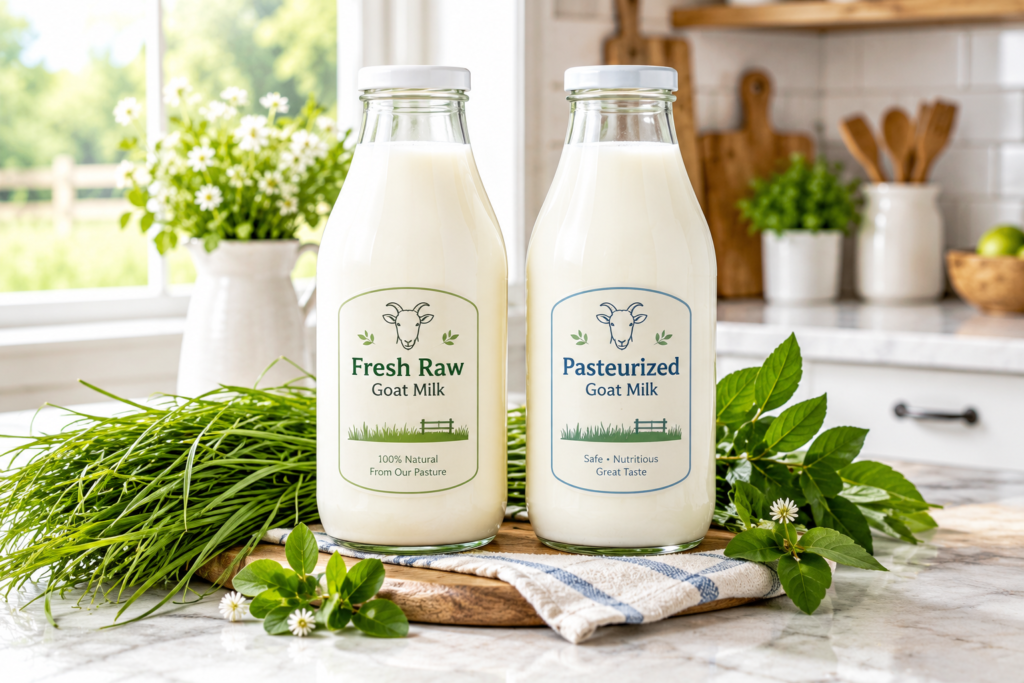
Raw goat milk carries a richer, herbal, and grassy flavor straight from the pasture, whereas pasteurized goat milk offers a mild, consistent, and clean taste created through heat processing. When analyzing goat milk vs raw goat milk taste, subtle differences emerge based on farm feeding and processing methods.
On the other hand, commercial pasteurized milk undergoes quick temperature treatment to ensure biological safety. Is goat milk pasteurized in most American grocery stores? Yes, commercial goat milk in the US is pasteurized to eliminate foodborne pathogens. Does goat milk need to be pasteurized for daily home use? According to the CDC, raw milk can contain harmful germs that cause foodborne illness, while pasteurization helps reduce this risk. In the United States, consumers should choose pasteurized goat milk rather than assume raw milk is safe for daily use.
For those managing household dairy inventory, learning can you freeze goat milk helps preserve either raw or pasteurized options for long term use.
4. How to Make Goat Milk Taste Better

Serving goat milk ice cold between 35°F and 38°F in sealed glass bottles instantly improves its flavor by muting natural earthy aromas and delivering a crisp texture. Temperature control remains the single most effective technique for elevating your drinking experience.
Here are practical, simple kitchen methods to enhance taste:
- Store in Glass Containers: Glass bottles prevent refrigerator odors from penetrating the milk fat.
- Keep at the Back of the Fridge: Avoid storing cartons on fridge doors where temperatures fluctuate.
- Add Natural Flavorings: Mixing a drop of vanilla extract or a pinch of cinnamon creates a delicious flavor.
- Blend into Smoothies: Combine milk with frozen fruits or bananas for a rich morning treat.
Following proper storage techniques ensures that your milk stays cold and appetizing. Exploring proper milk storage containers helps you select glass options that preserve natural flavor purity.
5. What Is Goat Milk Used For
Goat milk is widely used for drinking, baking, cooking creamy sauces, making coffee drinks, and crafting gourmet dairy products like yogurt, butter, and spreadable cheese. In everyday cooking, its rich texture enhances home recipes seamlessly as a direct substitute for cow dairy.
Beyond liquid beverages, goat milk serves as the primary base for artisanal cheeses, ice creams, and soaps. Its natural fat structure makes goat cheese wonderfully tangy and spreadable. For individuals exploring various dairy styles, learning about what does goat cheese taste like illustrates how fermentation transforms milk into a classic culinary favorite.
6. How Goat Milk Compares to Other Milks
Goat milk tastes slightly sweeter and richer than cow milk due to its smaller fat globules, while offering a traditional dairy creaminess that watery plant milks cannot match. It bridges the gap between light plant drinks and heavy cream dairy.
Research published on PubMed reports that goat milk differs from cow milk in fat-globule size and casein composition, which may influence curd formation during digestion. However, these differences do not prove that goat milk is easier for everyone to digest. If you want to evaluate alternative natural options, read our guide on what does camel milk taste like to explore another unique dairy profile.
Why Trust Fooder Ghor
At Fooder Ghor, we provide educational resources focused on understanding the safe use, handling, and storage of different types of milk, including breast milk, cow’s milk, goat milk, and raw milk, based on publicly available guidance from trusted sources such as the CDC, FDA, USDA, and AAP. Some milk-related articles, particularly those involving maternal and infant feeding topics, are reviewed for clarity and presentation by nursing students with academic training in maternal and child health to help make information easier to understand. This content is provided for learning purposes only and does not offer medical advice.
Frequently Asked Questions
A: Fresh pasteurized goat milk may taste similar to cow milk, with a creamy flavor and a slightly distinctive earthy note. To compare their flavor, texture, and nutritional differences, read our guide to difference between goat milk vs cow milk.
A: Goat milk tastes strong when it has been exposed to heat, improperly chilled after milking, or stored past its peak freshness, causing milk fats to break down.
A: Goat milk is naturally sweet with a mild, creamy taste, similar to whole cow milk, though it contains natural minerals that give it a balanced flavor. If you’re comparing goat milk products for everyday drinking, explore our guide to best goat milk brands to review available options and compare their taste, ingredients, and nutritional profiles.
A: Yes, keeping goat milk ice cold, storing it in sealed glass bottles, or adding a pinch of cinnamon or vanilla makes it taste virtually identical to fresh cow milk.
A: Raw goat milk may have a more pronounced flavor, while pasteurized goat milk can offer a more consistent taste. If you want to pasteurize fresh goat milk at home, explore our guide to best milk pasteurizer machine to compare available equipment and features.
A: Yes, goat milk is excellent in hot drinks because its small fat particles blend smoothly without heavy separation.
A: If goat milk tastes sour or vinegary, it may have spoiled and should be discarded. To help preserve its freshness and flavor, explore our guide to best glass milk bottles for suitable storage options, and always refrigerate milk promptly at 40°F (4°C) or below.
Conclusion
Understanding what does goat milk taste like reveals that fresh, high quality goat dairy is clean, creamy, and pleasantly sweet. By keeping milk ice cold and purchasing pasteurized options from trusted brands, your family can enjoy its rich texture without any unpleasant goaty odor. Always follow proper kitchen handling guidelines to maintain optimal freshness and safety.
To explore the health advantages of drinking fresh dairy daily, check out our comprehensive guide on goat milk health benefits to see how it supports family wellness.
To compare goat milk’s calories, protein, fat, vitamins, and minerals, explore our guide to goat milk nutrition facts for a detailed nutritional breakdown.
For those who collect fresh goat milk on a small farm, check out our guide to best goat milk milking machine to compare available milking equipment and features.