Skip to content



For many families managing their daily grocery lists, choosing the right plant-based drink requires a close look at the nutrition label.In everyday cooking, soy milk has remained a popular choice due to its balanced nutritional value, including each of the three macronutrients, vitamins, minerals, and antioxidants. But what exactly does soy milk nutrition look like across different brands and serving sizes? The answer depends on whether the milk is sweetened, unsweetened, fortified, or commercially produced by popular brands.
In this comprehensive guide, we will break down the essential soya milk nutrition facts and look closely at the macro profile. We will also answer common questions about the soy milk fat content to help you make an informed decision for your kitchen staples.
Quick Summary:
- Balanced Macro Profile: Delivers a steady mix of high-quality plant proteins, healthy unsaturated fats, and complex carbohydrates per serving.
- Fortification Benefits: Commercial brands add essential calcium and vitamins (D & B12) to match two major vitamins, supporting bone health, energy production, and brain health, among other functions, naturally found in dairy products such as cow’s milk.
- Sweetened vs. Unsweetened: Calorie and sugar levels vary significantly unsweetened offers a clean 80-calorie baseline, while sweetened and flavored options add extra energy.
- Brand & Variety Options: Nutrient densities shift across formulations, ranging from barista blends and store brands (Silk, Kirkland, Aldi) to light and homemade versions.
Many parents interested in comparing the nutritional value of different milk options often look at goat milk nutrition to see how its vitamins, minerals, and protein content compare with plant-based alternatives.
Soy Milk Nutrition
The standard soy milk nutrition profile offers an exceptional, balanced mix of plant-based macronutrients, vitamins, and minerals that closely mirror traditional dairy. For most people, a single cup of this beverage delivers a rich texture alongside a dense concentration of daily nutrients.
In many homes, parents select this drink because the soya milk nutritional value supports a wholesome diet for growing children. Whether you consume it raw or fortified, the underlying soy milk nutritional information highlights its status as a reliable kitchen staple.
👉 Many readers who compare different milk options for their nutritional value also explore camel milk nutrition to understand how it differs from popular plant-based alternatives.
Soy Milk Nutritional Information & Complete Value Profile
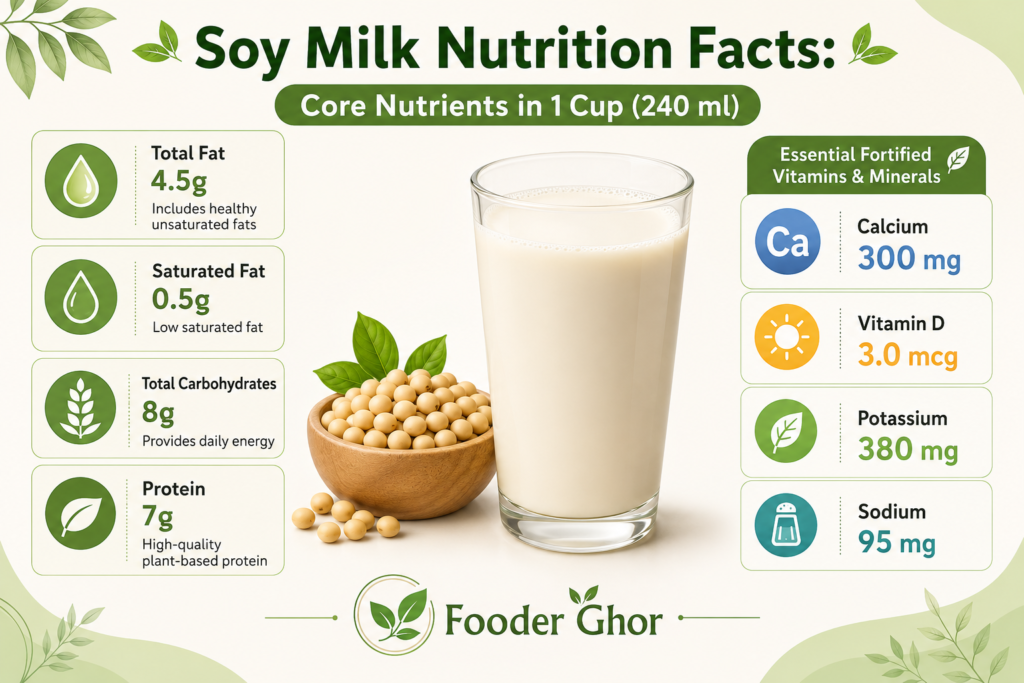
Understanding the comprehensive soy milk nutrition facts is essential for anyone shifting to a plant-based beverage. Analyzing the official soy milk nutritional content helps you track daily macros, vitamins, and minerals efficiently. Below is a structured breakdown modeled after a standard soy milk nutrition label to give you a complete soy milk nutritional value overview for your daily diet. Daily values are based upon an average healthy adult’s needs, and for children, a single cup of soy milk will often provide a slightly greater portion of their overall daily needs.
If you prefer a convenient option, read our guide on how to make soy milk from powder to learn how to prepare soy milk from powdered soy and water.
Standard Fortified Soy Milk Nutrition Facts Label (Per 1 Cup / 240ml)
| Nutrient Component | Amount Per Serving (1 Cup / 240ml) | Daily Value (% DV) |
| Calories | 100 kcal | 5% |
| Total Fat | 4.5 g | 6% |
| — Saturated Fat | 0.5 g | 3% |
| — Trans Fat | 0 g | 0% |
| Sodium | 95 mg | 4% |
| Total Carbohydrate | 8.0 g | 3% |
| — Dietary Fiber | 2.0 g | 7% |
| — Sugars (Total) | 6.0 g | — |
| Protein | 7.0 g | 14% |
| Calcium | 300 mg | 23% |
| Vitamin D | 3.0 mcg | 15% |
| Potassium | 380 mg | 8% |
According to USDA FoodData Central, the nutritional values of soy milk can vary slightly between brands and fortification methods, making it helpful to review product-specific labels when tracking daily nutrient intake.
To explore a detailed, volume-by-volume calorie breakdown across 100ml, 1 glass, and 32 oz containers, check out our complete guide on soy milk calories guide.
Homemade Soy Milk Nutrition Facts
Fresh homemade soy milk offers a pure, whole-food profile made entirely from soybeans and water, without added stabilizers or cane sugars.
| Nutrient Component | Per 100 ml | Per 1 Cup (8 oz / 240ml) |
| Calories | ~35 kcal | ~84 kcal |
| Protein | 3.2 g | 7.5 g |
| Total Fat | 1.8 g | 4.2 g |
| Total Carbohydrates | 1.5 g | 3.5 g |
| Calcium (Unfortified) | ~12 mg | ~30 mg |
If you want to review how fresh bean processing impacts protein quality and digestion, read our deep-dive on soy milk protein guide.
Analyzing the Soy Milk Fat Content and Saturated Fat
A frequent question that many shoppers ask when looking at the label is, does soy milk have fat? In everyday nutrition, understanding the fat profile helps clear up common myths about plant-based dairy.
Does Soy Milk Have Fat?
Yes, soy milk does contain fat, but it is primarily made of healthy, plant-based unsaturated fats. The typical soy milk fat percentage sits around two percent, which means it provides a lighter option compared to whole dairy milk. Its fat content is between that of 1% and 2%, or low- to moderate-fat cow’s milk products. According to USDA FoodData Central, most soy milk varieties contain primarily unsaturated fats, which, like other plant-based fat sources, contribute to overall calories while also protecting the heart, without long-term risk of raising cholesterol levels or cardiovascular challenges.
If you want to compare how this matches up with low-fat animal dairy, you can check out our analysis on 2% cow milk nutrition facts.
Saturated Fat and Weight Concerns
One important thing to know is that this beverage does not have a high concentration of bad, or saturated and trans fats, which in large amounts can contribute to adverse blood marker changes and cardiovascular challenges. It does not have saturated fat in large amounts, making it a heart-friendly choice for the pantry. For those wondering, can soy milk make you fat, the answer is no, provided it is consumed as part of a balanced lifestyle and does not lead to a calorie surplus. If you prefer to avoid fats entirely, a fat free soy milk nutrition option or a low fat unsweetened soy milk can provide an easy option for your calorie goals.
To preserve soy milk’s nutritional quality and freshness, proper storage is essential. Read our How Long Does Soy Milk Last guide to learn its refrigerator, freezer, and shelf life after opening.
Unsweetened vs. Sweetened Soy Milk Nutrition Facts
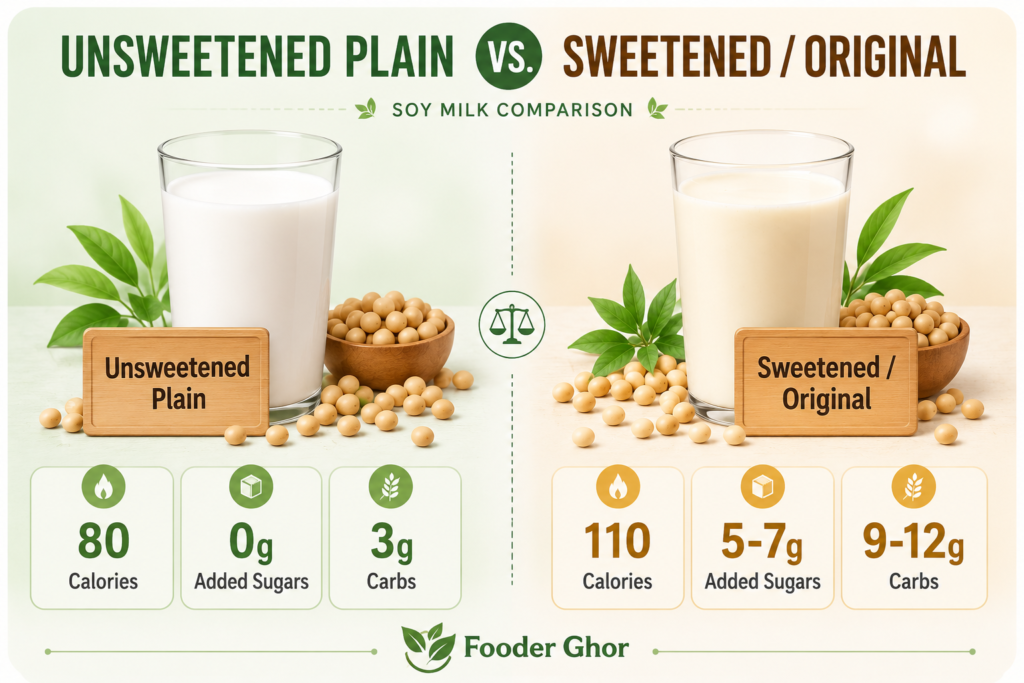
The primary nutritional variation between unsweetened and sweetened soy milk lies in carbohydrate density and total sugar content. Both products are low in sugar, but unsweetened soy milk is preferable for someone with pre-diabetes or diabetes or whose physical activity is limited.
| Nutrient Component | Unsweetened Plain (1 Cup) | Sweetened / Original (1 Cup) |
| Calories | ~80 kcal | ~110 kcal |
| Total Carbohydrates | 3.0 g | 9.0–12.0 g |
| Added Sugars | 0 g | 5.0–7.0 g |
| Protein | 7.0–8.0 g | 7.0–8.0 g |
| Total Fat | 4.0 g | 4.5 g |
The FDA recommends reviewing the Nutrition Facts label to compare added sugars, calories, and serving sizes when choosing between unsweetened and flavored soy milk products.
To analyze how added sugars shift total glycemic loads and daily energy limits, check our detailed report on soy milk sugar guide.
Commercial Comparison: Silk vs. Alpro Soy Milk Nutrition Facts
Leading commercial brands offer distinct micronutrient profiles based on their regional fortification standards and formulations. If dairy consumption is small or bone health is a concern, a calcium-fortified soy milk is often the best choice.
| Nutrient (Per 1 Cup / 240ml) | Silk Original | Alpro Original Soya |
| Calories | 110 kcal | 93 kcal |
| Protein | 8.0 g | 8.0 g |
| Total Fat | 4.5 g | 4.3 g |
| Calcium | 450 mg (35% DV) | 300 mg (23% DV) |
| Sugars | 6.0 g | 6.0 g |
Want to know which commercial brand provides maximum bone-building minerals per serving? Discover our analysis on soy milk calcium guide.
Light, Kirkland, Vanilla, Aldi, Trader Joe’s & Specialty Soy Milk Nutritional Comparison
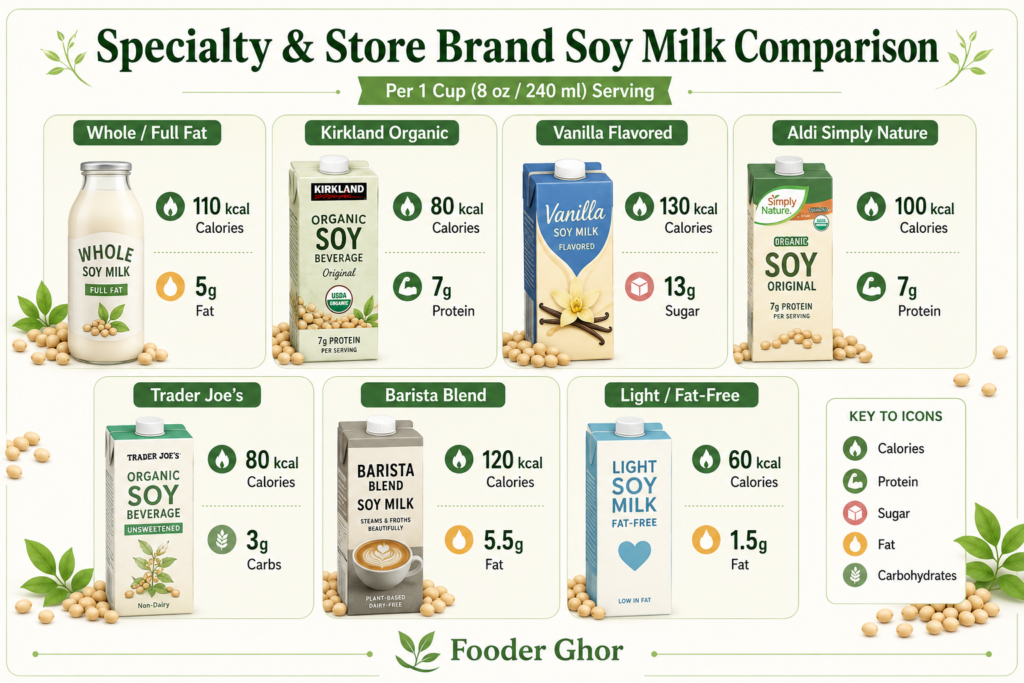
Comparing store brands, barista formulations, and fat-reduced options helps you pick the exact nutritional fit for your dietary needs. If desired, lower-fat and lower-carbohydrate products are available.
| Variety / Brand | Serving Size | Calories | Protein | Total Fat | Carbs | Sugars |
| Full Fat / Whole Soy | 1 Cup (240ml) | ~110 kcal | 8.0 g | 5.0 g | 8.0 g | 6.0 g |
| Kirkland Organic Unsweetened | 1 Cup (240ml) | 80 kcal | 7.0 g | 4.0 g | 3.0 g | 1.0 g |
| Vanilla Flavored Soy Milk | 1 Cup (240ml) | 130 kcal | 6.0 g | 3.5 g | 15.0 g | 13.0 g |
| Aldi Simply Nature Organic | 1 Cup (240ml) | 100 kcal | 7.0 g | 4.0 g | 8.0 g | 6.0 g |
| Trader Joe’s Organic Unsweetened | 1 Cup (240ml) | 80 kcal | 7.0 g | 4.0 g | 3.0 g | 1.0 g |
| Barista Blend Soy Milk | 1 Cup (240ml) | ~120 kcal | 6.0 g | 5.5 g | 10.0 g | 7.0 g |
| Light / Fat-Free Soy Milk | 1 Cup (240ml) | ~60 kcal | 6.0 g | 1.5 g | 6.0 g | 4.0 g |
👉 Consumers who enjoy comparing the nutritional value of different milk alternatives often explore coconut milk nutrition to see how its fat content, calories, and micronutrients differ from fortified soy milk products.
Barista, Light, and Specialty Varieties:
For coffee lovers, barista soy milk nutrition profiles feature slightly higher healthy fats to help create a smooth, stable foam for hot drinks. Conversely, light soy milk nutrition facts show a significant reduction in calories and fat for weight management. For those interested in how alternative grains compare in a coffee cup, you can discover our overview on oat milk nutrition.
Homemade and Alpro Options
If you prefer a whole-food drink, homemade soy milk nutrition depends entirely on the bean-to-water ratio offering pure macros without commercial additives. For packaged options, alpro soy milk nutrition facts showcase a standardized, low-fat beverage suitable for everyday family goals.
Whether you choose homemade or packaged soy milk, proper storage is essential to maintain its quality and nutritional value. Read our How to Store Soy Milk guide for safe refrigeration, freezing, and storage tips.
The Value of Fortified Soy Milk
Most commercial plant milks undergo a process called fortification to ensure they deliver a balanced nutritional framework for families. This process replaces the natural elements lost during production.
According to nutrition information published by the USDA, fortified soy milk nutrition packages are designed to match the micronutrient value of cow milk, with the primary nutrients added in often vitamin D, calcium, and vitamin B12, supporting bone health, brain health, energy, and disease prevention. The FDA recommends checking labels to ensure your plant-based milk contains added nutrients for bone development. This makes fortified varieties an excellent, family-friendly choice for everyday meals. If you want to see how the natural nutrient profile of raw milk looks without any commercial fortification, read our guide on raw milk nutrition.
Why Trust Fooder Ghor?
At Fooder Ghor, we provide comprehensive, research-backed educational resources on all types of milk including breast milk, dairy (cow, goat, camel, sheep, buffalo), and plant-based alternatives (oat, soy, almond). Our guides cover everything from nutrition, taste, and health benefits to proper storage, shelf life, and safety handling, aligned with official guidance from the CDC, FDA, USDA, and AAP. To maintain the highest standards of scientific accuracy, this article has been medically reviewed by a Registered Dietitian (MS, MPH, RD). This content is for educational purposes only and does not substitute for professional medical advice.
Frequently Asked Questions
A standard cup contains about 4 to 4.5 grams of total fat, which consists mostly of healthy monounsaturated and polyunsaturated fats that support heart health and is a comparatively small portion of most individuals’ daily fat intake goals.
Soy milk is low in fat compared to whole dairy milk, providing a lighter option with significantly less saturated fat per serving. If you’d like to prepare it yourself, read our guide on how to make soy milk at home for a simple step-by-step method.
It contains a very negligible amount of saturated fat (around 0.5 grams per cup), which is naturally occurring from the soybeans.
Homemade versions contain only soybeans and water, meaning they offer natural macros but lack the added calcium and vitamins found in commercial fortified brands. If you’re making soy milk at home, read our guide on how to make soy milk with a blender for a simple method using soybeans and water.
Yes, soy milk is packed with nutritional value. It is naturally rich in high-quality plant protein, healthy unsaturated fats, and essential dietary fiber, along with isoflavones, an antioxidant supporting heart health, reducing inflammation, and hormone health. When fortified, it also provides daily recommended amounts of calcium, vitamin D, vitamin B12, and potassium, making it closely comparable to dairy milk.
No, soy milk does not make you fat when consumed as part of a balanced diet. Unsweetened soy milk is relatively low in calories (around 80 kcal per cup). Weight gain only occurs if you consistently consume more total daily calories than your body needs, particularly from sweetened or heavily flavored varieties containing added sugars.
No, soy milk is not considered high in fat. A standard cup contains around 4 to 4.5 grams of total fat, which is much lower than whole cow’s milk (8 grams) and roughly similar to 2% reduced-fat dairy milk.
No, soy milk is extremely low in saturated fat. Containing just 0.5 grams per serving, it provides a much lighter, heart-friendly alternative to full-fat dairy products, which can contain up to 5 grams of saturated fat per cup.
Yes, commercial soy milk contains a small amount of naturally occurring and added sodium, typically ranging from 90 mg to 120 mg per 1-cup (240ml) serving to balance flavor and minerals. Even for an individual on a low-sodium diet, this is a small portion of daily sodium needs.
No, soy milk is not high in sodium. Containing around 95 mg of sodium per cup (which is only about 4% of your daily recommended limit), it is considered a low-sodium beverage option that fits easily into a heart-healthy diet.
Yes, soy milk is a naturally rich source of potassium. A standard 1-cup serving provides around 300 to 380 mg of potassium, helping support overall cellular and heart function.
Yes, soy milk provides a good amount of potassium, delivering approximately 8% to 10% of your recommended daily value per cup. It offers a comparable potassium level to traditional cow’s milk, making it a great plant-based choice for maintaining healthy blood pressure and muscle function.
Conclusion
In simple terms, analyzing soy milk nutrition shows that this plant-based drink is a highly stable, nutrient-dense, and reliable option for everyday family use. From the clean profile of unsweetened versions to the enriched values of fortified store brands, it easily adapts to your daily kitchen needs. By checking the soy milk fat content and choosing the version that aligns with your goals, you can comfortably enjoy this classic ingredient in your daily meals.
For a closer look at the nutrition of another lower-fat milk option, read our guide on skim milk nutrition to learn more about its protein, vitamins, minerals, and overall nutritional profile.
Before making soy milk a regular part of your diet, it’s also worth understanding its potential drawbacks. Read our Soy Milk Health Side Effects guide to learn about allergies, digestive concerns, and who should limit soy milk consumption.