Skip to content


Goat milk and regular store bought milk often dominate dairy conversations in the United States. However, many American families are now turning their attention toward raw milk nutrition to get whole food benefits. Raw milk is simply milk that has not undergone the pasteurization process. This means it comes straight from the cow to your kitchen with all its natural components completely intact.
In everyday cooking, understanding the exact nutritional information of what you consume is incredibly important. If you want to compare different dairy options later, you can also check our guide on what is raw milk for more background details.
What You Will Learn in This Guide
The complete raw milk nutrition label and natural components.
Exact calorie counts for 1 cup, 100 ml, 1 liter, and a gallon.
Deep analysis of raw milk fat content and saturated fat percentages.
Specific profiles for A2 raw milk and raw Jersey milk.
Trusted data from official United States food and health organizations.
Quick Answer: What is the Overall Raw Milk Nutrition Profile?
In general, raw milk is a nutrient rich beverage that provides a balanced mix of proteins, carbohydrates, healthy fats, vitamins, and active enzymes. One cup of whole raw milk typically contains about 150 calories, 8 grams of fat, 12 grams of carbohydrates, and 8 grams of protein. Because it does not undergo pasteurization, raw milk retains naturally occurring microorganisms and certain heat-sensitive nutrients that may change during processing.
👉 For proper guidelines on how to keep this nutrient dense beverage fresh in your kitchen, read our complete guide on how long does raw milk last.
The Complete Raw Milk Nutrition Label and Facts
For most people, looking at a standardized food label is the easiest way to understand what they are consuming daily. The nutritional benefits of raw milk come from its complex structural matrix which remains unaltered by factory processing.
Understanding Raw Milk Nutritional Information
Raw milk contains naturally occurring enzymes and vitamins, though nutrient levels can vary depending on farming practices, storage, and processing methods.
The FDA recommends checking standardized serving sizes when measuring your daily nutrient intake for a balanced family diet.
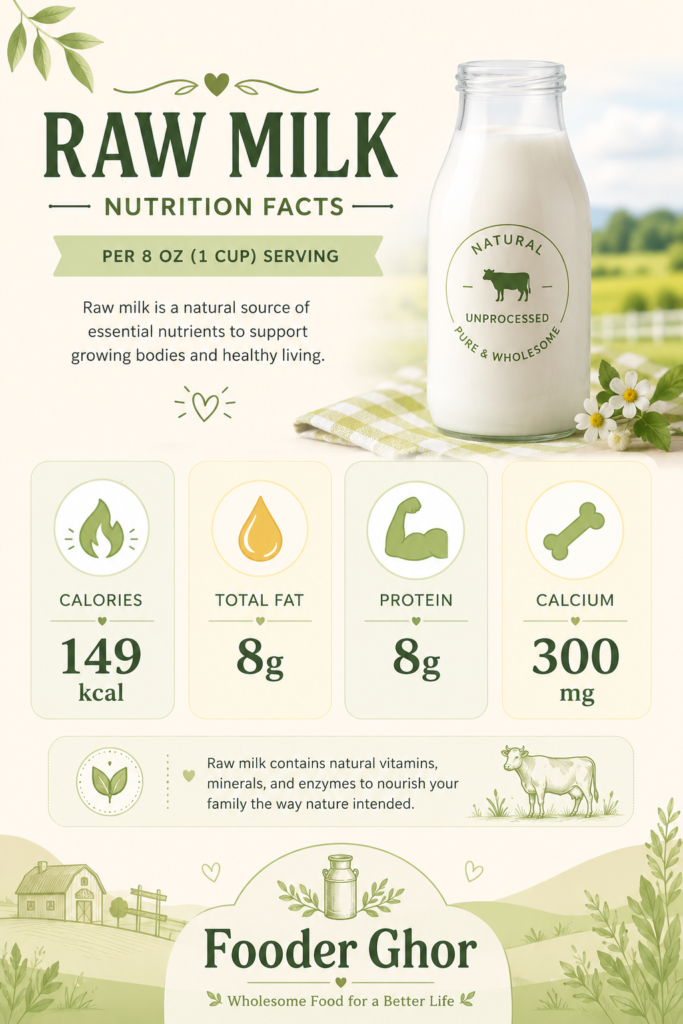
Here is a comprehensive raw milk nutrition chart based on a standard 8 oz serving size.
| Nutrient Component | Value Per Serving (8 oz / 1 Cup) | Daily Value Percentage (DV %) |
| Calories | 149 kcal | 7% |
| Total Fat | 8 grams | 10% |
| Saturated Fat | 5 grams | 25% |
| Cholesterol | 24 milligrams | 8% |
| Sodium | 105 milligrams | 5% |
| Total Carbohydrates | 12 grams | 4% |
| Sugars (Lactose) | 12 grams | Only natural sugars |
| Protein | 8 grams | 16% |
| Calcium | 300 milligrams | 30% |
| Potassium | 366 milligrams | 10% |
Warning Note: Always keep your fresh dairy products safely stored below 40 degrees Fahrenheit to protect these sensitive nutrients from spoiling too quickly.
Raw Milk Calories: A Detailed Breakdown by Volume
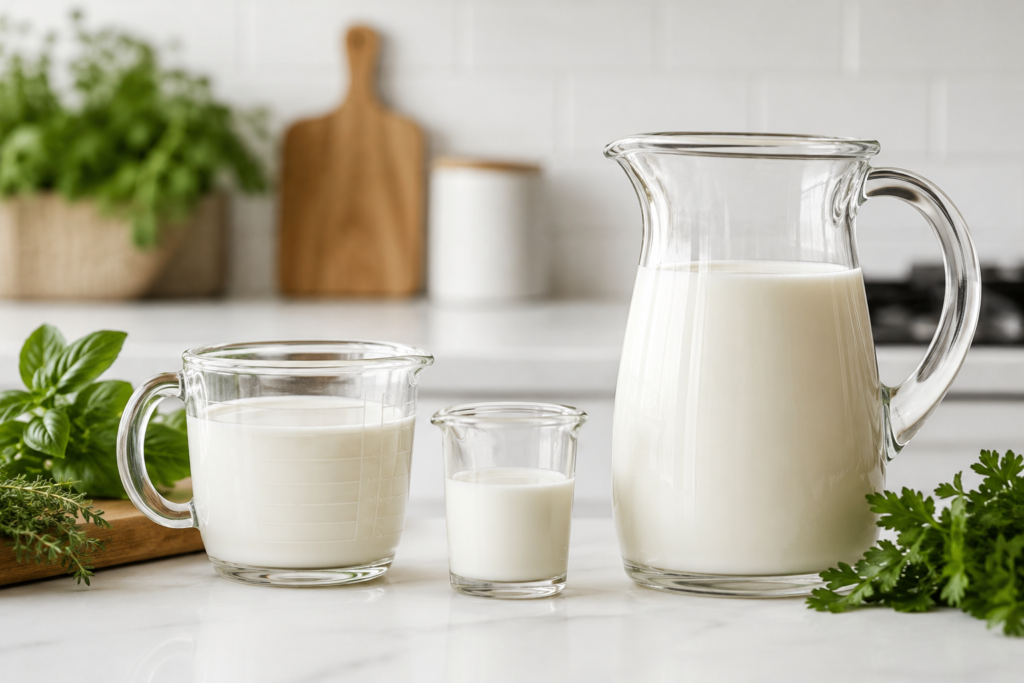
Many families use this because they want to track their daily energy intake accurately. Depending on the recipe, you might need to know the calories in raw milk for different cooking measurements in your kitchen.
How Many Calories in a Cup of Raw Milk?
For everyday cooking, a standard cup of raw milk contains roughly 146 to 150 calories depending on the specific breed of cow.
Based on USDA data, a single 8 oz raw milk nutrition and facts profile indicates that these calories supply high quality cellular energy.
Calorie Counts for Common Kitchen Measurements
It is also worth noting that the total energy value changes significantly when you purchase or consume larger kitchen quantities.
Research from the CDC shows that tracking portion sizes is a helpful practice for maintaining long term family wellness.
100 ml raw milk calories: Approximately 62 calories, making it a light option for small coffee additions.
1 cup raw milk nutrition and facts: Contains 149 calories, which serves as a great base for morning smoothies.
1 litre raw milk calories: Provides about 620 calories, frequently used in desserts and traditional home baking.
How many calories in a gallon of raw milk: Contains around 2400 total calories, making it a great pantry friendly staple for larger households.
👉 If you need to store large quantities of dairy safely in your freezer, review our detailed guide on can you freeze raw milk.
Raw Milk Fat Content: The Truth About Dairy Fats
For many homes, the creamy texture and mild flavor of whole dairy are the primary reasons people choose it over watery alternatives. Many consumers often ask how much fat in raw milk is actually considered healthy for daily consumption.
Understanding Raw Milk Fat Percentage
In most kitchens, standard whole raw milk fat percentage hovers between 3.5% and 4.5% naturally.
The FDA states that regular whole milk from commercial stores is typically standardized to exactly 3.25% fat content through processing machines.
This means full fat raw milk contains its natural, unaltered fat spheres which make it a richer texture and smoother consistency.
Does Raw Milk Have Saturated Fat?
Yes, raw milk naturally contains saturated fat, which accounts for about 5 grams per standard 8 ounce glass serving.
According to USDA nutrition data, raw milk fat naturally contains compounds such as short-chain fatty acids including butyric acid.
Does Raw Milk Make You Fat?
One important thing to know is that full fat dairy does not automatically lead to unwanted weight gain when enjoyed in moderation.
CDC guidance suggests that the healthy fats present in whole foods actually help increase feelings of fullness and satiety.
This can be useful when trying to avoid overeating sugary snacks later in the day.
Special Varieties: A2 Raw Milk Nutrition Facts
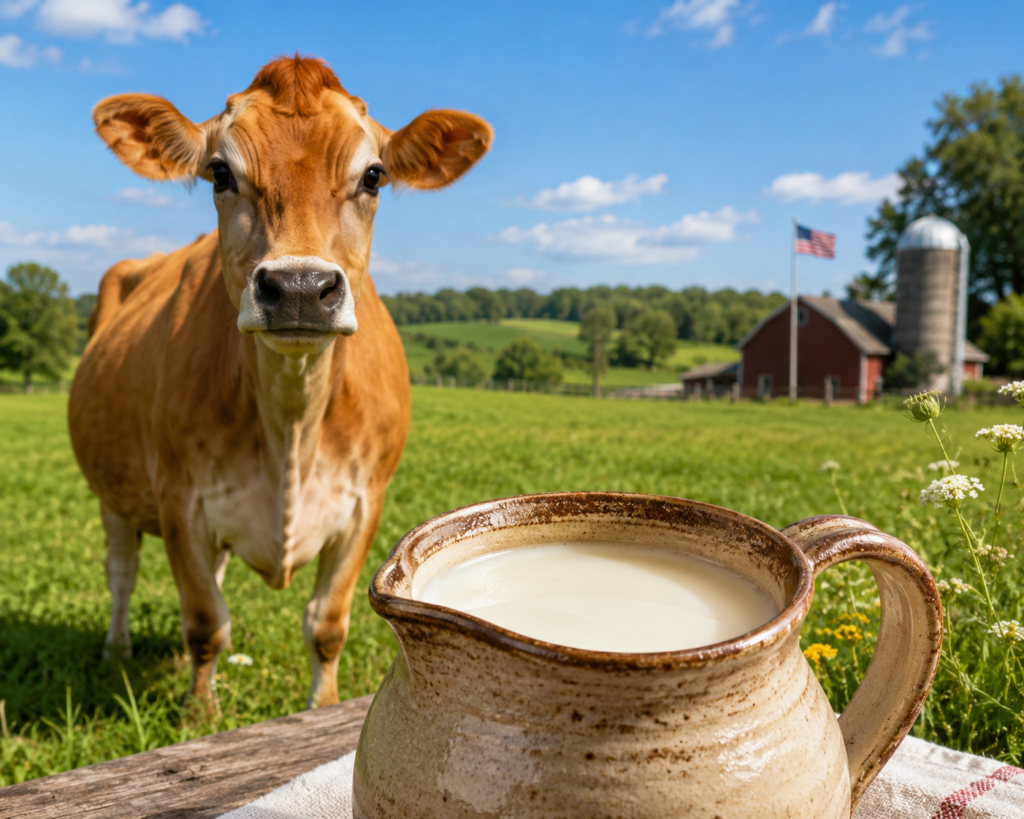
Another reason people choose it is the specific protein structure found in certain traditional livestock breeds. Many people prefer specialized varieties because they are naturally a lighter option on sensitive stomachs.
What is Special About A2 Raw Milk Nutrition Facts?
In simple terms, A2 raw milk contains only the A2 beta casein protein variant and lacks the traditional A1 protein segment.
Some consumers report preferring A2 dairy products for digestive comfort, although scientific evidence on these differences is still developing.
This makes it an incredibly family friendly choice for daily breakfast recipes.
Raw Jersey Milk Nutrition and Facts
When it comes to luxury dairy quality, raw Jersey milk nutrition and facts stand out completely from average herd options. Jersey cows naturally produce milk with a significantly higher fat content, often reaching up to 5% or 6% total fat. This unique profile creates an incredibly nutrient rich beverage with a deep golden hue and a highly prized creamy texture. It works well in soups and sauces and is commonly used in baking by artisan home chefs.
👉 To understand how raw options compare to standard heat treated factory options, read our analysis on pasteurized vs unpasteurized milk.
What Are the Nutritional Benefits of Raw Milk?
For most households, the choice to buy unpasteurized dairy comes down to the preservation of raw food qualities. The nutritional benefits of raw milk extend far beyond basic macronutrient numbers on a cardboard package.
Active Enzymes and Bioavailable Nutrients
Raw dairy naturally contains enzymes such as lipase and lactase, although the extent of their digestive role in humans remains an area of ongoing research.
According to various independent food studies, these enzymes are highly heat sensitive and are completely destroyed during commercial pasteurization.
For this reason, some consumers prefer raw dairy as a minimally processed alternative to conventional milk products.
Health guidance from the CDC mentions that while raw dairy contains many active components, consumers should always source it from clean, certified organic pastures.
👉 If you want to understand if raw options are safe for your specific family needs, check our guide on is raw milk bad for you.
Why Trust Fooder Ghor?
At Fooder Ghor, we provide educational resources focused on understanding the safe use, handling, and storage of different types of milk, including breast milk, cow’s milk, goat milk, and raw milk, based on publicly available guidance from trusted sources such as the CDC, FDA, USDA, and AAP. Some milk-related articles, particularly those involving maternal and infant feeding topics, are reviewed for clarity and presentation by nursing students with academic training in maternal and child health to help make information easier to understand. This content is provided for learning purposes only and does not offer medical advice.
Most Common Frequently Asked Questions
A: A standard 8 oz glass contains roughly 149 calories, providing balanced energy from natural proteins, carbohydrates, and healthy fats.
A: The fat percentage usually ranges from 3.5% to 4.5% for standard cows, but it can go higher for specific breeds like Jersey cows.
A: No, freezing keeps the basic macronutrients and calories intact, though the smooth consistency might separate slightly after you thaw it out.
A: Many families find it easier to digest because it contains naturally occurring food enzymes that help the human body break down nutrients comfortably.
Conclusion
So, what should we conclude about raw milk nutrition? In general, it is a whole food ingredient that offers a rich array of calories, healthy fats, vitamins, and active enzymes. A single cup provides 149 calories and 8 grams of premium fat content, making it a nutrient rich addition to any traditional kitchen. Always ensure you source your family dairy from reputable, certified local farms to enjoy these nutritional benefits safely.
👉 If you want to store bulk quantities of your fresh dairy safely in the freezer, review our steps on can you freeze raw milk.