 Skip to content

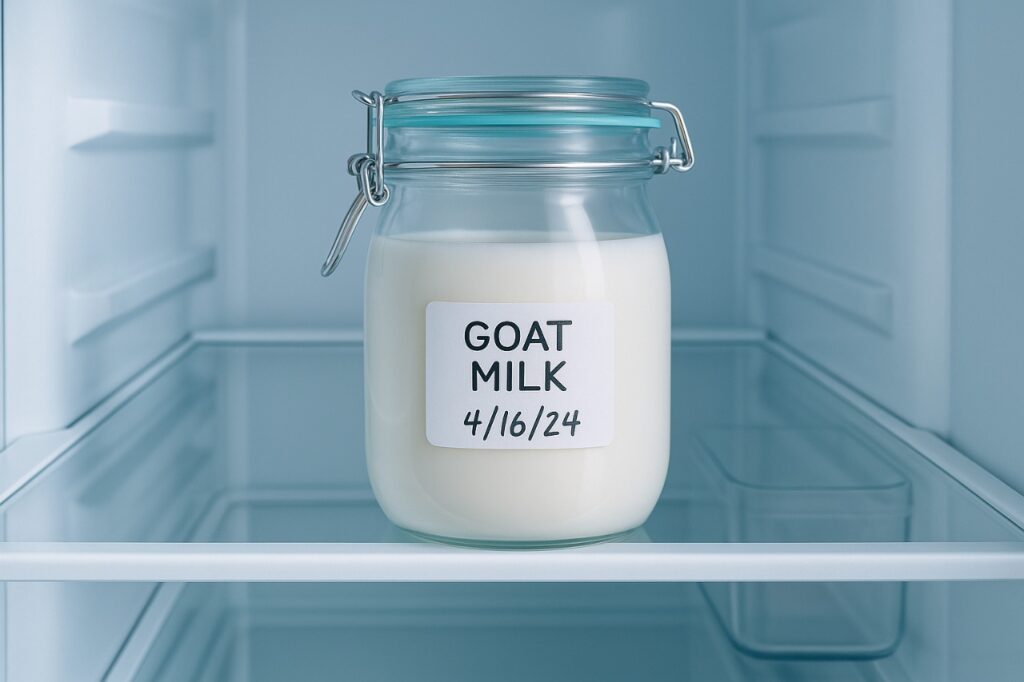
Goat milk is a popular choice for many families because of its creamy texture, mild flavor, and natural nutrients. Whether you buy it fresh from a local market or store it for daily home use, knowing how to store goat milk correctly is important to keep it fresh and tasting great. Proper handling in the kitchen ensures your family enjoys high quality milk every day.
In this simple guide, we will cover the best practices for storing and preserving goat milk. You will learn the easiest ways to keep it fresh in the refrigerator, how airtight containers protect flavor, and basic methods for long term preservation.
Short Summary
- Store goat milk cold in the back of your refrigerator where temperatures remain steady.
- Use glass or food safe airtight containers to block unwanted fridge odors.
- Keep milk fresh longer by following simple handling and clean kitchen hygiene steps.
- Learn basic preservation choices like home pasteurization and safe room temperature canning solutions.
How to Store Goat Milk Safely at Home
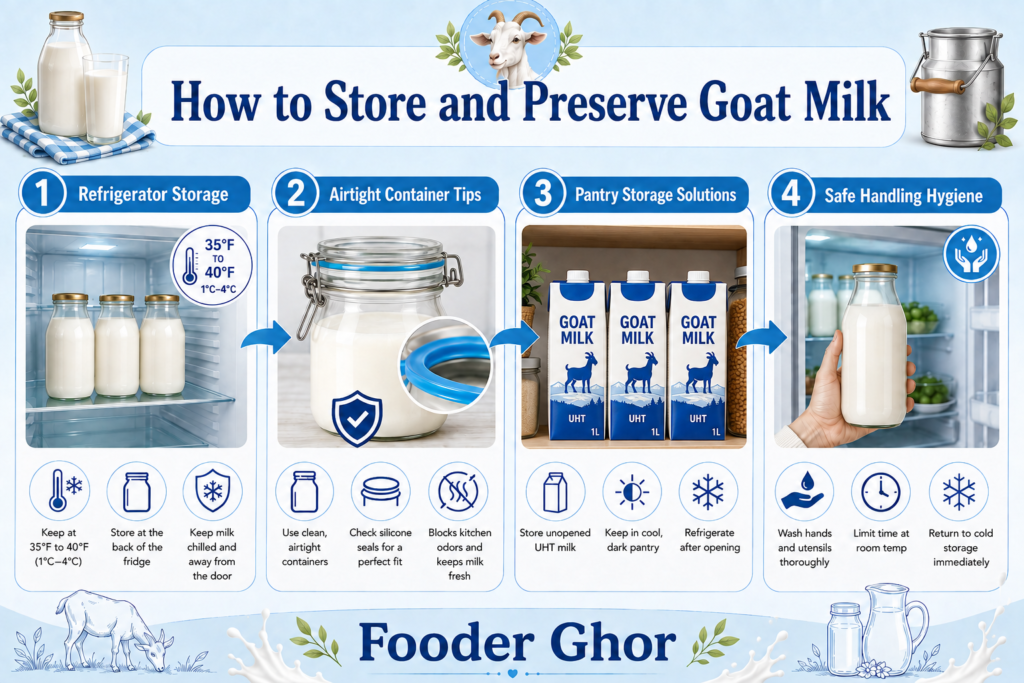
Proper temperature control is the most effective way to maintain milk quality for everyday cooking and drinking. In most households, goat milk is stored in two main ways depending on how soon you plan to use it. You can keep it cold in the primary refrigerator section or place it in sealed airtight containers for short term storage.
According to USDA, perishable foods should be refrigerated at 40°F or below to help slow bacterial growth and maintain food safety.
For similar refrigeration guidance, check out How to Store Cow Milk to learn how to keep cow milk fresh and safe at home.
How to Store Goat Milk in the Fridge
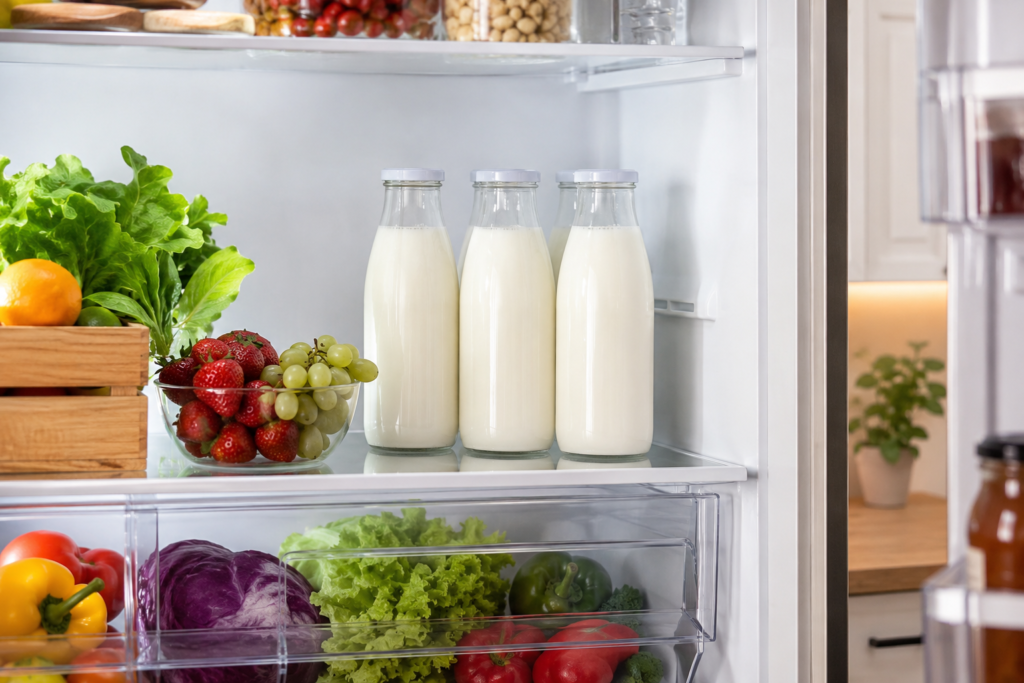
Keeping goat milk inside the main body of your refrigerator ensures a stable, cold environment. Always place your milk jug on an interior shelf rather than on the door bins. Refrigerator doors experience frequent temperature shifts whenever they open, which affects sensitive dairy items.
Placing your milk bottle toward the back wall provides consistent cooling. This simple step helps protect the creamy texture and natural flavor of your milk throughout the week.
For a step-by-step guide to freezing, portioning, storing, and thawing goat milk, check out How to Freeze Goat Milk to learn the best methods for preserving it in the freezer.
Clean Handling Practices Before Refilling
Residual milk dried inside container lids or glass rims causes early sour smells. Always wash glass bottles, lids, and silicone seals thoroughly with warm soapy water and air dry them completely before refilling with fresh goat milk. Clean habits prevent unnecessary air exposure and protect the natural taste of your milk.
How to Store Goat Milk in an Airtight Container
Glass mason jars and BPA free plastic containers work best for storing fresh goat milk. Glass is often a popular choice because it does not absorb odors from other food kept nearby. A tight seal prevents air exposure and preserves that natural mild flavor.
Before pouring milk, ensure your container is completely clean and dry. Sealing the lid tightly immediately after every use is a reliable habit for maintaining fresh dairy in any home kitchen.
For a detailed shelf-life guide, check out How Long Does Goat Milk Last to learn how long goat milk stays fresh under different storage conditions.
Using Storage Bags for Fresh Goat Milk
While storage bags are popular for breast milk, they are generally not ideal for primary goat milk storage. Storage bags are thin, which increases the risk of punctures, kitchen leaks, and unwanted odor absorption inside the refrigerator. If you use storage bags for short term cold storage, always place them inside a rigid, airtight container for extra protection against spills.
Why Proper Storage of Goat Milk Is Crucial
Understanding why proper storage of goat milk is crucial helps you protect its overall quality and nutritional value. Fresh milk contains natural proteins and delicate fats that require careful temperature management to stay fresh.
According to USDA, keeping perishable dairy products refrigerated at 40°F (4.4°C) or below helps slow bacterial growth and maintain food safety.
For a similar guide to proper refrigeration and shelf life, check out How Long Does Cow Milk Last to learn how long cow milk stays fresh under different storage conditions.
How Proper Storage Helps Prevent Goat Milk From Spoiling
Proper cooling and airtight sealing slow down natural changes in fresh dairy products. When you keep milk cold and sealed, you protect it from surrounding air exposure, humidity, and unwanted kitchen smells.
According to FDA, milk and milk products should be kept refrigerated at 40°F (4°C) or below to help slow the growth of harmful bacteria and maintain food safety. Maintaining a clean container and a cold environment ensures your goat milk remains a simple, reliable ingredient for breakfast cereals, baking recipes, or afternoon smoothies.
For more information about potential digestive, allergic, and nutritional concerns, check out Goat Milk Side Effects.
How to Handle Goat Milk for Maximum Freshness
Good handling practices begin long before the milk reaches your glass. Always return the milk carton to the refrigerator right after pouring a serving. Leaving milk sitting on the kitchen counter allows the liquid to warm up quickly.
Always use clean glasses and avoid pouring unused milk back into the main storage container. These effortless kitchen habits keep your main supply fresh and perfect for daily family meals.
For practical storage guidance, check out How to Store Buffalo Milk to learn how proper refrigeration, clean handling, and suitable containers can help keep buffalo milk fresh.
Quick Kitchen Tip: Checking Fridge Temperature
If you do not have a digital thermometer, place a small glass of water in the back of your refrigerator overnight. Check the water temperature in the morning to ensure your cooling setting stays consistently at 35°F to 40°F. Maintaining cold air flow keeps stored goat milk fresh and prevents natural degradation.
Can You Preserve Goat Milk for Longer Use?
Yes, you can preserve goat milk if you want to extend its usability beyond standard fresh storage limits. Many people wonder how to preserve goat milk for future cooking, baking, or emergency pantry supplies.
Goat milk can generally be preserved in three distinct ways: pantry safe shelf processing, heat pasteurization, and specialized commercial processing. Each method offers flexible choices depending on your household needs and kitchen setup.
According to USDA, perishable foods can be preserved through methods such as refrigeration, freezing, or approved heat processing, while commercially shelf-stable foods require proper heat treatment and airtight packaging to remain safe without refrigeration.
For more information about the nutritional value and potential advantages of goat milk, check out Goat Milk Benefits.
3 Ways to Preserve Goat Milk Efficiently
Preserving dairy requires precise methods to keep the product safe for consumption. Depending on your resources and preferences, you can choose from home processing or commercial options.
According to CDC, pasteurization heats milk to a high enough temperature for enough time to kill harmful germs, making pasteurized milk a safer choice than raw milk.
How to Preserve Goat Milk in the Pantry
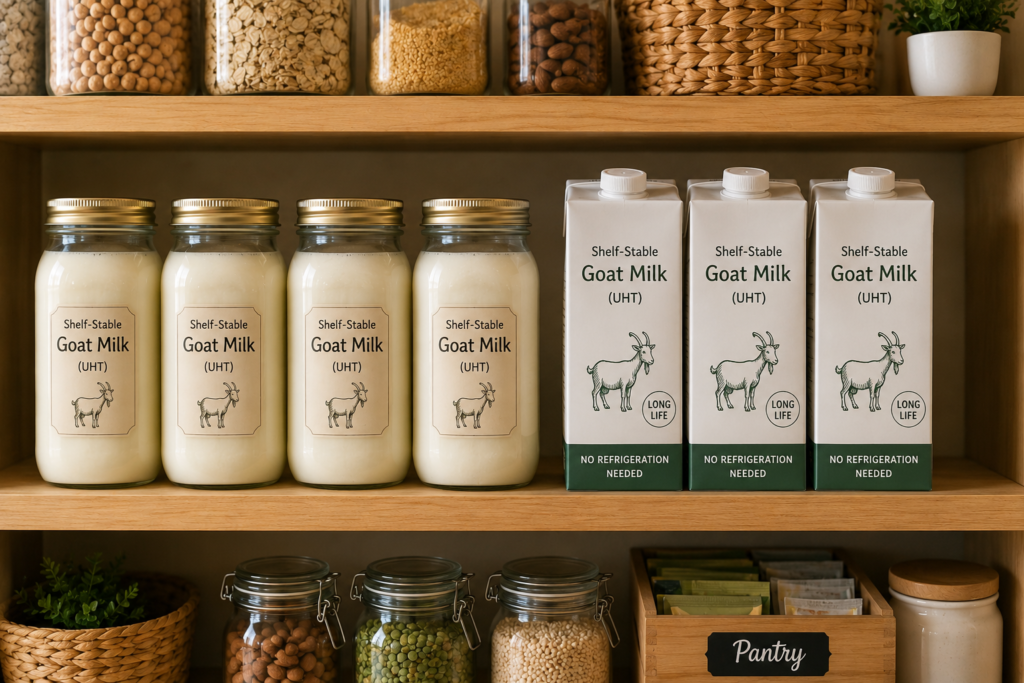
Standard liquid goat milk should never be canned at home, as home pressure canning liquid milk is not safe or recommended by USDA food safety guidelines. Liquid milk requires specialized Ultra-High Temperature (UHT) commercial processing to remain shelf-stable safely without refrigeration.
If you want to keep goat milk in your pantry for long-term emergency supplies or camping trips, use store-bought, commercially processed UHT goat milk or convert fresh milk into dehydrated powdered goat milk. Unopened commercial UHT milk can sit safely in a cool, dark pantry for months until opened.
If you want to understand its natural taste profile in detail, you can read our guide on what goat milk tastes like.
How to Preserve Goat Milk Through Pasteurization
Home pasteurization is an effective way to prepare fresh milk for longer refrigerator storage by heat-treating it to eliminate naturally occurring bacteria. Instead of detailed cooking steps, focus on cooling the milk quickly after heating before transferring it into sanitized glass bottles for fridge storage.
According to CDC, pasteurization heats milk enough to kill harmful germs, making pasteurized milk a safer choice than raw milk. Milk should still be refrigerated at 40°F or below after pasteurization. Keeping pasteurized milk tightly sealed in cold refrigeration helps retain its quality and smooth texture for daily use.
For another practical guide to preserving shelf-stable dairy at home, check out How to Preserve Evaporated Milk to learn about refrigeration, freezing, and other storage methods.
How to Preserve Goat Milk in a Commercial Way
Commercial processors use specialized temperature techniques to create shelf stable liquid products found in grocery stores. The primary commercial preservation method is Ultra High Temperature (UHT) processing, which packages milk into airtight aseptic containers.
UHT treated milk remains completely safe at stable room temperatures until opened, offering a long term solution for household pantries.
For a practical guide to safely heat-treating fresh goat milk at home, check out How to Pasteurize Raw Goat Milk to learn about the basic pasteurization process and safe handling.
Why Trust Fooder Ghor?
At Fooder Ghor, we provide educational resources focused on understanding the safe use, handling, and storage of different types of milk, including breast milk, cow’s milk, goat milk, and raw milk, based on publicly available guidance from trusted sources such as the CDC, FDA, USDA, and AAP. Some milk-related articles, particularly those involving maternal and infant feeding topics, are reviewed for clarity and presentation by nursing students with academic training in maternal and child health to help make information easier to understand. This content is provided for learning purposes only and does not offer medical advice.
Frequently Asked Questions
Heavy glass jars with airtight lids are the best option because glass does not transfer odors or flavors to the milk. For more guidance on choosing the right containers for storing milk safely and maintaining freshness, check out Best Milk Storage Containers for practical storage recommendations.
It is better to store milk on an inside shelf near the back where the temperature remains cold and constant.
An airtight container features a silicone seal or screw top lid that prevents liquid leaks and keeps outside air from entering.
Yes, pasteurized goat milk is safer and holds its freshness longer under regular household refrigeration.
No, you should avoid metal containers when learning how to store goat milk safely. Metal reacts with milk fat and causes a unpleasant metallic taste, so always choose glass or BPA free plastic options instead. Heavy glass jars protect the natural mild flavor without altering the taste during daily refrigeration.
Never pour served milk back into the original container after pouring a glass. Liquid poured out rapidly absorbs room temperature microorganisms and ambient moisture, which spoils the rest of the fresh batch. Pouring used milk back introduces bacteria directly into your main clean supply.
Yes, raw and pasteurized goat milk absorbs surrounding odors very quickly if left exposed inside the refrigerator. Storing milk near onions, garlic, or fish spoils its natural sweet flavor, making airtight glass containers necessary for proper dairy placement.
Frequent shaking does not extend fresh quality and introduces extra air bubbles into the container. Added oxygen accelerates natural degradation over time, so you should only swirl the bottle gently right before serving to blend natural fats evenly.
The back shelf of your refrigerator provides the most stable environment for keeping stored goat milk fresh. Placing bottles on refrigerator doors exposes dairy to warmth every time the door opens, which speeds up natural bacterial growth.
Conclusion
Learning how to store goat milk properly ensures your family always enjoys fresh, delicious, and nutrient rich dairy. By keeping your milk in airtight glass containers on a cold refrigerator shelf, you preserve its creamy texture and mild flavor. Whether you rely on simple fridge storage or explore home pasteurization, following clean kitchen practices keeps your dairy safe and delicious.
For another practical guide to keeping milk fresh and safe at home, check out How to Store Soy Milk to learn about proper refrigeration, containers, and everyday storage practices.
For a closer look at how goat milk compares with cow milk in nutrition, composition, and other characteristics, check out Difference Between Goat Milk vs Cow Milk for a detailed comparison.











