 Skip to content


Mozzarella cheese is one of the most versatile and beloved ingredients in everyday cooking, prized for its mild flavor and wonderful meltability. Whether you are building a homemade pizza or preparing a fresh Caprese salad, knowing how long does mozzarella cheese last is essential for maintaining both food quality and family safety. The shelf life of mozzarella depends heavily on its moisture content, packaging type, and exact storage temperature. Fresh mozzarella packed in liquid, for instance, spoils much faster than low-moisture block or shredded varieties.
In this comprehensive guide, we will explore the exact timelines for keeping mozzarella fresh in the refrigerator, freezer, and at room temperature. We will also cover clear safety indicators to help you spot bad cheese before it harms your health.
Short Summary
Fresh mozzarella in water lasts 3 to 5 days after opening in the fridge.
Low-moisture block mozzarella lasts 3 to 4 weeks opened in the fridge.
Shredded mozzarella cheese usually lasts 5 to 7 days after opening.
Freezing mozzarella extends its usability for 3 to 6 months.
Never leave mozzarella at room temperature for more than 2 hours.
Discard cheese immediately if you notice mold, sour odor, or slimy texture.
For a detailed guide on making cottage cheese at home, check out How to Make Cottage Cheese for step-by-step instructions.
How Long Does Mozzarella Cheese Last?
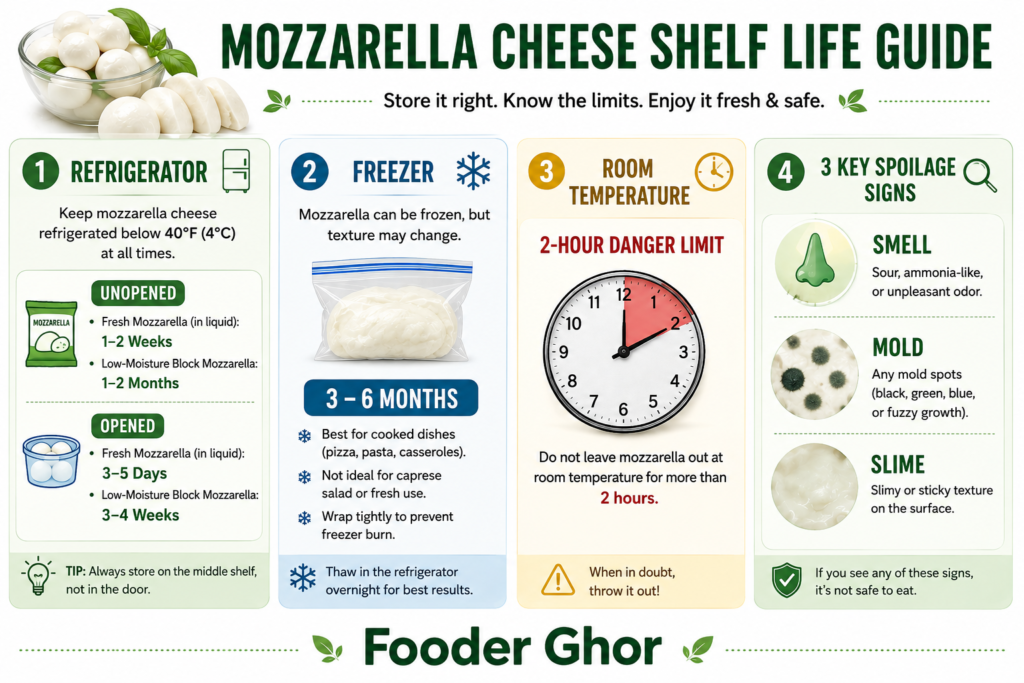
Mozzarella cheese typically lasts anywhere from 3 days to 6 months depending on its moisture level, packaging, and whether it is stored in the fridge, freezer, or counter.
In general, unopened hard or low-moisture mozzarella can remain safe in your refrigerator for up to 1 to 2 months, while opened packs should be consumed within 1 to 4 weeks depending on the style. Fresh mozzarella balls packed in whey or brine are highly perishable due to high water content and last only 3 to 5 days once opened. If left at room temperature, any form of mozzarella becomes unsafe after 2 hours.
Here is a quick reference guide showing how long mozzarella cheese lasts under different storage conditions:
| Mozzarella Variety | Refrigerator (Unopened) | Refrigerator (Opened) | Freezer Storage | Room Temp Limit |
| Fresh Mozzarella (in liquid) | 1 – 2 Weeks | 3 – 5 Days | Safe for 1–2 Months (Texture becomes crumbly) | 2 Hours |
| Low-Moisture Block | 1 – 2 Months | 3 – 4 Weeks | 3 – 6 Months | 2 Hours |
| Shredded Mozzarella | Best-by Date (+1 week) | 5 – 7 Days | 3 Months | 2 Hours |
| Deli Mozzarella Slices | 1 – 2 Weeks | 5 – 7 Days | 2 – 3 Months | 2 Hours |
| Homemade Mozzarella | N/A | 3 – 5 Days | 1 – 2 Months | 2 Hours |
| Cooked Mozzarella Dishes | N/A | 3 – 4 Days | 2 – 3 Months | 2 Hours |
How Long Does Mozzarella Cheese Last in the Fridge?
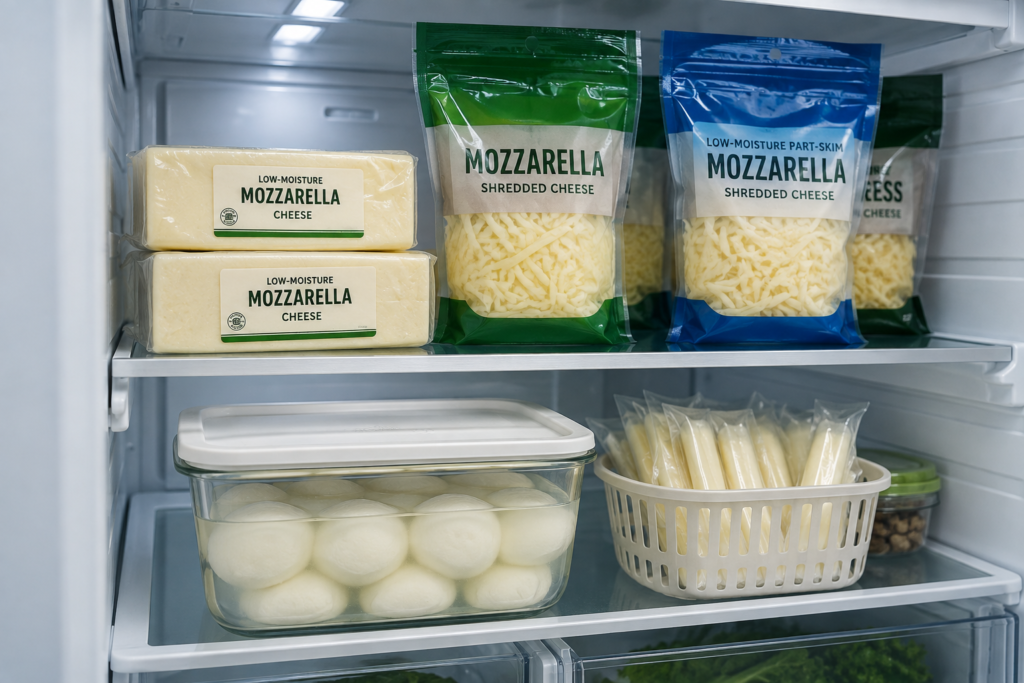
When kept in the refrigerator below 40°F, mozzarella cheese lasts from 3 days up to 2 months based on moisture content and package sealing.
For most households, keeping cheese cold in the refrigerator is the primary method for maintaining daily freshness and safety. In everyday cooking, storage time varies greatly between opened and unopened containers.
Unopened Mozzarella in the Fridge
Unopened low-moisture block mozzarella remains safe in the fridge for 1 to 2 months, while unopened pre-shredded bags last up to 1 week past their printed date.
Unopened mozzarella cheese protected by original factory vacuum packaging lasts quite long because exposure to ambient air and bacteria is completely blocked. Unopened fresh mozzarella in water should always be consumed by the date marked on the tub.
Opened Mozzarella in the Fridge
Opened low-moisture block mozzarella lasts 3 to 4 weeks in the fridge, while opened fresh mozzarella in liquid stays good for only 3 to 5 days.
Once you open the packaging, oxygen and ambient microorganisms interact with the cheese surface, which accelerates deterioration. Opened low-moisture block cheese lasts well when wrapped tightly in parchment paper or foil.
According to the FDA, perishable foods should be refrigerated at or below 40°F (4°C) to slow the growth of harmful bacteria and help maintain food safety.
How Long Does Mozzarella Cheese Last in the Freezer?
Frozen low-moisture or shredded mozzarella cheese stays fresh and safe to use for 3 to 6 months when kept constantly at 0°F. Freezing is an excellent, practical way to preserve cheese if you purchased extra quantities on sale or cannot finish a large block before it spoils.
According to the USDA, food that remains continuously frozen at 0°F (-18°C) or below can remain safe almost indefinitely, while recommended freezer storage times are mainly intended to maintain the best quality, taste, and texture. Low-moisture block and shredded mozzarella freeze exceptionally well. Fresh high-moisture mozzarella can also be frozen, but it often becomes watery and crumbly upon thawing due to ice crystal formation breaking down the delicate protein structures.
To freeze mozzarella successfully, wrap blocks tightly in plastic wrap and place them inside a heavy-duty freezer bag. For pre-shredded cheese, toss the bag occasionally during the first hour of freezing to keep individual shreds from clumping into one solid mass. If you enjoy managing various pantry and cold items, you can also check how long does sheep milk lasts alongside your cheese storage routine.
How Long Does Homemade Mozzarella Cheese Last?
Freshly made homemade mozzarella cheese lasts between 3 and 5 days when kept submerged in cold liquid inside the refrigerator. Homemade mozzarella cheese is a delicious, fresh kitchen staple, but it lacks the chemical preservatives and commercial vacuum sealing of factory-made options.
Because it contains higher moisture levels and is handled manually during the stretching process, natural ambient bacteria can shorten its lifespan. Always submerge homemade mozzarella balls in cold, lightly salted water or fresh whey inside an airtight container. If you plan to make your own cheese at home, be sure to check how to make mozzarella cheese for safe step-by-step milk pasteurization and handling instructions.
Note: According to FDA & AAP guidelines, always use pasteurized milk for making homemade mozzarella to prevent Listeria and bacterial contamination.
How Long Does Mozzarella Cheese Last at Room Temperature?
Mozzarella cheese can safely stay out at room temperature for a maximum of 2 hours before bacteria multiply to unsafe levels.
Leaving perishable dairy out on kitchen counters is one of the most common causes of premature spoilage and foodborne health issues. In many cases, warmth accelerates bacterial growth significantly.
Unopened at Room Temperature
Unopened mozzarella cheese packages can sit out at room temperature for up to 2 hours before the internal temperature rises into the danger zone.
Even if a package of mozzarella is completely sealed in factory plastic, it should never remain out at room temperature for an extended period. Unopened fresh mozzarella packed in liquid is even more sensitive and will begin souring rapidly if left unchilled.
Opened at Room Temperature
Opened mozzarella cheese left at room temperature must be discarded after 2 hours, or after just 1 hour if room temperature exceeds 90°F.
Opened mozzarella cheese left at room temperature can become unsafe as bacteria multiply rapidly in the temperature danger zone between 40°F and 140°F. According to the CDC, perishable foods should be refrigerated within 2 hours, or within 1 hour when the temperature is above 90°F.
How Long Does Mozzarella Cheese Last After Expiration Date?
Unopened low-moisture mozzarella block lasts 1 to 2 weeks past its expiration date, while fresh mozzarella should be eaten on or before the date. The date stamped on cheese packaging is usually a “best-by” or “sell-by” date indicating peak quality rather than a strict safety deadline.
Unopened low-moisture block mozzarella often remains completely safe and tasty for 1 to 2 weeks past the printed expiration date if stored continuously below 40°F. Unopened pre-shredded cheese may last 5 to 7 days past its date, provided there are no visible signs of mold inside the bag. However, fresh high-moisture mozzarella should ideally be consumed on or before the printed date, as its quality degrades rapidly once that threshold passes.
How Long Does Mozzarella Cheese Last While Traveling?
Mozzarella cheese lasts 2 to 4 hours while traveling if kept inside an insulated cooler bag filled with frozen ice packs. Transporting cheese during road trips, picnics, or grocery runs requires careful temperature control to prevent spoilage.
Without ice packs, soft or fresh mozzarella should not be kept in a warm vehicle for more than 1 to 2 hours. Harder low-moisture blocks handle short travel times slightly better, but consistent refrigeration is always required to prevent fat separation and bacterial proliferation.
How Long Does Mozzarella Cheese Last If Left Out Overnight?
Mozzarella cheese left out overnight for more than 2 hours is unsafe to eat and must be thrown away immediately.
A very common household question is whether cheese can be saved after being left out on the counter overnight. In everyday cooking, if mozzarella cheese has been left out overnight at room temperature for 6 to 8 hours or longer, it must be thrown away immediately.
According to the USDA, perishable foods should not be left at room temperature for more than 2 hours, or more than 1 hour when the temperature is above 90°F. Even if the cheese looks normal or does not smell foul, invisible bacterial toxins may be present that cannot be destroyed by cooking or reheating.
How Long Does Deli Mozzarella Cheese Last?
Freshly sliced deli mozzarella cheese lasts between 5 and 7 days in the refrigerator when wrapped tightly in sealed packaging. Freshly sliced mozzarella from the deli counter offers fantastic flavor, but its shelf life differs from factory-sealed packages.
Because deli slices are handled manually, cut on shared equipment, and wrapped in basic butcher paper or plastic wrap, they are exposed to air and human contact early on. To maximize freshness, transfer deli slices into an airtight container or wrap them tightly in foil as soon as you get home.
How Long Does Cooked Mozzarella Cheese Last?
Cooked mozzarella cheese used in baked meals like pizza or lasagna lasts 3 to 4 days stored in the refrigerator. Using mozzarella in baked dishes like lasagna, pizza, or casserole alters its physical structure and moisture balance.
Heat destroys initial surface bacteria during cooking, but once the meal cools down, new air exposure introduces spoilage risks over time. If you cannot finish cooked leftovers within 4 days, freeze individual portions for up to 2 months.
How Long Does Shredded Mozzarella Cheese Last?
An opened bag of pre-shredded mozzarella cheese lasts 5 to 7 days in the refrigerator before mold risk increases significantly. Pre-shredded cheese is a convenient kitchen staple, but individual shreds offer a large surface area exposed to oxygen.
Commercial manufacturers coat shredded cheese with cellulose or potato starch to prevent sticking, which also helps absorb minor moisture. However, once opened, mold spores from the environment easily settle on shreds. Always inspect the inner corners of the bag for tiny green or white mold spots.
How Long Does Mozzarella Cheese Last in Olive Oil?
Fresh mozzarella balls submerged in olive oil last between 3 and 5 days when kept continuously refrigerated in an airtight container. Marinating fresh mozzarella balls in extra virgin olive oil with herbs is a popular culinary tradition that offers rich flavor.
Fresh mozzarella balls submerged in olive oil must be kept continuously refrigerated and used within 4 to 5 days to comply with FDA botulinum safety standards.
According to the FDA and CDC food safety guidelines, submerged fresh cheese in oil creates an anaerobic (oxygen-free) environment where Clostridium botulinum bacteria can thrive. Always store oil-marinated mozzarella continuously in the refrigerator below 40°F and consume it within 3 to 5 days. Never store oil-marinated mozzarella at room temperature.
Does Mozzarella Cheese Go Bad?
Yes, mozzarella cheese definitely goes bad over time due to moisture degradation, yeast buildup, and natural bacterial growth.
Like all real dairy products, mozzarella cheese undergoes chemical breakdown as fats and proteins deteriorate over time.
Does Expired Mozzarella Cheese Go Bad?
Expired mozzarella cheese eventually goes bad as bacteria and mold break down the organic milk solids inside the cheese structure.
While unopened low-moisture blocks offer some buffer time past the printed label, high moisture levels make fresh mozzarella particularly vulnerable to rapid decay once expiration passes.
How to Tell If Mozzarella Cheese Is Bad?
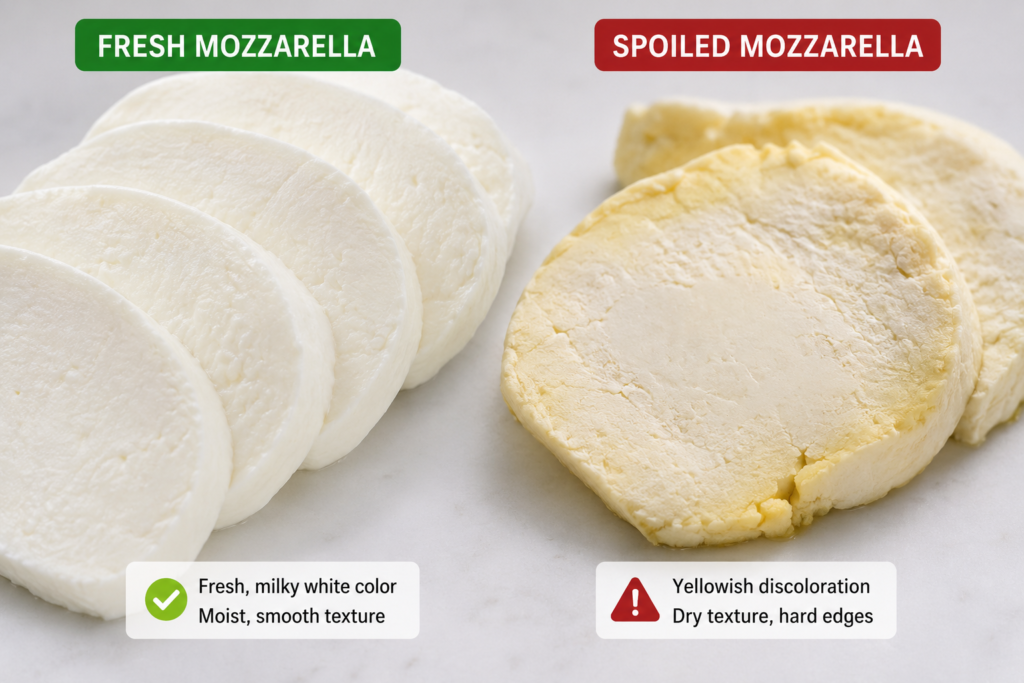
You can tell mozzarella cheese is bad if it smells sour, develops green or white mold, or feels slimy to the touch.
Knowing how to evaluate dairy freshness using basic sensory checks is essential for every home cook.
Does Mozzarella Cheese Smell Bad When Spoiled?
Spoiled mozzarella cheese smells distinctly bad, developing a sharp, sour, vinegary, or yeast-like odor instead of its normal mild milky aroma.
Fresh, safe mozzarella has a very mild, milky, and pleasant aroma. When mozzarella goes bad, taking a whiff reveals an aggressive or unpleasant odor, showing that the cheese has spoiled and should not be eaten.
Visual Signs of Bad Mozzarella Cheese
Visual signs of bad mozzarella cheese include visible green or blue mold spots, yellowish discoloration, a slimy surface layer, and swollen packaging.
Visual inspection is often the easiest way to identify unsafe cheese:
Mold Growth: Any presence of blue, green, black, or fuzzy white mold spots.
Color Changes: Yellowing, dull grayish discoloration, or brownish edges on white cheese.
Texture Changes: Slimy surface coating, watery separation, or hardened, cracked crusts.
Puffy Packaging: Swollen or bulged sealed bags caused by gas produced by active spoilage bacteria.
Can You Use Spoiled or Bad Mozzarella Cheese?
You can never safely use or eat spoiled mozzarella cheese, even if you cut away visible mold or cook it thoroughly. While some aged hard cheeses like cheddar allow you to trim off small surface mold spots, soft or semi-soft cheeses like mozzarella must be discarded completely when mold appears.
Unlike hard cheeses (such as cheddar or parmesan) where mold can be safely trimmed away, USDA food safety guidelines state that semi-soft, high-moisture cheeses like mozzarella must be discarded completely when mold appears. Microscopic mold roots and heat-resistant mycotoxins rapidly permeate through the soft, porous structure of mozzarella, making the entire block unsafe. Cooking or melting bad mozzarella will not make it safe, as many bacterial toxins are heat-resistant.
Mozzarella Cheese Spoiling vs. Going Bad: Is There a Difference?
Cheese spoiling refers to loss of peak taste or texture, whereas cheese going bad means dangerous bacterial growth makes it unsafe to eat.
In culinary terminology, there is a minor distinction between natural age deterioration and true bacterial spoilage:
Spoiling (Deterioration): This refers to the gradual loss of optimal quality. The cheese may dry out, lose its stretchiness, or develop a slightly stronger, tangier flavor, but it remains microbially safe to eat.
Going Bad (Unsafe Spoilage): This occurs when dangerous mold, yeast, or pathogenic bacteria multiply to unsafe levels, producing sour smells, slime, or toxins that make the food hazardous to human health.
For practical guidance on keeping mozzarella cheese fresh, maintaining its quality, and storing it safely, check out How to Store Mozzarella Cheese for detailed storage recommendations.
Can Spoiled Mozzarella Cheese Make You Sick?
Eating spoiled mozzarella cheese can make you sick by causing mild to severe food poisoning from harmful bacterial toxins.
If you accidentally consume bad mozzarella, your immune and digestive systems will react to eliminate the foreign toxins and bacteria.
What Happens If You Eat Spoiled Mozzarella Cheese?
When you eat spoiled mozzarella cheese, you may experience stomach pain, nausea, vomiting, and diarrhea within 2 to 24 hours after eating.
While most mild cases resolve on their own with adequate hydration, severe infections can cause dehydration and require professional medical evaluation.
According to the CDC, common symptoms of food poisoning include nausea, vomiting, stomach pain or cramps, and diarrhea, while severe illness can lead to dehydration and may require medical attention.
Common Mozzarella Cheese Side Effects from Spoilage
Common side effects of eating spoiled mozzarella cheese include sudden nausea, stomach cramps, watery diarrhea, vomiting, mild fever, and fatigue.
Consuming spoiled dairy leads to typical food poisoning reactions. It is worth noting that fresh mozzarella also carries standard nutritional side effects for people with lactose intolerance or milk allergies, even when fresh. To understand general dietary concerns unrelated to spoilage, you can read our mozzarella cheese side effects guide for a detailed health overview.
Why Trust Fooder Ghor?
At Fooder Ghor, we provide educational resources focused on understanding the safe use, handling, and storage of different types of milk, including breast milk, cow’s milk, goat milk, and raw milk, based on publicly available guidance from trusted sources such as the CDC, FDA, USDA, and AAP. Some milk-related articles, particularly those involving maternal and infant feeding topics, are reviewed for clarity and presentation by nursing students with academic training in maternal and child health to help make information easier to understand. This content is provided for learning purposes only and does not offer medical advice.
Frequently Asked Questions
Unopened low-moisture block mozzarella is often safe for 1 to 2 weeks past its expiration date if kept chilled below 40°F and shows no visual or odor signs of spoilage.
Fresh mozzarella in water has gone bad if the liquid becomes cloudy and slimy, smells sour or like yeast, or if the cheese balls develop a yellowish tint or soft mold spots.
Melting or cooking bad mozzarella will not make it safe. While heat kills active bacteria, it does not destroy heat-stable toxins produced by spoilage microorganisms.
Shredded mozzarella turns yellow when exposed to air and light, causing fats to oxidize. If it only changed color slightly without a bad odor or mold, it may be safe, but severe yellowing usually indicates decay.
Drink plenty of water and monitor how you feel over the next 24 hours. Most healthy adults handle tiny accidental exposures well, but consult a physician if you experience vomiting or severe cramps.
Fresh mozzarella should smell clean, mild, and milky. A distinct sour or vinegary smell is a clear sign that bacterial growth has occurred and the cheese should be discarded.
Refreezing thawed mozzarella cheese is not recommended. Repeated freezing and thawing breaks down cell structures, making the texture extremely watery, grainy, and unappetizing.
Conclusion
So, how long does mozzarella cheese last? Mozzarella cheese lasts 3 to 5 days opened for fresh varieties, 3 to 4 weeks for low-moisture blocks, and up to 6 months when frozen.
The exact timeline depends directly on the cheese style, moisture level, and storage environment. Freezing low-moisture mozzarella extends its usability significantly while preserving cookability. Always follow basic safety guidelines, keep dairy cold below 40°F, and discard any cheese showing signs of sour smells, slime, or mold. For better cheese management, you can also learn how to store feta cheese to keep all your favorite dairy products fresh and delicious.











