 Skip to content


Mozzarella cheese is a staple ingredient in many home kitchens, appreciated for its fresh flavor and smooth texture. Knowing how to store mozzarella cheese properly ensures that its quality, moisture, and mild taste remain intact for family meals. Proper care prevents early spoiling and allows parents to manage household food waste efficiently.
In this guide, we will explore effective ways to keep mozzarella fresh using simple refrigeration, freezing methods, olive oil preservation, and safe thawing techniques. Following proper safety steps helps keep your dairy safe and delicious.
Short Summary
Mozzarella cheese can be stored in three primary ways: in the refrigerator, in the freezer, or inside an airtight container.
Proper storage preserves moisture levels and prevents exposure to harmful airborne bacteria.
Freezing low-moisture mozzarella is safe and can be done in three main formats: freezing whole blocks, freezing shredded cheese, or freezing cooked portions.
Preservation can be extended using two home methods: freezer storage or submerging firm cheese in olive oil.
Safe thawing can be accomplished using three methods: refrigerator thawing, cold water baths, or direct cooking.
If you want to compare storage methods for other fresh pantry items, you can read our guide on how to store feta cheese for home kitchens.
Why Proper Storage of Mozzarella Cheese Is Crucial
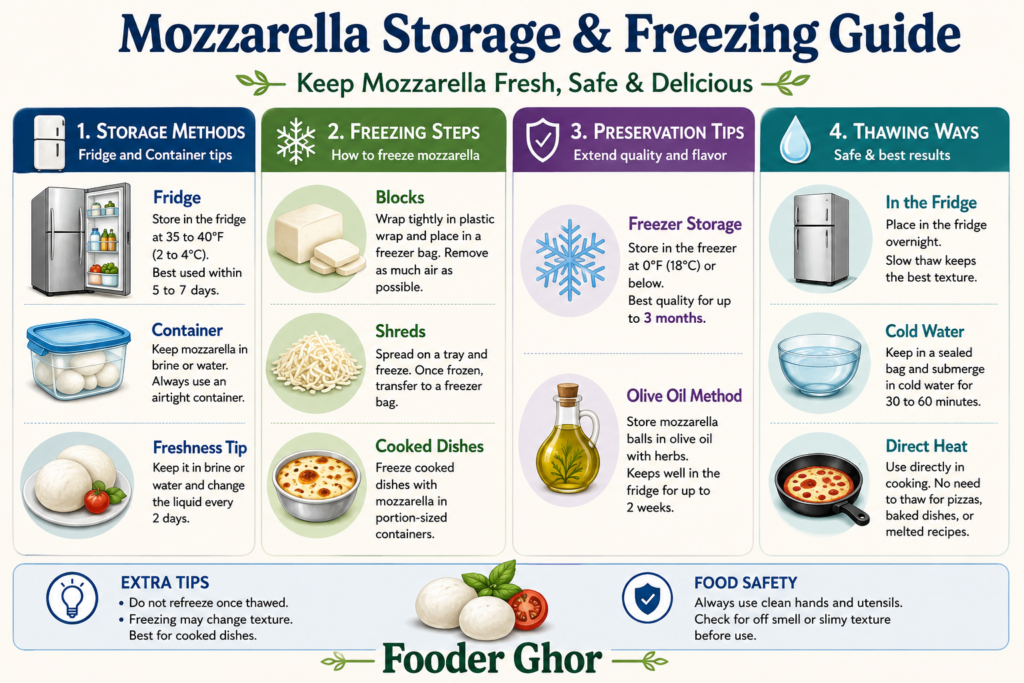
Proper storage of mozzarella cheese is crucial because its high moisture content makes it highly susceptible to microbial growth and texture loss. Without adequate temperature control, the balance of whey and milk fat breaks down quickly, altering the cheese’s mild taste.
According to the FDA, keeping perishable foods refrigerated at 40°F (4°C) or below helps slow the growth of harmful bacteria. Proper refrigeration is therefore important for maintaining the safety and quality of fresh mozzarella.
According to the USDA, perishable foods enter the “Danger Zone” when kept at temperatures between 40°F and 140°F (4°C and 60°C). In this temperature range, harmful bacteria can double in number in as little as 20 minutes. Maintaining constant refrigeration below 40°F is essential to prevent rapid spoilage and protect your family from foodborne illness.
For families interested in how storage impacts shelf life across different dairy products, review our guide on how long does mozzarella cheese last under standard cooling conditions.
How Proper Storage Helps Prevent Mozzarella Cheese from Spoiling
Proper storage prevents mozzarella cheese from spoiling by eliminating exposure to ambient air, preventing mold spores from settling, and stabilizing moisture levels. Sealing cheese minimizes oxidation and protects delicate milk proteins from absorbing external refrigerator odors.
According to the CDC, keeping perishable foods refrigerated at 40°F (4°C) or below helps slow the growth of harmful bacteria and reduce the risk of foodborne illness.
If you naturally enjoy alternative dairy options, you may also find our article on how to store soy milk useful for organizing your household routine.
How to Store Mozzarella Cheese
Mozzarella cheese can be stored effectively using three practical methods: keeping it in the refrigerator, freezing it for longer periods, or sealing it inside an airtight container. Each method serves different kitchen needs depending on how soon you plan to use the cheese.
3 Ways to Store Mozzarella Cheese
How to Store Mozzarella Cheese in the Fridge
Store fresh mozzarella cheese in the fridge by keeping fresh water-packed balls submerged in their original liquid brine or wrapping low-moisture blocks tightly in plastic wrap. Refrigerate immediately upon bringing it home, placing it in the coldest part of the main compartment rather than the door.
According to the USDA, perishable foods should be stored in a refrigerator maintained at 40°F (4°C) or below to help slow the growth of harmful bacteria.
For practical guidance on storing almond milk safely and maintaining its freshness, check out How to Store Almond Milk for a detailed guide.
How to Store Mozzarella Cheese in the Freezer
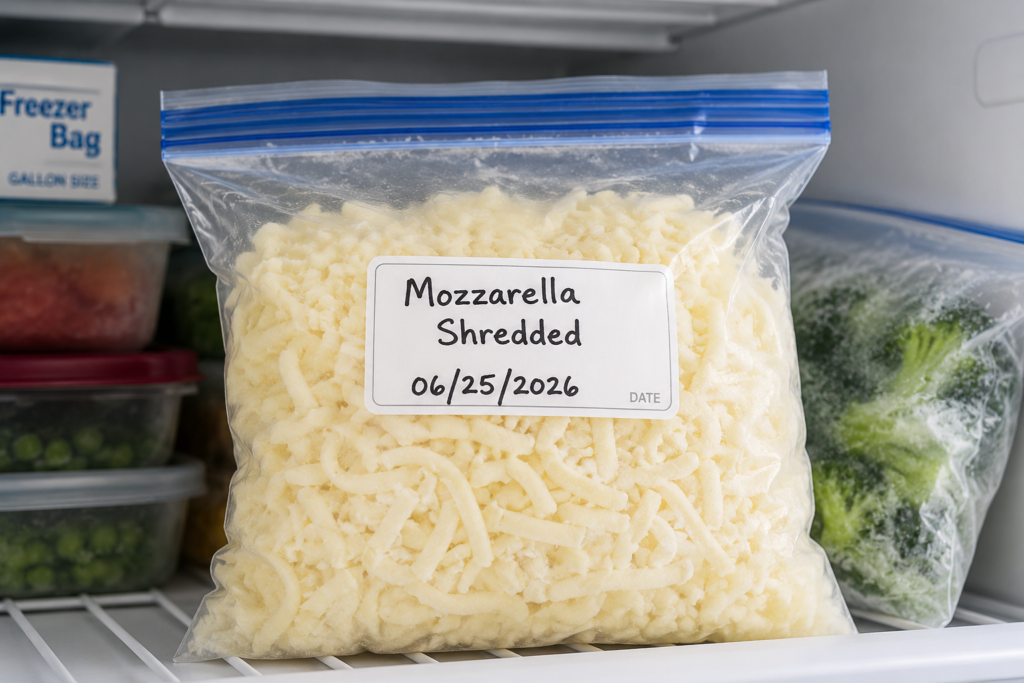
Store mozzarella cheese in the freezer by wrapping the cheese in moisture-proof plastic film and placing it into a heavy-duty freezer bag. Squeeze out excess air to prevent freezer burn before labeling the package with the date.
Freezing works best for low-moisture block or shredded varieties, keeping them preserved for extended household meal planning.
How to Store Mozzarella Cheese in an Airtight Container
Store mozzarella cheese in an airtight container by transferring opened portions into a clean glass or food-safe plastic vessel with a tight-fitting lid. This container barrier blocks cold air circulation and prevents moisture evaporation.
For fresh mozzarella packed in brine, keep the liquid inside the container so the cheese remains plump and tender. For practical guidance on keeping cottage cheese fresh and properly refrigerated, check out How to Store Cottage Cheese for detailed storage recommendations.
Can You Freeze Mozzarella Cheese?
Yes, you can freeze mozzarella cheese safely to extend its usability for future recipes. Low-moisture and shredded mozzarella freeze exceptionally well without significant loss of quality, while fresh high-moisture mozzarella may become slightly soft or crumbly after thawing.
How to Freeze Mozzarella Cheese
Low-moisture and pre-shredded mozzarella varieties freeze exceptionally well for long-term meal planning. While high-moisture fresh mozzarella balls can technically be frozen, they lose their delicate structure and become watery upon thawing, making low-moisture blocks the ideal choice for freezing.
3 Ways to Freeze Mozzarella Cheese Step by Step
Method 1: Freezing Whole Mozzarella Cheese Blocks
Freezing whole mozzarella cheese blocks involves dividing large cheese portions into smaller family-sized pieces and sealing them tightly with protective plastic wrap. This technique shields the interior dairy mass from direct exposure to cold freezer air.
Cut the large mozzarella cheese block into smaller, usable meal portions.
Wrap each portion tightly with two layers of plastic wrap to keep out moisture.
Place the wrapped blocks inside a heavy-duty freezer bag.
Press out extra air from the bag, seal tightly, and write the storage date.
Method 2: Freezing Shredded Mozzarella Cheese
Freezing shredded mozzarella cheese requires flash freezing individual strands on a flat baking tray before transferring them into long-term storage bags. This step prevents the cheese shreds from clumping together into a solid frozen lump.
Spread the shredded mozzarella evenly across a parchment-lined baking sheet.
Place the sheet inside the freezer for about 60 minutes until the strands freeze firm.
Pour the loose frozen shreds into a clean freezer bag.
Seal the bag securely and lay it flat in your freezer for quick portioning later.
Method 3: Freezing Sliced Mozzarella Cheese
Freezing sliced mozzarella cheese involves separating individual cheese slices with layers of parchment paper to prevent them from freezing into one single block. This enables you to pull out exact slice counts for quick sandwiches or casseroles.
Cut the mozzarella cheese into uniform recipe slices.
Interleave a small sheet of wax or parchment paper between each slice.
Stack the layered slices neatly and wrap the whole stack tightly in freezer film.
Place the wrapped stack into a labeled freezer bag and store it immediately.
According to the USDA, freezing keeps food safe by slowing the movement of molecules and preventing microorganisms from multiplying, although freezing does not destroy most bacteria. Proper packaging also helps maintain food quality during freezer storage.
Types of Mozzarella Cheese Freezing Guide
Different formats of mozzarella respond uniquely to low temperatures, requiring specific handling to preserve quality.
Can You Freeze Shredded Mozzarella Cheese?
Yes, shredded mozzarella cheese freezes exceptionally well because its low moisture content prevents large ice crystals from forming. Pre-shredded strands thaw quickly and melt smoothly directly onto hot dishes.
Can You Freeze Whole Mozzarella Cheese?
Yes, whole mozzarella cheese blocks freeze reliably when wrapped tightly to prevent exposure to cold air. While thawing may make the block slightly crumbly, it remains ideal for melting into warm recipes.
Can You Freeze Buffalo Mozzarella Cheese?
Yes, you can freeze buffalo mozzarella cheese, but its extremely high moisture level will cause structural changes once thawed. The texture becomes noticeably softer and less elastic, making it better suited for cooked sauces than fresh salads.
If you enjoy comparing specialty dairy handling, check our tips on how long does goat cheese last in home kitchens.
Can You Freeze Mozzarella Cheese in Water?
No, you should not freeze mozzarella cheese directly in water or liquid brine because the expanding liquid forms ice crystals that rupture the delicate curd structure. Always drain excess liquid before freezing fresh mozzarella.
Can You Freeze Cooked Mozzarella Cheese?
Yes, cooked mozzarella cheese freezes successfully within prepared dishes. The fat structure remains stable after baking, allowing it to reheat smoothly without separating.
Can You Freeze Homemade Mozzarella Cheese?
Yes, homemade mozzarella cheese can be frozen, provided excess whey is drained out prior to packaging.
If you want to try making your own fresh dairy products, explore our step-by-step instructions on how to make mozzarella cheese at home.
Can You Freeze Low Fat Mozzarella Cheese?
Yes, low fat mozzarella cheese can be frozen, though its lower fat content makes it slightly more prone to dryness upon thawing. Wrap it securely to retain existing moisture.
When You Can’t Freeze Mozzarella Cheese
You should avoid freezing mozzarella cheese if it is nearing its expiration date, shows any signs of mold, or has already been thawed after previous freezing. Refreezing previously thawed cheese damages texture and increases safety risks.
For insights into managing other classic kitchen products, read our practical overview on how long does cream cheese last in standard storage.
Can You Preserve Mozzarella Cheese?
Yes, you can preserve mozzarella cheese to extend its storage life beyond standard daily refrigeration. Using appropriate preservation techniques protects the cheese flavor and maintains safety for long-term household meal planning.
How to Preserve Mozzarella Cheese
Mozzarella cheese can be preserved in two primary ways: long-term freezer storage or immersion in herb-infused olive oil. Both methods shield the dairy from spoilage vectors like oxygen and wild yeasts.
2 Ways to Preserve Mozzarella Cheese
How to Preserve Mozzarella Cheese in the Freezer
Preserve mozzarella cheese in the freezer by sealing properly wrapped portions at 0°F (-18°C) to pause microbial activity. Maintaining sub-zero conditions keeps low-moisture mozzarella safe indefinitely, while preserving peak taste and texture for 3 to 4 months.
How to Preserve Mozzarella Cheese Using Olive Oil

Preserve low-moisture mozzarella cheese using olive oil by submerging thoroughly dried cheese cubes in a clean glass jar filled with high-quality olive oil and dried herbs (never use fresh herbs or fresh garlic to prevent Botulism risks). Store the jar continuously refrigerated below 40°F (4°C) for up to two weeks, ensuring the oil completely covers the cheese at all times.
Commercial Methods to Preserve Mozzarella Cheese
Commercial processors preserve mozzarella cheese using modified atmosphere packaging (MAP), flash vacuum sealing, and high-pressure processing (HPP). These industrial techniques remove oxygen gas from packages to inhibit mold growth naturally.
According to the USDA, vacuum packaging removes substantially all air from a package, while modified-atmosphere packaging replaces some or all of the oxygen with gases such as carbon dioxide or nitrogen. These packaging methods can help prolong shelf life and retard bacterial growth.
Can You Thaw Mozzarella Cheese Safely?
Yes, you can thaw mozzarella cheese safely by applying gradual temperature changes that keep the cheese below the danger zone. Controlled thawing prevents rapid bacterial proliferation while maintaining fat emulsion stability.
To learn more about practical uses for alternative fresh cheeses after careful handling, read about cream cheese benefits in home meals.
How to Handle & Thaw Mozzarella Cheese
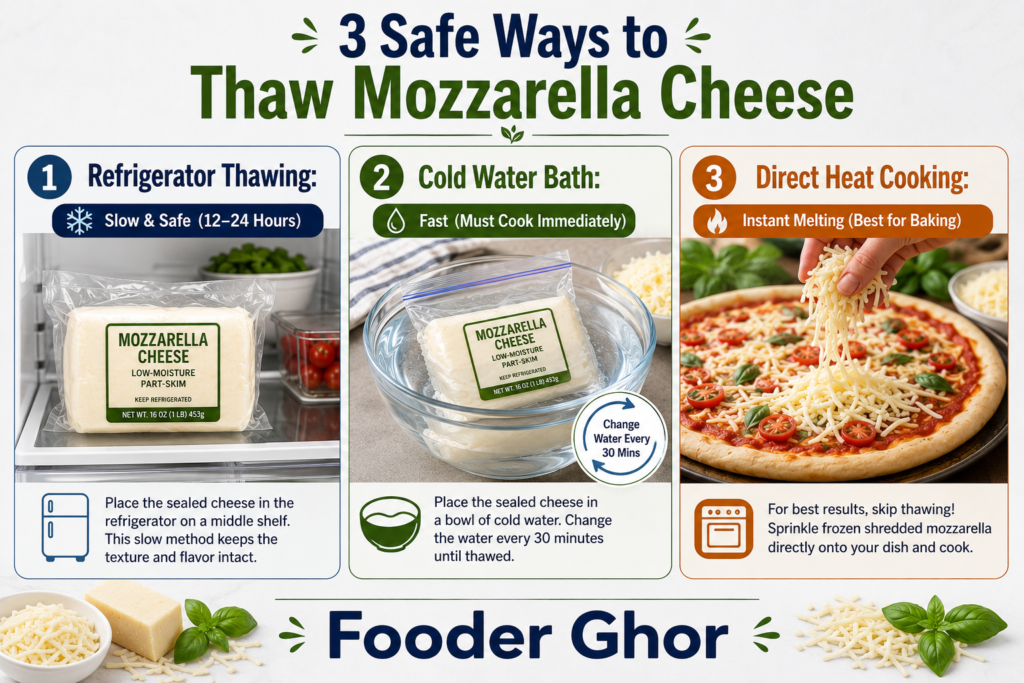
Mozzarella cheese can be handled and thawed in three safe ways: gradual refrigeration, cold water bath immersion, or direct heat application during cooking. Avoiding room-temperature thawing keeps dairy safe for consumption.
3 Ways to Thaw Mozzarella Cheese
Thawing Mozzarella Cheese in the Refrigerator
Thaw mozzarella cheese in the refrigerator by moving frozen packages from the freezer to the main fridge compartment for 12 to 24 hours. This slow transition allows ice crystals to melt gently without exposing dairy to warm temperatures.
For practical guidance on safely thawing goat cheese and maintaining its texture after freezing, check out How to Thaw Goat Cheese for a detailed guide.
Thawing Mozzarella Cheese in Cold Water
Thaw mozzarella cheese in cold water by placing the sealed, watertight bag into a bowl of cold tap water. Change the water every 30 minutes until the cheese feels soft and pliable throughout.
According to the USDA, frozen food can be safely thawed in cold water when placed in a leak-proof bag, with the water changed every 30 minutes so it stays cold. Keeping the food cold during thawing helps limit conditions that allow harmful bacteria to multiply.
Important Safety Note (USDA Guidelines): Mozzarella thawed using the cold water method must be cooked immediately in baked dishes, skillet meals, or pizza toppings. Do not refreeze or return cold-water thawed cheese to the refrigerator without cooking it first.
Direct Cooking Thawing Method
Thaw mozzarella cheese using direct heat by adding frozen shreds or thin slices directly onto hot pizzas, baked casseroles, or skillet dishes. The heat melts the frozen cheese instantly during baking, bypassing separate thawing steps.
As you plan your kitchen storage routines, consider exploring other fresh food handling guides. You can review feta cheese benefits for healthy salads
Why Trust Fooder Ghor?
At Fooder Ghor, we provide educational resources focused on understanding the safe use, handling, and storage of different types of milk, including breast milk, cow’s milk, goat milk, and raw milk, based on publicly available guidance from trusted sources such as the CDC, FDA, USDA, and AAP. Some milk-related articles, particularly those involving maternal and infant feeding topics, are reviewed for clarity and presentation by nursing students with academic training in maternal and child health to help make information easier to understand. This content is provided for learning purposes only and does not offer medical advice.
Frequently Asked Questions
No, fresh mozzarella should not remain at room temperature for more than two hours due to high perishability and bacterial growth risks.
Fresh mozzarella turns slimy when bacterial growth breaks down surface proteins, typically caused by improper storage temperatures or contaminated water liquid.
Olive oil preserved mozzarella should be consumed within two weeks and kept refrigerated to avoid risks associated with anaerobic bacteria in oil.
Low-moisture frozen mozzarella retains excellent melting properties, whereas high-moisture fresh mozzarella may release slightly more liquid when melted after freezing.
Spoiled mozzarella exhibits a sour odor, yellowish color shifts, surface mold patches, or an acidic taste. Discard moldy soft cheeses immediately.
Conclusion
Mastering how to store mozzarella cheese properly preserves its quality, texture, and mild milky taste for family cooking. Utilizing reliable refrigeration, proper freezing, or oil preservation allows parents to manage fresh ingredients safely and avoid food waste.
For practical guidance on the shelf life and proper storage of sheep milk, check out How Long Does Sheep Milk Last for a detailed guide.











