Skip to content

Why Goat Cheese Storage Matters for U.S. Moms
If you have ever stared at a fresh chèvre log and wondered, How long does goat cheese last?, you are not alone. Because goat cheese is creamier and higher in moisture than most cow’s milk cheeses, it tends to spoil much faster. For U.S. moms, knowing the exact shelf life of goat cheese is the key to preventing food waste while keeping family meals both delicious and safe.
This guide provides a complete 2026 safety timeline covering every scenario from daily refrigeration to long-term preservation and even room-temperature safety windows. We will walk you through the essential storage durations and help you spot early signs of spoilage using trusted FDA and USDA food safety recommendations. Whether you are planning a party platter or stocking up for the month, having a clear understanding of these timelines ensures you have the most accurate dairy information at your fingertips.
Quick Summary: Goat Cheese Shelf Life at a Glance
-
Opened Soft Cheese: Best used within 5–7 days in the refrigerator for peak freshness.
-
Unopened Soft Cheese: Generally lasts 2–3 weeks past the “sell-by” date if kept at 40°F.
-
Aged/Hard Varieties: Can remain fresh for 3–4 weeks in the fridge due to lower moisture.
Room Temperature: Must be discarded after 2 hours (or 1 hour in temps above 90°F) to prevent bacterial growth.
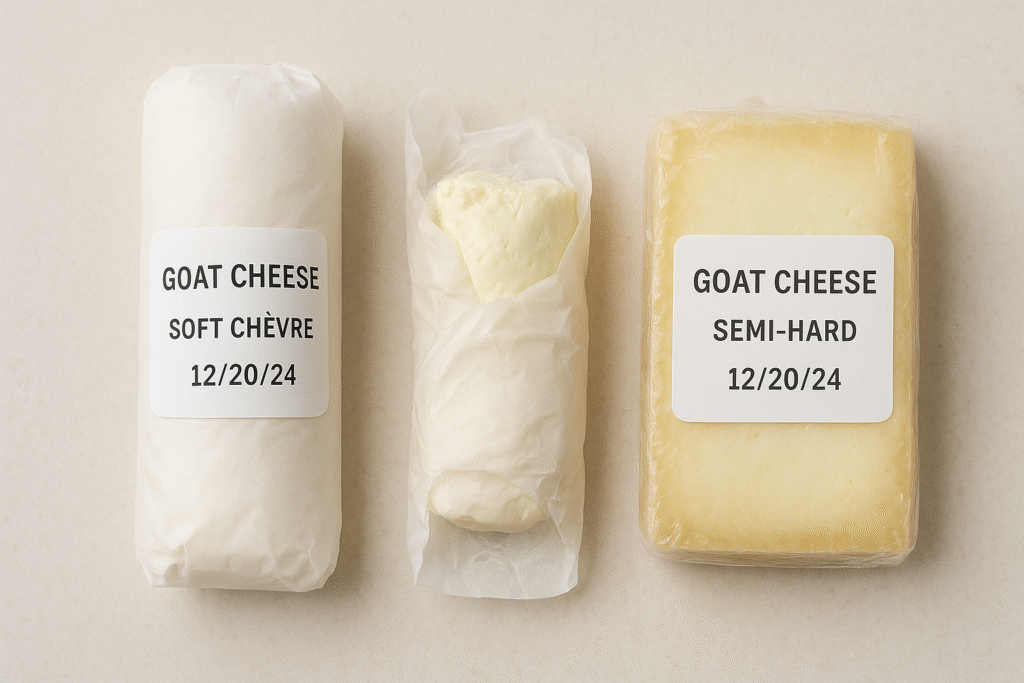
Goat Cheese Shelf Life Timeline (Quick Visual Guide)
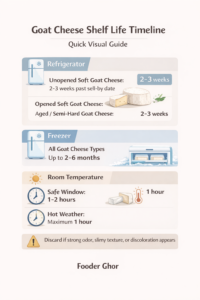
This visual provides a general shelf life overview only. Detailed storage methods, freezing techniques, and refrigerator-specific handling are covered separately within this guide.
How Long Does Goat Cheese Last? (The Quick Reference Guide)
The lifespan of goat cheese varies significantly based on its type and how it is stored. Whether you’re managing fresh chèvre or an aged log, maintaining a consistent temperature of 40°F (4°C) is critical for safety.
Below is a quick-glance safety window for goat cheese storage:
| Storage Location | Condition | Estimated Shelf Life |
| Refrigerator | Unopened (Soft) | 2–3 Weeks past “Sell-By” |
| Refrigerator | Opened (Soft) | 5–7 Days |
| Refrigerator | Aged / Semi-Hard | 2–3 Weeks |
| Room Temp | Served/Sitting Out | 1–2 Hours |
Optimizing Your Fridge Space
While these timelines provide a reliable safety window, the specific environment and organization of your refrigerator play a huge role in preventing early spoilage. For example, storing dairy in the door vs. the back of the shelf can change the freshness outcome by several days.
👉 For a deep dive into cold-zone optimization, temperature control, and specific fridge placement, see our dedicated guide: How Long Does Goat Cheese Last in the Fridge? (The Cold Storage Master Guide).
How Long Does Goat Cheese Last in the Fridge?

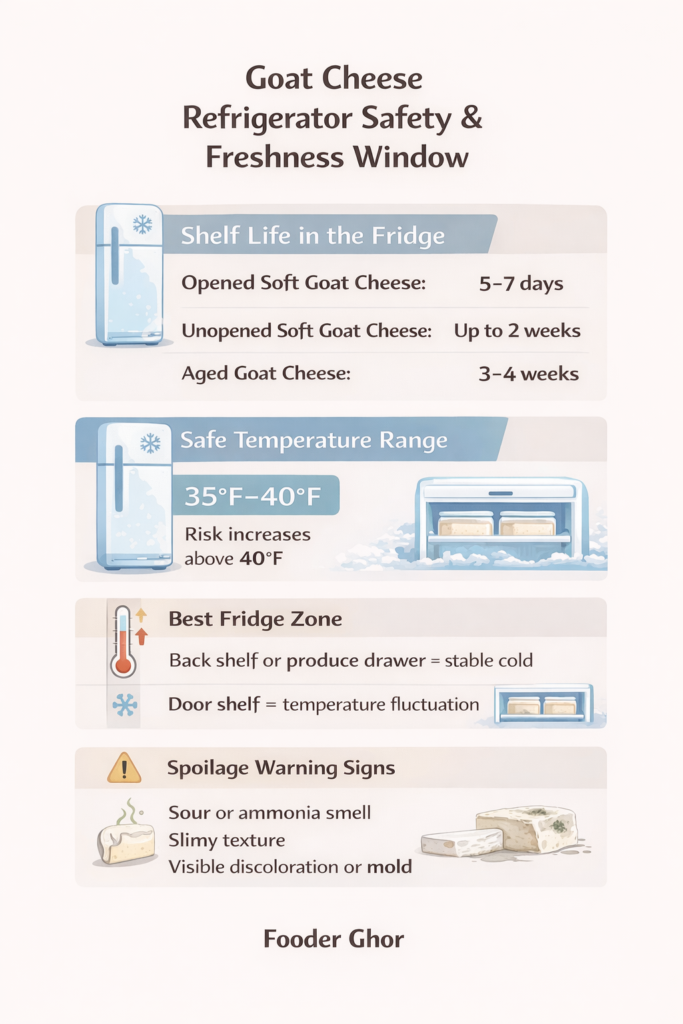
Goat cheese lasts 5–7 days opened and up to 2 weeks unopened.
When stored in the refrigerator, goat cheese shelf life depends on its type and storage condition. Soft fresh goat cheese, like chèvre, typically lasts about 5–7 days after opening. If unopened and properly stored, it can remain fresh for up to 2 weeks.
Aged or semi-hard goat cheese lasts longer due to lower moisture content. These varieties can stay fresh for around 3–4 weeks when kept in airtight conditions.
To ensure safety, always keep your refrigerator at or below 40°F (4°C). Consistent cold temperature slows bacterial growth and preserves both texture and flavor. According to the U.S. Department of Agriculture (USDA), always refrigerate at 40°F (4°C)or lower to prevent bacterial growth.
How Long Does Goat Cheese Last in the Fridge? Visual Safety Guide
Best Fridge Storage Practices for Maximum Freshness
Proper wrapping and cold placement extend goat cheese freshness.
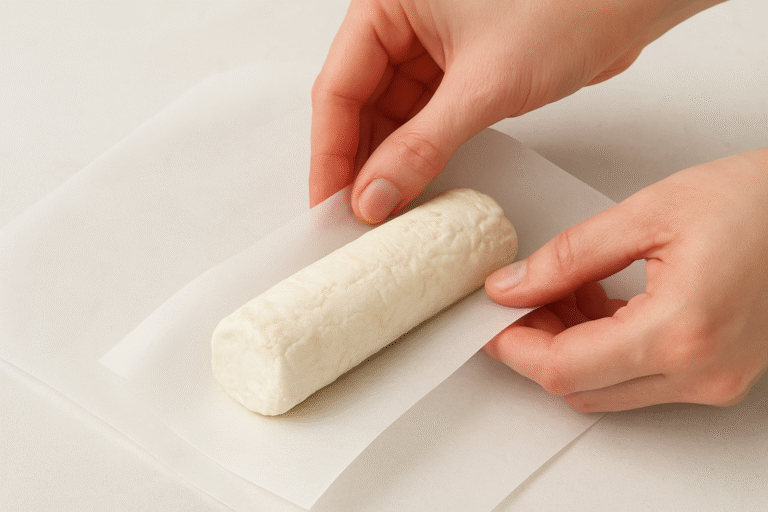
Refrigeration alone is not enough. How you store goat cheese inside the fridge directly impacts how long it lasts.
Use parchment or wax paper for soft goat cheese. This allows the cheese to breathe and prevents excess moisture buildup. After wrapping, place it inside an airtight container to protect it from odors.
Store goat cheese in the vegetable drawer or back of the fridge. These areas maintain a more stable temperature compared to the door, where frequent opening causes fluctuations.
Keeping cheese away from strong-smelling foods like onions or fish also helps preserve its original flavor.
Why Fridge Temperature Matters for Goat Cheese
Above 40°F, bacteria grow fast and spoil goat cheese quickly.
Goat cheese is a high-moisture dairy product, which makes it more sensitive to temperature changes than harder cheeses.
When the fridge temperature rises above 40°F (4°C), bacteria such as Listeria can multiply rapidly. Even small fluctuations can shorten the safe shelf life significantly.
Over time, the natural lactic acid in goat cheese begins to break down. This reduces its ability to resist mold and bacterial growth, especially in soft varieties.
For this reason, maintaining a stable cold environment is just as important as proper packaging. The FDA and American Academy of Pediatrics (AAP) recommend that pregnant women, elderly individuals, and parents of young children be extra vigilant with soft cheese storage temperatures to avoid the risk of foodborne illness.
Safe Storage During Travel
Keep goat cheese below 40°F during travel to prevent spoilage.
If you are carrying goat cheese while traveling or for outdoor use, always store it in an insulated cooler with ice packs.
Maintaining a temperature below 40°F helps prevent bacterial growth and keeps the cheese safe to eat. Avoid leaving it at room temperature for extended periods, especially in warm weather.
This is especially important during summer or long trips where temperature control becomes difficult.
How Long Can Goat Cheese Stay Out of the Fridge
Goat cheese is very sensitive to temperature because of its high moisture and low acidity.
- At room temperature (68–72°F), it can safely sit out for about 2 hours.
- In warmer climates or during summer, discard it after 1 hour.
Once you notice the surface looking oily or “sweating,” bacteria growth has already started. When serving goat cheese at parties, it’s better to take out small portions and keep the rest refrigerated. According to the USDA Food Safety and Inspection Service (FSIS), perishable foods should never be left in the “Danger Zone” (40°F–140°F) for more than two hours. Furthermore, the FDA and CDC recommend a strict 1-hour limit if the ambient temperature is above 90°F to prevent foodborne illness.
Extending Shelf Life Beyond the Fridge
For long-term preservation beyond daily refrigeration, freezing is a popular option for many U.S. moms. To learn the exact steps to maintain texture and safety while freezing, see our master guide: Can You Freeze Goat Cheese?
How to Tell If Goat Cheese Has Gone Bad
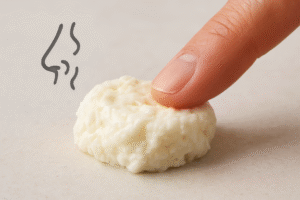
Before eating, always check for the following signs:
- Smell: A strong sour, rancid, or ammonia-like odor means it’s spoiled.
- Texture: If it feels excessively slimy, chalky, or sticky, throw it away.
- Color: Yellowing or brown patches indicate oxidation or mold growth.
- Taste: A bitter or unusually sharp flavor means it’s no longer safe.
Soft goat cheese requires extra caution. If mold appears on fresh chèvre, the entire portion should be discarded because contamination spreads easily through soft dairy. For aged cheeses, you may trim around the mold, but always avoid cross-contamination.
👉 According to FDA Dairy Safety Guidelines spoiled cheese should never be consumed, especially by pregnant women or infants.
Best Storage Practices for Maximum Freshness
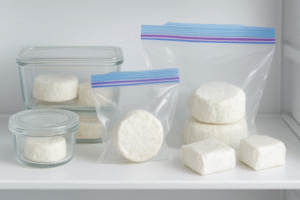
While timing is everything, your storage habits determine if your cheese reaches its full shelf-life potential. To keep your goat cheese creamy and safe:
-
Limit Oxygen: Always use airtight containers or resealable bags.
-
Proper Wrapping: Use wax or parchment paper to prevent sogginess.
-
Hygiene: Never double-dip; always use clean utensils.
👉 Want to master the exact science of refrigerator placement and packaging techniques? Read our comprehensive guide: How to Keep Goat Cheese Fresh in the Fridge? (Expert Storage Practices).
Expert Tips from Dairy Specialists
- Buy goat cheese in smaller quantities so it’s always fresh.
- To revive dry cheese, drizzle a little olive oil before serving.
- You can even store goat cheese in olive oil — this extends freshness up to two extra weeks and adds rich flavor.
👉 For detailed food safety rules visit verified standards USDA Food Storage Recommendations.
Most Common Questions About Goat Cheese Storage
A: Goat cheese typically stays fresh for 5–7 days once opened in the refrigerator, 2–3 weeks if unopened, and up to 2–6 months when frozen. At room temperature, it should not sit out longer than 1–2 hours for safety. Actual freshness depends on moisture level, packaging, and temperature consistency.
A: Yes, if it’s unopened and refrigerated, it may last 1–2 weeks past the date — but always check smell and texture first.
A: No. Refreezing affects texture and may cause spoilage.
A: Use airtight packaging, refrigerate immediately after opening, and store smaller batches.
A: If it’s not a natural white rind (like on aged chèvre), discard it immediately.
A: Temperature fluctuations near the fridge door accelerate moisture breakdown and bacterial activity, while stable cold zones like the back of the shelf slow down spoilage.
A: Both are equally vital; a stable temperature prevents bacteria, while breathable wrapping controls mold growth and preserves the cheese’s signature creamy texture.
Why Trust Fooder Ghor?
At Fooder Ghor, we provide educational resources focused on understanding the safe use, handling, and storage of different types of milk including breast milk, cow’s milk, goat milk, and raw milk based on publicly available guidance from trusted sources such as the CDC, FDA, USDA, and AAP. Some milk-related articles, particularly those involving maternal and infant feeding topics, are reviewed for clarity and presentation by nursing students with academic training in maternal and child health to help make information easier to understand. This content is provided for learning purposes onlyand does not offer medical advice.
Conclusion: Freshness Depends on Smart Storage
Knowing how long does goat cheese last is the first step toward safe and delicious family meals. Goat cheese is nutritious but needs proper care to stay that way. By refrigerating it promptly, using airtight containers, and always trusting your senses, you can enjoy its rich flavor safely for weeks — whether fresh, aged, or frozen. With these smart storage habits, you’ll never have to guess about your dairy’s freshness again.”
Explore More: Your Ultimate Goat Dairy Resource Hub
If you found this storage guide helpful, you might want to explore our deeper resources on goat dairy management. Mastering the shelf life of your ingredients is the first step toward creating healthy, delicious meals for your family.
-
Discover versatile ways to use your fresh dairy in our master collection of Goat Milk Recipes for U.S. Families.
-
Need to save your leftovers for next month? Learn the precise steps in our guide on How to Freeze Goat Cheese Without Losing Texture.
Since liquid milk spoils differently than cheese, ensure you follow the safety windows in our Goat Milk Shelf Life & Safety Guide.