Skip to content


Understanding how do you know if breast milk is bad is very important for every parent who stores expressed milk for later use. Breast milk is a living fluid that contains nutrients, antibodies, and natural enzymes, but it can still spoil under certain conditions.
Many parents search for how do you know if breast milk has gone bad or how to tell if breast milk is bad because stored milk sometimes looks or smells different. The truth is, spoilage signs are usually easy to detect if you know what to look for, such as odor changes, separation that does not mix after swirling, or a sour taste.
In this guide, you will learn everything about spoiled breast milk, including storage safety, frozen milk checking methods, and why spoilage happens.
Quick Takeaways
- Spoiled breast milk usually shows smell, texture, and separation changes
- Fresh breast milk normally has mild sweet smell
- Frozen or refrigerated milk can still go bad if stored improperly
- Always check smell, color, and consistency before feeding
- Proper storage reduces risk of spoilage significantly
Does Breast Milk Go Bad?
Yes, does breast milk go bad is a very common question, and the answer is yes. Breast milk can go bad if:
- Left at room temperature too long
- Stored in the fridge beyond safe duration
- Frozen and thawed incorrectly
- Contaminated during pumping or handling
According to breastfeeding safety guidelines from the Centers for Disease Control and Prevention, stored breast milk has specific time limits depending on temperature.
How Do You Know If Breast Milk Has Gone Bad?
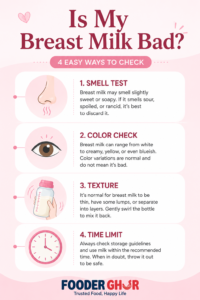
If breast milk has gone bad, you will usually notice:
- Sour or rotten smell
- Thick clumps that do not mix after swirling
- Yellow or gray discoloration
- Very strong unpleasant taste (for older milk handling checks only)
Now in detail:
Spoiled breast milk is different from normal separation. Fresh milk often separates into layers (cream and liquid), but when you gently swirl it, it mixes again. If it stays chunky or smells sour, it may be bad.
Parents searching how to tell if breast milk is bad or bad breast milk color usually notice these early warning signs first.
Why Breast Milk Spoils
Understanding why breast milk spoils helps prevent waste.
Main reasons:
- Bacterial growth from improper storage
- Exposure to warm temperature
- Dirty pumping equipment
- Long storage duration
- Frequent temperature changes
Breast milk is sensitive because it contains natural enzymes that break down over time.
For related guidance on milk quality changes, you may also read our detailed guide about Why Is My Breast Milk Yellow to understand natural color variations and when it may indicate spoilage or normal composition differences.
What Does Bad Breast Milk Smell Like?
Many parents ask what does bad breast milk smell like.
Spoiled breast milk usually smells:
- Sour (like spoiled cow milk)
- Soapy or metallic (in some cases due to lipase enzyme activity)
- Strong and unpleasant compared to normal sweet smell
Important note:
Sometimes breast milk smells “soapy” but is still safe due to lipase activity, not spoilage.
Bad Breast Milk Color: What to Look For
Normal breast milk colors:
- White
- Bluish-white
- Yellowish (colostrum or fatty milk)
Spoiled milk may look:
- Grayish
- Greenish tint (rare contamination)
- Thick and curdled
If color changes with bad smell, it is a strong spoilage sign.
According to the Centers for Disease Control and Prevention, changes in milk appearance along with odor or texture changes can indicate possible spoilage, so visual signs should always be checked with proper storage conditions.
For more detailed color variations, read our internal guide what is the color of breast milk to understand normal vs. abnormal breast milk colors in different stages.
Can Breast Milk Go Bad in Breast?
Many parents worry about can breast milk go bad in breast or can breast milk go bad inside the breast.
Normally, breast milk inside the breast does not spoil quickly because:
- It is continuously produced
- It is sterile inside the body
- It is not exposed to air or bacteria
However, infections like mastitis can affect milk quality temporarily, causing changes in taste or smell.
According to the American Academy of Pediatrics, breast milk is produced and stored within a sterile internal environment, and changes in milk during infections like mastitis are usually temporary and related to maternal health rather than milk “spoiling” inside the breast.
Visual Signs of Spoiled Milk
For how to tell if breast milk is bad, check:
- Smell test (most important)
- Visual inspection
- Texture check after swirling
- Storage time check
If more than one sign appears, discard the milk.
How to Tell If Breast Milk Is Bad in Fridge
For how to tell if breast milk is bad in fridge:
- Check storage duration (usually up to 4 days safe in fridge)
- Smell after opening container
- Look for separation that does not mix
Guidelines from U.S. Food and Drug Administration recommend strict refrigeration limits for safety.
How to Tell If Frozen Breast Milk Is Bad

For how to tell if frozen breast milk is bad:
Frozen milk is usually safe longer, but can still go bad if:
- Freezer temperature is unstable
- Milk is stored too long
- Container is not sealed properly
Signs include:
- Strong sour smell after thawing
- Strange color change
- Layer separation that does not mix
To deeply understand how to tell if frozen breast milk is bad, you must observe it during and after the thawing process. If the milk has white, icy patches or looks shriveled in the bag, it might have freezer burn. While freezer burn affects taste, it’s the smell after thawing that truly matters. If thawed breast milk is bad, it will emit a sharp, offensive odor that doesn’t go away after gentle swirling. Furthermore, if you see chunks that remain solid even after the milk has reached room temperature, the milk has likely denatured and spoiled.
According to the U.S. Food and Drug Administration, frozen breast milk should be stored at proper freezing temperatures and used within recommended time limits, and any unusual odor, color change, or texture after thawing may indicate quality loss or possible spoilage.
For more storage safety details, read our complete guide How Long Does Breast Milk Last in the Fridge to understand proper refrigeration timelines and safe usage practices.
Why Frozen Milk Can Spoil
Even under ideal conditions, breast milk isn’t meant to last forever. Here are the most common reasons frozen milk can go bad:
-
Lipase breakdown: Natural enzymes can change the milk’s taste over time (see ‘The Science Behind Off-Flavors’ below for details)
-
Freezer burn: Air exposure or poor sealing allows ice crystals to form, damaging both flavor and nutrition.
-
Temperature fluctuation: Frequent opening and closing of the freezer can cause minor thawing and refreezing, reducing milk stability.
-
Storage time: Milk kept beyond the recommended window loses its taste profile and vitamin potency.
According to the Centers for Disease Control and Prevention (CDC), breast milk should ideally be used within 6 months for the best quality. It can be stored for a maximum of 12 months, but only if the freezer maintains a steady temperature of 0°F (–18°C).
Step-by-Step: How to Check If Frozen Breast Milk Is Still Safe
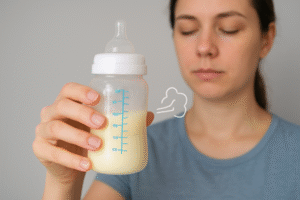
- Check storage date
- Thaw slowly in fridge
- Swirl gently (do not shake)
- Smell test
- Observe texture
If everything looks normal, it is generally safe.
For proper storage practices, read our guide: How to Store Breast Milk to learn safe handling, refrigeration, and freezing methods that help maintain milk quality.
What to Do If You Find Spoiled Frozen Milk?
If your milk smells or tastes bad, don’t risk feeding it. Discard it immediately—even a small amount of spoiled milk can upset your baby’s stomach and cause digestive issues.
To reduce milk waste in the future, try defrosting smaller portions and freezing your milk in 2–4 oz bags. This ensures you only thaw what your baby actually needs.
👉 Pro Tip: You can also save time and prevent spoilage by organizing your stash using the tips from our post on how to organize breast milk in freezer to ensure you always use the oldest milk first.
Is Cold Breast Milk Bad for an Infant?
No, is cold breast milk bad for an infant is a common concern, but cold milk is generally safe. Some babies may prefer warmed milk, but temperature itself does not spoil milk.
Can Breast Milk Go Bad?
Yes, breast milk go bad depends on:
- Time
- Temperature
- Hygiene
Always follow proper storage rules from trusted health sources.
For a deeper understanding of why milk sometimes develops a sour smell even when storage seems correct, read our guide on Why Is My Breast Milk Smell Sour.
Why Does My Fresh Breast Milk Smell Bad?
For why does my fresh breast milk smell bad:
- Lipase enzyme activity
- Diet changes
- Storage container odor
Not always spoilage.
According to the Centers for Disease Control and Prevention, breast milk can change in smell due to normal factors like storage conditions and handling, but proper temperature control and hygiene are important to maintain milk quality and safety.
The Science Behind Off-Flavors: Lipase vs. Oxidation
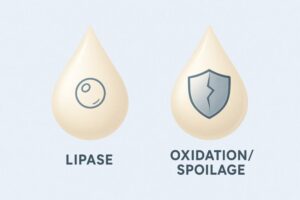
Sometimes, breast milk can smell or taste different even when it isn’t spoiled—and this usually happens due to lipase activity or oxidation.
-
Lipase: A natural enzyme in breast milk that breaks down fats. It can give milk a mild soapy or sweet smell, but it remains completely safe for your baby.
-
Oxidation: Occurs when milk is stored too long or exposed to excess air. It causes a metallic or bitter taste, often described as “off” or “old.”
The Key Difference:
-
Lipase-related changes are safe and only affect smell or taste.
-
Oxidation can indicate nutrient loss if milk has been kept for too long.
If your milk smells slightly metallic but your baby accepts it, there’s no harm. However, if the smell is strong and acidic, or if your baby refuses it, consider refreshing your freezer stash and ensuring airtight storage. This distinction helps you recognize that not all “weird smells” mean milk is bad—sometimes, it’s just natural chemistry.
According to the Centers for Disease Control and Prevention, changes in breast milk smell or taste can sometimes occur due to normal storage-related factors like temperature exposure or handling, and proper airtight storage and temperature control help maintain milk quality.
Foods That Make Breast Milk Taste Bad
Some foods may slightly change taste:
- Garlic
- Onion
- Spicy foods
- Certain vegetables
This is normal and not harmful.
While certain foods that make breast milk taste bad (like strong spices or cruciferous vegetables) change the flavor, they do not cause the milk to spoil. This is a common confusion for parents asking how do you know if breast milk has gone bad. Diet-related taste changes are safe for babies, whereas spoilage caused by bacteria is dangerous.
According to the American Academy of Pediatrics, maternal diet can influence the flavor of breast milk, but these taste changes are normal and do not indicate spoilage or reduced safety for the baby.
How to Know If Thawed Breast Milk Is Bad
For how to know if thawed breast milk is bad:
- Sour smell after thawing
- Curds that don’t mix
- Strong discoloration
If unsure, discard.
How to Know If Pumped Breast Milk Is Bad
For how to know if pumped breast milk is bad:
- Check pumping hygiene
- Storage time
- Smell and texture
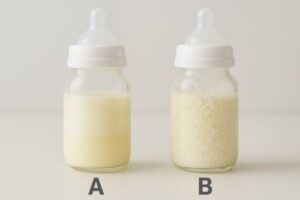
When learning how to know if pumped breast milk is bad, don’t be alarmed by color separation. Breast milk is not homogenized, so it’s normal for the fat to rise to the top. The real test is the ‘Swirl Test’. If the fat layer incorporates back into the milk with a gentle swirl, it’s fine. If the layers remain separate or look like ‘curds and whey’ (clumpy), it is a definitive sign of bad breast milk.
According to the Centers for Disease Control and Prevention, proper pumping hygiene, clean storage containers, and correct refrigeration are essential to prevent bacterial contamination and ensure expressed breast milk remains safe for use.
Why Trust Fooder Ghor?
At Fooder Ghor, we provide educational resources focused on understanding the safe use, handling, and storage of different types of milk, including breast milk, cow’s milk, goat milk, and raw milk, based on publicly available guidance from trusted sources such as the CDC, FDA, USDA, and AAP. Some milk-related articles, particularly those involving maternal and infant feeding topics, are reviewed for clarity and presentation by nursing students with academic training in maternal and child health to help make information easier to understand. This content is provided for learning purposes only and does not offer medical advice.
Frequently Asked Questions
Usually up to 4 days under proper storage.
Yes, if left at room temperature too long.
Yes, smell is the most reliable indicator.
No, normal separation is not spoilage.
Yes, if storage conditions are poor.
No, it can be due to lipase enzyme.
Use insulated cooler bags with ice packs and keep milk below 59°F (15°C). Read our travel-focused post How to Store Breast Milk on the Go.
They may spit up, refuse feeding, or experience minor stomach upset. Offer water and monitor — contact a pediatrician if symptoms persist.
That’s due to high lipase activity, it’s not unsafe, but many babies reject the taste. Scalding fresh milk before freezing can help.
Conclusion
Knowing how do you know if breast milk is bad helps parents ensure safe feeding and protect infant health. Always check smell, texture, color, and storage time before using stored milk. Proper handling reduces spoilage risk and keeps milk safe whether it is fresh, refrigerated, or frozen.