Skip to content



Cheddar cheese side effects primarily stem from its dense concentration of sodium, saturated fats, and naturally occurring tyramine when consumed in excess or by sensitive individuals. While cheddar is a widely consumed, nutrient-dense hard dairy product rich in calcium and protein, eating large amounts or consuming unpasteurized varieties can trigger specific adverse health reactions. Understanding these cheddar cheese side effects ranging from elevated blood pressure and migraines to digestive distress is essential for maintaining a safe and balanced dietary routine.
In this comprehensive guide, we examine the medically verified cheddar cheese side effects, analyzing listeria risks, sodium content, lactose profiles, and safety guidelines based on official data from major health authorities.
Short Summary
Listeria Contamination: Pasteurized cheddar cheese is completely safe, but unpasteurized (raw milk) cheddar carries listeria risks, especially for pregnant women and immunocompromised individuals.
Lactose Intolerance: Aged hard cheddar contains minimal lactose (less than 1g per serving), but individuals with extreme sensitivity may still experience mild digestive issues like gas or bloating.
Sodium & Blood Pressure: A single serving contains 180 mg to 200 mg of sodium, which can elevate blood pressure if consumed in excessive amounts.
Migraine Triggers: Aged cheddar accumulates high concentrations of tyramine, which can trigger headaches in sensitive individuals or interact with MAOI medications.
Cholesterol & Weight: Dense saturated fats and high calorie counts mean overconsuming cheddar can increase LDL cholesterol levels and contribute to body weight accumulation.
If you want to compare the potential health risks of different cheeses, read our guide on ricotta cheese health side effects for more information about possible reactions and dietary considerations.
Is Cheddar Cheese Bad for You?
Cheddar cheese is not inherently bad for you, but excessive consumption can trigger digestive distress, elevated blood pressure, migraines, and elevated LDL cholesterol due to its dense saturated fat, sodium, and tyramine concentrations.
For most healthy adults, moderate portions of cheddar cheese can fit into a balanced diet, while people with specific dietary restrictions or health conditions may need to pay closer attention to portion size, saturated fat, and sodium intake. The FDA identifies saturated fat and sodium as nutrients that may need to be limited based on individual dietary needs.
For a broader look at potential digestive, dietary, and other health concerns related to another popular cheese, explore Mozzarella Cheese Side Effects for practical information about common side effects and health considerations.
Cheddar Cheese and Listeria Risks (Bacterial Contamination)
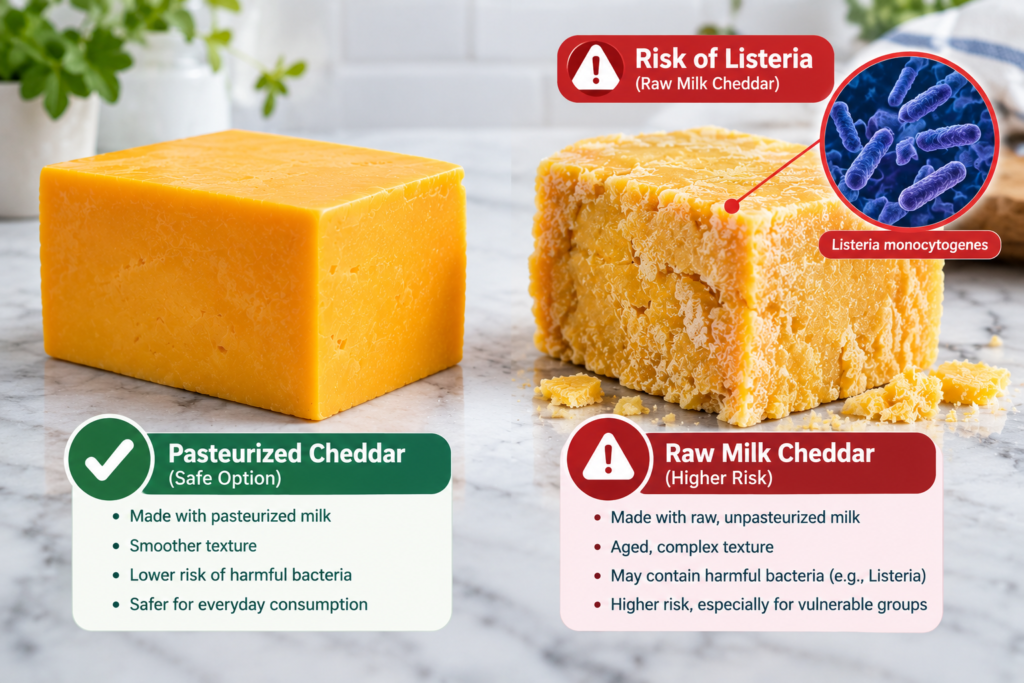
The main cheddar cheese risks of bacterial contamination depend on its moisture content, raw milk status, and proper pasteurization processing during commercial production. Because hard cheddar undergoes aging and has a relatively low moisture level compared to soft cheeses like brie or feta, it provides an inhospitable environment for pathogenic bacteria such as Listeria monocytogenes.
The FDA warns that cheeses made with unpasteurized milk can carry Listeria and other harmful pathogens, and notes that aging raw-milk cheese for 60 days does not guarantee that these pathogens are eliminated. Listeriosis can be especially serious for pregnant women, newborns, adults 65 and older, and people with weakened immune systems.
Is Pasteurized Cheddar Cheese Safe During Pregnancy?
Yes, pasteurized cheddar cheese is completely safe to consume during pregnancy because the pasteurization process heat-treats milk to destroy harmful pathogens like Listeria monocytogenes.
According to FDA and CDC guidelines, pregnant individuals can safely enjoy pasteurized hard cheeses when properly refrigerated, while any unpasteurized (raw milk) cheeses should be strictly avoided due to serious listeriosis risks.
Pasteurization heats raw milk to precise temperatures to eradicate disease-causing bacteria while preserving essential nutrients. Pregnant women can safely consume both mild and sharp pasteurized cheddar cheese, provided it is kept properly chilled. Conversely, unpasteurized (raw milk) cheddar cheese that has not been legally aged for at least 60 days carries a direct prohibition from the FDA during pregnancy due to high listeriosis contamination risks.
If you’re curious about cheddar’s flavor, texture, and how aging influences its taste, explore What Does Cheddar Cheese Taste Like for a detailed guide.
Cheddar Cheese and Lactose Intolerance
Individuals with lactose intolerance may experience digestive issues from cheddar cheese because it contains trace amounts of lactose, though it is usually far better tolerated than soft dairy. During the traditional cheesemaking and aging process, most liquid whey which contains the majority of milk sugars is drained away.
The NIDDK notes that hard cheeses such as cheddar are lower in lactose than many other milk products and may be easier for people with lactose intolerance to tolerate. However, consuming large quantities or having extreme lactose hypersensitivity can still trigger clinical symptoms such as severe abdominal gas, bloating, stomach cramps, and osmotic diarrhea.
For a broader look at potential digestive and dietary concerns related to another cheese, explore Brie Cheese Side Effects for practical information about common side effects and health considerations.
Cheddar Cheese Allergy Symptoms (Dairy Protein Hypersensitivity)
A genuine cheddar cheese allergy is an immune system response triggered by an adverse hypersensitivity reaction to milk proteins, specifically casein and whey. Unlike lactose intolerance, which is a digestive enzyme deficiency, a true milk protein allergy involves IgE antibody activation that treats dairy proteins as dangerous invaders. Consuming even a tiny piece of cheddar cheese can cause an immediate physiological reaction.
Mild IgE Symptoms: Skin rashes, hives (urticaria), localized itching, and nasal congestion.
Gastrointestinal Symptoms: Acute stomach pain, sudden nausea, vomiting, and severe cramping.
Respiratory Symptoms: Wheezing, coughing, tightness in the chest, and shortness of breath.
Anaphylaxis (Medical Emergency): Severe airway constriction, swelling of the tongue and throat, a sudden drop in blood pressure, dizziness, and loss of consciousness requiring immediate emergency epinephrine administration.
For readers interested in how cheddar is traditionally prepared and processed, explore How to Make Cheddar Cheese at Home for step-by-step cheesemaking instructions.
Does Cheddar Cheese Increase Blood Pressure? (Sodium Load)
Yes, excessive consumption of cheddar cheese can increase blood pressure due to its high sodium content introduced during the salting and preservation process. Sodium is added during manufacturing to control moisture, suppress unwanted bacterial growth, and develop its signature sharp flavor. A single 1-ounce serving of cheddar cheese contains approximately 180 mg to 200 mg of sodium.
The American Heart Association explains that excess sodium can cause the body to retain water and increase the amount of blood in the blood vessels, which can raise blood pressure.
For a broader look at potential digestive, dietary, and other health concerns related to cottage cheese, explore Cottage Cheese Side Effects for practical information about common side effects and health considerations.
Can Cheddar Cheese Trigger Migraines? (Tyramine Sensitivity)
Cheddar cheese can potentially trigger migraines in sensitive individuals because it accumulates high levels of tyramine as it undergoes natural aging. Tyramine is a naturally occurring compound that can increase as protein-rich foods age or ferment, and aged cheeses such as cheddar can contain higher amounts. Sharp and extra-sharp cheddars contain significantly higher tyramine concentrations than mild or unaged fresh cheeses.
When consumed by sensitive individuals, tyramine causes blood vessels to constrict and subsequently dilate, releasing inflammatory neurotransmitters that provoke throbbing migraine headaches. People taking monoamine oxidase inhibitor (MAOI) medications may need to avoid high-tyramine foods such as aged cheeses because the interaction can cause a dangerous increase in blood pressure and, in severe cases, a hypertensive crisis.
According to the National Institutes of Health (NIH) and FDA food-drug interaction standards, individuals taking MAOI antidepressants or those susceptible to dietary migraines should opt for unaged fresh cheeses (such as fresh mozzarella, ricotta, or cottage cheese) or young mild cheddar to maintain safe tyramine levels.
For practical guidance on protecting cheddar cheese from moisture, contamination, and quality loss during storage, explore How to Store Cheddar Cheese for detailed storage tips.
Does Cheddar Cheese Cause Weight Gain and High Cholesterol?
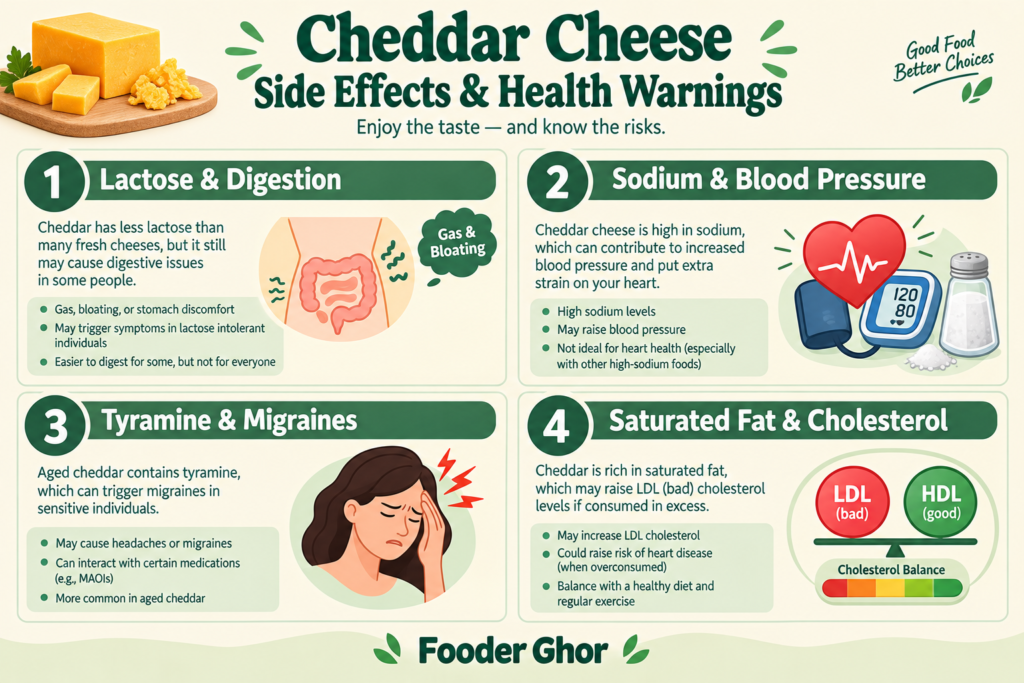
Yes, eating large amounts of cheddar cheese can contribute to weight gain and elevated LDL cholesterol due to its high caloric density and saturated fat content.
Cheddar cheese is relatively energy-dense and contains a substantial amount of saturated fat. Consuming excess saturated fat can raise LDL cholesterol levels, which is why the American Heart Association recommends limiting saturated fat as part of an overall heart-healthy eating pattern.
High circulating LDL levels promote arterial plaque buildup (atherosclerosis), increasing long-term risks for coronary artery disease. Furthermore, because cheddar is energy-dense and easy to overeat, excess calorie intake without adequate metabolic expenditure leads to gradual body weight accumulation.
If you’re also exploring potential dietary concerns associated with plant-based milk, Soy Milk Side Effects provides a useful guide to common side effects and health considerations.
Is Cheddar Cheese Bad for Kidney Health?
Excessive intake of cheddar cheese can strain kidneys in individuals with pre-existing renal conditions due to its high phosphorus and sodium concentration.
The NIDDK notes that healthy kidneys help balance salts and minerals in the blood, while people with chronic kidney disease may need to limit nutrients such as phosphorus and sodium because damaged kidneys cannot remove them as effectively.
High serum phosphorus levels force calcium out of bones, making them weak and brittle (renal osteodystrophy), while extra sodium causes fluid retention and hypertension, further accelerating kidney damage.
For a practical guide to the shelf life and proper storage of cheddar cheese, explore How Long Does Cheddar Cheese Last for useful storage guidance.
Can Cheddar Cheese Cause Kidney Stones? (Calcium Oxalate Risks)
No, moderate intake of cheddar cheese does not cause kidney stones and can actually help prevent them; however, excessive consumption alongside a high-protein, high-sodium diet may elevate risks in stone-prone individuals.
Cheddar cheese is rich in dietary calcium and animal proteins. Under normal circumstances, dietary calcium binds with oxalates in the digestive tract, preventing them from being absorbed into the bloodstream and forming stones. However, overconsuming dense dairy alongside high animal protein increases urinary calcium and uric acid clearance. For individuals genetically prone to hypercalciuria or kidney stones, this mineral overload in urine can potentially contribute to calcium oxalate stone formation.
According to the National Institute of Diabetes and Digestive and Kidney Diseases (NIDDK), dietary calcium from dairy should not be restricted, but individuals prone to kidney stones should moderate sodium and animal protein intake to maintain healthy urinary mineral excretion.
For a broader look at potential digestive, dietary, and other health concerns related to soft cheeses, explore Cream Cheese Health Risks for practical information about common risks and considerations.
Cheddar Cheese and Constipation Risks (Low-Fiber & Slow Digestion)
Consuming large amounts of cheddar cheese can cause or worsen constipation because it is completely devoid of dietary fiber and digests slowly in the gastrointestinal tract. Hard dairy products contain significant binding fats and protein matrices that slow down intestinal motility. When eaten in large quantities without sufficient high-fiber foods (such as vegetables, fruits, and whole grains) or adequate hydration, cheddar cheese absorbs fluid in the digestive tract and hardens stool, resulting in difficult, infrequent bowel movements and abdominal discomfort.
If you’re also interested in the potential digestive and dietary concerns associated with another cheese, explore Feta Cheese Side Effects for practical information about common side effects and health considerations.
Safety Protocol for Minimizing Cheddar Cheese Risks
How to safely consume cheddar cheese
To reduce common food-safety risks associated with cheddar cheese, follow basic dairy safety practices recommended by the FDA, such as choosing pasteurized dairy products and keeping milk and milk products refrigerated at 40°F (4°C) or below.
Verify Pasteurization Labels: Always check product packaging to ensure the cheddar cheese is made from pasteurized milk, especially if purchasing for pregnant women, young children, or older adults.
Practice Portion Control: Limit single daily portions to 1 ounce (about the size of two small dice) to keep saturated fat and sodium intake within recommended dietary limits.
Balance with Dietary Fiber: Pair cheddar cheese with fiber-rich foods like whole-grain crackers, apples, or fresh vegetables to support healthy gastrointestinal motility and prevent constipation.
Opt for Aged Cheddar for Low Lactose Needs: If you have mild lactose sensitivity, select aged sharp cheddar varieties, which contain less residual lactose sugar than mild cheddar or fresh cheeses.
Hygienic Storage: Store cheddar tightly wrapped in parchment paper inside the refrigerator below 40°F (4°C) to prevent mold exposure and maintain bacterial safety.
For a closer look at the nutritional value and potential health benefits of cheddar, explore Cheddar Cheese Health Benefits for a detailed guide.
Why Trust Fooder Ghor?
At Fooder Ghor, we provide educational resources focused on understanding the safe use, handling, and storage of different types of milk, including breast milk, cow’s milk, goat milk, and raw milk, based on publicly available guidance from trusted sources such as the CDC, FDA, USDA, and AAP. Some milk-related articles, particularly those involving maternal and infant feeding topics, are reviewed for clarity and presentation by nursing students with academic training in maternal and child health to help make information easier to understand. This content is provided for learning purposes only and does not offer medical advice.
Frequently Asked Questions About Cheddar Cheese Side Effects
Unpasteurized cheddar cheese made from raw milk can harbor dangerous foodborne pathogens such as Listeria monocytogenes, E. coli, and Salmonella. Unless raw milk cheese is aged legally for a minimum of 60 days at specific temperatures, these bacteria remain active and can cause severe foodborne illness or pregnancy complications.
Both cheeses can contribute to high sodium and saturated fat intake when consumed in excess, but their nutritional profiles differ. Read our guide on Cotija cheese side effects to understand its potential health risks.
Yes, most people with mild lactose intolerance can safely enjoy small amounts of hard cheddar cheese. The aging process removes most whey and converts residual lactose into lactic acid, resulting in less than 1 gram of lactose per serving.
A cheddar cheese allergy triggers immune system responses such as hives, skin itching, swelling, wheezing, or anaphylaxis shortly after consumption. Lactose intolerance only affects the digestive system, producing symptoms like gas, abdominal bloating, stomach cramps, and diarrhea hours later.
Cheddar cheese has a low moisture content compared to soft cheeses like brie or mozzarella. Lower moisture levels significantly reduce water activity, slowing down microbial multiplication and making hard cheddar less susceptible to rapid bacterial contamination like Listeria.
Not exactly; both may cause lactose-related digestive symptoms, but their nutritional profiles and potential health effects differ. Read our guide on cow milk health side effects for more details.
Conclusion
While cheddar cheese provides rich flavor, high-quality dairy protein, and essential calcium, excessive intake or improper dietary fit can lead to high sodium elevation, migraine triggers, elevated LDL cholesterol, and digestive discomfort. By practicing portion control, choosing pasteurized options, and balancing your diet with fiber-rich foods, you can safely minimize these cheddar cheese side effects. Understanding how your body reacts to dense dairy allows you to enjoy your favorite meals while keeping long-term health risks well under control.
For a complete nutritional breakdown, caloric density metrics, and vitamin profiles, check out our detailed guide on Cheddar Cheese Nutrition Facts to manage your daily diet effectively.