Skip to content



Sweetened condensed milk is a thick, viscous, high-sugar dairy product created by removing most of the natural water content from fresh cow’s milk and blending it with heavy cane sugar. Whether you are baking traditional desserts, making creamy coffee beverages, or preparing rich caramel sauces, knowing what is sweetened condensed milk is essential for understanding its unique culinary applications. The rich flavor and golden-ivory color of sweetened condensed milk depend heavily on natural milk proteins and caramelization processes during heating.
In this comprehensive guide, we will explore what sweetened condensed milk tastes like, its ingredients, pasteurization standards, popular commercial brands, and common uses.
Quick Summary
Primary Definition: Sweetened condensed milk is a concentrated cow milk product preserved with a high concentration of added refined sugar.
Distinct Flavor Profile: Offers an intensely sweet, rich, and creamy taste with warm caramelized undertones and zero natural bitterness.
Color and Texture: Features a smooth, thick, viscous consistency with a distinct warm ivory or pale golden hue.
Core Ingredients: Made strictly from fresh whole cow milk and granulated cane sugar, concentrated through thermal evaporation.
Pasteurization Standards: Commercial canned varieties undergo strict industrial thermal pasteurization and vacuum sealing to ensure shelf stability.
If you prefer a richer, creamier homemade version, you can also try using heavy cream instead of regular milk. Read our guide on how to make sweetened condensed milk from heavy cream for an alternative preparation method.
What is Sweetened Condensed Milk?
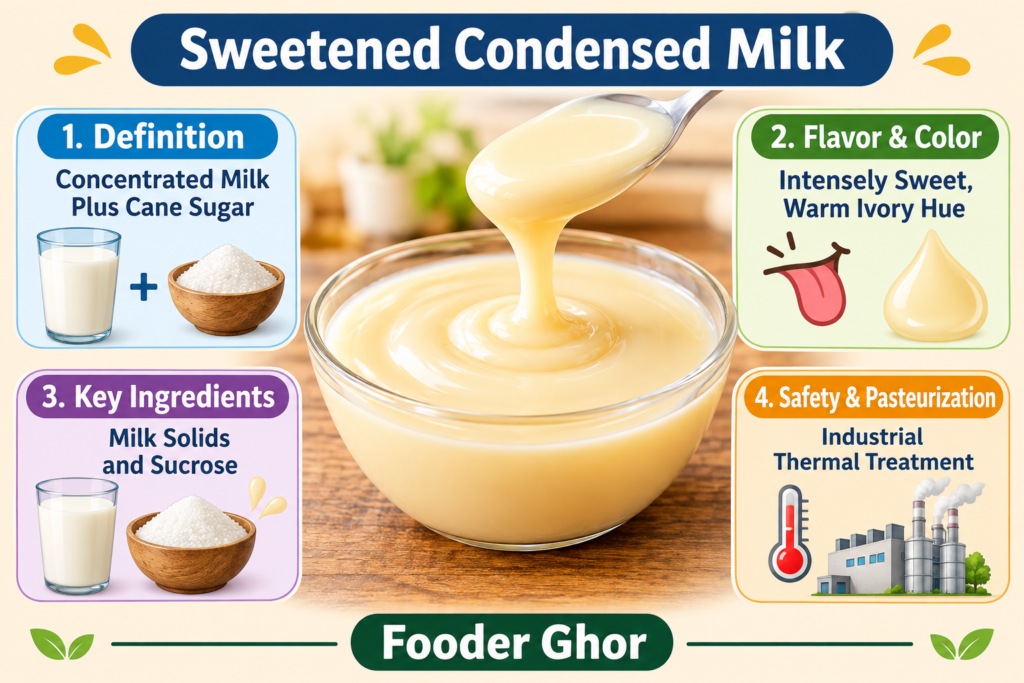
Sweetened condensed milk is a concentrated dairy product manufactured by evaporating approximately sixty percent of the water from fresh whole milk and dissolving a high percentage of sugar into the liquid.
The high sugar content acts as a natural preservative, inhibiting bacterial growth without requiring immediate refrigeration while the package remains unopened. This unique processing method gives the dairy product an exceptionally long shelf life and a thick, syrupy consistency.
Unlike sweetened condensed milk, evaporated milk contains no added sugar and has a different consistency. Read our guide on what is evaporated milk to understand its ingredients, processing, and key differences.
What is Sweetened Condensed Milk Taste Like?
Sweetened condensed milk tastes intensely sweet, rich, and velvety, featuring prominent creamy dairy notes combined with warm caramelized undertones.
Unlike plain fluid milk or unsweetened evaporated milk, the addition of concentrated sugar creates a deeply decadent flavor profile that coats the palate. There is no natural sourness or bitterness because the heavy sugar load completely dominates the taste receptors.
If you have leftover sweetened condensed milk, you may also wonder whether it can be frozen without affecting its texture. Read our guide on can you freeze sweetened condensed milk for practical storage tips.
What Color Is Sweetened Condensed Milk?
Sweetened condensed milk features a distinct warm ivory, creamy off-white, or pale golden hue depending on the length of thermal processing.
The gentle golden tint develops naturally during the evaporation stage as milk proteins and natural sugars undergo mild, controlled Maillard reactions and caramelization under warm industrial heat.
According to research published in the Foods journal, heating milk triggers Maillard reactions between lactose and milk proteins, producing compounds that contribute to gradual browning and changes in milk color.
Sweetened Condensed Milk Flavor Profile
The flavor profile of sweetened condensed milk centers on concentrated sweetness, heavy dairy butterfat richness, and smooth caramelized notes.
Because the water content is heavily reduced, every drop delivers an concentrated burst of milk solids and sucrose. This high-density profile makes it a favorite base ingredient for fudges, custards, and sweet beverages.
For a closer look at its calories, sugar, protein, fat, and other essential nutrients, read our guide on sweetened condensed milk nutrition to understand its nutritional composition.
What Is in Sweetened Condensed Milk?
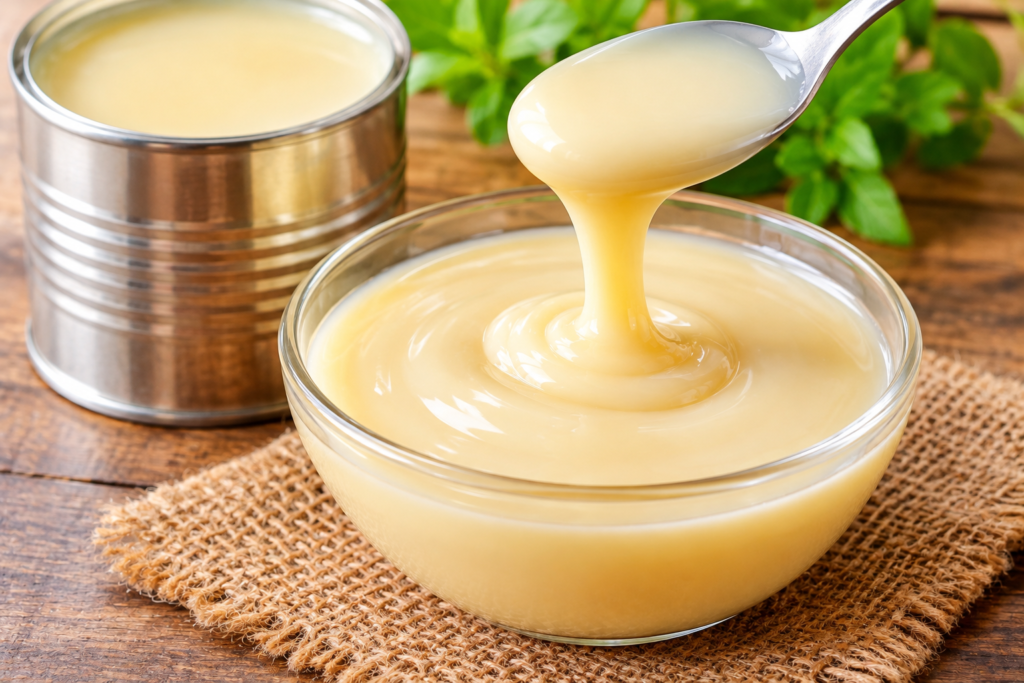
Sweetened condensed milk contains natural concentrated milk solids, milk fats, water, and approximately forty to forty-five percent added sucrose.
The finished liquid consists of essential dairy nutrients including milk proteins (casein and whey), natural milk fats, and concentrated lactose, all suspended stably within a heavy sugar syrup matrix.
To understand how long sweetened condensed milk stays fresh after opening or when stored unopened, read our guide on how long does sweetened condensed milk last for practical storage and shelf-life information.
What Is Sweetened Condensed Milk Made Of?
Sweetened condensed milk is made of fresh whole cow milk and refined white cane sugar, processed through thermal vacuum evaporation to remove water.
Fresh whole cow milk is clarified and standardized for optimal fat and protein balance.
Refined sugar is thoroughly dissolved into the liquid milk at precise proportions.
The sweetened mixture enters commercial vacuum evaporators where moisture is boiled off at lower temperatures to prevent scorching.
The thick, condensed product is cooled, homogenized, and hermetically sealed into cans.
If you want to prepare this dairy product yourself, read our guide on how to make sweetened condensed milk at home for a simple, step-by-step homemade preparation method.
Is Sweetened Condensed Milk Pasteurized?
Yes, commercial sweetened condensed milk is pasteurized during manufacturing to reduce harmful microorganisms and make the product safer for consumption.
According to the FDA’s dairy product pasteurization guidelines, milk products containing added sweeteners and condensed milk must meet specified time-and-temperature pasteurization standards to reduce harmful microorganisms.
Does Sweetened Condensed Milk Need to Be Pasteurized?
Sweetened condensed milk is pasteurized during manufacturing because raw milk may contain harmful foodborne microorganisms that must be reduced through controlled heat treatment.
The high sugar concentration helps prevent spoilage by reducing the availability of water for microbial growth. However, this preservative effect does not replace the need for pasteurization during manufacturing, as specified under FDA regulations for sweetened condensed milk.
Is Eagle Brand Sweetened Condensed Milk Pasteurized?
Yes, Eagle Brand sweetened condensed milk is fully pasteurized and manufactured using high-quality whole milk and cane sugar under strict quality controls.
As one of the oldest and most trusted commercial dairy brands in North America, Eagle Brand ensures complete pathogen elimination through standard industrial thermal pasteurization and vacuum canning.
What Is La Lechera Sweetened Condensed Milk?
La Lechera is a popular global brand of sweetened condensed milk produced by Nestlé, known for its rich texture and convenient squeeze format or traditional cans.
It is widely used in Latin American and international baking to prepare classic desserts like flan, tres leches cake, and sweet coffee drinks.
Why Does Sweetened Condensed Milk Taste So Bad?
Sweetened condensed milk can taste unpleasantly metallic, overly cloying, or burnt if the product has expired, suffered improper storage, or been scorched during manufacturing.
While fresh condensed milk is deliciously sweet, old cans stored in hot environments can develop metallic off-notes from tin reactions or rancid fat flavors as milk lipids oxidize over time.
Although sweetened condensed milk is widely used in desserts, consuming it in excess may have health implications. Read our guide on sweetened condensed milk side effects to understand its potential health risks and precautions.
How to Make Sweetened Condensed Milk Taste Better
You can make sweetened condensed milk taste better by balancing its intense sweetness with a pinch of sea salt, pure vanilla extract, or espresso powder.
Adding contrasting elements cuts through the heavy sugar concentration, elevating the flavor profile for specific dessert recipes, frostings, and coffee pairings.
If you have evaporated milk on hand, you can also use it to create a homemade version with a rich, sweet flavor. Check out our guide on how to make sweetened condensed milk from evaporated milk for an easy preparation method.
What Is Sweetened Condensed Milk Used For?

Sweetened condensed milk is used primarily as a versatile baking base, coffee sweetener, ice cream ingredient, and primary component for traditional confections like fudge and caramel.
Its low water activity and high sugar concentration allow it to thicken frostings, create smooth caramels (dulce de leche) when boiled, and add rich creaminess to beverages without curdling.
Besides its culinary uses, sweetened condensed milk also provides certain nutrients from dairy. Read our guide on sweetened condensed milk health benefits to explore its nutritional value and potential benefits.
Why Trust Fooder Ghor
At Fooder Ghor, we provide educational resources focused on understanding the safe use, handling, and storage of different types of milk, including breast milk, cow’s milk, goat milk, and raw milk, based on publicly available guidance from trusted sources such as the CDC, FDA, USDA, and AAP. Some milk-related articles, particularly those involving maternal and infant feeding topics, are reviewed for clarity and presentation by nursing students with academic training in maternal and child health to help make information easier to understand. This content is provided for learning purposes only and does not offer medical advice.
Frequently Asked Questions
A: No, unopened cans are shelf-stable at room temperature because the high sugar concentration and vacuum seal prevent bacterial growth.
A: No, sweetened condensed milk generally lasts longer because its high added sugar content helps inhibit microbial growth; read our guide on how long does evaporated milk last to compare their storage times and shelf life.
A: No, you cannot substitute them equally because sweetened condensed milk contains heavy sugar and lacks the water volume of fluid milk.
A: It is thicker because industrial evaporators remove up to sixty percent of the natural water content from the milk. If you don’t have evaporated milk available, you can also prepare a homemade version using powdered milk. Read our guide on how to make sweetened condensed milk from powdered milk for an easy alternative.
A: No, evaporated milk is unsweetened and contains no added sugar, whereas sweetened condensed milk is heavy with added cane sugar.
Conclusion
Understanding what is sweetened condensed milk helps you utilize this rich, versatile dairy staple effectively in baking, cooking, and beverage preparation. Its unique combination of evaporated milk solids and heavy cane sugar provides unmatched texture and sweetness for your favorite kitchen recipes.
To explore how to properly store opened cans and extend shelf life safely, visit our dedicated guide on how to store sweetened condensed milk today!