Skip to content



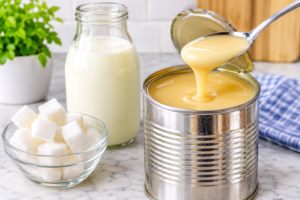
Sweetened condensed milk is a rich, high-sugar dairy product that requires proper environmental control to maintain its creamy texture and prevent spoilage over time. Whether you are stocking your pantry with unopened steel cans, managing opened portions in the refrigerator, or using convenient squeeze tubes, knowing how to store sweetened condensed milk is essential for maintaining product quality. The shelf life of condensed milk depends heavily on container integrity, ambient temperatures, and clean kitchen handling.
In this comprehensive guide, we will explore the 3 primary storage methods, why proper storage is crucial, preservation techniques, and handling safety.
Quick Summary
Storage Methods Overview: Sweetened condensed milk can be stored in 3 main ways: as shelf-stable unopened cans, in refrigerated airtight containers after opening, or inside commercial squeeze tubes.
Crucial Preservation Role: Proper temperature control and oxygen barriers stop mold growth, microbial spoilage, and undesirable milk fat separation.
Long-Term Preservation Techniques: Preservation can be achieved through vacuum canning, sugar saturation, physical jar inversion tricks, or commercial freeze drying.
Hygienic Handling Rules: Always use clean, dry utensils when scooping open portions to prevent bacterial cross-contamination.
Temperature Guidelines: Keep pantry items below 70°F and refrigerated dairy at or below 40°F for optimal freshness.
If you want to understand the foundational characteristics and natural ingredients of this dairy staple before organizing your pantry, read our comprehensive guide on what is sweetened condensed milk for full background context.
Why Proper Storage of Sweetened Condensed Milk Is Crucial
Proper storage of sweetened condensed milk is crucial because ambient heat and oxygen exposure can cause milk proteins to brown, flavors to turn rancid, and bacterial growth to occur once seals are broken.
Although the high sugar concentration acts as a natural osmotic preservative, improper environmental conditions degrade the texture and safety of the product. According to food safety guidelines from the USDA, maintaining stable storage environments protects perishable dairy derivatives from physical and chemical breakdown.
To discover exact timelines for how long this dairy staple stays fresh across various environments, explore our detailed guide on how long does sweetened condensed milk last today!
How Proper Storage Helps Prevent Sweetened Condensed Milk from Spoiling
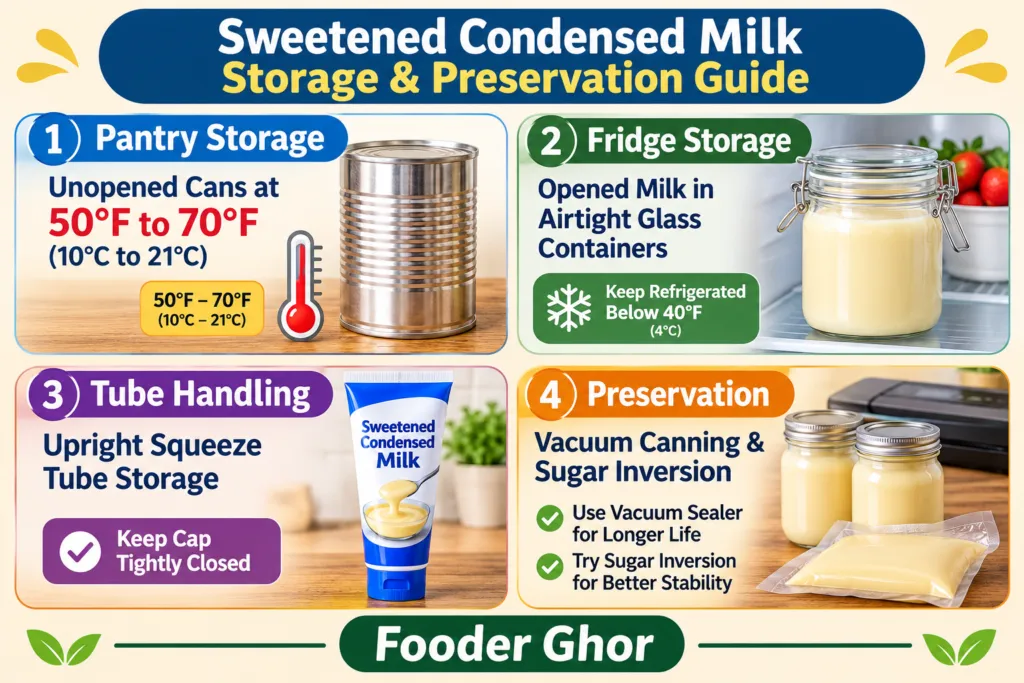
Proper storage helps prevent sweetened condensed milk from spoiling by maintaining an airtight seal that locks out airborne moisture, dust, and environmental contaminants.
When opened cans are left exposed to humid kitchen air, ambient mold spores and yeast can settle on the surface. Storing opened dairy inside clean, airtight glass or plastic containers keeps the liquid stable and protected from spoilage.
Although proper storage helps maintain freshness, consuming spoiled or contaminated sweetened condensed milk may pose health risks. Read our guide on sweetened condensed milk side effects to understand its potential health effects and safety precautions.
How to Store Sweetened Condensed Milk
You can store sweetened condensed milk in 3 main ways depending on packaging status: as shelf-stable pantry items, in refrigerated containers after opening, or inside clean squeeze tubes.
Selecting the correct storage method ensures your sweet dairy stock remains smooth and flavorful for daily baking applications.
3 Ways to Store Sweetened Condensed Milk Safely
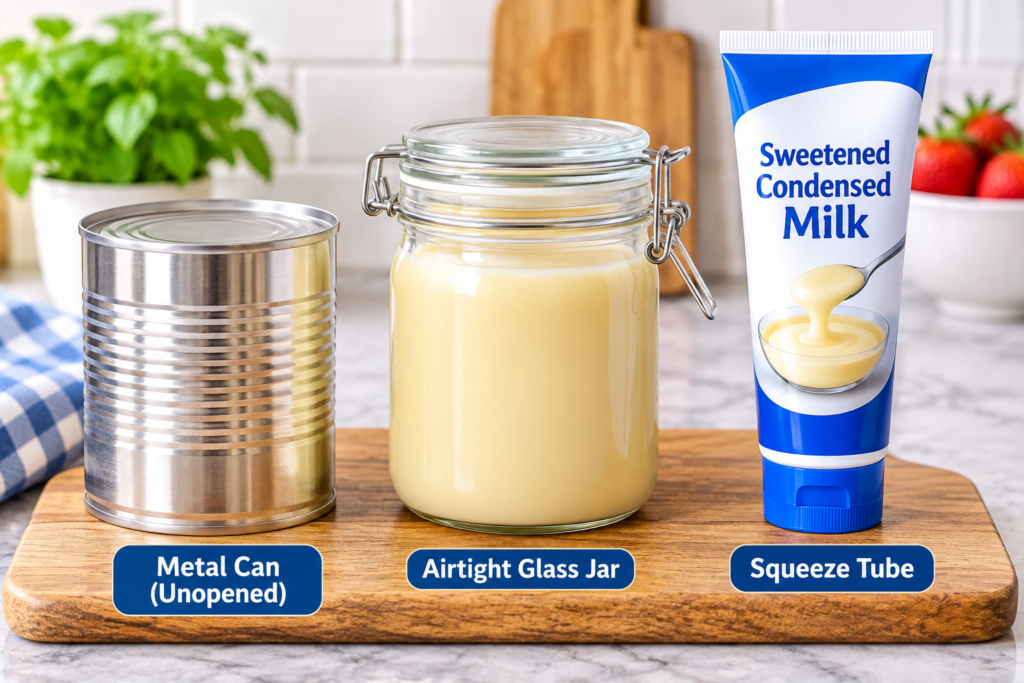
Choosing the right short-term and medium-term storage technique keeps sweetened condensed milk fresh and ready for use.
How to Store Shelf-Stable Sweetened Condensed Milk Safely Before Opening
To store shelf-stable sweetened condensed milk safely before opening, keep unopened steel cans in a cool, dark, dry pantry maintained between 50°F and 70°F.
Inspect unopened metal cans for any signs of dents, rust, or swelling.
Place the cans on a stable pantry shelf away from direct sunlight and oven heat sources.
Keep the storage area dry to prevent exterior rust from compromising the metal seal.
If you also keep evaporated milk in your pantry, read our guide on how to store evaporated milk for practical storage tips to maintain its quality and freshness.
How to Store Sweetened Condensed Milk in the Fridge After Opening
To store sweetened condensed milk in the fridge after opening, transfer the remaining liquid from the metal can into a clean, airtight glass container with a tight lid.
Open the metal can and transfer the remaining contents into a clean, food-grade glass or plastic container.
Snap or screw the airtight lid on tightly to block refrigerator odors.
Store the container on an interior refrigerator shelf kept at or below 40°F.
According to the USDA Food Safety and Inspection Service (FSIS), transferring leftover canned food into a clean glass or plastic container helps preserve its flavor and quality during refrigeration.
If you also keep plant-based milk at home, proper refrigeration is equally important for maintaining freshness. Read our guide on how to store soy milk for practical storage tips.
How to Store and Handle Sweetened Condensed Milk Using Commercial Squeeze Tubes
To store and handle sweetened condensed milk using commercial squeeze tubes, wipe the nozzle clean after each use and store the capped tube upright in the refrigerator.
Dispense the desired amount of condensed milk directly from the flexible tube.
Wipe any sticky residue off the plastic dispensing tip using a clean damp cloth.
Snap the cap securely closed to prevent air entry and store upright in the fridge door.
If you also use plant-based milk at home, proper storage is essential for maintaining freshness. Read our guide on how to store almond milk for practical refrigeration and storage tips.
Can You Preserve Sweetened Condensed Milk
Yes, you can preserve sweetened condensed milk for extended periods using traditional sugar preservation, industrial vacuum sealing, physical inversion methods, or freeze drying.
Preservation techniques alter environmental factors around the dairy product to inhibit microbial activity and extend usability well beyond standard pantry limits.
How to Preserve Sweetened Condensed Milk
You can preserve sweetened condensed milk in 4 ways: through industrial sugar vacuum canning, physical jar inversion tricks, commercial freeze-drying, or deep cold storage.
Implementing these preservation steps allows home cooks and bakers to maintain stable dairy supplies across changing seasons.
3 Ways to Preserve Sweetened Condensed Milk Safely
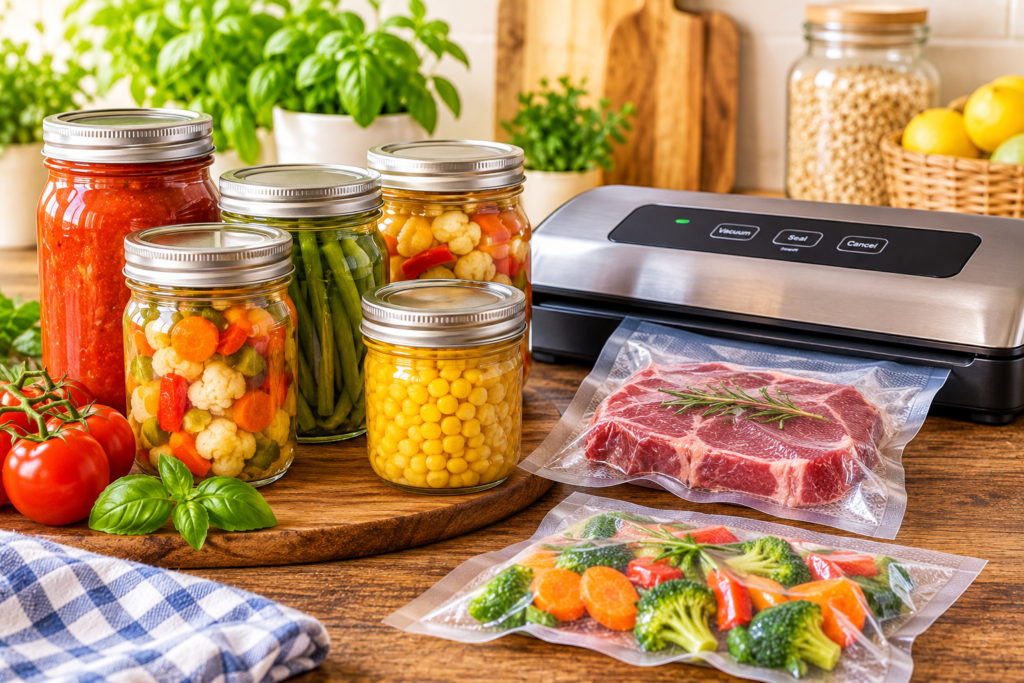
Specialized preservation methods protect dairy quality and prevent structural separation during long-term storage.
How Sugar Preservation and Vacuum Canning Extends the Shelf Life of Sweetened Condensed Milk
Sugar preservation and vacuum canning extends the shelf life of sweetened condensed milk by combining high sucrose concentrations with hermetic steel sealing to block all oxygen.
Blend fresh whole milk with refined sugar until fully dissolved and concentrated.
Pour the hot liquid into sterile metal cans and extract all internal air using industrial vacuum sealers.
Hermetically seal the containers and apply controlled thermal treatment to ensure long-term stability.
⚠️ SAFETY WARNING (Factory vs. Home Method): This vacuum canning process is for industrial factories only using high-heat commercial machinery. According to USDA & FDA guidelines, you must never attempt to can milk or dairy at home. Standard home sealers or canners cannot kill dangerous bacterial spores, creating a severe risk of fatal Botulism food poisoning.
If you also store fresh goat milk at home, proper handling and refrigeration are essential for maintaining its quality and safety. Read our guide on how to store goat milk for practical storage and preservation tips.
How to Keep Sweetened Condensed Milk Fresh for Years Using the Physical Inversion Trick
To keep sweetened condensed milk fresh for years using the physical inversion trick, periodically flip unopened canned stock stored in pantry racks to prevent milk solids from settling.
Arrange your unopened canned sweetened condensed milk upright on pantry shelves.
Every few weeks, carefully flip the entire batch of cans upside down.
Flipping redistributes the concentrated milk solids and heavy sugars evenly through the syrup matrix, preventing localized hardening.
⚠️ STORAGE NOTICE (Commercial Cans Only): This trick works only for unopened, store-bought cans to prevent sugars from settling and hardening at the bottom over time. It is a texture maintenance tip, not a preservation method. Never use this for homemade or opened dairy, which must always be kept in the fridge below 40°F (4°C) to prevent spoiling.
Although proper storage helps maintain its quality, sweetened condensed milk also contains dairy-derived nutrients. Read our guide on sweetened condensed milk health benefits to explore its nutritional value and potential health benefits.
How to Long-Term Preserve Sweetened Condensed Milk Using the Freeze-Drying Method
To long-term preserve sweetened condensed milk using the freeze-drying method, dehydrate liquid milk-sugar mixtures under deep vacuum freezing to remove 98 percent of moisture.
Pour sweetened condensed milk into shallow trays designed for commercial freeze dryers.
Freeze the liquid rapidly at sub-zero temperatures inside the vacuum chamber.
Apply low heat under deep vacuum pressure to sublimate ice crystals directly into vapor, leaving shelf-stable dry powder.
According to technical food preservation guidelines from the USDA & FDA, controlling moisture activity through dehydration effectively halts bacterial proliferation in dairy products. For a closer look at its calories, sugar, protein, fat, and other essential nutrients, read our guide on sweetened condensed milk nutrition facts to understand its nutritional composition.
⚠️ TECHNICAL & SAFETY NOTICE: Safe freeze-drying requires a specialized commercial or home freeze-dryer appliance. A standard household kitchen freezer cannot remove the moisture needed to stop bacterial growth.
Why Trust Fooder Ghor
At Fooder Ghor, we provide educational resources focused on understanding the safe use, handling, and storage of different types of milk, including breast milk, cow’s milk, goat milk, and raw milk, based on publicly available guidance from trusted sources such as the CDC, FDA, USDA, and AAP. Some milk-related articles, particularly those involving maternal and infant feeding topics, are reviewed for clarity and presentation by nursing students with academic training in maternal and child health to help make information easier to understand. This content is provided for learning purposes only and does not offer medical advice.
Frequently Asked Questions
A: No, you should transfer opened milk into a glass container because exposed metal can impart a metallic taste and invite air contaminants.
A: Yes, freezing extends storage limits, though it creates a very thick consistency that requires careful thawing before use. If you want to preserve leftover sweetened condensed milk for longer, read our guide on how to freeze sweetened condensed milk for proper freezing, storage, and thawing instructions.
A: The ideal pantry temperature ranges between 50°F and 70°F away from direct heat and moisture sources.
A: It darkens due to natural Maillard reactions where milk proteins interact slowly with sugars over extended storage periods. If you enjoy using condensed milk in homemade desserts, you can also prepare it from scratch with simple ingredients. Read our guide on how to make sweetened condensed milk at home for an easy, step-by-step recipe.
A: Separation appears as a syrupy liquid layer at the bottom with thickened solids on top, which can be remixed by vigorous stirring.
A: Not exactly, as cashew milk generally requires refrigeration and has a shorter shelf life than commercially canned evaporated milk; read our guide on how to store cashew milk for proper storage methods and freshness tips.
Conclusion
Mastering how to store sweetened condensed milk ensures your kitchen stock remains fresh, smooth, and safe for all your favorite baking and beverage recipes. Whether you keep unopened cans in a cool pantry, store opened portions in airtight refrigerator containers, or manage squeeze tubes, proper environmental control prevents food waste.
Proper storage is essential for maintaining the freshness and quality of different types of milk. You can also read our guide on how to store coconut milk for practical storage methods and tips to prevent spoilage.