Skip to content



Goat cheese is a nutritious and popular dairy product, but excessive consumption or underlying health conditions can sometimes lead to unintended physical discomfort. While fresh goat dairy offers high protein and essential minerals, individuals with specific food sensitivities, high blood pressure, or weakened immune defenses must monitor their intake. Understanding potential dairy side effects helps protect your digestive health and systemic wellness.
In this comprehensive guide, we will explore the medically verified health risks of goat cheese, including bacterial contamination, lactose reactions, allergy symptoms, sodium load, and kidney considerations.
Quick Summary
Bacterial Contamination Risks: Unpasteurized goat cheese carries severe listeria infection risks for vulnerable populations due to its high moisture environment.
Lactose and Digestive Limits: Although lower in lactose than cow milk, fresh goat cheese can still trigger bloating or gas in sensitive individuals.
Dairy Protein Allergies: True goat cheese allergies stem from casein or whey immune responses, ranging from skin rashes to severe anaphylaxis.
Sodium and Blood Pressure: Excessive portions of salted goat cheese can elevate daily sodium intake, increasing cardiovascular strain.
Kidney and Renal Strain: High phosphorus and sodium concentrations in aged or salted cheeses can burden pre-existing chronic kidney disease.
If you want to understand the comprehensive nutritional advantages of this dairy staple before exploring its limitations, read our detailed guide on goat cheese benefits for complete wellness context.
Is Goat Cheese bad for you?
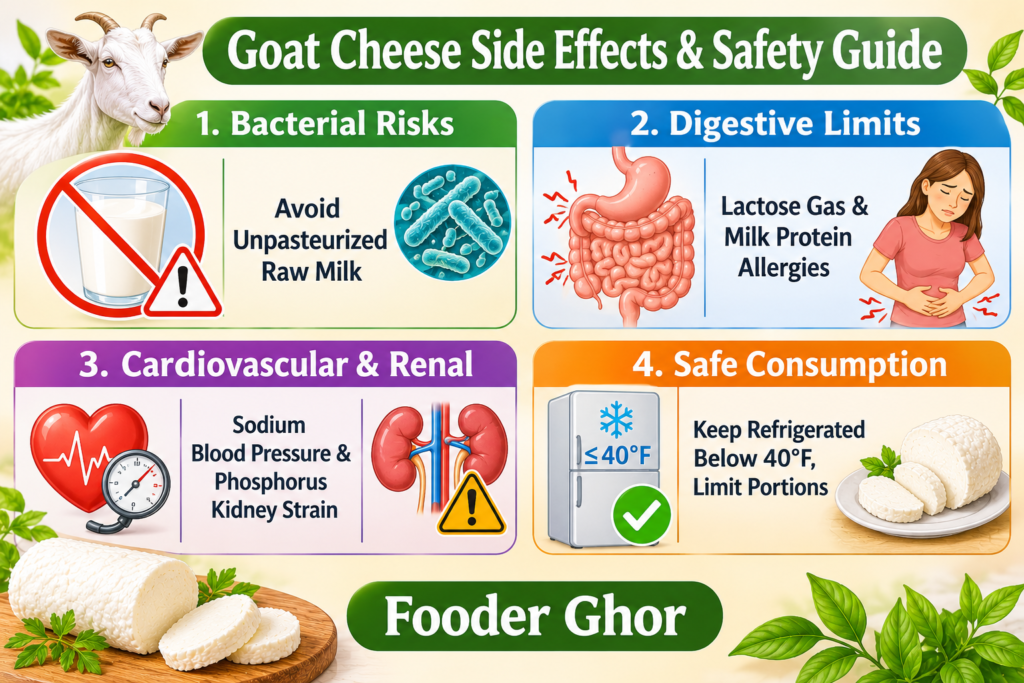
Goat cheese is not inherently bad for you, but excessive consumption, unpasteurized sourcing, or underlying health conditions like lactose intolerance and high blood pressure can trigger adverse side effects.
For most healthy individuals, incorporating moderate portions of goat cheese into a balanced diet provides valuable proteins and fats without negative consequences. However, consuming large amounts can introduce excessive calories, saturated fats, and sodium. Furthermore, individuals with specific medical sensitivities must exercise caution when selecting dairy products.
Understanding proper storage limits also prevents accidental food spoilage issues; for instance, reviewing our practical guide on how long does goat cheese last ensures you avoid consuming degraded curds.
Goat Cheese and listeria risks (Bacterial Contamination)
The risk of bacterial contamination in goat cheese depends partly on whether it is made from raw or pasteurized milk, as well as its moisture level, acidity, and handling conditions.
Soft unpasteurized cheeses maintain high moisture levels and a near-neutral pH, creating an ideal breeding ground for pathogenic bacteria. According to the CDC, soft cheeses with high moisture content are more likely to be contaminated with Listeria monocytogenes, and cheeses made from unpasteurized milk can also carry this harmful bacterium. Listeriosis is a serious infection that causes flu-like symptoms, miscarriages, and severe neurological complications in high-risk groups.
Goat cheese is made from goat milk, but consuming goat milk products may not suit everyone. Read our guide to goat milk side effects to understand possible digestive reactions and other health considerations.
Is pasteurized Goat Cheese safe during pregnancy?
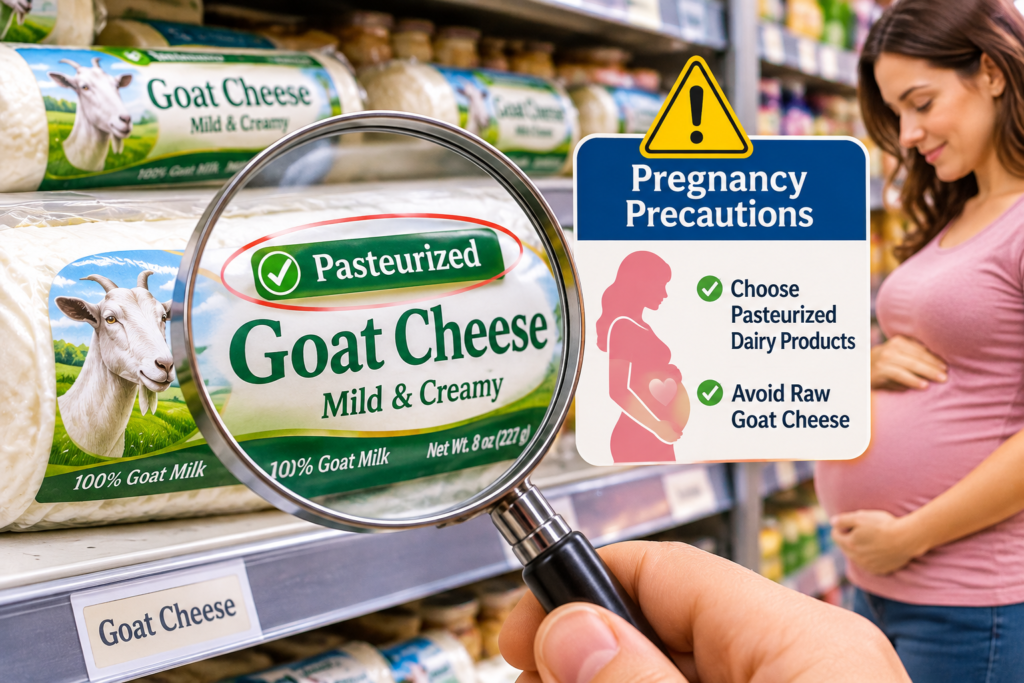
Yes, pasteurized goat cheese can generally be eaten during pregnancy, while goat cheese made from unpasteurized milk should be avoided because it may carry harmful bacteria such as Listeria monocytogenes.
Thermal pasteurization destroys harmful bacteria effectively. According to the FDA, pregnant women should avoid soft cheeses made from unpasteurized milk, including goat cheese, because these products may contain Listeria monocytogenes. Always inspect package labels to verify pasteurization before purchasing.
Different cheeses can have different nutritional properties and potential drawbacks. If you enjoy feta cheese, our guide to feta cheese side effects explains possible health concerns and what to consider when including it in your diet.
Goat Cheese allergy symptoms (Dairy Protein Hypersensitivity)
A genuine goat cheese allergy is an immune system response triggered by specific milk proteins such as alpha-s1 casein or whey, rather than a simple sugar intolerance.
Unlike lactose intolerance which affects digestion, a true dairy protein allergy engages the immune system. Consuming even trace amounts can provoke immediate physical reactions.
Mild Skin Reactions: Hives, localized rashes, skin itching, and eczema flare-ups.
Respiratory Discomfort: Nasal congestion, wheezing, coughing, and breathing tightness.
Gastrointestinal Distress: Severe abdominal pain, violent vomiting, and acute nausea.
Anaphylaxis: A life-threatening medical emergency involving throat swelling and blood pressure drop requiring immediate medical intervention.
According to the American College of Allergy, Asthma & Immunology (ACAAI), people with cow’s milk allergies may also react to goat’s milk because the milk proteins are similar. Symptoms can include hives, vomiting, stomach upset, and, in severe cases, anaphylaxis.
Milk protein allergies can affect people differently depending on the type of dairy product they consume. If you want to understand the possible reactions associated with another popular cheese, read our guide to cream cheese side effects for more information.
Does Goat Cheese increase blood pressure? (Sodium Load)
Yes, excessive consumption of goat cheese can increase blood pressure due to its concentrated sodium content, which contributes to overall daily dietary salt loads.
Many artisan and commercial goat cheeses require substantial salting during the curd pressing and rind-curing stages to enhance flavor and prevent mold. According to the American Heart Association, excess sodium can cause the body to retain water, increasing blood volume and potentially raising blood pressure. Individuals managing hypertension should monitor their daily portion sizes carefully.
Just like cheese, other dairy products may also have nutritional considerations depending on how they are prepared and consumed. Read our guide to evaporated milk side effects to understand its potential drawbacks and what to consider before including it in your diet.
Goat Cheese and lactose intolerance

Individuals with lactose intolerance may experience digestive issues from goat cheese because fresh soft goat curds still contain residual milk sugars that can ferment in sensitive intestinal tracts.
Although goat milk contains slightly less lactose than cow milk, fresh unaged goat cheese is not completely lactose-free. When sensitive individuals consume soft goat cheese, undigested lactose reaches the large intestine where gut bacteria break it down, producing excess gas. Common clinical symptoms include abdominal bloating, cramping, flatulence, and mild diarrhea.
To understand how proper preservation and chilling protect dairy quality before consumption, explore our detailed resource on how to store goat cheese.
Can Goat Cheese trigger migraines? (Tyramine Sensitivity)
Goat cheese can potentially trigger migraines in sensitive individuals because aged or ripened varieties develop high concentrations of tyramine during protein breakdown.
As cheese ages, natural bacterial enzymes break down milk proteins into an amino acid called tyramine. According to the National Center for Biotechnology Information (NCBI), tyramine is found in aged and fermented foods, including certain cheeses, and may act as a migraine trigger in some individuals, although the evidence is not conclusive. Furthermore, individuals taking monoamine oxidase inhibitor (MAOI) antidepressants must avoid aged cheeses to prevent dangerous hypertensive crises. Fresh, unaged cheeses generally contain less tyramine than aged varieties, although the exact amount can vary depending on production and storage conditions.
Different cheeses can have different nutritional properties and potential side effects. If you enjoy Mexican-style cheeses, our guide to Cotija cheese side effects explains possible health considerations and what to know before including it in your diet.
Does Goat Cheese cause weight gain and high cholesterol?
Yes, eating large portions of goat cheese regularly can contribute to weight gain because it is calorie-dense, while its saturated fat content may raise LDL cholesterol levels when consumed in excess.
Goat cheese is a rich source of dietary fat and calories. According to USDA FoodData Central, goat cheese contains calories and fat that vary by type, making portion size an important consideration when managing daily calorie intake. Additionally, the American Heart Association explains that consuming too much saturated fat can raise LDL (bad) cholesterol levels in the blood. Practicing strict portion control is essential for maintaining cardiovascular health.
To review basic fat and protein composition metrics across different cheese styles, read our foundational guide on what does goat cheese taste like.
Is Goat Cheese bad for kidney health?
Excessive intake of goat cheese may make it harder for individuals with chronic kidney disease to manage their phosphorus and sodium levels, depending on the type of cheese and portion size.
According to the National Institute of Diabetes and Digestive and Kidney Diseases (NIDDK), damaged kidneys may not remove phosphorus from the blood effectively, allowing it to build up and contribute to weakened bones. The National Kidney Foundation also explains that many cheeses contain phosphorus and sodium, although the amount varies by cheese type, and people with CKD may need to choose lower-phosphorus and lower-sodium options.
Different types of cheese can have different nutritional considerations, especially for people managing specific health conditions. If you enjoy ricotta, read our guide to ricotta cheese health risks to understand its potential drawbacks and what to consider before adding it to your diet.
How to safely consume Goat Cheese
To minimize food safety risks, consumers should choose pasteurized goat cheese, check product expiration and use-by dates, and maintain continuous refrigerator storage at 40°F (4°C) or below.
Following food safety guidance from the CDC, the USDA Food Safety and Inspection Service, and the FDA, consumers should follow proper hygiene and safe food-handling practices when preparing goat cheese. Always wash knives, cutting boards, utensils, and food-contact surfaces thoroughly before use to reduce the risk of cross-contamination. High-risk individuals, including pregnant women, newborns, adults aged 65 and older, and people with weakened immune systems, should avoid all cheeses made with unpasteurized milk because of the risk of Listeria infection.
For complete freezing and thawing safety guidelines, check our comprehensive manual on can you freeze goat cheese.
Why Trust Fooder Ghor
At Fooder Ghor, we provide educational resources focused on understanding the safe use, handling, and storage of different types of milk, including breast milk, cow’s milk, goat milk, and raw milk, based on publicly available guidance from trusted sources such as the CDC, FDA, USDA, and AAP. Some milk-related articles, particularly those involving maternal and infant feeding topics, are reviewed for clarity and presentation by nursing students with academic training in maternal and child health to help make information easier to understand. This content is provided for learning purposes only and does not offer medical advice.
Frequently Asked Questions About Goat Cheese Side Effects
Unpasteurized goat cheese lacks thermal processing controls, allowing harmful pathogens like Listeria monocytogenes to survive and multiply within its high-moisture matrix.
Yes, many individuals with mild lactose intolerance can enjoy small portions of goat cheese because fermentation and whey drainage remove a substantial portion of the original milk sugars.
High moisture levels in soft cheeses provide a hospitable environment and water activity necessary for rapid bacterial proliferation and mold colonisation. If you want to understand how moisture affects homemade cheese, you can read our guide on how to make goat cheese at home, including the steps involved in preparing fresh goat cheese.
A true allergy triggers immune responses like hives, swelling, or breathing difficulty, whereas lactose intolerance produces purely digestive symptoms such as gas, bloating, and cramps.
Conclusion
Understanding potential goat cheese side effects ensures you can enjoy this nutritious dairy staple safely without risking bacterial infections, digestive distress, or cardiovascular strain. Selecting pasteurized varieties and practicing moderate portion control protects long-term health.
To explore the exact calorie counts, protein grams, and micronutrient breakdowns of this natural food, visit our dedicated guide on goat cheese nutrition facts today!