Skip to content



Cheddar cheese benefits overall human wellness by providing an exceptionally dense package of high-biological-value protein, highly bioavailable calcium, essential fat-soluble vitamins, and vital trace minerals that support skeletal, muscular, and cellular health. Integrating cheddar cheese into a balanced daily diet helps strengthen bone matrices, enhance immune responses, and maintain metabolic efficiency across all age groups.
Short Summary
Bone & Women’s Health: Rich in calcium, phosphorus, and vitamin K2, which enhance bone density and help prevent osteoporosis.
Weight Management: High protein (casein) and conjugated linoleic acid (CLA) promote satiety and support metabolic function when consumed in moderation.
Diabetes & Heart Health: Minimal carbohydrates ensure zero blood sugar spikes, while healthy fats improve insulin sensitivity.
Skin & Cellular Care: Contains vitamin A, zinc, and selenium to accelerate skin cell repair and combat acne-causing oxidative stress.
Men’s Fitness: High-quality amino acids support post-workout muscle recovery, while zinc maintains natural testosterone levels.
For practical guidance on keeping cheddar cheese fresh, maintaining its quality, and freezing it properly, explore How to Store and Freeze Cheddar Cheese for detailed storage guidance.
What are the Main Health Benefits of Eating Cheddar Cheese?
The main cheddar cheese health benefits stem from its rich concentration of essential nutrients, including calcium, casein protein, zinc, vitamin B12, and conjugated linoleic acid (CLA). Regular, moderate intake supports skeletal integrity, aids muscle tissue repair, promotes cellular growth, and provides long-lasting energy without raising blood sugar levels.
For a closer look at the nutritional value and potential health benefits of Brie cheese, explore Brie Cheese Health Benefits for a detailed guide.
Cheddar Cheese Benefits for Women
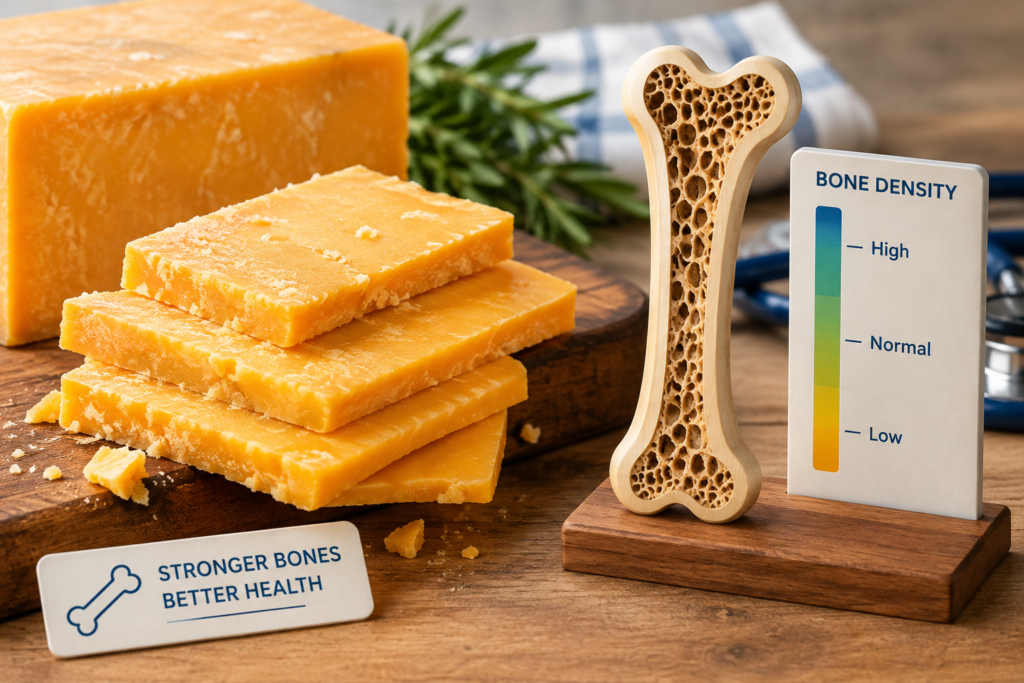
Cheddar cheese offers specific health benefits for women by delivering high concentrations of bioavailable calcium, phosphorus, and vitamin K2 essential for maintaining optimal bone mineral density. Women face a heightened physiological risk of progressive bone loss and osteoporosis, especially during postmenopausal years when estrogen levels decline. A single 1-ounce serving of aged cheddar delivers nearly 20% of the recommended daily intake of calcium alongside phosphorus and protein, forming a mineral matrix that fortifies bone structure. Furthermore, cheddar contains vitamin K2 (menaquinone), which actively directs calcium into bones and teeth rather than allowing it to accumulate in arterial walls.
The NIH notes that calcium is essential for building and maintaining strong bones, while adequate calcium intake is particularly important for bone health throughout adulthood.
Is Cheddar Cheese Healthy for Weight Loss?
Yes, in moderation, cheddar cheese can be a valuable addition to a weight management plan due to its high protein density and satiety-inducing lipid profile. Hard cheddars are packed with slow-digesting casein protein, which slows down gastric emptying and triggers the release of satiety hormones like peptide YY and GLP-1. This action suppresses appetite and reduces overall daily caloric intake. Additionally, cheddar cheese contains conjugated linoleic acid (CLA), a naturally occurring fatty acid shown in nutritional research to support fat oxidation and metabolic efficiency when paired with regular exercise.
For practical information about using almond milk as part of a weight-management diet, explore Almond Milk Benefits for Weight Management for a detailed guide.
Cheddar Cheese Benefits for Skin
The primary cheddar cheese benefits for skin are driven by its potent blend of bioavailable vitamin A, riboflavin (vitamin B2), zinc, and selenium, which collectively promote cellular repair and antioxidant defense. Vitamin A plays a critical role in epithelial tissue regeneration and sebum regulation, helping to keep skin clear and supple. Zinc and selenium act as mineral antioxidants that combat environmental free radicals, reduce skin inflammation, and aid in acne healing. Furthermore, riboflavin supports natural collagen synthesis, preserving skin elasticity and structural firmness.
For a closer look at the potential skin benefits of plant-based milk, explore Soy Milk Benefits for Skin for a detailed guide.
Cheddar cheese benefits for diabetes
Cheddar cheese provides excellent nutritional benefits for diabetes management because it contains virtually zero carbohydrates and possesses a glycemic index (GI) of zero. For individuals managing type 2 diabetes or prediabetes, eating cheddar cheese prevents glucose spikes and stabilization issues. The balanced combination of protein and healthy fats slows down the absorption of carbohydrates consumed during meals, reducing postprandial glycemic spikes and supporting long-term insulin sensitivity.
The CDC notes that eating carbohydrates with foods containing protein, fat, or fiber can slow how quickly blood sugar rises after a meal.
Cheddar Cheese Benefits for Men
Cheddar cheese delivers targeted health benefits for men by providing dense, high-quality proteins required for muscle hypertrophy alongside zinc, which naturally supports endogenous testosterone production. A 1-ounce serving contains roughly 7 grams of complete protein, rich in branched-chain amino acids (BCAAs) like leucine, which are essential for post-workout muscle protein synthesis and tissue repair. Furthermore, the high zinc content in cheddar supports prostate health, immune function, and optimal hormonal balance in men.
For a closer look at the nutritional value and potential health benefits of cottage cheese, explore Cottage Cheese Health Benefits for a detailed guide.
Cheddar Cheese Benefits for Dental and Oral Health (Enamel Remineralization)
Cheddar cheese delivers outstanding oral health benefits by actively stimulating saliva production, raising plaque pH, and depositing essential enamel-remineralizing minerals like calcium and phosphate directly onto teeth. Consuming a small piece of cheddar cheese after meals neutralizes harmful dietary acids produced by mouth bacteria. The casein proteins form a protective film over tooth surfaces, shielding enamel from acid erosion and significantly reducing the risk of dental caries.
Crucial Safety Considerations and Dietary Restrictions
Cheddar Cheese and Cholesterol Management
While cheddar cheese offers exceptional nutritional value, individuals managing high cholesterol or cardiovascular conditions must practice strict portion control. Cheddar contains roughly 5.5 grams of saturated fat per ounce.
The American Heart Association recommends limiting saturated fat to less than 6% of total daily calories, particularly for people who need to lower LDL cholesterol. Keeping cheddar portions moderate and pairing it with fiber-rich foods such as vegetables, fruits, and whole grains can help support an overall heart-healthy eating pattern.
For a closer look at the nutritional value and potential health benefits of cream cheese, explore Cream Cheese Health Benefits for a detailed guide.
Is Cheddar Cheese Safe During Pregnancy?
The FDA lists pasteurized hard cheeses such as cheddar as a lower-risk choice during pregnancy, while recommending that pregnant women avoid cheeses made from unpasteurized milk because they may carry harmful bacteria such as Listeria monocytogenes.
Hard cheeses like cheddar naturally have low moisture levels and higher salt contents, creating an environment where bacteria struggle to survive. However, pregnant women should always check labels to confirm that the cheddar is made from pasteurized milk, completely avoiding raw or unpasteurized varieties unless aged for extended, legally verified periods.
For practical information about cheddar cheese shelf life under different storage conditions, explore How Long Does Cheddar Cheese Last for useful storage guidance.
Is Cheddar Cheese Safe for Babies and Toddlers?
Cheddar cheese can be safely introduced to babies starting around 6 to 8 months of age, provided it is made from pasteurized milk and served in age-appropriate, non-choking textures.
The CDC recommends offering pasteurized cheeses as part of a varied diet beginning around 6 months, while emphasizing foods that match a child’s developmental eating skills. To prevent choking hazards in infants and toddlers, avoid serving hard chunks or thick slices; instead, offer shredded cheddar, finely melted cheese over soft foods, or tiny crumbled bits.
For a closer look at the nutritional value and potential health benefits of feta cheese, explore Feta Cheese Benefits for a detailed guide.
Cheddar Cheese benefits for Energy and Metabolism
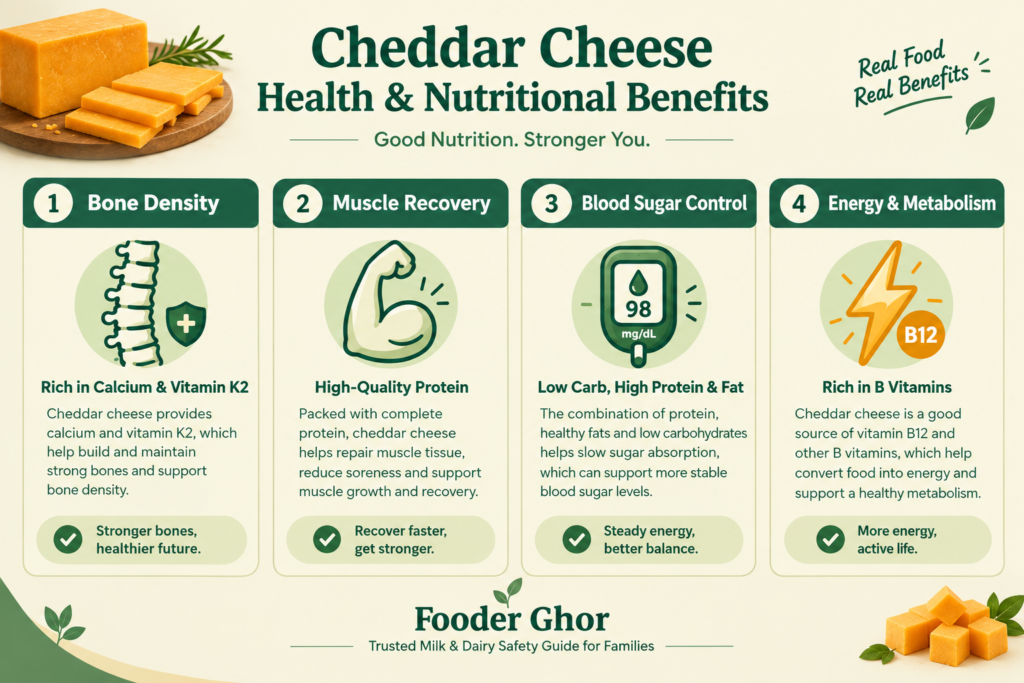
The unique vitamin and co-enzyme profile in cheddar cheese directly boosts energy production and metabolic pathways, primarily through its rich supply of Vitamin B12 (Cobalamin) and B-complex vitamins.
The NIH notes that vitamin B12 is essential for healthy red blood cell formation, DNA synthesis, and normal nervous system function, and it plays an important role in cellular metabolism. A single serving of cheddar fulfills a significant portion of the daily B12 requirement, preventing megaloblastic anemia, reducing fatigue, and helping convert dietary carbohydrates, fats, and proteins into usable cellular energy (ATP).
For a closer look at the nutritional value and potential health benefits of mozzarella cheese, explore Mozzarella Cheese Health Benefits for a detailed guide.
Why Trust Fooder Ghor?
At Fooder Ghor, we provide educational resources focused on understanding the safe use, handling, and storage of different types of milk, including breast milk, cow’s milk, goat milk, and raw milk, based on publicly available guidance from trusted sources such as the CDC, FDA, USDA, and AAP. Some milk-related articles, particularly those involving maternal and infant feeding topics, are reviewed for clarity and presentation by nursing students with academic training in maternal and child health to help make information easier to understand. This content is provided for learning purposes only and does not offer medical advice.
Frequently Asked Questions About Cheddar Cheese Benefits
Cheddar cheese health benefits refer to its positive nutritional impacts such as bone density support, muscle repair, and oral health when eaten in moderation. Side effects occur primarily when consumed in excess, leading to high sodium intake, elevated LDL cholesterol, or digestive distress in sensitive individuals. For a broader look at the potential health concerns and side effects associated with cheddar cheese, explore Cheddar Cheese Health Side Effects for practical information about common dietary considerations.
Yes, cheddar cheese provides essential nutrients for growing children, including calcium and phosphorus for bone and tooth growth, protein for muscle development, and healthy fats necessary for neurological growth.
Yes! Because cheddar is a fully aged hard cheese, most whey and lactose are separated and converted into lactic acid during processing. A standard serving contains less than 1 gram of lactose, allowing most individuals with mild to moderate lactose intolerance to enjoy its full nutritional benefits without digestive upset.
Conclusion
Cheddar cheese is a nutrient-dense food packed with high-quality protein, bioavailable calcium, essential B vitamins, and healthy lipids that strengthen bones, support muscle recovery, and promote overall metabolic health. By keeping portions balanced and opting for pasteurized products, you can easily maximize these cheddar cheese benefits while avoiding excess sodium or saturated fat.
For a complete nutritional breakdown, caloric density metrics, and vitamin profiles, check out our detailed guide on Cheddar Cheese Nutrition Facts to manage your daily diet effectively.