Skip to content

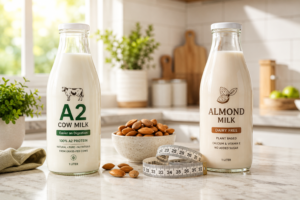
Plant based alternatives have completely transformed modern kitchens across the United States. Many parents and fitness lovers actively evaluate traditional dairy options against plant sources. When looking for a daily beverage you will eventually compare almond milk vs cow milk. Both options offer great utility in your daily diet but they serve entirely different physical health goals.
Choosing between these two classic products depends on your dietary requirements and physical needs. Some people prefer a lighter option for fat control while others look for heavy protein content to support active muscle recovery. In this comprehensive guide we will compare almond milk vs cow across multiple performance metrics. We will explore their complete nutritional charts, unique tastes, pregnancy safety, and environmental impacts to help you make a smart choice.
Quick Summary:
- Nutrition: Cow milk naturally provides more protein, calcium, and essential nutrients, while almond milk is much lower in calories and carbohydrates.
- Taste and Texture: Cow milk provides a sweet creamy finish depending on the fat level. Almond milk offers a mild flavor with a subtle nutty undertone and a thinner consistency.
- Best Uses: Almond milk is well suited for dairy-free diets and weight management, while cow milk supports muscle building, growing children, and traditional cooking.
- Dietary Considerations: Almond milk is naturally lactose-free, but people with tree nut allergies should avoid it.
Is Almond Milk Better Than Cow Milk?
Almond milk is generally better for people looking for a low-calorie, dairy-free beverage, while cow milk is better for those who need more protein, naturally occurring calcium, and complete nutrition. The better choice depends on your dietary goals.
What is the Difference Between Almond Milk and Cow Milk Nutrition?

In general cow milk is much heartier because it is an animal product containing natural proteins and complex fats. Almond milk is made from strained ground nuts with water which naturally yields a much lighter liquid.
According to nutrition information published by the USDA a standard cup of whole cow milk contains around 150 calories while skim options contain about 90 calories. In contrast a cup of unsweetened almond milk contains only 30 to 40 calories. When reviewing the sugar in almond milk vs cow milk a cup of cow milk contains around 12 grams of natural sugar called lactose. Unsweetened almond milk contains zero grams of natural sugar.
Calories: Unsweetened almond milk has 30 to 40 kcal while whole cow milk contains around 150 kcal.
Almond Milk vs Cow Milk Protein: Cow milk provides 8 grams of complete protein per cup while almond milk provides only 1 gram.
Almond Milk vs Cow Milk Fat Content: Whole cow milk contains 8 grams of fat including saturated fat while almond milk contains around 2.5 grams of healthy unsaturated fats.
Calcium in Almond Milk vs Cow Milk: Cow milk naturally contains around 300 milligrams of calcium. Popular commercial brands like silk almond milk vs cow milk or blue diamond almond milk nutrition vs cow milk match or exceed this by fortifying almond milk up to 450 milligrams per cup.
When analyzing the nutritional value of almond milk vs cow milk nutrition facts you will find that a specific holstein cow milk vs almond milk comparison highlights cow milk as a natural source of B vitamins and potassium. Almond milk requires synthetic fortification to deliver similar essential micronutrients.
👉 To understand how grain based alternatives compare to animal options read our detailed guide on what is oat milk.
Which is Better for Weight Loss, Bodybuilding, and Diabetes?

For most people managing daily weight or muscle mass requires a deep evaluation of caloric density and macronutrient balances. When we look closely at almond milk vs cow milk for weight loss unsweetened almond milk is the ultimate winner. Because it is a lower calorie option it lets you drink it regularly without affecting your daily calorie target. Many families use this in their meal preps to keep their food light and filling.
At the same time we must study almond milk vs cow milk bodybuilding performance. Cow milk is rich in casein and whey protein which are highly essential for muscle repair and protein synthesis. Therefore almond milk vs cow milk protein comparisons favor cow milk for mass building.
For blood sugar regulation almond milk vs cow milk for diabetics shows that unsweetened almond milk is a very safe choice. The FDA recommends checking labels to avoid added sweeteners but pure almond milk has a minimal glycemic impact compared to the natural sugars found in dairy.
👉 If you are looking for other popular lower calorie alternative choices see our article on what is skim milk.
Which Milk Is Better for Heart Health and Lactose Intolerance?
When evaluating the health benefits of almond milk vs cow milk, it is important to consider cholesterol levels and overall dietary fat composition. A key advantage of almond milk vs cow milk for cholesterol management is that almond milk is naturally free from dietary cholesterol and contains very low levels of saturated fat due to its plant-based origin.
In contrast, whole cow milk contains naturally occurring saturated fats, which, when consumed in excess, may contribute to higher LDL cholesterol levels. According to the Dietary Guidelines for Americans, replacing saturated fats with plant-based unsaturated fat sources is recommended as part of a heart-healthy eating pattern.
Additionally, when comparing almond milk vs cow milk for lactose intolerance, almond milk is naturally lactose-free, making it easier to digest for individuals who are sensitive to dairy sugars. Cow milk contains lactose, which can cause digestive discomfort such as bloating or gas in lactose-intolerant individuals.
From a nutritional perspective, dairy milk does provide naturally occurring calcium, vitamin D (if fortified), and protein that support bone health and muscle maintenance. However, health authorities such as the CDC emphasize that maintaining adequate calcium intake throughout life is essential for supporting bone density and long-term skeletal health.
👉 To understand how cholesterol levels behave with alternative dairy options review our analysis on is skim milk healthy.
How Do They Compare in Taste, Texture, and Baking?

Cow milk has a richer, creamier texture, while almond milk has a lighter body with a mild nutty flavor. The better option depends on whether you prefer traditional dairy richness or a lighter plant-based taste.
The discussion around almond milk vs cow milk taste usually depends on what you are preparing in your kitchen. Cow milk is recognized for its thick consistency and rich creaminess.
It behaves very predictably when exposed to high temperatures. For this reason choosing almond milk vs cow milk cooking is highly common. Cow milk helps thicken sauces and binds ingredients seamlessly.
Baking Stability: Almond milk vs cow milk baking shows that cow milk creates a golden brown crust due to its natural sugars and proteins.
Texture Adjustments: Almond milk can be used in a 1:1 ratio for baking but you might need to add a bit of fat to keep cakes moist.
Flavor Profiles: Almond milk provides a very mild flavor with a familiar nutty finish which works well in light batters.
On the other hand almond milk provides a thinner texture which makes it versatile for basic morning cereals. If you do not want a heavy dairy flavor in your delicate recipes almond milk is a great alternative.
👉 To see how traditional plant milks compare in natural flavor profiles see our post on what does goat milk taste like.
Which is Better for Pregnancy, Breastfeeding, and Babies?
For most healthy pregnancies, both cow milk and fortified almond milk can be included as part of a balanced diet. Cow milk naturally provides more protein, while fortified almond milk may be suitable for people avoiding dairy.
Introducing plant alternatives to infants requires strict attention to professional medical guidelines. The American Academy of Pediatrics (AAP) explains that almond milk vs cow milk for baby care follows strict age limits. Cow milk can be introduced as a primary beverage after a child turns one year old.
However almond milk should never replace breast milk or infant formula during the first year of life. These alternative liquids lack the necessary fat density and vitamin balances needed for an infant’s vital development.
For expecting mothers almond milk vs cow milk pregnancy options show that both can be useful. Cow milk provides the high protein and natural calcium needed for fetal bone growth.
Choosing almond milk vs cow milk during pregnancy or almond milk vs cow milk while breastfeeding offers a light hydrating option that is easy on the stomach if a mother experiences morning sickness or dairy sensitivities.
👉 For complete guidelines on storing your child’s nutrition safely see our guide on breast milk storage guidelines.
What are the Prices and Environmental Footprint Factors?
When making a final decision for your household budget it is helpful to look at almond milk vs cow milk price. In most supermarkets regular cow milk is highly subsidized and remains cheaper than commercial almond milk brands.
Carbon Emissions: One important thing to know is the environmental impact of your food. Look at almond milk vs cow milk carbon footprint.
Greenhouse Gases: Industrial dairy farming produces a significant amount of methane gas which increases the carbon footprint of cow milk.
Water Consumption: Looking at almond milk vs cow milk water usage reveals a different challenge. Almond cultivation requires an enormous amount of water to keep orchards growing in dry regions.
Understanding the balance between water usage and greenhouse emissions helps green conscious buyers pick the best option for their sustainable lifestyles.
The USDA notes that food production systems, including dairy and plant-based agriculture, can have varying environmental impacts depending on resource use such as water and energy consumption.
👉 While comparing the price and environmental footprint of different milk types, it is also important to understand storage life and freshness, especially for traditional dairy alternatives such as how long does camel milk last.
Almond Milk vs Cow Milk Storage and Shelf Life Comparison
| Storage Stage | Almond Milk | Cow Milk |
|---|---|---|
| Shelf-Stable (Unopened) | Several months | Not applicable |
| Refrigerated (Opened) | 7–10 days | 5–7 days |
| Homemade | 3–5 days | Not common |
| Frozen | Up to 3 months | Up to 3 months |
Storage recommendations differ mainly because almond milk is available in both shelf-stable and refrigerated forms, while fresh cow milk requires continuous refrigeration.
According to the FDA, perishable foods such as milk should be refrigerated at 40°F (4°C) or below, and consumers should always follow the storage instructions and use-by information provided on the product label to maintain quality and food safety.
👉 If you want detailed storage recommendations for plant-based beverages, read our complete guide on almond milk storage & shelf life guide.
Almond Milk vs Cow Milk: Which Is Better Overall?
| If Your Priority Is… | Better Choice |
|---|---|
| Lower Calories | Almond Milk |
| Higher Protein | Cow Milk |
| Lower Carbohydrates | Almond Milk |
| Muscle Building | Cow Milk |
| Lactose Intolerance | Almond Milk |
| Bone Health | Cow Milk |
| Weight Loss | Almond Milk |
| Everyday Drinking | Cow Milk |
There is no universal winner. Almond milk is ideal for people looking for fewer calories and a dairy-free option, while cow milk is the better choice for those who need more protein, naturally occurring nutrients, and a traditional everyday beverage.
👉 If you choose cow milk for everyday nutrition, proper storage is essential to maintain its freshness and safety. Read our complete guide on how long does fresh cow milk last to learn how long fresh cow milk stays safe in the refrigerator, freezer, and at room temperature.
Who Should Choose Which Milk?
Who Should Choose Almond Milk?
- Want fewer calories
- Follow a dairy-free diet
- Are lactose intolerant
- Prefer a lighter beverage
- Want lower carbohydrate intake
Planning to make your own almond milk? Explore our how to make almond milk guide for an easy homemade recipe, storage tips, and practical preparation steps.
Who Should Choose Cow Milk?
- Need more protein
- Build muscle regularly
- Want naturally occurring calcium
- Have growing children over one year
- Prefer traditional dairy
👉 If you’re considering cow milk as part of your daily diet, explore our complete guide on cow milk benefits to learn how it supports bone health, muscle development, and overall nutrition for children and adults.
Why Trust Fooder Ghor?
At Fooder Ghor, we provide educational resources focused on understanding the safe use, handling, and storage of different types of milk, including breast milk, cow’s milk, goat milk, and raw milk, based on publicly available guidance from trusted sources such as the CDC, FDA, USDA, and AAP. Some milk-related articles, particularly those involving maternal and infant feeding topics, are reviewed for clarity and presentation by nursing students with academic training in maternal and child health to help make information easier to understand. This content is provided for learning purposes only and does not offer medical advice.
Most Common Frequently Asked Questions
No the AAP recommends whole cow milk or fortified soy milk for toddlers because plant alternatives like almond milk do not provide enough protein or fats for growing children.
Yes many commercial brands fortify unsweetened almond milk to contain up to 45 percent of your daily value which is higher than the natural calcium found in cow milk.
Yes cow milk is an animal product and is completely free of tree nuts making it safe for individuals with nut allergies.
Curdling happens when cold plant milk hits hot acidic liquids. To prevent this you can gently warm your almond milk before pouring it into your coffee mug.
Yes. Almond milk and cow milk can be mixed safely for cooking, smoothies, cereals, or coffee. Mixing them simply changes the flavor, texture, and nutritional profile.
Conclusion
So when comparing almond milk vs cow milk which is healthier? The final choice depends entirely on your personal wellness targets and nutritional needs. In simple terms if your main priority is weight loss, low calorie intake, or strict carbohydrate control unsweetened almond milk is your best option.
If you want a high protein beverage that builds muscle, supports young children, or works beautifully in traditional baking recipes cow milk is an excellent selection. Always read labels to avoid added sugars to keep your family’s diet balanced.
If you are also comparing plant-based alternatives beyond dairy, our detailed almond milk vs coconut milk guide explains how these two popular options differ in calories, protein, taste, nutrition, cooking performance, and the best choice for different dietary goals.