 Skip to content


Expressing a bottle and noticing a clear, see-through, or watery liquid can naturally make any nursing parent wonder about their milk’s quality. In simple terms, breast milk usually looks clear or watery because of foremilk, which is naturally lower in fat and packed with essential hydration, water, and carbohydrates. This clear appearance is completely normal, highly nutritious, and safe for your baby.
This essential guide details why milk looks transparent or thin, explains the subtle differences between clear and watery milk, and provides practical ways to manage your supply.
Quick Summary
- Clear or watery breast milk is primarily foremilk, which flows at the start of a feeding to quench your baby’s thirst.
- Transitional milk, produced during the first few weeks after birth, naturally appears more translucent than mature milk.
- Clear breast milk is fully nutritious, rich in lactose, antibodies, and vital minerals needed for infant development.
- Cold storage naturally separates milk lipids, causing the lower layer to look thin, clear, or translucent.
- You do not need to discard clear or watery milk unless it smells sour, yields a spoiled odor, or was stored improperly.
Why Is My Breast Milk Clear?
Breast milk is usually clear because it contains a higher water and lactose concentration during the initial phase of milk removal. This translucent liquid, known as foremilk, naturally lacks the dense fat globules that give hindmilk its solid creamy white appearance.
In almost all cases, what makes breast milk clear is the timing of your nursing or pumping session. Between feedings, fat particles stick to the lining of the milk ducts while the watery portion collects near the nipple. When expression begins, the first milk to flow is thin and clear. As the breast empties, fat particles dislodge and mix into the stream, gradually changing the color from clear to creamy white or pale yellow.
Stage of lactation also plays a significant role. During the transition from colostrum to mature milk, expressed milk often looks semi-transparent. To explore the full spectrum of normal lactation shades, read our detailed guide on what color breast milk can be.
Clear Breast Milk vs. Watery Breast Milk: What’s the Difference?
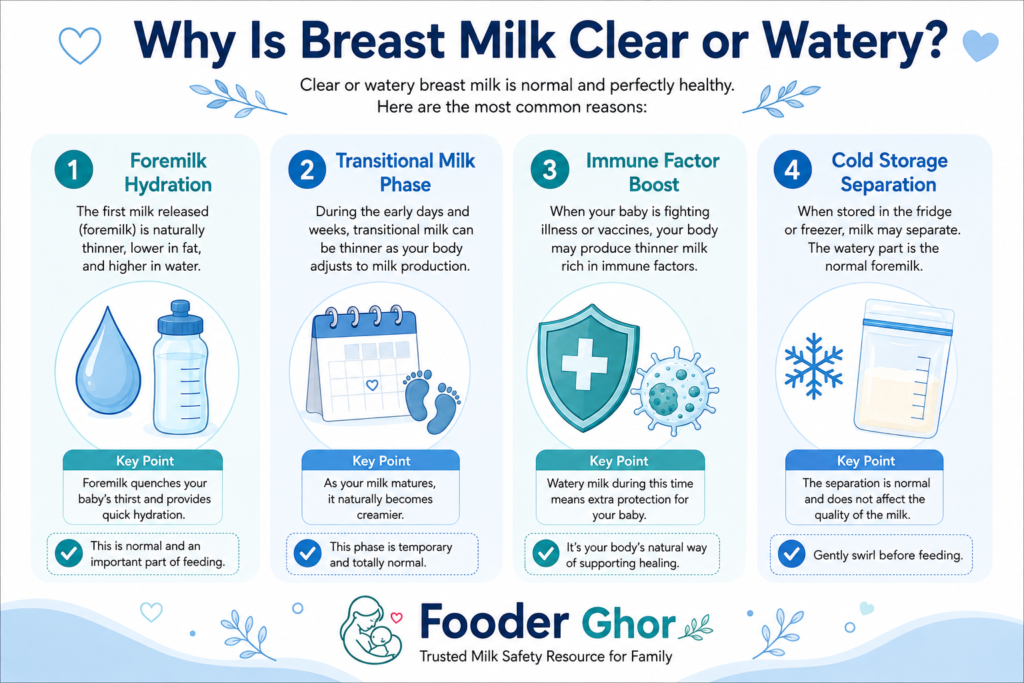
While parents often use these terms interchangeably, understanding the difference between visual clarity and liquid texture helps clarify milk composition.
| Milk Feature | Clear Breast Milk (Visual Aspect) | Watery Breast Milk (Texture Aspect) | Mature / Mixed Milk (Creamy White) |
| Primary Definition | Translucent, see-through, or pale grey hue | Thin, skim-milk consistency with low density | Opaque, thick, creamy white or yellow tone |
| Main Cause | Foremilk phase or transitional milk stage | High water ratio and lower fat concentration | Balanced blend of foremilk and fat-dense hindmilk |
| Nutritional Profile | Rich in lactose, proteins, and antibodies | Packed with hydration and essential minerals | High in fats, calories, and fat-soluble vitamins |
| Baby’s Benefit | Quenches thirst and supports brain growth | Hydrates and provides fast-acting energy | Promotes weight gain and long-lasting satiety |
| Safety Status | 100% Safe & Wholesome | 100% Safe & Wholesome | 100% Safe & Wholesome |
Clear milk refers to how much light passes through the liquid, whereas watery milk describes its fluid density. Both are healthy expressions of foremilk working to keep your infant hydrated.
If you are curious about other natural shade variations, see our comprehensive guide on why breast milk turns blue.
Clear Breast Milk vs. Regular/Mature Breast Milk: What’s the Difference?
Comparing early translucent milk to standard mature milk helps nursing parents evaluate visual appearance, fat levels, and necessary feeding adjustments.
| Milk Characteristic | Clear / Watery Foremilk | Regular / Mature Mixed Milk | High-Fat Hindmilk |
| Primary Visual Appearance | Translucent, see-through, or pale grey hue | Opaque, creamy white, or soft pale ivory | Rich yellow, golden, or thick creamy shade |
| Main Composition | High water content, lactose, and electrolytes | Balanced blend of fats, proteins, and water | Dense fat particles and fat-soluble vitamins |
| Flow & Timing | Released in the first few minutes of expression | Flows during the middle of nursing or pumping | Released toward the end of a thorough session |
| Primary Infant Benefit | Quenches immediate thirst & provides quick hydration | Delivers steady nutrition, energy, & hydration | Promotes long-lasting satiety & weight gain |
| Safety & Quality | 100% Safe, fresh, & highly nutritious | 100% Safe, fresh, & highly nutritious | 100% Safe, fresh, & highly nutritious |
| Recommended Action | Continue normal feeding; no dumping needed | Continue normal feeding; no dumping needed | Continue normal feeding; no dumping needed |
Early foremilk flows rapidly and appears semi-clear or watery because fat globules remain stored higher up inside the milk ducts. As pumping or nursing continues, the mechanical action dislodges these lipid particles, causing them to mix evenly into the stream. Regular mature milk represents this perfectly balanced blend, while hindmilk delivers the densest caloric fraction. Both stages are equally vital for infant growth, working together to deliver a ideal balance of hydration and calories.
For insights into high-fat milk characteristics, read our guide on why breast milk turns yellow.
Causes of Clear and Watery Milk: Foremilk, Stages, and Illness

Exploring the biological reasons behind clear milk provides complete reassurance for nursing parents.
Lactation Stages and Foremilk Dynamics
Milk can appear relatively clear, thin, or watery during the early part of a feeding or pumping session because milk fat content is generally lower at the beginning and increases as the breast is progressively emptied. This can give early milk a bluish or translucent appearance.
During the first two weeks after birth, breast milk is also changing from colostrum to transitional milk and then toward mature milk. Transitional milk is generally observed around days 5 to 14, while mature milk becomes established afterward. According to the CDC, breast milk changes as breastfeeding continues and adapts to the baby’s nutritional needs as the baby grows.
If you want to explore other breast milk color variations, you may also read Why Is My Breast Milk Pink? to understand another rare but normal color change.
Why Is My Breast Milk Clear When Sick?
Breast milk may sometimes look thinner or more translucent when you are sick, but illness itself does not necessarily make breast milk watery or clear. Milk naturally varies in appearance depending on factors such as its fat content, stage of lactation, and when it is collected during a feeding or pumping session.
When a breastfeeding mother or her baby develops an infection, the immune-cell composition of breast milk can change. Research has found that leukocyte (white blood cell) levels in breast milk can increase during maternal or infant infection, reflecting the dynamic immune response of human milk. According to NIH research, these changes in milk leukocytes are associated with maternal or infant illness.
According to the CDC, mothers can generally continue breastfeeding while sick with certain common illnesses, including flu, COVID-19, diarrhea, or mastitis. Breast milk continues to provide nutrition and immune factors while the mother follows appropriate hygiene and medical advice.
If your milk looks unusually clear or watery but you otherwise feel well, the appearance alone does not necessarily indicate a problem. However, if you develop significant breast pain, swelling, redness, warmth, or fever along with changes in your milk or breastfeeding difficulties, contact a healthcare professional.
If you want to evaluate stored milk quality during illness, check our guide on how to know if breast milk is bad.
Oversupply and Fast Letdown Factors
If your expressed milk or nursing sessions consistently yield extremely watery milk and your baby frequently spits up or acts fussy, you might be dealing with an oversupply or a forceful letdown. When milk flows too rapidly, babies may fill up quickly on the hydrating foremilk before reaching the rich, caloric hindmilk. Adjusting nursing positions, such as reclined nursing, or practicing block-feeding under a lactation consultant’s guidance can help balance milk composition.
If you are concerned that your breast milk looks unusually watery or low in fat, our guide on Why Is My Breast Milk Not Fatty explains the common reasons breast milk can appear less creamy and what factors influence its fat content.
Pumping Technique and Flange Fit
Sometimes, the way you pump can directly influence how efficiently your breasts drain. If your pump suction is set too high or your breast shields do not fit properly, it may trigger an early letdown consisting mostly of clear foremilk without allowing the deeper, fat-rich ducts to empty fully. Ensuring a comfortable, well-fitted pump setup helps achieve a more thorough and evenly blended milk expression.
Cold Storage and Freezing: Why Is My Frozen Breast Milk Watery?
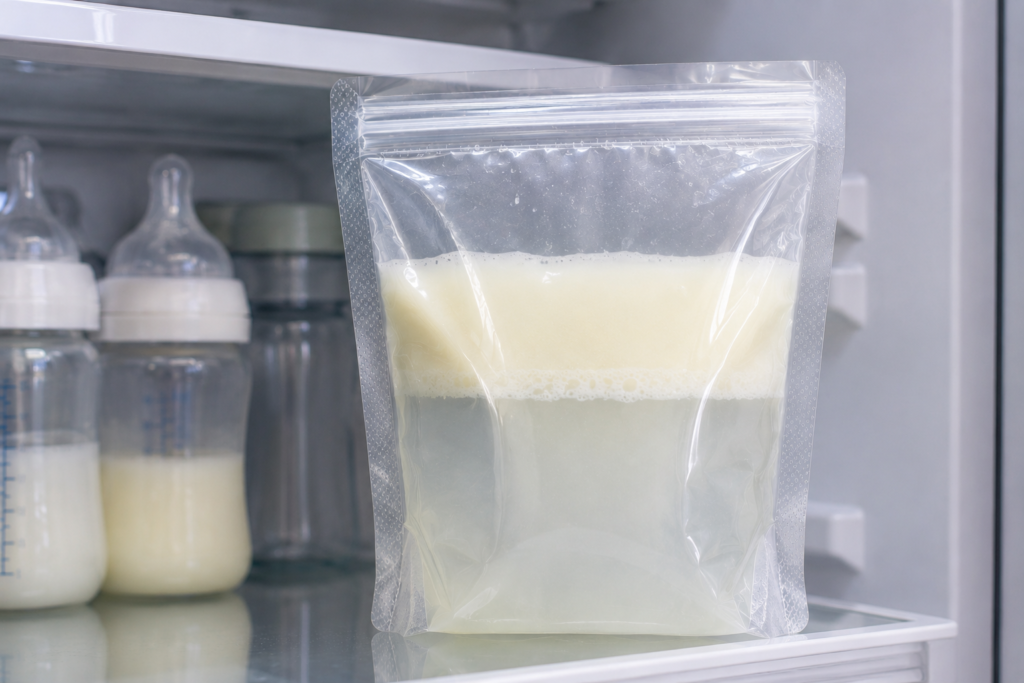
Understanding how refrigeration and freezing affect milk appearance prevents false concerns about spoiled milk.
Storage Separation and Cold Storage Appearance
Breast milk does not become watery simply because it is refrigerated or frozen, but natural separation occurs during storage. As the milk rests, fat rises toward the top and forms a creamy layer, while the liquid underneath may look thinner, clearer, or slightly bluish-white.
The USDA recommends gently swirling separated human milk to mix the fat back into the milk before feeding.
To review proper cold storage timelines, read our article on how long breast milk lasts in the refrigerator.
Why Frozen Breast Milk Looks Watery After Thawing
Yes, thawed breast milk can sometimes look watery, thin, or separated because breast milk naturally separates during storage. The fat may rise and form a creamy layer, while the remaining milk underneath can appear more translucent.
When frozen milk is thawed, this natural separation may still be visible. According to the CDC, gently swirling the milk helps mix separated fat back into the milk before feeding.
If the milk has been thawed safely and handled according to recommended storage practices, a separated or watery appearance alone does not necessarily indicate that the milk has spoiled.
You can also notice temporary green or greenish-yellow shades in breast milk, particularly after dietary changes. If you want to understand the possible causes and what this color may mean, see our Why Is My Breast Milk Green guide.
How to Fix Watery Breast Milk Naturally and Practical Steps
If you want to increase the fat content and density of your expressed milk, simple feeding adjustments can help balance foremilk and hindmilk.
Practical Steps While Pumping or Nursing
If you notice your expressed milk looks very thin or clear during expression, follow these practical steps:
- Pump a Few Minutes Longer: Extend your pumping session by 3 to 5 minutes to allow the fat-rich hindmilk to release and mix into the bottle.
- Apply Warm Compresses & Breast Massage: Gently massage your breasts before and during pumping to help dislodge fat globules stuck in the milk ducts.
- Check Flange Fit & Suction: Ensure your breast shield fits comfortably, as proper stimulation encourages a stronger milk letdown.
- Ensure Complete Breast Drainage: Allow your baby to fully drain one breast before offering the second side during nursing sessions.
- Gently Swirl Stored Milk: Always swirl refrigerated or thawed milk bottles to mix the top cream layer back into the watery base before feeding.
For comprehensive handling guidelines, check our resource on breast milk storage guidelines.
What to Do with Clear Breast Milk and When to See a Doctor
Knowing when clear milk is normal and when to consult a lactation consultant ensures optimal infant care.
What to Do with Clear Breast Milk and Should You Dump It?
No, you should never dump clear or watery breast milk. Clear milk contains vital carbohydrates, hydration, lactose, and infection-fighting antibodies essential for your baby.
Dumping thin milk deprives your infant of critical hydration. The only reason to discard clear milk is if it was left unrefrigerated past safety limits, exposed to unsanitary conditions, or developed a sour, spoiled odor.
If you suspect stored milk may have gone bad, consult our guide on what the 555 rule for breast milk is.
When Should I Worry About Clear Milk?
You usually do not need to worry about clear or watery-looking breast milk by itself. However, if your baby consistently seems unsatisfied after feeds, is not gaining weight appropriately, or has other signs of feeding difficulty, it is worth discussing the situation with your pediatrician or a lactation specialist.
Green or watery stools alone do not necessarily mean that your baby is receiving too much foremilk. According to the AAP, normal breastfed stools can be loose and sometimes green, while inadequate weight gain, poor feeding, or other feeding difficulties warrant professional evaluation.
For convenient and hygienic storage, choosing a suitable Best Breast Milk Storage Container can also make freezing, thawing, and organizing expressed milk easier.
Why Trust Fooder Ghor?
At Fooder Ghor, we provide educational resources focused on understanding the safe use, handling, and storage of different types of milk, including breast milk, cow’s milk, goat milk, and raw milk, based on publicly available guidance from trusted sources such as the CDC, FDA, USDA, and AAP. Some milk-related articles, particularly those involving maternal and infant feeding topics, are reviewed for clarity and presentation by nursing students with academic training in maternal and child health to help make information easier to understand. This content is provided for learning purposes only and does not offer medical advice.
Frequently Asked Questions
Yes, watery breast milk is 100% normal. It represents fresh foremilk, which is naturally high in water and lower in fat to keep your baby hydrated.
Yes, clear breast milk is completely normal. It typically occurs during the early foremilk stage or transitional milk phase and poses no risk to your infant.
Yes, clear breast milk is highly nutritious. While it contains less fat than hindmilk, it is packed with lactose, protective antibodies, proteins, and essential minerals.
No, cold temperatures do not turn milk watery. Refrigeration simply causes fat layers to float to the top, leaving the clear, watery liquid underneath. Swirling the bottle blends it back together.
Yes, watery breast milk is very good for babies. It satisfies their thirst, provides easy-to-digest carbohydrates, and delivers vital immune support.
Yes, pumping for a few extra minutes can help stimulate a second letdown, allowing the thicker, fat-rich hindmilk to mix with the watery foremilk.
Breast milk looks clear after thawing because freezing separates milk fats from the water base. Once thawed, the clear fluid settles at the bottom until gently swirled.
No, watery breast milk is not less nutritious. It simply serves a different purpose by delivering hydration and carbohydrates rather than high calories.
No, clear milk is not caused by dehydration. Your body naturally produces clear foremilk rich in water to ensure your baby remains hydrated regardless of minor fluid fluctuations.
Yes, gently swirl to mix and provide balanced nutrition.
Conclusion
Noticing clear or watery breast milk can initially feel unexpected, but it is a healthy, natural sign of early foremilk working as intended. This translucent milk provides critical hydration, lactose, and infection-fighting antibodies to your baby. By practicing gentle milk mixing and proper pumping techniques, you can confidently feed your infant wholesome, safe milk.
If you want to know about fatty breast milk, you can check our detailed blog about Why is my milk foamy.











