Skip to content


Raw milk requires careful handling because it is unpasteurized and more sensitive to temperature than pasteurized dairy. If you’re wondering how to store raw milk safely, the right storage method can help maintain its freshness, quality, and usability for longer. Many families also ask whether they can freeze raw milk when buying in bulk or saving extra milk for later use.
The good news is that raw milk can be refrigerated for short-term use or frozen for longer storage when handled properly. Using clean containers, maintaining consistent cold temperatures, and thawing frozen milk correctly all help preserve its quality.
This guide explains how to store raw milk safely, whether you can freeze raw milk, the best storage containers, freezing methods, thawing tips, and practical ways to keep raw milk fresh for longer.
Quick Summary
- Learn how to store raw milk safely for maximum freshness.
- Raw milk can be refrigerated or frozen depending on your storage needs.
- Use clean, airtight, freezer-safe containers.
- Leave headspace when freezing because milk expands.
- Thaw frozen raw milk slowly in the refrigerator for the best quality.
- Proper storage helps maintain freshness and reduce unnecessary waste.
How to Store Raw Milk?
Proper storage is essential because raw milk is unpasteurized and naturally contains beneficial bacteria as well as microorganisms that can multiply if handled incorrectly. To help maintain freshness and quality, refrigerate raw milk immediately after purchase or milking and keep it at 40°F (4°C) or below in a clean, tightly sealed container. Avoid leaving it at room temperature for extended periods, and minimize repeated temperature changes by returning it to the refrigerator as soon as possible after each use. If you do not plan to use the milk within several days, freezing is the best option for longer-term storage.
According to the FDA, perishable foods such as milk should be kept refrigerated at 40°F (4°C) or below to help maintain food safety and quality.
If you also keep goat milk at home, explore our complete guide on How to Store Goat Milk to learn the best storage and refrigeration practices.
5 Ways to Store Raw Milk
Different storage methods work best depending on how soon you plan to use your raw milk. Here are five practical ways to help maintain its freshness and quality.
1. Store It in the Refrigerator
Keep raw milk at 40°F (4°C) or below and place it on the back or bottom shelf, where the temperature remains the most consistent.
2. Use a Clean, Airtight Container
Always store raw milk in a sanitized glass bottle or food-grade container with a tight-fitting lid to help reduce exposure to air and contaminants.
3. Freeze for Long-Term Storage
If you will not use the milk within a few days, freeze it in a freezer-safe container while leaving some headspace for expansion.
4. Divide Milk into Smaller Portions
Storing raw milk in smaller containers allows you to thaw only what you need and helps avoid repeated opening and refreezing.
5. Keep It Away from Temperature Fluctuations
Avoid storing raw milk in the refrigerator door, where frequent opening can cause temperature changes that may reduce freshness.
Want to know exactly how long raw milk stays fresh in the refrigerator, after opening, or in the freezer? Read our complete guide on How Long Does Raw Milk Last for detailed shelf life and storage timelines.
How to Store A2 Raw Milk for Maximum Freshness
Storing farm-fresh A2 raw milk follows strict safety guidelines to preserve its unique properties. To protect its gut-friendly A2 beta-casein proteins and natural living enzymes, you must keep the milk constantly refrigerated at or below 40°F (4°C).
Always store your raw A2/A2 milk in a tightly sealed glass jar on the main shelf or back of the fridge, as the refrigerator door is prone to temperature fluctuations that can affect milk quality. Keeping the container tightly closed prevents the liquid dairy product from absorbing strong odors from other foods inside the refrigerator.
Want to keep A2 milk fresh for as long as possible? Read our complete guide on How to Store A2 Milk for refrigeration, freezing, and everyday storage tips.
Where Should You Store Raw Milk?
Raw milk should always be stored in the coldest part of your refrigerator rather than in the door. The back or bottom shelf maintains the most consistent temperature, helping preserve the milk’s freshness and quality. Because raw milk is unpasteurized, even small temperature fluctuations can affect how well it keeps over time.
For the best results, follow these simple storage practices:
- Store raw milk at 40°F (4°C) or below.
- Place the container on the back or bottom shelf of the refrigerator.
- Keep the lid tightly sealed after every use.
- Avoid storing raw milk in the refrigerator door, where temperatures change frequently.
- Keep the container away from raw meat, seafood, and other foods that may cause cross-contamination.
- Return the milk to the refrigerator immediately after pouring.
According to the U.S. Food and Drug Administration (FDA), perishable foods, including milk, should be refrigerated at 40°F (4°C) or below to help maintain food safety and quality.
Proper storage helps maintain the quality of raw milk. If you’re curious about its nutritional value and why some people choose it, read our complete guide on Raw Milk Health Benefits.
Can You Freeze Raw Milk?
Yes, raw milk can be frozen safely when stored in freezer-safe containers. Freezing slows bacterial growth and helps preserve milk for later use.
Many families freeze raw milk because they:
- Buy in bulk
- Purchase farm milk
- Want less waste
- Need longer storage flexibility
According to the Food and Drug Administration, freezing helps preserve food quality by slowing microbial activity.
Freezing methods are also commonly used for other types of milk beyond cow or raw milk. If you want to know how it works for different dairy sources, check our guide on can you freeze goat milk to see how goat milk behaves in the freezer.
Can You Freeze Raw Milk to Make It Last Longer?
Yes, you can freeze. Freezing raw milk is one of the most common ways to preserve it for longer periods.
When frozen properly, raw milk generally stores best for about 3 months for quality purposes. Freezing does not stop all natural physical changes, but it slows spoilage significantly.
Benefits include:
- Less waste
- Longer storage
- Bulk buying flexibility
This is why many families ask whether can you freeze raw milk to preserve it for future use.
Freezing does not destroy the nutritional profile of raw milk, though some minor degradation of vitamins may occur after 6 months. To learn more about the specific health benefits and enzymes found in fresh raw milk, see our guide on Is Raw Milk Good for You?
Can You Freeze Raw Milk in Glass Jars?
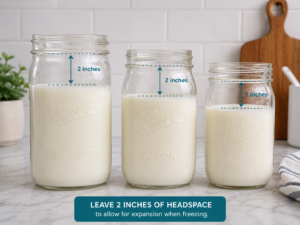
Yes, raw milk can be frozen in glass jars if the jars are freezer-safe and not overfilled.
Important precautions:
- Use freezer-rated glass only
- Leave headspace
- Avoid filling to the top
Milk expands while freezing.
Not all glass containers are designed for freezing liquids safely. The USDA freezing and food storage guidance explains why leaving headspace and using proper freezer-safe containers helps prevent cracking or breakage.
Overfilled jars may:
- Crack
- Leak
- Break under pressure
Small takeaway: Glass works well when expansion room is left.
Container choice is only one part of freezing milk properly. For a complete guide on freezing methods, storage tips, and thawing recommendations, read our article on can you freeze cow milk.
Can You Freeze Raw Milk Cream?
Yes, Raw milk cream can also be frozen successfully. Because cream contains higher fat content, texture separation after thawing may be more noticeable.
After thawing, you may observe:
- Separation
- Graininess
- Texture change
These changes are often physical rather than spoilage-related. Gentle shaking or stirring may help recombine the cream.
Texture changes after freezing are not unique to raw milk cream and can happen with other concentrated dairy products as well. Read our guide on Can You Freeze Evaporated Milk to learn how freezing affects texture, storage, and usability after thawing.
Can You Freeze Dry Raw Milk?
Yes, raw milk can be freeze-dried, but it requires specialized freeze-drying equipment and cannot be done in a standard home freezer. Freeze drying is different from regular freezing because it removes nearly all moisture from the milk, allowing it to be stored for much longer under the right conditions.
Standard home freezers cannot freeze-dry milk, they only freeze it. Because freeze-drying equipment is expensive and uncommon in most households, families typically preserve raw milk by conventional freezing instead.
Freeze drying and traditional freezing are not the same preservation methods. The USDA food freezing guidelines explain how standard freezing helps preserve food quality, while more advanced preservation methods require specialized processes.
Raw Milk Storage
Raw milk requires careful handling because it is unpasteurized.
Best practices include:
- Refrigerate immediately
- Keep container sealed
- Avoid repeated warming
- Freeze if long-term storage needed
Proper raw milk storage reduces waste and helps maintain better freshness.
According to the Centers for Disease Control and Prevention, refrigeration and safe handling remain important for dairy products.
Can You Freeze A2 Raw Milk to Extend Freshness?
Yes, you can freeze A2 raw milk safely without altering its easily digestible protein structure or core nutrition facts. Freezing is a fantastic, family-friendly way to prevent dairy waste if you purchase fresh milk in bulk.
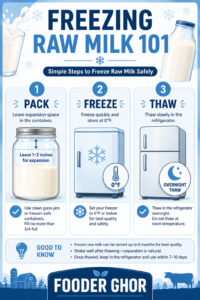
However, when choosing to freeze raw A2 milk, you must leave at least 1 to 2 inches of headspace at the top of your container because liquid expands during the freezing process. For optimal digestive comfort and taste, thaw the frozen container slowly inside the refrigerator and shake it vigorously before pouring it into your daily breakfast recipes.
If you’re comparing storage methods and safety, read our complete guide on A2 Raw Milk vs Pasteurized A2 Milk to understand the key differences between the two.
How to Thaw Frozen Raw Milk
Frozen raw milk should be thawed gradually for best results.
Best thawing methods:
- Refrigerator overnight
- Cold water bath
Avoid:
- Hot countertop thawing
- Leaving out all day
After thawing, shake gently if separation occurs.
Once raw milk is fully thawed, it is best to use it within 24 to 48 hours. Since the freezing process can slightly alter the milk’s structure, it will not stay fresh as long as fresh refrigerated milk.
Safe thawing is important for maintaining food quality and reducing bacterial growth risks after freezing. The CDC food safety tips provide guidance on handling refrigerated and frozen dairy products safely.
Safe thawing is critical to prevent bacterial growth. Never thaw milk on the counter, as this increases the risk of contamination. For a full breakdown of the safety risks and side effects associated with raw milk consumption, visit our Raw Milk Side Effects & Risks page.
Step-by-Step Guide: How to Freeze and Thaw Raw Milk Safely
Why Trust Fooder Ghor?
At Fooder Ghor, we provide educational resources focused on understanding the safe use, handling, and storage of different types of milk, including breast milk, cow’s milk, goat milk, and raw milk, based on publicly available guidance from trusted sources such as the CDC, FDA, USDA, and AAP. Some milk-related articles, particularly those involving maternal and infant feeding topics, are reviewed for clarity and presentation by nursing students with academic training in maternal and child health to help make information easier to understand. This content is provided for learning purposes only and does not offer medical advice.
Frequently Asked Questions
A: No, but texture changes after thawing are common.
A: Best quality is usually around 3 months.
A: Yes, if freezer-safe and not overfilled.
A: Quality may decline after repeated freezing cycles.
A: Slight texture or taste changes may occur.
A: Yes, separation is normal.
Conclusion
Proper storage plays an important role in maintaining the freshness and quality of raw milk. Whether you refrigerate it for everyday use or freeze it for longer preservation, using the right containers, safe temperatures, and careful thawing methods helps keep raw milk in its best condition. Following these storage practices can also help reduce unnecessary waste and make daily use more convenient.
Storage is only one part of understanding milk quality and freshness. If you are curious how freshness, fat content, and processing affect flavor, explore our guide on what does cow milk taste like for a full breakdown.