Skip to content
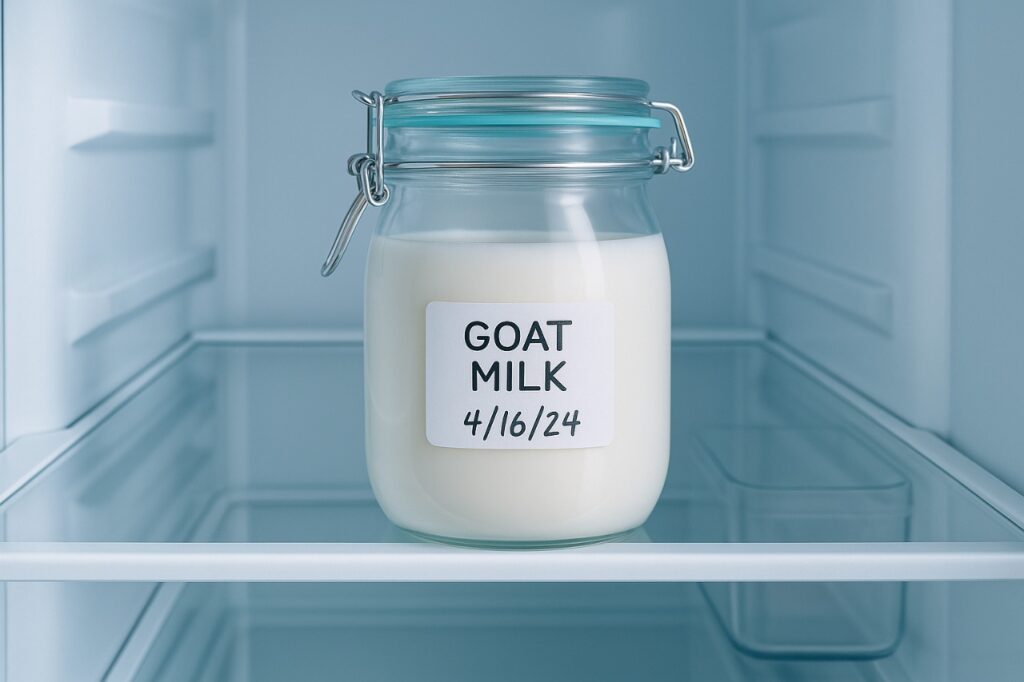
If you’re a US consumer, understanding how to store goat milk is essential. Mastering the best goat milk storage tips is the key to preserving its unique flavor and nutrition to preserving its unique flavor and nutrition. Unlike cow’s milk, goat milk requires specific temperature and sealing methods to prevent quick spoilage. Here are 10 essential, science-backed goat milk storage tips for every kitchen to help your milk last longer.
Quick Goat Milk Storage Summary (For Busy Parents)
-
Keep goat milk stored between 38°F–40°F (3°C–4°C) at all times.
-
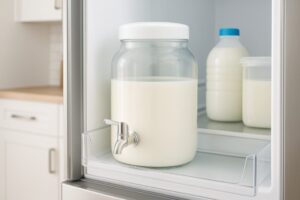
Always place milk on the middle or back shelf, never in the fridge door.
-
Use airtight glass or BPA-free plastic containers to prevent odor absorption.
-
Label containers with the open date to track freshness.
-
Avoid leaving milk at room temperature for more than a few minutes.
-
Freeze extra milk only when you cannot finish it soon.
-
Thaw frozen milk slowly in the refrigerator, never on the counter.
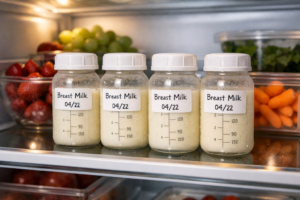
Goat Milk Storage Tips Explained in Visual Format

🧊 The Golden Rule: How to Store Goat Milk at the Ideal Temperature

The first and most important rule: goat milk should always be stored at 38°F to 40°F (3°C–4°C).
This range slows bacterial growth while preserving nutrients, as recommended by the U.S. Department of Agriculture (USDA) Food Safety Guidelines.
Most people make one major mistake — keeping milk on the fridge door. That’s the warmest part of your refrigerator, where temperatures fluctuate every time the door opens. This fluctuation cuts shelf life by nearly 40%.
✅ Pro Tip: Keep your goat milk in the back or middle shelf, where the temperature is most stable. Want to know exact refrigerator shelf life and safety limits? See our complete guide on how long does goat milk last.
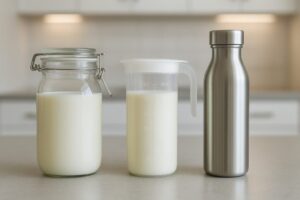
🫙 Airtight Sealing: Essential Tips for Goat Milk Containers
Goat milk easily absorbs surrounding smells from foods like onions or fish. To prevent this:
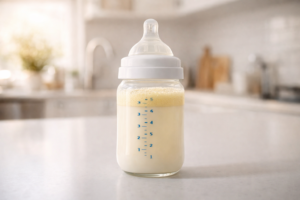
- Store in glass jars or BPA-free plastic bottles with airtight silicone lids.
- Avoid metal containers — they can alter taste over time.
- Label the container with the purchase or open date to track freshness.
- Use the oldest milk first (first in, first out) to reduce waste.
Proper sealing not only keeps bacteria out but also helps the milk retain its natural flavor and smooth texture.
👉 If you’re wondering about the benefits of goat’s milk, I’ve already covered a full guide here: Is Goat’s Milk Good for You?
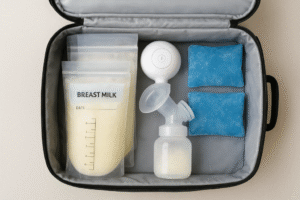
🧩 Using Goat Milk Storage Bags (Safety & Tips)
While many parents use storage bags for breast milk, they are not the ideal choice for storing goat milk. Goat milk storage bags are thin, increasing the risk of freezer burn, tears, and contamination. If you must use bags, always place them inside a rigid, airtight container or a large freezer bag to provide an extra layer of protection and prevent freezer burn.
👉 If you frequently store expressed milk at home or while traveling, this guide may also help: How to Store Breast Milk on the Go?
🧩 Quick Trick: How to Check Your Fridge Temperature Without a Thermometer
If you don’t have a thermometer, place a small cup of water with a tablespoon of sugar in your fridge overnight. If it freezes partially, your fridge is likely at 32–36°F — perfect. If it remains fully liquid, your temperature is too warm.
🧺 Beyond the Fridge: Storing Shelf-Stable Goat Milk Correctly
Shelf-stable or UHT goat milk can remain safe unopened when stored in a cool, dry pantry away from heat and sunlight. Avoid direct sunlight or warm kitchen shelves even before opening — store in a cool pantry instead. Once opened, treat it like fresh milk and refrigerate immediately according to manufacturer guidance.
⚠️ Common Pitfalls: Storage Mistakes That Cut Goat Milk Shelf Life
Even good-quality milk can go bad early due to small habits. Avoid these mistakes:
- Pouring directly into hot coffee or tea straight from the fridge — the sudden heat causes separation.
- Overloading your fridge — poor air circulation raises the internal temperature.
- Not cleaning milk containers properly — leftover residue creates sour odor.
- Reusing old caps or lids that aren’t airtight.
- Wash hands before handling milk.
- Rinse containers and lids well, then air-dry completely before refilling.
Small fixes like these can easily double your goat milk’s shelf life. The U.S. Food and Drug Administration (FDA) also emphasizes strict refrigeration, clean containers, and minimizing room-temperature exposure to prevent bacterial growth in dairy products.
👉 For exact room-temperature safety limits and discard rules, see our complete guide on how long does goat milk last.
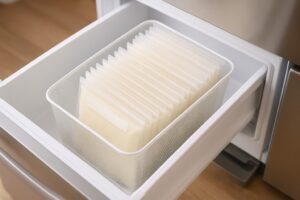
❄️ Need More Time? Freezing as a Long-Term Storage Solution

If you’ve bought milk in bulk or can’t finish it soon, freezing is your best option. Always leave an inch of headspace for expansion.
When you’re ready to use it, thaw slowly in the fridge for 12–24 hours. Never thaw at room temperature — it encourages bacteria and changes the taste.
Can You Freeze Goat Milk in the Original Carton?
Yes, you can freeze goat milk in its original cardboard carton, but you must take one critical step first: Pour out about one inch (2-3 cm) of milk before resealing and freezing. This is because liquids expand when frozen, and if the carton is full, it will burst, leading to contamination and wasted milk. Note that freezing in the carton may slightly alter the texture upon thawing, but the milk will remain safe.
👉 Want to know exact goat milk freezing method and safety limits? Read our full guide on Can You Freeze Goat Milk? (A Full U.S. Safety Guide).
Common FAQ About Goat Milk Storage
A: No, it’s generally best to avoid metal containers. Goat milk can sometimes absorb metallic tastes, affecting its mild flavor. Use glass or BPA-free plastic instead.
A: Shaking milk often is unnecessary and can actually introduce air, which might accelerate spoilage. Only shake it gently before serving to redistribute the fat.
A: Only if it passes the “sniff test” and the texture is still smooth. The “best by” date is about peak quality, but use caution. If it smells sour or is lumpy, discard it immediately.
A: Never. Milk poured into a glass has already been exposed to air and room temperature bacteria. Pouring it back contaminates the entire fresh carton.
A: No. Goat milk easily absorbs surrounding odors, especially from foods like onions, garlic, and fish. Always store milk in airtight containers and keep it away from strong-smelling foods to preserve its natural taste and freshness.
A: Shaking goat milk before storing is not necessary and may introduce extra air, which can slightly speed up spoilage. Gently swirl the container only before serving to redistribute the natural fat.
👉 For more verified information, you can also visit the U.S Food Storage Guidelines for more details.
Why Trust Fooder Ghor?
At Fooder Ghor, we provide carefully researched content based on trusted U.S. health and food safety authorities such as the CDC, USDA, FDA, and AAP. Our mission is to help U.S. parents and families use milk safely and make confident, informed decisions for their children and households. We simplify complex guidelines into practical, mom-friendly advice and regularly update our content to reflect the latest safety recommendations.
Conclusion
Storing goat milk properly protects its freshness, nutrition, and safety for your family. Simple habits such as maintaining correct refrigerator temperature, using airtight containers, avoiding fridge door storage, and practicing good hygiene can significantly extend milk quality and reduce waste.
When extra milk cannot be used quickly, freezing offers a convenient backup solution if handled carefully. By following these practical goat milk storage tips, you can enjoy better flavor, longer freshness, and greater peace of mind in everyday kitchen routines.