Skip to content



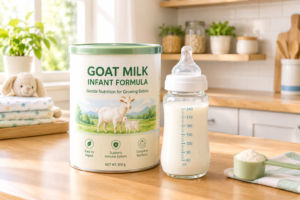
Goat milk formula is a specially manufactured baby food made from pasteurized goat dairy solids, plant oils, lactose, and essential vitamins to support infant growth. For most people, finding a gentle feeding option that supports daily infant digestion without causing excessive stomach gas can feel like a top priority. In simple terms, this alternative baby formula offers an impressive balance of easy to digest proteins, soft curd structures, and vital micro-nutrients that fit effortlessly into a daily nursery routine.
In everyday parenting and formula feeding, families often prefer this creamy option for its natural softness and gentle digestive feel. In this guide, we will learn what is goat milk formula, what does goat milk formula taste like, how its color appears, what it is made of, and practical usage guidelines so you can make informed decisions for your family.
Short Summary
Infant Nutrition Alternative: What is goat milk formula? It is a biologically adapted baby food tailored to mirror human milk nutrition using modified goat dairy proteins.
Gentle Taste Profile: Features a mild, creamy, and slightly sweet flavor that closely mimics the gentle taste of natural breast milk.
Porcelain White Appearance: Mixes into a clean, smooth, pale white liquid without any harsh yellowish tint.
Strict Pasteurization Safety: Always made using pasteurized goat milk solids to ensure zero harmful bacterial contamination.
Safe Infant Age Use: Designed specifically for infants and toddlers under pediatrician guidance as a primary or secondary bottle option.
To keep prepared goat milk formula safe for your baby, read our guide to goat milk formula storage guidelines for practical advice on refrigeration, storage times, and safe handling.
What is Goat Milk Formula
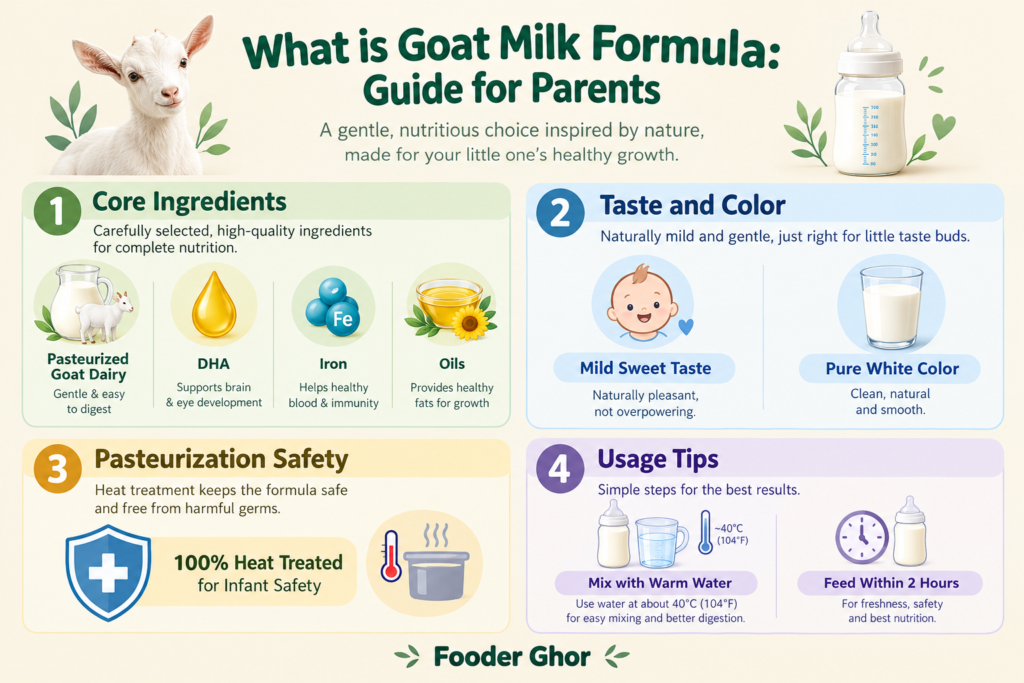
Goat milk formula is an infant baby food made from pasteurized goat dairy, fortified with vitamins, minerals, and plant oils to supply complete nutrition for growing babies. In general, this gentle formula provides comprehensive nutritional support for infants who experience mild digestive discomfort with standard cow dairy choices.
For most people, integrating pasteurized goat milk infant formula into daily feeding schedules offers a simple way to maintain easy bowel movements and consistent daily calories. Clinical research consistently highlights how its small fat particles and low alpha-S1-casein levels create a soft stomach curd that aligns naturally with infant digestive needs.
| Product Characteristic | Fresh Goat Dairy | Commercial Goat Milk Formula |
| Infant Suitability (Under 12 months) | Strictly Unsafe (Lacks iron/folate) | Fully Complete (FDA/AAP compliant) |
| Protein Structure | Raw or Pasteurized whole protein | Modified whey-to-casein ratio |
| Added Essential Nutrients | Natural dairy levels only | Fortified with DHA, ARA, iron, and folate |
| Digestibility in Babies | Heavy on unimpaired kidneys | Ultra-gentle soft curd formation |
According to the CDC, infants younger than 12 months should not be given ordinary cow’s milk or other animal milk as a substitute for breast milk or infant formula. Commercial goat milk-based infant formula that is specifically formulated for infants is different from ordinary goat milk and should be prepared according to its label.
To understand the potential nutritional benefits and possible drawbacks of goat milk-based infant formula, read our guide to goat milk formula benefits & side effects.
What Is in Goat Milk Formula
Goat milk formula contains a precise balance of bioavailable vitamins, minerals, iron, folate, DHA, ARA, and prebiotic oligosaccharides matched to human milk standards. In terms of nutritional components, the finished formula supplies essential lipids, proteins, and carbohydrates required for healthy physical development during an infant’s first year of life.
Every batch combines structured fatty acid profiles with vital micronutrients that support brain development and visual acuity. Commercial preparations rely on strict formulation rules established by health authorities to ensure every bottle provides dependable, complete infant nourishment. For parents managing broader family dairy needs, reviewing our resource on goat milk nutrition offers helpful context regarding raw versus processed dairy components.
What Is Goat Milk Formula Made Of
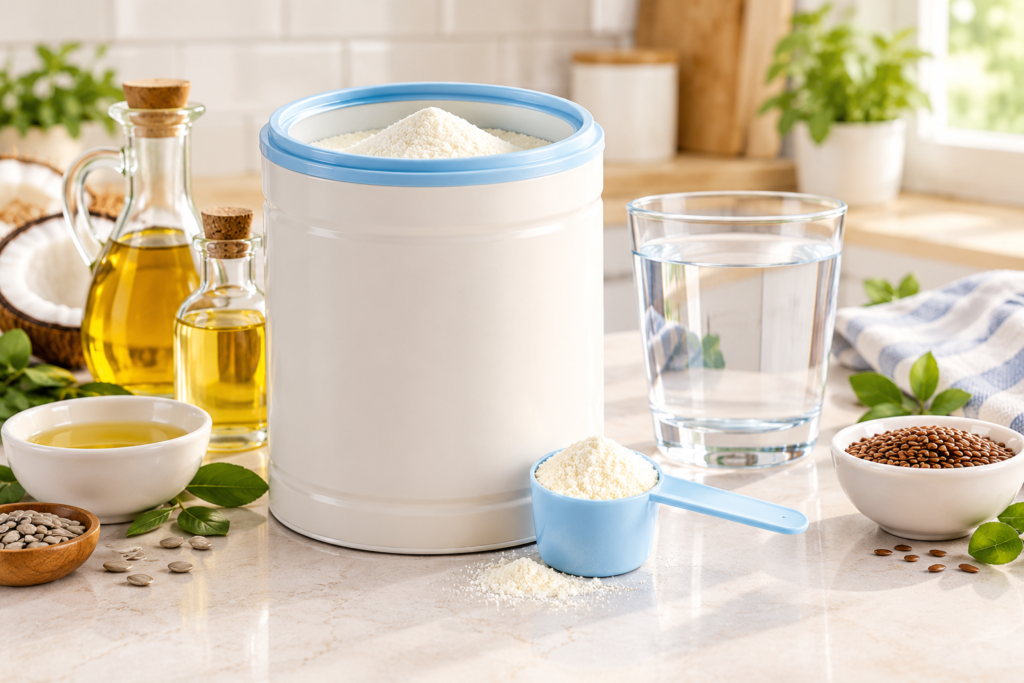
Goat milk formula is made of pasteurized whole goat milk solids, vegetable oil blends, lactose, and adapted whey proteins processed through gentle thermal spray drying. The primary ingredients provide clean fats and proteins that dissolve smoothly when mixed with warm drinking water.
The production process begins on clean dairy farms where fresh goat milk is collected and rapidly chilled below 40°F. According to the FDA, infant formula manufacturers must follow good manufacturing practices and quality-control procedures to help prevent contamination and ensure that formula meets applicable safety and nutritional requirements. The liquid milk is then fortified with vegetable oils to supply essential fatty acids, balanced with lactose, and gently spray-dried into a fine, highly soluble powder.
If you want to compare powdered goat milk products for uses beyond infant formula, explore our guide to powdered goat milk for information about available options and their nutritional characteristics.
Important Note: Ordinary powdered goat milk is not a substitute for infant formula. Babies under 12 months need breast milk or an appropriate infant formula designed to meet their nutritional needs. Goat milk-based infant formula has a different formulation from regular powdered goat milk, and ingredients may vary by product.
What Color Is Goat Milk Formula
Goat milk formula is bright porcelain white because dairy goats convert dietary beta-carotene directly into clear, colorless vitamin A during milk synthesis. Unlike cow milk formula which often displays a subtle yellow tint due to carotene residues, goat milk formula mixes into a pure white liquid.
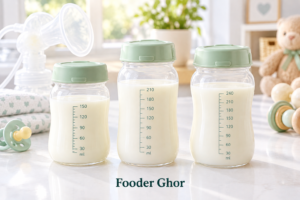
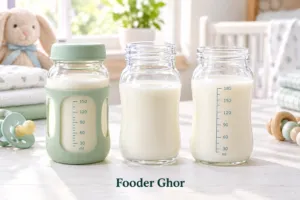
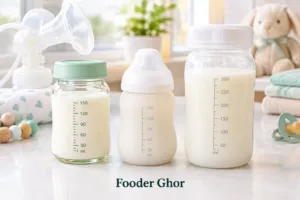
This distinct color difference makes goat dairy formulas easily recognizable inside nursery bottles. When reconstituted with clean water, the formula maintains a clean, uniform white appearance with a smooth, light texture that flows easily through standard bottle nipples.
To help maintain freshness and quality after preparing goat milk formula, read our guide to goat milk storage tips for practical advice on safe storage, refrigeration, and handling.
What Does Goat Milk Formula Taste Like
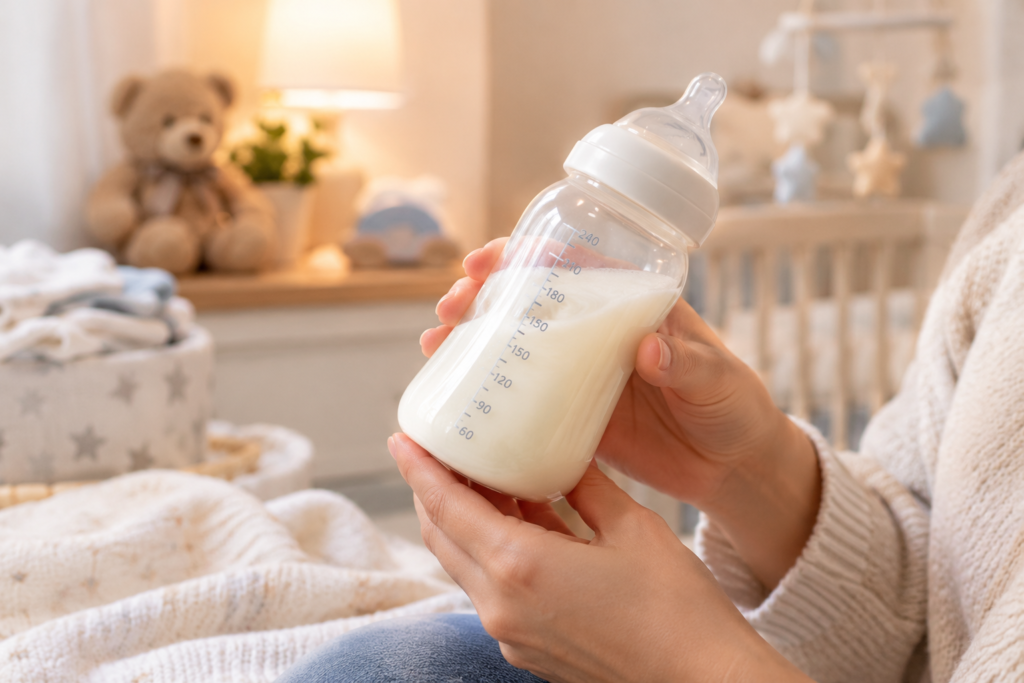
Goat milk formula tastes mild, creamy, and slightly sweet with a smooth, clean flavor profile that lacks any heavy metallic or harsh aftertaste. In everyday bottle feeding, infants accept this beverage readily because its gentle taste closely resembles natural human breast milk.
The pleasant flavor comes from high quality pasteurized goat dairy solids blended with lactose and refined plant lipids. Unlike certain hypoallergenic formulas that carry a bitter or medicinal tang, goat formula delivers a soft dairy profile that remains appetizing for daily feeding routines. If your household uses various dairy preparations, learning what does goat milk taste like helps explain how liquid goat milk compares to spray-dried baby formulas.
Is Goat Milk Formula Pasteurized
Goat milk formula is thoroughly pasteurized during manufacturing using controlled heat treatment to destroy all potential foodborne pathogens before powder packaging. Pasteurization ensures that every can of formula meets strict microbiological safety standards for infant consumption.
Because an infant’s immune system is still developing during early months, thermal processing provides an essential safety layer against bacterial contamination. The controlled heat application destroys harmful microorganisms while preserving essential amino acids and minerals.
For a balanced overview of potential concerns associated with goat milk, read our guide to goat milk health side effects to understand possible allergies, digestive reactions, and other nutritional considerations.
Does Goat Milk Formula Need to Be Pasteurized
Goat milk formula must be pasteurized to prevent severe bacterial infections like Cronobacter and Salmonella in vulnerable infants with developing immune systems. Health guidelines strictly mandate heat treatment for all commercial dairy ingredients used in infant formula products.
According to the CDC, raw milk can contain harmful germs that pose serious health risks, particularly for infants and young children. Commercial infant formula should be prepared and handled according to the product label and official food-safety guidance. Pasteurization guarantees a clean, sterile powder base that parents can mix safely at home without compromising their baby’s health or digestive safety.
For parents comparing goat milk-based formula options for older children, explore our guide to best goat milk formula for toddlers to review available products and their nutritional features.
How to Make Goat Milk Formula Taste Better
Mixing goat milk formula with freshly boiled water cooled to 98°F–100°F and swirling the bottle gently ensures full powder dissolution for a smooth, creamy flavor. Proper temperature control and gentle mixing eliminate grainy powder clumps and reduce air bubbles.
Here are practical kitchen techniques to improve bottle taste and acceptance:
Use Warm Filtered Water: Mix powder with warm water to dissolve lipids completely without leaving lumps.
Swirl Gently Instead of Shaking: Swirl the bottle to prevent excess air bubbles that cause gas discomfort.
Feed Immediately After Preparation: Freshly mixed bottles offer the cleanest, sweetest milk flavor.
Clean Bottles Thoroughly: Remove lingering fat residues that can create sour odors inside bottle nipples.
If you’re comparing powdered goat milk products, explore our guide to best goat milk powder brands to review available options, ingredients, and nutritional features.
What Is Goat Milk Formula Used For
Goat milk formula is used as a primary daily nutrition source or supplemental feeding option for infants and toddlers who require a gentle, easily digestible dairy base. Parents frequently select goat formula when their babies experience mild stomach gas, bloating, or spit-up from traditional cow milk formulas.
Research published on PubMed suggests that goat milk-based infant formula may differ from cow milk-based formula in protein digestion and curd formation under simulated infant digestive conditions. However, current evidence does not establish that goat milk formula reliably relieves gas, bloating, spit-up, or constipation in all infants. However, it is important to remember that goat formula is not intended to treat severe cow milk protein allergies without pediatric approval.
To learn about the storage life of regular goat milk and how to keep it fresh, you can also read our guide to how long does goat milk last.
How Goat Milk Formula Compares to Cow Formula and Human Milk
Goat milk formula forms a softer stomach curd than cow milk formula, offering an easy to digest fat and protein structure that closely resembles human milk. In simple terms, while cow milk formula contains higher levels of alpha-S1-casein which can form firmer curds, goat formula remains loose and soft inside an infant stomach.
According to the FDA, infant formulas made with goat milk or cow milk must meet applicable safety and nutritional requirements. Research published on PubMed suggests that goat milk-based and cow milk-based infant formulas may differ in protein digestion under simulated infant digestive conditions, but these findings do not establish that goat milk formula is easier for every baby to digest or places less strain on the digestive system. For parents comparing alternative dairy options for the whole family, reading about the difference between goat milk and cow milk offers clear insights across all age groups.
Why Trust Fooder Ghor
At Fooder Ghor, we provide educational resources focused on understanding the safe use, handling, and storage of different types of milk, including breast milk, cow’s milk, goat milk, and raw milk, based on publicly available guidance from trusted sources such as the CDC, FDA, USDA, and AAP. Some milk-related articles, particularly those involving maternal and infant feeding topics, are reviewed for clarity and presentation by nursing students with academic training in maternal and child health to help make information easier to understand. This content is provided for learning purposes only and does not offer medical advice.
Frequently Asked Questions
A: Some research suggests differences in protein digestion between goat milk-based and cow milk-based infant formulas, but there is not enough evidence to say goat milk formula is easier for every infant to digest. If you’re comparing products, explore our guide to best easy to digest goat milk to review available options and their features.
A: No, the American Academy of Pediatrics (AAP) warns that plain liquid goat milk lacks essential iron, folate, and balanced calories required for infants under 12 months.
A: No, goat milk contains proteins similar to cow milk that can cause cross-reactive allergic reactions, so babies with diagnosed cow milk protein allergies require specialized hydrolysate formulas.
A: Goat milk formula is typically white because goats convert much of the beta-carotene in their diet into vitamin A rather than allowing it to accumulate in milk. For convenient storage of prepared formula, explore our guide to best glass milk bottles and always follow the formula manufacturer’s storage instructions.
A: Yes, goat milk formula naturally contains lactose as its main carbohydrate source to match the energy levels found in natural human breast milk.
A: Commercial goat milk-based infant formula is manufactured under safety and quality requirements, but processing methods can vary by product. If you’re interested in pasteurizing fresh milk at home, explore our guide to best milk pasteurizer machine to compare available equipment and features.
Conclusion
Understanding what is goat milk formula reveals that this specialized infant food provides a gentle, nutrient dense alternative for growing babies. By utilizing pasteurized goat dairy solids fortified with essential vitamins, iron, and healthy plant oils, it delivers complete infant nutrition while supporting easy stomach comfort. Always follow safe bottle preparation practices and consult your pediatrician to choose the best feeding plan for your infant.
To explore additional gentle feeding choices for older toddlers, check out our resource on is goat milk good for you to learn more about long term dairy wellness.
For convenient storage and portioning, explore our guide to best small glass milk bottles to compare compact options for everyday use.
If you need bottles for larger portions, check out our guide to best 12 oz glass milk bottles to compare bottle sizes and storage features.