Skip to content


Raw milk often raises an important question among parents and health conscious consumers in the United States: is raw milk bad for you?
Raw milk is milk that has not been pasteurized or heat treated. Because it skips pasteurization, it keeps its natural bacteria, enzymes, and nutrients. However, it also carries a higher risk of harmful bacteria that can affect health.
In this guide, you will learn when raw milk can be harmful, its side effects, how it goes bad, and how to reduce risks safely.
Quick Summary
- Raw milk can carry harmful bacteria if not handled properly
- It may go bad faster than pasteurized milk
- Common risks include foodborne illness and digestive issues
- Pregnant women, kids, and elderly people are more sensitive
- Proper storage reduces but does not remove all risks
- Sour raw milk is usually unsafe to drink
Is Raw Milk Bad for You?
Raw milk is not automatically bad for everyone, but it carries a higher health risk compared to pasteurized milk.
The main concern is bacterial contamination. Harmful bacteria like Salmonella, E. coli, and Listeria can sometimes be present in raw milk.
These bacteria can cause:
- Stomach pain
- Diarrhea
- Vomiting
- Fever
For most healthy adults, risks may be lower, but they are never zero.
Many people wonder, is it bad to drink raw milk daily? From a purely bacterial standpoint, unpasteurized milk can harbor pathologically dangerous organisms. Because these microbes are invisible to the naked eye, drinking it without boiling introduces a continuous risk of foodborne infections to your digestive tract.
According to the U.S. Food and Drug Administration, raw milk can contain harmful bacteria that may cause serious foodborne illness, which is why proper milk handling and pasteurization are recommended for safety.
Small takeaway: Raw milk is not always “bad,” but it is higher risk by nature.
For a broader look at the nutritional value, potential benefits, and common consumer questions around unprocessed dairy, read our related guide on raw milk health considerations Is Raw Milk Good for You.
Why Is Raw Milk Bad in Some Cases?
Raw milk becomes risky when harmful bacteria multiply due to:
- Poor hygiene during milking
- Improper storage temperature
- Contaminated equipment
- Long storage time
Unlike pasteurized milk, raw milk does not go through heat treatment that kills bacteria.
To understand deeply why is raw milk bad under certain conditions, we must look at cross-contamination. Even on pristine farms, bacteria from the animal’s skin, feces, or subclinical udder infections (like mastitis) can easily enter the milk pail. Without the safety net of industrial pasteurization, even a microscopic amount of bacteria can rapidly multiply into millions if the cold chain is broken for just an hour.
That is why health authorities like the CDC Raw Milk Safety Guidelines strongly caution against raw milk consumption.
Raw Milk Side Effects
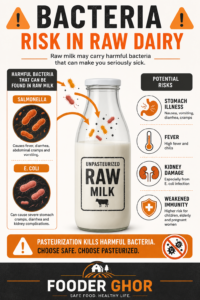
Raw milk side effects can vary depending on contamination level and individual sensitivity.
Common side effects include:
- Stomach cramps
- Nausea
- Food poisoning symptoms
- Diarrhea
- Fever
In severe cases:
- Hospitalization
- Kidney complications (rare cases from E. coli infection)
Small takeaway: Side effects usually come from bacteria, not milk itself.
For a balanced understanding of both risks and potential nutritional aspects of unprocessed dairy, you can also read our guide on Raw Milk Benefits to explore why some people still prefer raw milk despite its risks.
Drinking Raw Milk Side Effects
When someone drinks contaminated raw milk, symptoms may appear within hours or days.
Possible effects include:
- Sudden digestive upset
- Loss of appetite
- Weakness and dehydration
- High fever in some cases
Children and pregnant women are more vulnerable because their immune system is more sensitive.
According to the Centers for Disease Control and Prevention, raw milk may carry harmful germs that can lead to foodborne illness, with infants, children, pregnant women, older adults, and people with weakened immune systems facing higher risk of severe complications.
How to Avoid Raw Milk Side Effects
While you cannot completely eliminate pathogens without heat, you can significantly lower your risk of exposure by following these steps:
-
Source Verification: Only purchase from farms that strictly practice certified closed-system milking and conduct regular independent lab tests for pathogens.
-
The Boiling Method: If you want to eliminate drinking raw milk side effects entirely while using raw dairy, gently boil the milk at 161°F (72°C) for 15 seconds at home to pasteurize it yourself.
-
Immune Check: Never serve unpasteurized milk to individuals with developing or compromised immune systems.
According to the U.S. Food and Drug Administration, pasteurization is the most effective method for reducing harmful bacteria in milk and lowering the risk of foodborne illness associated with raw dairy products.
Does Raw Milk Go Bad?
Yes, raw milk goes bad faster than pasteurized milk.
Because it contains active bacteria, it spoils quickly if not refrigerated properly.
Signs it is going bad:
- Sour smell
- Thick or curdled texture
- Yellow or gray color change
- Bitter or unpleasant taste
Small takeaway: Raw milk has a shorter safe window.
For a more detailed breakdown of storage timelines and how freshness changes under different conditions, you can read our guide on How Long Does Raw Milk Last.
How Raw Milk Goes Bad
Raw milk goes bad through natural bacterial growth.
This process happens faster when:
- Temperature rises above refrigeration level
- Container is not sealed
- Milk is exposed to air
- Time passes beyond freshness window
Even good quality raw milk will eventually spoil.
How Do You Know If Raw Milk Has Gone Bad?
The easiest way to tell if raw milk has gone bad is by checking its smell, appearance, and texture. Fresh raw milk should have a clean, slightly sweet aroma and a smooth consistency. If it develops a sour odor, thick curds, an unusual color, or an unpleasant taste, it is no longer considered fresh and should be discarded.
Common signs include:
- Sour or unpleasant smell
- Thick, curdled, or slimy texture
- Yellow, gray, or unusual color changes
- Bitter or off taste
- Excessive clumping beyond normal cream separation
If you’re looking for detailed shelf life, storage timelines, and freshness guidance, read our complete guide on How Long Does Raw Milk Last.
Is Sour Raw Milk Bad for You?
Yes, sour raw milk is generally unsafe to drink.
Sour smell usually indicates:
- Active fermentation
- Bacterial growth
- Spoilage
While some traditional foods use fermented milk, uncontrolled souring is not safe for regular consumption.
How to Avoid Raw Milk Going Bad
You can reduce risk by following safe handling practices:
- Refrigerate immediately after purchase
- Keep temperature below 40°F (4°C)
- Store in clean glass containers
- Avoid leaving it at room temperature
- Use within a short time frame
Small takeaway: Proper storage slows spoilage but does not eliminate risk.
For longer preservation options and safe handling of raw milk during storage, you can read our guide on Can You Freeze Raw Milk.
Is Drinking Too Much Raw Milk Bad for You?
Yes, drinking too much raw milk may increase risk exposure.
Higher consumption means:
- Higher chance of exposure to bacteria
- More strain on digestion
- Greater risk if contamination exists
Moderation is always safer.
Is Raw Skim Milk Bad for You?
Raw skim milk has lower fat content, but safety risks remain the same.
Even if fat is removed:
- Bacteria risk still exists
- Spoilage still happens
- Storage rules are unchanged
So skim or full fat raw milk has similar safety concerns.
Raw Milk During Pregnancy Side Effects
Pregnant women should be especially cautious.
Raw milk may increase risk of:
- Listeria infection
- Foodborne illness complications
- Dehydration from vomiting or diarrhea
Health organizations recommend avoiding raw milk during pregnancy.
According to the Centers for Disease Control and Prevention, pregnant women are at increased risk of severe illness from foodborne pathogens such as Listeria, making avoidance of raw and unpasteurized dairy products an important food safety precaution.
Raw Turmeric Milk Side Effects
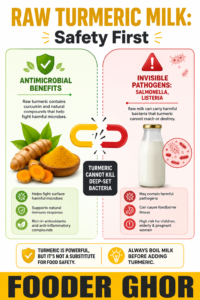
A popular traditional remedy is mixing turmeric with dairy, but using unpasteurized milk creates unique raw turmeric milk side effects. While turmeric itself has natural antimicrobial properties, it is not strong enough to kill deeply embedded pathogens like Listeria or E. coli in raw dairy. Furthermore, consuming excessive amounts of raw turmeric combined with heavy raw milk fats can trigger acute stomach acidity, nausea, and severe gallbladder contractions in sensitive individuals.
According to the U.S. Food and Drug Administration, unpasteurized milk may contain harmful bacteria that can cause foodborne illness, and heat treatment (pasteurization) is recommended to reduce these risks before consumption.
Raw Milk vs Pasteurized Milk Safety
| Feature | Raw Milk | Pasteurized Milk |
|---|---|---|
| Bacteria removal | No | Yes |
| Safety level | Lower | Higher |
| Shelf life | Short | Longer |
| Risk of illness | Higher | Lower |
Pasteurization reduces harmful bacteria while preserving nutrition.
According to the Food and Drug Administration, pasteurization is designed to reduce harmful bacteria in milk while maintaining its core nutritional value, making pasteurized dairy a safer option for most consumers.
When Raw Milk Is Most Dangerous
Raw milk is most risky when:
- Stored improperly
- Consumed by children
- Used during pregnancy
- Bought from unsafe sources
For a deeper comparison of different raw dairy types and their nutritional and safety considerations, you can also read our guide on whether goat milk is a healthy option for you Is Goat Milk Healthy for You.
Why Trust FooderGhor?
At Fooder Ghor, we provide educational resources focused on understanding the safe use, handling, and storage of different types of milk, including breast milk, cow’s milk, goat milk, and raw milk, based on publicly available guidance from trusted sources such as the CDC, FDA, USDA, and AAP. Some milk-related articles, particularly those involving maternal and infant feeding topics, are reviewed for clarity and presentation by nursing students with academic training in maternal and child health to help make information easier to understand. This content is provided for learning purposes only and does not offer medical advice.
Frequently Asked Questions
It is not recommended for daily use due to contamination risk.
Because harmful bacteria may be present in unpasteurized milk.
It contains nutrients, but safety risks are higher.
Boiling reduces risk but changes natural structure.
No, but risk is always higher compared to pasteurized milk.
Children, pregnant women, elderly, and immunocompromised people.
Conclusion
Understanding is raw milk bad for you depends on how it is handled and consumed. Raw milk is naturally rich in nutrients, but it carries a higher risk of bacterial contamination compared to pasteurized milk.
For many families, safety is the main concern. While some people prefer raw milk for its natural structure, health authorities consistently highlight the potential risks.
If you are considering raw milk, proper storage and awareness of side effects are essential. Always weigh both benefits and risks before making a decision.
For practical storage guidance and to understand whether dairy milk can be preserved safely for longer use, you can read our related guide on Can You Freeze Fresh Goat Milk.