Skip to content

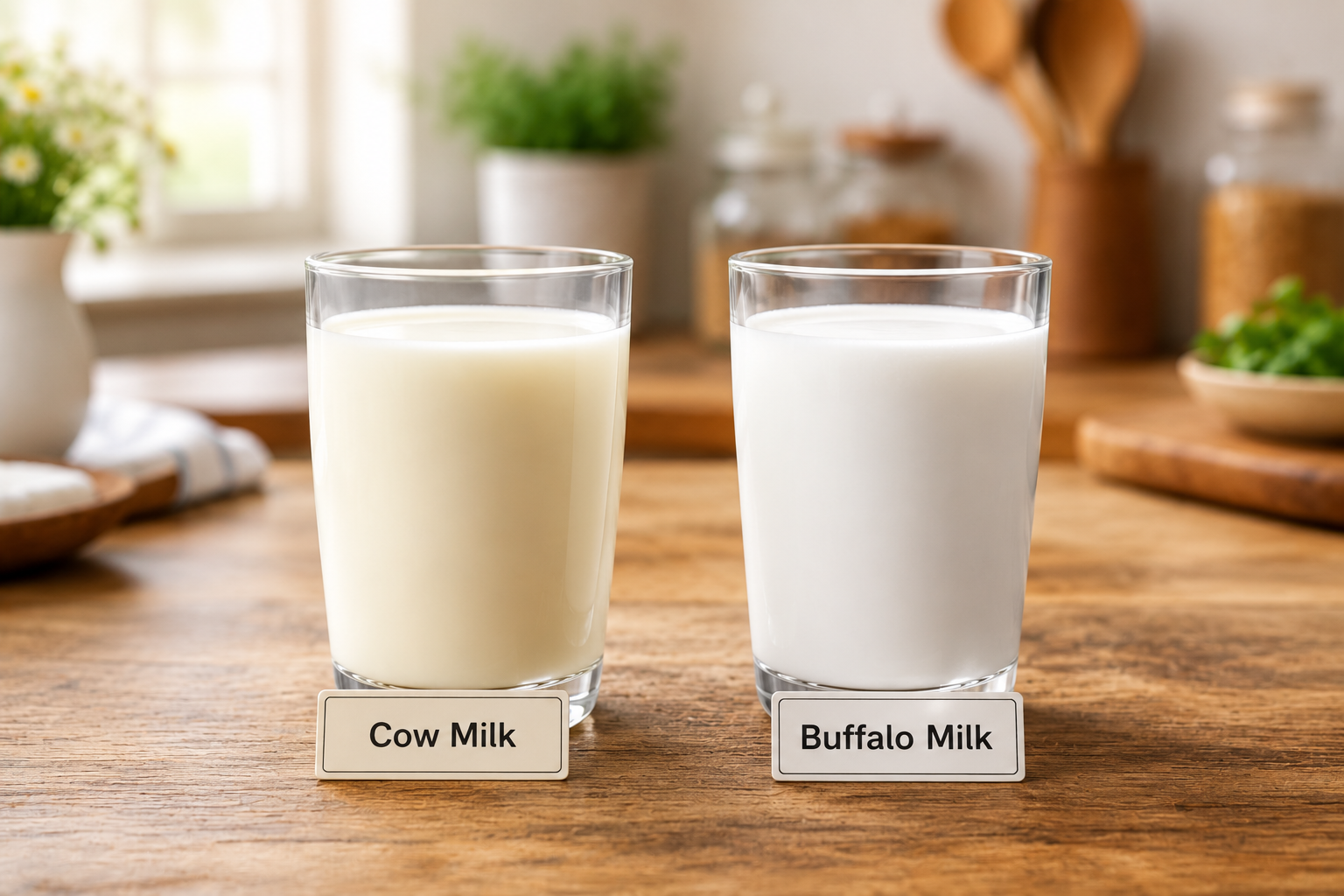
Selecting the right beverage for your family breakfast table requires a clear look at how different farm options stack up against each other. Many households are curious about the distinct profiles of the two most common mammalian options available in grocery stores. Choosing between cow milk vs buffalo milk depends entirely on your specific dietary requirements and culinary needs.
In this ultimate comparison guide, we will examine the structural differences, mineral contents, taste profiles, and age appropriate safety guidelines of these two traditional kitchen staples.
Quick Summary of the Dairy Comparison
- Calories & Fat: Cow milk is lower in calories and fat, while buffalo milk is richer and more energy-dense.
- Protein & Calcium: Buffalo milk provides slightly more protein and significantly more calcium per serving than cow milk.
- Taste & Texture: Cow milk has a lighter, milder taste, whereas buffalo milk is thicker, creamier, and naturally richer.
- Best Choice: Cow milk is ideal for everyday drinking, while buffalo milk is better suited for people seeking higher nutrient density and richer dairy products.
Cow Milk vs Buffalo Milk: Which Is Better Overall?
Both cow milk and buffalo milk offer excellent nutrition, but the better choice depends on your health goals and everyday needs. Cow milk is generally preferred for its lighter texture and lower calorie content, while buffalo milk stands out for its richer nutritional profile, higher calcium, and creamier consistency.
| If Your Priority Is… | Better Choice |
|---|---|
| Lower Calories | Cow Milk |
| Higher Protein | Buffalo Milk |
| Higher Calcium | Buffalo Milk |
| Lower Fat | Cow Milk |
| Creamier Texture | Buffalo Milk |
| Weight Gain | Buffalo Milk |
| Everyday Drinking | Cow Milk |
| Rich Desserts | Buffalo Milk |
There is no universal winner. Choosing the right milk depends on your nutritional requirements, cooking preferences, and personal lifestyle.
The U.S. Food and Drug Administration (FDA) recommends comparing nutrients such as protein, calcium, calories, saturated fat, and added sugars on the Nutrition Facts label when choosing the milk that best fits your dietary needs and health goals.
👉 If you’re also comparing different animal milks, read our complete guide on goat milk vs buffalo milk to explore how they differ in nutrition, protein, digestibility, taste, and everyday use.
Cow Milk vs Buffalo Milk Nutrition Facts: Calories, Fat, and Cholesterol

Buffalo milk is naturally more nutrient dense than cow milk, delivering higher calories, more total fat, and a richer supply of essential solids per standard kitchen cup.
When evaluating cow milk vs buffalo milk nutrition components, the baseline density changes due to the water content in each animal secretion. One important thing to know is that standard cow milk contains more water, making it a much lighter option for daily use. Nutrient composition data for different milk types is supported by large-scale food databases, which help standardize comparisons across dairy sources.
The following comprehensive comparison table illustrates the specific cow milk vs buffalo milk nutrition facts based on a standard 100ml fluid serving.
| Nutrient Component | Cow Milk (Per 100ml) | Buffalo Milk (Per 100ml) |
| Calories (kcal) | 62 | 100 |
| Total Fat (g) | 3.3 | 7.1 |
| Protein (g) | 3.2 | 3.9 |
| Carbohydrates (g) | 4.8 | 5.4 |
| Calcium (mg) | 120 | 201 |
| Cholesterol (mg) | 14 | 8 |
Depending on the recipe, the higher fat profile of buffalo fluid makes it highly valued for churning rich butter and heavy creams. At the same time, cow milk vs buffalo milk cholesterol data shows that buffalo options actually contain less cholesterol per serving, which surprises many home cooks. To read more about how standard whole bovine beverages fit into a daily diet, review our comprehensive article on is cow milk healthy for families.
Cow Milk vs Buffalo Milk Calories and Weight Management
Buffalo milk contains significantly more calories than cow milk, offering approximately 100 calories per 100ml compared to the 62 calories found in standard bovine options.
Managing your daily macronutrients requires tracking the energy density of your favorite household beverages. When comparing cow milk vs buffalo milk calories, the elevated energy levels in buffalo dairy come directly from its rich concentration of natural lipids.
Based on USDA nutrition data, the higher fat and solids content in water buffalo fluid provides a sustainable source of metabolic energy for active individuals.
For individuals looking into cow milk vs buffalo milk for weight gain, the high calorie density of buffalo products makes it an excellent choice for building lean mass naturally. In everyday cooking, it serves as a robust base for calorie dense recipes. To learn how these calorie counts match up against modern plant based items, look into our detailed data on almond milk calories for comparison.
Cow Milk vs Buffalo Milk Protein: Casein and A2 Structures
Buffalo milk contains a slightly higher protein level than cow milk, making it a nutrient-dense dairy option for those focusing on dietary protein intake.
Building lean muscle and supporting daily cellular repair requires complete animal proteins that provide all essential amino acids.
According to USDA FoodData Central, when comparing cow milk vs buffalo milk protein content, buffalo milk typically provides around 3.9 grams per 100ml, while cow milk provides approximately 3.2 grams per 100ml.
Protein composition in milk is primarily made up of casein and whey, which are naturally occurring across all mammalian milk types. These proteins can vary slightly depending on species, diet, and genetics.
From a structural perspective, casein exists in different genetic variants, commonly discussed in nutrition science as A1 and A2 types in cow’s milk. Some water buffalo milk naturally contains A2-like beta-casein structures, which is why it is often described in nutritional literature as having a different protein profile compared to standard commercial cow dairy.
When comparing a2 buffalo milk vs cow milk, it is important to understand that both still provide complete protein nutrition, but their protein variants may differ in composition and digestibility characteristics for some individuals.
For another popular option with highly digestible protein structures, read our ultimate guide on goat milk nutrition.
Cow Milk vs Buffalo Milk Taste, Color, and Commercial Options

Buffalo milk has a noticeably thicker, creamier taste and a pure white color, whereas cow milk has a lighter consistency and a distinct yellowish-white tint.
The visual and sensory differences between these beverages are highly apparent in everyday cooking. When looking at cow milk vs buffalo milk color variations, cow fluid contains a higher amount of beta-carotene, which gives it a familiar creamy yellow hue.
According to FDA food safety guidance, the natural diet and metabolic processes of dairy animals can influence the fat content, flavor profile, and overall composition of milk.
In terms of palatability, cow milk vs buffalo milk taste tests show that buffalo options have a rich, sweet flavor profile due to less water content. In commercial packaging, consumers often compare premium market lines like Amul Gold vs Amul buffalo milk to find the best consistency for their morning tea. For home chefs looking to explore unique texture profiles, learn more by reading what does camel milk taste like.
Lactose in Buffalo Milk vs Cow Milk and Sensitivity Realities
Buffalo milk contains slightly more lactose sugar than cow milk, meaning neither option is suitable for individuals requiring a strictly lactose free diet.
Managing a sensitive digestive system requires a deep look into the carbohydrate composition of your kitchen staples. When comparing lactose in buffalo milk vs cow milk, buffalo options carry roughly 5.4 grams of natural sugar per 100ml, while cow options sit at 4.8 grams.
The American Academy of Pediatrics explains that lactose is the primary carbohydrate found in mammalian milk and serves as an important energy source during early childhood nutrition.
Because both options contain these natural sugars, consumers often ask cow milk vs buffalo milk which is better for mild sensitivities. While the protein structure of buffalo fluid may be easier on some stomachs, it is definitely not lactose free. If you want to look into commercial alternative options that have had these sugars modified, review our helpful text on is skim milk lactose free for shoppers.
Buffalo Milk vs Cow Milk Allergy Risks
Both cow milk and buffalo milk can trigger standard dairy allergies because they share highly similar casein and whey protein chains that cause cross-reactivity.
Understanding true food sensitivities is critical for keeping your household safe from unexpected immune reactions. When reviewing a potential buffalo milk vs cow milk allergy, it is essential to know that a body sensitive to cow dairy will almost always react to buffalo dairy.
According to CDC food allergy guidance, individuals with severe food allergies are advised to strictly avoid the trigger food and follow medical advice to prevent serious allergic reactions.
As a result, switching to water buffalo options is not a safe alternative for individuals with a confirmed, medically diagnosed mammalian dairy allergy. For homes that need to manage strict dietary exclusions while preparing food, check out our guide on how to make icing without milk to keep your desserts safe.
Cow Milk vs Buffalo Milk Calcium and Bone Health
Buffalo milk contains significantly more calcium than cow milk, delivering over 200 milligrams of this vital bone-building mineral per 100ml serving.
Meeting your daily mineral targets is a fundamental part of maintaining strong skeletal integrity across all stages of life. When evaluating cow milk vs buffalo milk calcium concentrations, buffalo options provide nearly double the mineral density of a standard bovine cup.
According to USDA nutrition data, dairy products are naturally rich in calcium, and their nutrient profiles help support the evaluation of dietary mineral intake across different milk types.
This high density makes buffalo dairy a practical choice for individuals looking to boost their daily intake without consuming large volumes of liquid. To understand the broader historical and culinary context of this mineral-rich food option, feel free to read our fundamental guide on what is buffalo milk in daily cooking.
Cow Milk vs Buffalo Milk for People with Diabetes
For people with diabetes, both cow milk and buffalo milk can be included as part of a balanced diet when consumed in appropriate portions. Neither milk contains added sugar naturally, but both provide lactose, which is a naturally occurring carbohydrate.
Cow milk is generally lower in calories and fat, making it a practical choice for individuals who are managing both blood sugar and overall calorie intake. Buffalo milk, on the other hand, contains more fat and calories, which may be suitable for people with higher energy needs but should be consumed in moderation.
According to the American Diabetes Association (ADA), people with diabetes should pay attention to total carbohydrate intake, portion size, and overall dietary balance rather than focusing on a single food.
👉 If you’re comparing dairy with plant-based alternatives for your overall health goals, explore our complete guide on cow milk vs soy milk health benefits to see how they differ in nutrition, protein, and everyday wellness.
Cow Milk vs Buffalo Milk for Different Life Stages: Babies to Adults

For most healthy children over 12 months of age, cow milk is generally preferred because it has a lighter fat content and is more commonly recommended for everyday use. Buffalo milk is richer in fat and calories, making it less suitable as a routine first choice for young children unless advised by a healthcare professional.
Cow milk is preferred for young children due to its lighter consistency, while buffalo milk is often favored by adults for its exceptional richness and wellness advantages.
Family care requires adapting your grocery selections based on the age and developmental needs of each individual. When deciding between cow milk vs buffalo milk for babies and buffalo milk vs cow milk for infants, medical experts lean strictly toward standard cow alternatives after twelve months of age because buffalo fluid is too rich for an infant’s delicate digestive tract.
For older individuals, comparing cow milk vs buffalo milk for adults or choosing cow milk vs buffalo milk during pregnancy shifts the focus toward total nutrient delivery. Buffalo options provide essential energy during pregnancy, while cow options offer a lighter daily beverage. To discover more about the traditional health advantages of adding this thick fluid to your wellness routine, see our full article on buffalo milk benefits for vitality.
Cow Milk vs Buffalo Milk Storage Comparison
Although cow milk and buffalo milk require similar storage conditions, their composition can slightly affect how they perform during refrigeration and everyday use. Regardless of the type, both should be kept refrigerated and handled safely to maintain quality and freshness.
| Storage Factor | Cow Milk | Buffalo Milk |
|---|---|---|
| Unopened (Refrigerated) | Follow the “use-by” date on the package | Follow the “use-by” date on the package |
| After Opening | Usually best consumed within 5–7 days | Usually best consumed within 5–7 days |
| Refrigeration Required | Yes | Yes |
| Recommended Storage Temperature | 40°F (4°C) or below | 40°F (4°C) or below |
| Can Be Frozen | Yes, though texture may change after thawing | Yes, though texture may change after thawing |
Both types of milk should be returned to the refrigerator immediately after use and discarded if they develop an unusual smell, sour taste, curdling, or other signs of spoilage.
👉 If you want to learn more about proper cow milk storage and how long it stays fresh, read our complete guide on how long does cow milk last.
Which Milk Is Better for Cheese, Yogurt, and Ghee?
Because buffalo milk contains more fat and total milk solids, it is widely preferred for making many traditional dairy products. Its naturally rich composition produces creamier textures and higher yields during dairy processing.
| Dairy Product | Better Choice |
|---|---|
| Cheese | Buffalo Milk |
| Paneer | Buffalo Milk |
| Yogurt | Buffalo Milk |
| Ghee | Buffalo Milk |
| Butter | Buffalo Milk |
| Everyday Drinking | Cow Milk |
Cow milk remains an excellent choice for everyday consumption, while buffalo milk is often favored when preparing richer homemade dairy products.
👉 If you regularly use buffalo milk for homemade dairy products, it’s important to store it properly. Read our complete guide on how long does buffalo milk last to learn about safe storage, refrigeration, and shelf life.
Who Should Choose Cow Milk?
Cow milk may be a better choice for people who:
- Prefer a lighter everyday beverage
- Want fewer calories and less fat
- Have children over 12 months of age following pediatric dietary guidance
- Drink milk regularly with breakfast or snacks
- Prefer a mild flavor and thinner consistency
Its balanced nutritional profile and lighter texture make cow milk a practical everyday choice for many households.
👉 To learn more about its nutritional value and everyday health benefits, explore our complete guide on cow milk nutrition.
Who Should Choose Buffalo Milk?
Buffalo milk may be a better option for people who:
- Need a higher-calorie beverage
- Want slightly more protein and calcium
- Enjoy rich, creamy dairy products
- Frequently prepare desserts, yogurt, or paneer
- Prefer a fuller texture in tea, coffee, and cooking
Its naturally dense composition makes buffalo milk a popular choice for individuals looking for a richer dairy option.
👉 Discover more about its nutrients and health benefits in our complete guide on buffalo milk nutrition.
Why Trust Fooder Ghor?
At Fooder Ghor, we provide educational resources focused on understanding the safe use, handling, and storage of different types of milk, including breast milk, cow’s milk, goat milk, and raw milk, based on publicly available guidance from trusted sources such as the CDC, FDA, USDA, and AAP. Some milk-related articles, particularly those involving maternal and infant feeding topics, are reviewed for clarity and presentation by nursing students with academic training in maternal and child health to help make information easier to understand. This content is provided for learning purposes only and does not offer medical advice.
Most Common Frequently Asked Questions
Many families use buffalo milk for traditional baking and desserts because its higher fat and solids percentage creates a much smoother, richer consistency naturally.
Yes, plain unflavored fluid milk from both cows and water buffaloes is naturally free from grain contaminants, which means it is completely gluten free.
Yes, it works exceptionally well in hot beverages, giving a creamy texture that reduces the need for adding commercial heavy cream products.
Cow options contain higher levels of beta-carotene from their grass diet, which gives the liquid a subtle, signature yellowish tint.
Yes. Cow milk and buffalo milk can be mixed and consumed together because they are both dairy milks. Mixing them combines the lighter texture of cow milk with the richer consistency of buffalo milk. However, people with a diagnosed milk allergy or lactose intolerance should follow their healthcare provider’s advice before consuming either type.
Both cow milk and buffalo milk provide nutrients that support overall health, including protein, vitamin B12, and other essential vitamins and minerals. There is no strong scientific evidence that one is universally better than the other for brain health. A balanced diet remains more important than choosing one type of milk alone.
Conclusion
In summary, evaluating cow milk vs buffalo milk highlights that both liquids offer distinct benefits depending on your family’s health goals. Cow milk provides a familiar, lighter consistency that is globally recommended for growing toddlers and daily light drinking. Meanwhile, buffalo milk delivers an energetic, calcium-dense profile rich in A2 proteins, making it an excellent kitchen choice for adults and culinary enthusiasts. Always choose the option that aligns best with your domestic dietary needs.
To learn more about the raw origins of these farm beverages, read our extensive guide on what is raw milk before your next grocery trip.