Skip to content



Exploring plant-based baking alternatives often brings up unique culinary challenges, especially when substituting traditional dairy with lighter nut milks. Learning how to make sweetened condensed milk from almond milk provides a delicate, nutty alternative recipe that can satisfy specific dietary preferences when prepared with the correct reduction techniques.
Understanding the water content and protein behavior of almond milk ensures your homemade syrup achieves a smooth and usable finish. This comprehensive guide breaks down the precise steps for reducing almond milk and sugar into a functional baking syrup while avoiding common separation pitfalls.
Quick Summary
Core Ingredients: Requires unsweetened almond milk, granulated white sugar, and optionally a tiny pinch of cornstarch or arrowroot for extra binding.
Reduction Challenge: Almond milk has a high water-to-solid ratio, meaning it requires a longer simmering time to evaporate completely.
Heat Control: Always maintain a gentle, bare simmer over low heat to prevent almond proteins from curdling or separating.
Texture Adjustment: Allowing the finished syrup to chill in the refrigerator helps it firm up into a more manageable consistency.
If you want to explore general plant-based dairy options or standard dairy reduction methods before starting your recipe, read our guide on what is sweetened condensed milk for full background context.
How to Make Sweetened Condensed Milk from Almond Milk
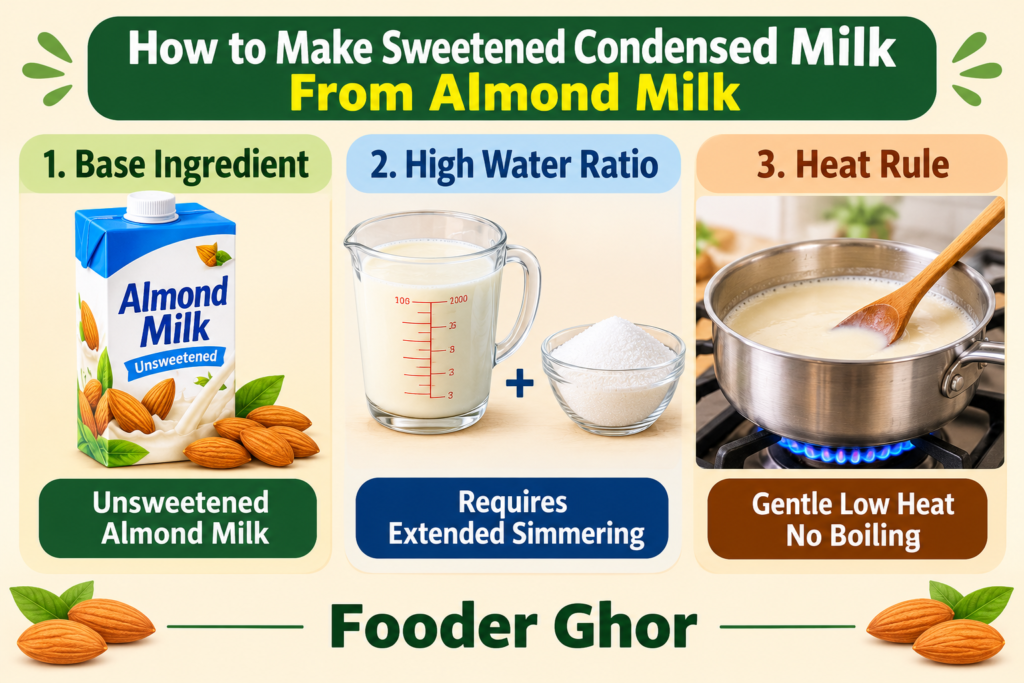
You can make sweetened condensed milk from almond milk by simmering unsweetened almond milk and granulated sugar slowly over low heat for an extended duration until the excess water evaporates.
Because commercial and homemade almond milks are primarily water suspended with ground almonds, achieving a thick syrup requires patience and steady temperature management. Unlike whole dairy milk, almond milk lacks heavy dairy fats, making careful reduction essential to build body.
To understand how long your final plant-based mixture remains safe to consume after preparation, review our guidelines on how long does sweetened condensed milk last.
The Challenge of Reducing Almond Milk (And How to Overcome It)
The primary challenge of reducing almond milk is its naturally high water content and low fat percentage, which can be overcome by simmering slowly and incorporating a gentle binding agent.
When heat is applied too quickly to nut milks, the liquid evaporates unevenly while the delicate proteins separate. Managing a low, consistent flame and stirring frequently prevents scorching and allows the sugar molecules to bond with the remaining almond solids.
According to the FDA, following proper food safety practices when preparing food helps reduce the risk of foodborne illness. For longer storage after preparing your homemade batch, read our guide on how to freeze sweetened condensed milk to learn the proper freezing and storage methods.
Ingredients and Ratios for Almond Condensed Milk
The essential ingredients for almond condensed milk include 2 cups of unsweetened almond milk, 3/4 cup of granulated white sugar, and an optional pinch of cornstarch.
Unsweetened Almond Milk: Provides a light, nutty base while allowing you to control sweetness.
Granulated White Sugar: Acts as the primary sweetener and thickener as moisture leaves.
Cornstarch or Arrowroot (Optional): Helps bind the thin nut milk components together for a smoother consistency.
For a traditional dairy-based preparation, read our guide on how to make sweetened condensed milk from scratch using simple ingredients at home.
The Stovetop Reduction Process
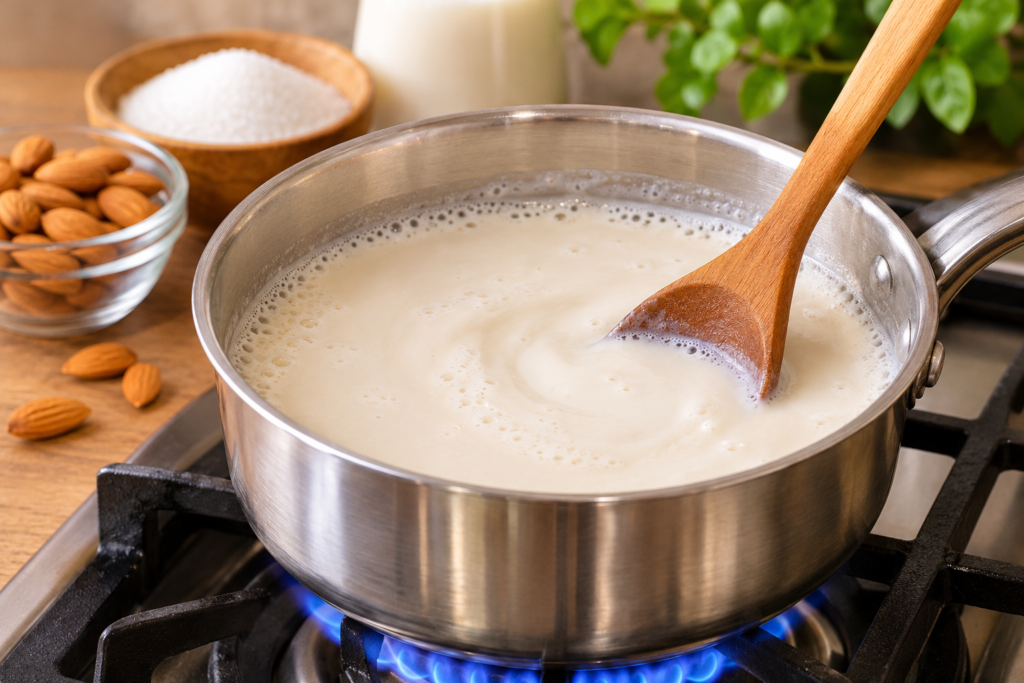
The stovetop reduction process involves dissolving sugar into almond milk and simmering the liquid over low heat until it concentrates into a rich syrup.
Managing Low Heat over Long Durations
To manage low heat over long durations, keep your stove burner set to low and stir the saucepan consistently to prevent sticking.
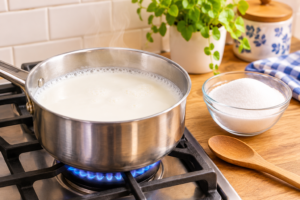
Pour 2 cups of unsweetened almond milk and 3/4 cup of sugar into a heavy-bottomed saucepan.
Whisk in a tiny pinch of cornstarch if you prefer extra thickening support.
Warm the mixture over low heat until the sugar dissolves completely, then maintain a gentle, continuous simmer.
If you prefer a quicker dairy-based method, read our guide on how to make sweetened condensed milk from evaporated milk for an easy homemade recipe.
Thickening Adjustments
To make thickening adjustments, monitor the liquid level closely as it reduces, whisking actively during the final stages of evaporation.
Allow the almond milk mixture to simmer uncovered for a longer duration than dairy milk.
Watch for the volume to reduce significantly and coat the back of a spoon.
Remove the pan from the heat source and let it cool before transferring to a storage jar.
According to the FDA, following proper food safety practices when preparing food helps reduce the risk of foodborne illness. To explore its nutritional value and potential benefits, read our guide on sweetened condensed milk health benefits and discover what nutrients it provides.
Should You Use Homemade or Store-Bought Almond Milk?
You should use store-bought or rich homemade almond milk that has been strained thoroughly to ensure a smooth, pulp-free reduction.
Using almond milk with heavy pulp residue can create a gritty texture during simmering. If you make your almond milk at home, strain it through a nut milk bag or fine cheesecloth to remove all solid particles before cooking.
If you are managing other dairy alternatives in your kitchen inventory, check out our guide on how to store sweetened condensed milk for proper container sealing techniques.
How to Avoid a Watery Texture
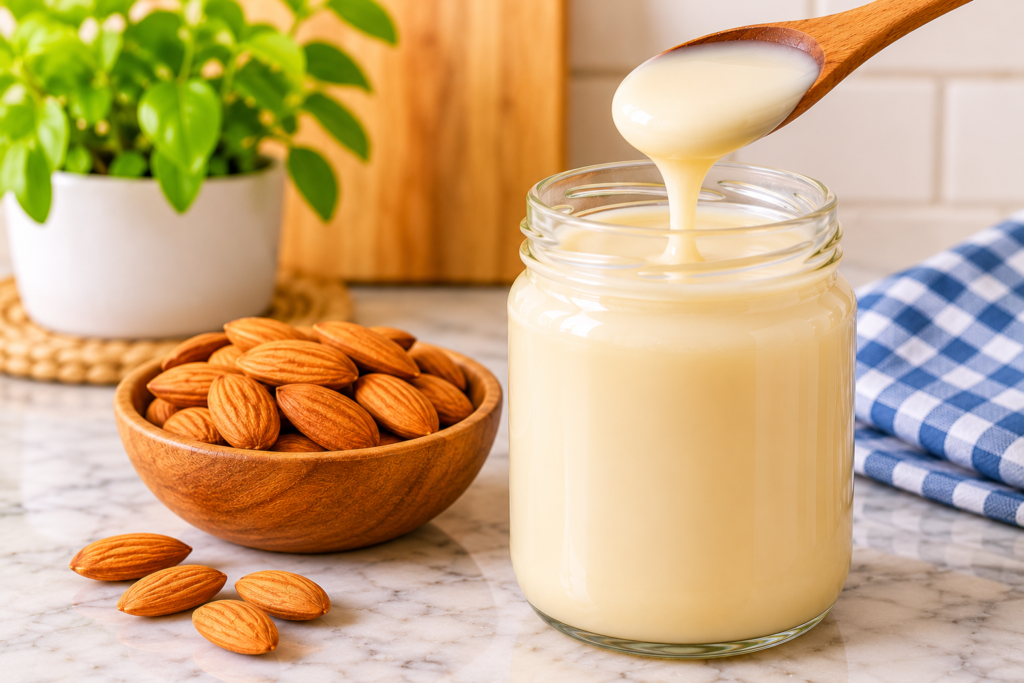
Avoid a watery texture by reducing the almond milk thoroughly, using a touch of starch binder, and allowing the finished syrup to chill completely in the refrigerator.
Because almond milk lacks natural dairy cream, it may appear slightly thinner while hot. Chilling the syrup for a few hours in an airtight jar allows the sugars and starches to set into a much thicker, spoonable texture. If you prefer making your own concentrated milk base, read our guide on how to make evaporated milk at home for a simple homemade preparation method.
Why Trust Fooder Ghor?
At Fooder Ghor, we provide educational resources focused on understanding the safe use, handling, and storage of different types of milk, including breast milk, cow’s milk, goat milk, and raw milk, based on publicly available guidance from trusted sources such as the CDC, FDA, USDA, and AAP. Some milk-related articles, particularly those involving maternal and infant feeding topics, are reviewed for clarity and presentation by nursing students with academic training in maternal and child health to help make information easier to understand. This content is provided for learning purposes only and does not offer medical advice.
Frequently Asked Questions
A: Almond milk has a higher water-to-solid ratio, requiring a longer time to evaporate completely. If you regularly consume sweetened condensed milk, read our guide on sweetened condensed milk side effects to understand its potential health risks.
A: High heat can cause almond proteins to separate. Always keep the heat at a gentle, bare simmer.
A: Yes, unsweetened is preferred so you can fully control the sugar content yourself. If you prefer preparing your own unsweetened almond milk, read our guide on how to make almond milk at home for a fresh, homemade alternative.
A: While optional, a tiny pinch of starch or arrowroot helps bind the thin nut milk components together.
Conclusion
Mastering how to make sweetened condensed milk from almond milk allows you to prepare customized plant-based baking syrups that fit your dietary preferences. By using unsweetened almond milk, maintaining a patient low-heat simmer, and chilling the finished reduction, you can achieve a workable dairy-free alternative. Always store your homemade batch in a clean airtight container and use it within a week.
To explore alternative plant-based dairy conversions, check out our complete guide on how to make sweetened condensed milk from oat milk today!