Skip to content



Ricotta cheese is a highly versatile and delicious fresh dairy staple, but its high moisture content makes it prone to rapid spoilage if left unhandled. Knowing how to store ricotta cheese correctly is essential for maintaining its mild flavor and creamy consistency.
In this comprehensive guide, we will explore practical methods for keeping ricotta cheese fresh in the refrigerator, step-by-step instructions for freezing different varieties, traditional preservation techniques, and safe thawing procedures for everyday cooking.
Short Summary
Refrigeration: Store fresh ricotta in the fridge at 35°F to 40°F in an airtight container for up to 5 to 7 days after opening.
Storage Options: Fresh ricotta can be stored effectively using two primary methods: standard refrigeration and sealed airtight container storage.
Freezing Duration: Freeze unopened or opened ricotta using freezer bags, ice cube trays, or portion-sized glass containers.
Preservation Methods: Extend shelf life through oil preservation, salting into Ricotta Salata, or baking into Ricotta Infornata.
Safe Thawing: Defrost frozen ricotta safely in the refrigerator, in cold water, or directly inside warm cooked recipes.
For a better idea of ricotta’s freshness window, read our guide on how long does ricotta cheese last to see how long it keeps after opening and how to recognize signs that it has gone bad.
How to Store Ricotta Cheese
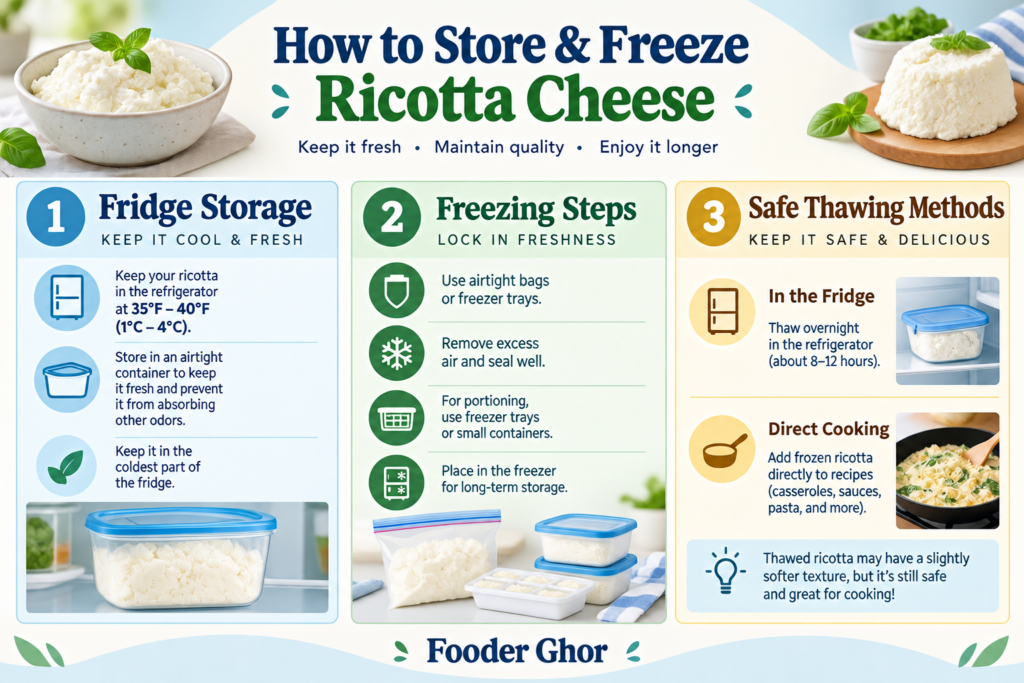
To maintain maximum freshness, learning how to store ricotta cheese properly in your home kitchen requires consistent temperature management and moisture control. Fresh ricotta cheese can be kept fresh using two main methods: short-term refrigeration and proper container sealing.
Fresh soft cheeses naturally absorb ambient aromas and moisture from refrigerator air. By keeping your dairy products sealed tightly, you prevent premature mold growth and preserve the natural milk fat quality needed for recipes like lasagna, stuffed shells, and baked pasta meals.
According to the FDA, refrigerated foods should be kept at 40°F (4°C) or below to slow the growth of harmful bacteria. Keeping ricotta covered in a sealed container can also help protect its quality while it is stored in the refrigerator.
For another soft cheese, read our guide on how to store feta cheese for practical tips on refrigeration, packaging, and keeping it fresh.
2 Ways to Store Ricotta Cheese
Understanding the specific steps for standard refrigeration helps extend the shelf life of opened and unopened tubs.
How to Store Ricotta Cheese in the Fridge
Store your ricotta cheese on an interior shelf of your refrigerator where temperatures remain stable between 35°F and 40°F. Avoid storing soft cheeses inside refrigerator door shelves, as frequent opening creates temperature fluctuations that speed up spoilage.
How to Store Ricotta Cheese in an Airtight Container
If you open the original commercial plastic container, transfer any leftover cheese into a clean glass or BPA-free plastic container with a locking lid. Smooth down the top surface of the cheese with a spoon and cover it tightly with a piece of plastic wrap touching the surface before closing the lid to block air contact.
For similar storage tips, read our guide on how to store cream cheese to learn how proper covering and refrigeration can help maintain its freshness.
Why Proper Storage of Ricotta Cheese is Crucial
Proper storage of ricotta cheese is crucial because fresh cheeses carry a high water activity level that creates an ideal environment for mold and spoilage bacteria.
Unlike hard aged cheeses like parmesan or cheddar, fresh ricotta has not undergone extended fermentation or heavy salting. Keeping your cheese constantly chilled and isolated from air exposure ensures that your family enjoys safe, high-quality dairy in daily cooking.
The CDC recommends keeping perishable foods, including soft dairy products, refrigerated at 40°F (4°C) or below and following safe food-handling practices to help reduce the risk of foodborne illness.
For another fresh dairy product, read our guide on how to store cottage cheese for practical tips on keeping it properly refrigerated and fresh.
How Proper Storage Helps Prevent Ricotta Cheese From Spoiling
Proper storage prevents ricotta cheese from spoiling by slowing down microbial growth and stopping environmental oxidation.
When you seal fresh ricotta in an airtight environment, you minimize oxygen availability, which prevents airborne mold spores from settling on the moist curds. Additionally, maintaining a steady cold environment keeps naturally occurring dairy enzymes stable, preventing the cheese from developing a sour smell or bitter taste.
Changes in freshness and quality can also affect how ricotta should be handled and consumed. Read our guide on ricotta cheese side effects to learn more about potential concerns and what to consider before eating it.
Can You Freeze Ricotta Cheese?
Yes, you can freeze ricotta cheese safely to extend its usable shelf life.
While freezing alters the physical texture slightly by separating the liquid whey from the milk solids, the flavor remains intact. Frozen and thawed ricotta works wonderfully in warm baked dishes like casseroles, manicotti, and savory pies where texture changes are undetectable.
👉 For companion guidance on freezing other soft varieties, you can read our detailed article on can you freeze soft cheese.
How to Freeze Ricotta Cheese
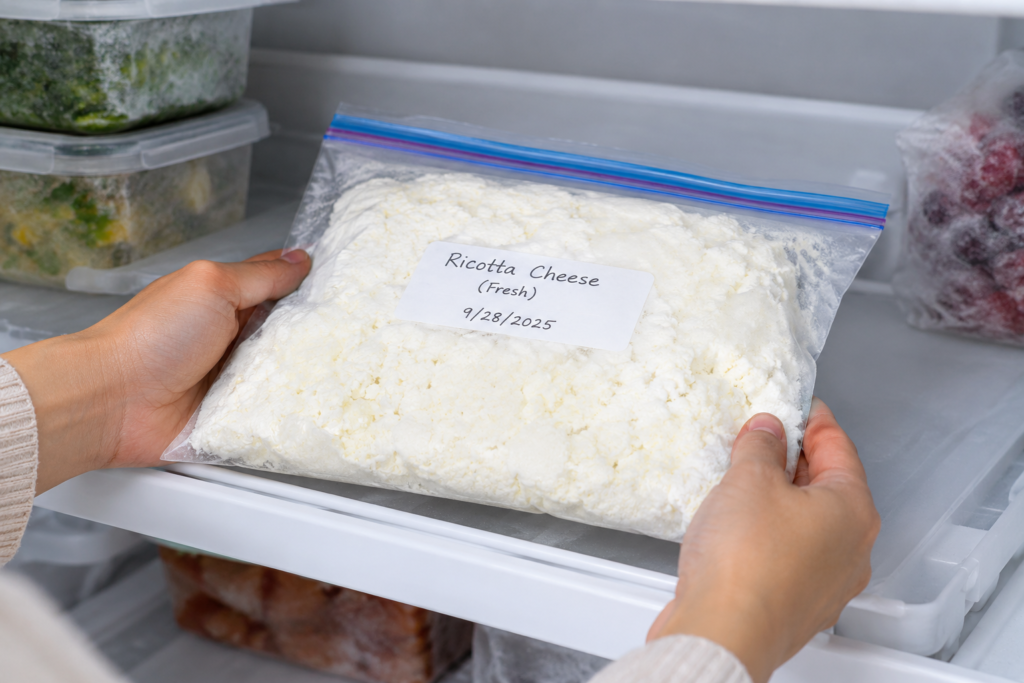
Learning how to freeze ricotta cheese allows you to buy dairy in bulk without worrying about food waste. Ricotta cheese can be frozen effectively in three practical ways: using freezer bags, using portioned ice cube trays, or using rigid freezer-safe containers.
Pre-portioning cheese before freezing makes future meal preparation fast and simple. Whether you need a small scoop for morning pancakes or a large quantity for weekend lasagna, choosing the right container method guarantees success.
According to the USDA, ricotta cheese should be kept refrigerated at 35°F to 40°F and should not be frozen, as freezing can affect the quality of this fresh cheese.
Freezing methods can vary depending on the type and texture of cheese. Read our guide on how to freeze brie cheese to see how this soft cheese can be prepared and stored in the freezer.
3 Ways to Freeze Ricotta Cheese Step by Step
Here is a step-by-step breakdown of the three primary methods for freezing fresh ricotta.
Method 1: Freezing Ricotta Cheese in Heavy-Duty Freezer Bags
Strain excess liquid whey from the fresh ricotta using a fine-mesh sieve or cheesecloth.
Scoop the desired portion of cheese directly into a heavy-duty, sealable freezer bag.
Press the bag flat with your hands to remove all trapped air before zipping it tightly.
Label the bag with the current date and place it flat on a freezer shelf.
For another popular cheese, read our guide on how to freeze cheddar cheese to learn the best ways to package and freeze it while helping maintain its quality.
Method 2: Freezing Ricotta Cheese in Ice Cube Trays
Fill clean silicone ice cube trays with spoonfuls of fresh ricotta, pressing down to remove air pockets.
Place the tray into the freezer for 3 to 4 hours until the cheese cubes are frozen solid.
Pop the frozen ricotta cubes out of the tray and transfer them into a sealable freezer bag.
Return the bag to the freezer for quick single-portion recipe additions.
If you’re interested in making ricotta at home, read our guide on how to make ricotta cheese for a simple look at the ingredients and process from start to finish.
Method 3: Freezing Ricotta Cheese in Rigid Containers
Select a BPA-free, freezer-safe plastic or tempered glass container with an airtight lid.
Transfer the strained ricotta into the container, leaving roughly half an inch of headspace at the top for expansion.
Press a piece of plastic wrap directly onto the surface of the cheese.
Seal the lid tightly, label the date, and store it in the freezer.
For another soft cheese, read our guide on how to freeze goat cheese to see how proper wrapping, portioning, and freezer storage can help maintain its quality.
Types of Ricotta Cheese Freezing Guide
Different culinary preparations and fat levels react uniquely when subjected to sub-zero freezer temperatures.
Can You Freeze Homemade Ricotta Cheese?
Yes, you can freeze homemade ricotta cheese, but because it contains no commercial stabilizers, it may experience higher whey separation upon thawing. Drain it thoroughly before freezing to minimize ice crystal formation.
Can You Freeze Cooked Ricotta Cheese?
Yes, you can freeze cooked ricotta cheese as part of prepared dishes like baked lasagna or stuffed pasta shells. In fact, cooked ricotta retains a smoother texture after freezing than raw fresh ricotta.
Can You Freeze Lemon Ricotta Cheese?
Yes, you can freeze lemon ricotta cheese. The natural citric acid from the lemon juice helps stabilize the curd proteins during cold storage without compromising the bright citrus flavor.
Can You Freeze Polly O Ricotta Cheese?
Yes, you can freeze Polly O ricotta cheese in its original sealed tub for short periods, or transfer it to airtight freezer bags for best quality protection up to 2 months.
Can You Freeze Full Fat Ricotta Cheese?
Yes, you can freeze full fat ricotta cheese. The higher butterfat content helps protect the smooth consistency better than part-skim or fat-free alternatives.
When You Can’t Freeze Ricotta Cheese
You should avoid freezing ricotta cheese if it has already been left out at room temperature for over 2 hours, if it shows signs of sour odor or color changing, or if it has been previously frozen and thawed already.
👉 To compare soft curd shelf life limits, check our guide on how long does cottage cheese last.
Can You Preserve Ricotta Cheese?
Yes, you can preserve ricotta cheese using traditional artisanal culinary methods passed down through Italian cooking heritage.
Preserving ricotta extends its shelf life far beyond standard refrigerator limits while developing unique, concentrated flavors and firmer textures for specialty appetizers and gourmet recipes.
How to Preserve Ricotta Cheese

Learning how to preserve ricotta cheese allows you to turn excess fresh curds into long-lasting gourmet dairy ingredients. Ricotta cheese can be preserved in three traditional ways: submerged in olive oil with herbs, salted and aged into Ricotta Salata, or oven-baked into Ricotta Infornata.
These time-tested methods rely on moisture reduction, salting, or thermal baking to create environments where spoilage bacteria cannot thrive easily.
The FDA explains that food preservation methods work by controlling factors such as moisture, temperature, pH, and other conditions that affect microbial growth. The specific method used depends on the food and preservation process.
For another plant-based option, read our guide on how to preserve soy milk for practical ways to keep it fresh and safe.
3 Ways to Preserve Ricotta Cheese
Explore these three classic techniques to preserve fresh ricotta at home.
How to Preserve Ricotta Cheese in Olive Oil
Drain fresh, firm ricotta cheese thoroughly using cheesecloth for several hours until dense.
Roll the drained cheese into small balls and lightly dust them with sea salt and dried herbs like rosemary or oregano.
Place the cheese balls into a sterilized glass jar and completely submerge them in extra virgin olive oil.
Store the jar tightly covered in the refrigerator for up to 2 to 3 weeks, ensuring the cheese remains fully submerged in oil.
How to Preserve Ricotta Cheese With Salt (Ricotta Salata)
Mix fresh ricotta with sea salt (roughly 2 to 3 percent of the total cheese weight).
Press the salted cheese firmly into a cheese mold lined with cheesecloth to expel moisture.
Apply a heavy weight on top of the mold and drain liquid for 48 hours.
Remove the firm wheel, rub the exterior with salt, and age it in a cool, dry area for 2 to 4 weeks until firm and crumbly.
For a closer look at the nutrients ricotta provides, read our guide on ricotta cheese health benefits and see how its protein, calcium, and other nutrients contribute to a balanced diet.
How to Preserve Ricotta Cheese by Baking (Ricotta Infornata)
Pack fresh ricotta into a round oven-safe dish and smooth the top surface.
Bake in an oven preheated to 300°F for about 45 to 60 minutes until a warm, golden-brown crust forms on the outside.
Cool the baked cheese completely before wrapping it tightly in parchment paper and foil.
Store the baked ricotta in the refrigerator for up to 2 weeks for slicing over salads or pasta.
👉 Interested in other preserved cheeses? Read our detailed guide on how long does feta cheese last.
Can You Thaw Ricotta Cheese Safely?
Yes, you can thaw ricotta cheese safely provided you use temperature-controlled defrosting methods that keep dairy out of the food temperature danger zone.
Never defrost soft cheese on a warm kitchen counter at room temperature, as bacteria can multiply rapidly on the outer layers while the center remains frozen.
According to the FDA, frozen foods should be thawed safely in the refrigerator, in cold water, or in the microwave rather than at room temperature. Keeping the refrigerator at 40°F or below helps slow the growth of harmful bacteria during thawing.
For a closer look at the nutrients ricotta provides, read our guide on ricotta cheese nutrition to learn more about its protein, calcium, fat, and other key nutrients.
How to Handle & Thaw Ricotta Cheese
Knowing how to handle and thaw ricotta cheese properly preserves safety and restores acceptable texture for cooking. Ricotta cheese can be thawed safely in three practical ways: inside the refrigerator, using a cold water bath, or adding it directly into hot cooked dishes.
Once thawed, stir the cheese thoroughly with a fork or whisk to blend any separated whey back into the creamy curds before mixing it into recipes.
For another soft cheese, read our guide on how long does cream cheese last to see how long it stays fresh and how proper storage affects its shelf life.
3 Ways to Thaw Ricotta Cheese
Follow these three reliable methods to defrost frozen ricotta safely.
1. Slow Refrigerator Thawing (Recommended)
Transfer the frozen container or bag of ricotta from the freezer to an interior shelf of your refrigerator. Allow it to thaw slowly overnight for 12 to 24 hours. This gentle temperature transition minimizes texture breakdown and guarantees maximum safety.
For another dairy product that benefits from careful refrigeration, read our guide on how to store goat milk to learn more about proper storage and handling.
2. Cold Water Bath Thawing
Place the tightly sealed freezer bag of ricotta into a large bowl filled with cold tap water. Change the water every 30 minutes to keep it cold. A small bag of ricotta typically defrosts completely within 1 to 2 hours using this method.
3. Direct Cooking Thawing
If you are preparing warm recipes like baked lasagna, soups, or pasta sauces, add small frozen chunks of ricotta directly into the cooking pot or casserole dish. The ambient baking heat defrosts and incorporates the cheese evenly during cooking.
Why Trust Fooder Ghor?
At Fooder Ghor, we provide educational resources focused on understanding the safe use, handling, and storage of different types of milk, including breast milk, cow’s milk, goat milk, and raw milk, based on publicly available guidance from trusted sources such as the CDC, FDA, USDA, and AAP. Some milk-related articles, particularly those involving maternal and infant feeding topics, are reviewed for clarity and presentation by nursing students with academic training in maternal and child health to help make information easier to understand. This content is provided for learning purposes only and does not offer medical advice.
Frequently Asked Questions
Liquid separation is a natural process where whey drains from the protein curds. You can drain off the excess liquid or stir it back into the cheese before use.
No, you should not refreeze previously thawed ricotta cheese. Refreezing severely degrades the moisture structure and increases food safety risks.
Freezing does not alter the mild flavor of ricotta cheese, though it makes the texture slightly more grainy and crumbly upon defrosting.
Conclusion
Understanding how to store ricotta cheese properly is the key to maintaining fresh, safe, and high-quality dairy in your kitchen. By utilizing tight airtight containers in the fridge, freezing excess portions safely for up to 2 months, or exploring traditional preservation methods like baking or oil submergence, you can easily prevent waste. Always remember to thaw frozen ricotta inside the refrigerator to keep your meal preparations safe and delicious.
👉 To learn more about soft cheese shelf life timelines, check our guide on how long does mozzarella cheese last.