Skip to content

Camel milk has quickly become a highly popular choice in many homes across the United States. Many families use this because it offers a distinct flavor profile and a wealth of natural properties that work well in everyday cooking. If you are a parent looking for a simple, family-friendly alternative to traditional dairy, you might be wondering how to keep your bottles fresh and safe for your children.
In simple terms, understanding how long does camel milk last allows you to manage your grocery budget while protecting your household from accidental spoilage. This ultimate guide covers everything from exact refrigerator timelines to the science of freezing raw liquids safely. We will also share crucial organizational charts and storage tricks to help you maximize your kitchen routine with confidence.
Quick Summary: Shelf Life Breakdown
Refrigerated Freshness: Unopened pasteurized bottles remain stable for a surprisingly long time, often outlasting traditional cow milk by several days.
Room Temperature Limits: Leaving fresh fluid out on a kitchen counter without cooling causes rapid bacterial growth within a very short window.
Freezing Capabilities: Freezing is an excellent, long-term preservation route that safely halts structural spoiling without destroying the underlying nutrients.
Powder Storage: Dehydrated varieties require completely dry, airtight conditions to prevent clumping and maintain maximum shelf stability.
How Long Does Camel Milk Last?
Fresh camel milk naturally lasts between 14 to 21 days when kept completely sealed inside a highly chilled, stable environment.
Because this specific grain-foraged animal fluid contains natural protective proteins and antimicrobial enzymes, it resists spoiling significantly better than bovine options. Many families use this beverage as a long-term kitchen companion because it stays fresh and clean throughout a busy multi-week meal schedule. For parents tracking options, looking at the structural stability of other like camel milk nutrition helps you organize your weekly cooling spaces effectively.
Shelf Life Reference Chart
To help busy parents scan storage timelines instantly during a hectic morning routine, here is a quick-reference guide for different storage environments:
Master Longevity Metrics
| Storage Method | Type of Camel Milk | Safe Duration Limit |
| How long does camel milk last in the fridge | Sealed Pasteurized Bottle | 2 Weeks – 3 Weeks |
| How long does camel milk last in the fridge | Opened Pasteurized Bottle | 5 Days – 7 Days |
| How long does camel milk last without refrigeration | Raw or Pasteurized Liquid | 4 Hours Maximum |
| How long does camel milk last in a bottle | Toddler Serving (Room Temp) | 1 Hour – 2 Hours |
| Deep Freezer Storage | Sealed Liquid Containers | 6 Months – 1 Year |
| Dry Pantry Storage | Unopened Powder Packets | 1 Year – 2 Years |
Proper refrigeration remains one of the most important factors in maintaining milk quality and safety, according to USDA food safety guidance.

How to Store Camel Milk
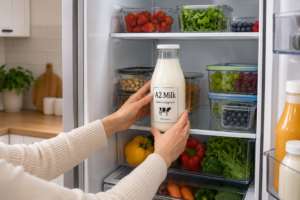
To store camel milk correctly, you must keep the liquid positioned inside the coldest zone of your primary refrigerator unit rather than placing it on the door shelves.
The temperature inside appliance doors fluctuates constantly every single time your children open the fridge for snacks, which accelerates early souring. To keep your household routine running perfectly, follow these 3 foundational rules for fresh liquid care:
Temperature Stability: Set your appliance cooling gauge strictly at 38°F (3°C) or slightly below.
Material Selection: Glass storage jars preserve the clean, crisp taste profile much better than porous plastic bottles.
Air Exposure Control: Always tighten the cap immediately after pouring a glass for the family breakfast table.
Correct refrigeration not only extends freshness but also helps maintain the natural flavor profile. Learn more about what does camel milk taste like and how its taste compares with other types of milk.
5 Ways to Store Camel Milk
Managing a premium dairy alternative requires adaptive kitchen strategies to fit different household needs. Here are 5 ways to store camel milk to preserve its natural properties safely:
The Glass Jar Method: Decant bulk purchases into small, airtight glass jars to minimize air contact during daily pouring.
The Deep Freeze Route: Divide extra cartons into freezer-safe containers before the expiration date arrives.
The Ice Cube Hack: Freeze small portions inside clean ice trays for effortless blending into morning fruit smoothies.
The Dry Pantry Protocol: Keep dehydrated pouches inside a cool, dark cabinet completely away from direct cooking steam.
The Sealed Toddler Bottle: Portion out exact serving amounts into sterilized cups right before mealtime begins.
Following FDA food storage safety recommendations can help reduce the risk of spoilage and maintain product quality.
How to Preserve Camel Milk
The most effective way to preserve camel milk for extended periods is to freeze the liquid or purchase pasteurized commercial brands that utilize clean thermal processing.
Parents often ask about advanced ways how to preserve camel milk without losing its natural health-forward profile. While industrial spray-drying creates the longest shelf stability, pasteurization remains the standard household method for securing food safety. If you want to learn the exact temperature steps for treating raw farmhouse batches at home, reviewing our complete guide on how to pasteurize camel milk at home ensures you eliminate pathogens perfectly.
Can You Freeze Camel Milk?

Yes, you can freeze camel milk safely for up to one full year without causing any major damage to its core nutritional value.
When analyzing if can you freeze camel milk, the structural process is highly successful because the liquid does not contain heavy clumps of bovine fat that separate harshly during thawing. To execute this trick correctly, remember these essential points:
Headspace Allocation: Leave at least one inch of empty space at the top of your container because the fluid expands as it turns to ice.
Gentle Thawing: Always thaw the frozen block slowly inside the refrigerator overnight rather than using a microwave.
Shaking Protocol: Give the thawed bottle a vigorous shake to recombine the natural moisture and grain-foraged elements smoothly.
Proper freezing and thawing practices help maintain food quality and safety during storage according to USDA Food Safety and Inspection Service guidance
If you enjoy tracking how different fluids behave under freezing conditions, checking our parental analysis on is oat milk healthy provides great insight into managing various kitchen staples.
How to Store Camel Milk Powder
To store camel milk powder safely, you must keep the dehydrated product inside an airtight container placed within a cool, dark, and completely dry pantry cabinet.
Moisture is the absolute biggest enemy of dried food products. When looking up how to store camel milk powder lines, exposing the open powder to humid kitchen air causes immediate clumping, texture degradation, and early spoilage. Follow this simple checklist for dry items:
Seal Inspection: Double-check that the zip-lock track is completely clear of powder grains before pressing it shut.
Scoop Hygiene: Always use a completely dry stainless steel spoon when measuring out portions for morning shakes.
Avoid Appliance Tops: Never store your dry canisters on top of the refrigerator or microwave, as these areas generate constant warmth.
To understand how delicate raw organic structures can be when exposed to incorrect room temperatures, reviewing the handling guides for how long does raw milk lasts serves as a wonderful safety reminder for parents.
Why Trust Fooder Ghor?
At Fooder Ghor, we provide educational resources focused on understanding the safe use, handling, and storage of different types of milk, including breast milk, cow’s milk, goat milk, and raw milk, based on publicly available guidance from trusted sources such as the CDC, FDA, USDA, and AAP. Some milk-related articles, particularly those involving maternal and infant feeding topics, are reviewed for clarity and presentation by nursing students with academic training in maternal and child health to help make information easier to understand. This content is provided for learning purposes only and does not offer medical advice.
Frequently Asked Questions
A: It naturally contains higher concentrations of protective proteins and lysozymes, which naturally slow down the proliferation of common lactic acid bacteria.
A: No, you should never refreeze thawed animal milk, as repeated temperature shifts introduce environmental bacteria and degrade the taste profile.
A: The most reliable indicators are a strong sour aroma, a thick clumpy texture, or a sudden bitter taste when sampled.
Conclusion
In summary, how long does camel milk last? It provides an impressively stable shelf life, remaining perfectly fresh for 14 to 21 days in a well-chilled refrigerator. By utilizing smart storage strategies—such as freezing extra portions for long-term use, avoiding warm appliance doors, and keeping powder pouches perfectly dry—you can protect your grocery investment easily. Always trust your senses and check labels carefully to ensure your family enjoys a premium, safe, and nutritious drinking experience at every single meal.
If you frequently use shelf-stable dairy products, you may also want to learn how long does evaporated milk last and the best ways to store it after opening.