Skip to content

For many Americans, the taste of raw cow milk remains a mystery—it’s something they’ve heard about but never tried. Unlike store-bought pasteurized milk, raw milk comes straight from the farm, offering a rich, creamy flavor that feels more natural and full-bodied. But does raw unpasteurized milk taste like what you expect? And why does raw milk taste different from the regular bottles in the dairy aisle? Let’s dive deep into the world of farm-fresh dairy.
Quick Overview: Raw Milk Taste & Characteristics
Flavor Profile: Naturally sweet, creamy, and rich with subtle grassy undertones.
Texture: Thick and velvety due to the intact cream layer.
Variability: The taste changes based on the cow’s diet, the season, and the breed.
Freshness: Lacks the “cooked” or “flat” taste of pasteurized milk.
Safety: Requires strict refrigeration to prevent it from tasting sour or spoiled.
The True Flavor: What Does Raw Milk Taste Like?
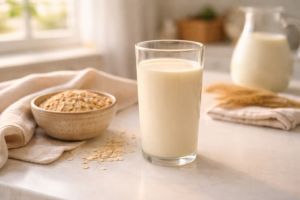
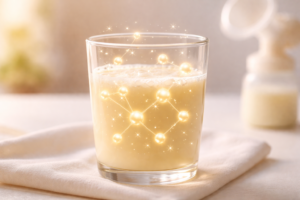
When you take your first sip, you’ll likely notice that raw cow milk tastes good—often better than any processed version. It has a smooth, slightly sweet profile with a full-bodied texture because none of the natural enzymes or fats are removed.
- Does raw milk taste different? Yes. Many describe it as “melted vanilla ice cream” when chilled perfectly.
- Flavor Influencers: Factors like the cow’s breed (Jersey vs. Holstein) and the food that changes raw cow milk taste (fresh grass vs. dry hay) play a huge role. Milk collected in spring often has a “floral” note because of the lush pastures.
👉 If you’re also curious about other natural dairy flavors, check out another blog What Does Goat Milk Taste Like?
Raw Milk vs. Pasteurized: Why the Difference?

Does raw milk taste different from pasteurized milk? Absolutely. Pasteurization involves heating milk to kill bacteria, which can “cook” the natural sugars and flatten the aroma. What does raw unpasteurized milk taste like in comparison? It tastes “alive.” It retains its original proteins and fats in their natural state, leaving a pleasant, silky coating on your tongue that pasteurized milk simply can’t match.
👉 For a healthy comparison, you can also read our latest guide Is Goat’s Milk Good for You? (Health Benefits & Nutrition Facts).
Troubleshooting Taste: Why Does Raw Milk Taste Sour or Spoiled?
Because it is unprocessed, raw milk is dynamic. It is crucial to know how to distinguish between “natural aging” and “spoiling.”
- Why does my raw milk taste sour? If it sits in the fridge for a few days, natural lactic acid bacteria start fermenting the lactose.
- Does raw milk taste sour in the fridge? Yes, it can over time. While “soured milk” is often used in baking, it is different from spoiled milk.
- Does raw milk taste spoiled? Spoiled milk will have a bitter, putrid smell and a sharp, unpleasant taste.
- Does raw milk taste spoiled in the fridge or after opening? If the temperature is above 38°F or if bacteria from the air enter the bottle, it can spoil quickly. Always check the scent before drinking.
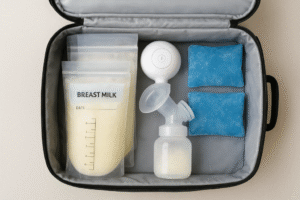
💡 Helpful Tip for Parents: Interestingly, cow milk isn’t the only milk that can develop a tangy scent. If you are a breastfeeding mom noticing a similar change in your stored milk, check out our guide on Why Does My Breast Milk Smell Sour? to understand the role of lipase and freshness.
What Factors and Foods Change the Taste of Raw Milk?
Many new consumers wonder why change raw cow milk taste happens so often. Unlike factory milk, raw milk is a direct reflection of the cow’s environment.
- Dietary Factors: If a cow eats wild garlic, onions, or specific weeds, it can significantly change raw cow milk taste, adding savory or pungent notes.
- Storage Factors: Milk absorbs odors. If kept uncovered in a fridge next to strong-smelling food, it will taste “weird.”
Safety and Storage Guidelines (U.S. Standards)
While raw milk’s flavor is unique, safety is the top priority. According to the Centers for Disease Control and Prevention (CDC), unpasteurized milk may contain harmful bacteria like E. coli, Listeria, or Salmonella if not handled properly. That’s why most U.S. states regulate or restrict raw milk sales.
To maintain the best flavor and safety:
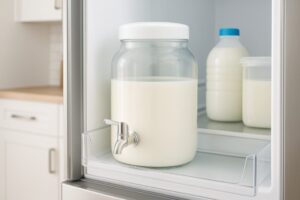
- Strict Temperature: Store it immediately in the refrigerator below 38°F (3°C).
- Shelf Life: Consume it within five to seven days.
- Handling: Always keep containers sealed tightly and avoid leaving them open at room temperature.
- Pro Tip: Reboiling or lightly heating the milk before drinking can also reduce bacterial risk without losing much of its natural taste.
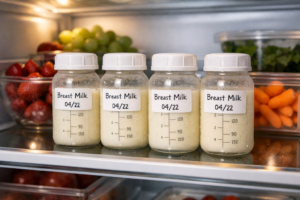
📌 Safe Storage Matters: Whether it’s farm-fresh dairy or liquid gold for your baby, proper cooling is key. For more expert tips on keeping milk fresh, don’t miss our comprehensive Breast Milk Storage & Safety Guide.
Expert Advice and Resources
According to USDA (U.S. Department of Agriculture), raw milk contains beneficial bacteria and natural enzymes that may improve digestion for some people, though scientific evidence is still limited.
However, the CDC emphasizes that while raw milk fans love the flavor, pasteurization doesn’t significantly reduce nutrition and is the only sure way to ensure safety. Ultimately, personal choice, legal access, and proper handling are what matter most for the American consumer.
FAQ: Solving Unusual Raw Milk Flavors (PAA Optimized)
Q: Why does raw milk taste fishy?
A: This is often caused by the cow’s diet, specifically high levels of Omega-3, fishmeal supplements, or certain clover types in their pasture.
Q: Why does raw milk taste metallic?
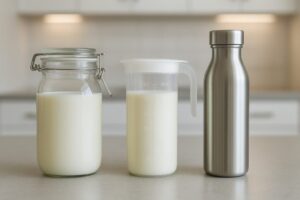
A: If raw milk is stored in copper or low-quality metal containers, it can pick up a metallic tang. Always use food-grade stainless steel or glass.
Q: Why does raw milk taste weird or “barny”?
A: A “barny” taste usually means the milk wasn’t cooled quickly enough after milking or there were hygiene issues during the milking process. High-quality raw milk should taste clean.
Q: Is it normal to change raw cow milk taste?
A: Yes, it is perfectly normal. Since it’s unhomogenized and unprocessed, the flavor fluctuates with the cow’s health, diet, and even the weather.
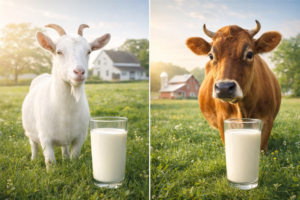
Q: Does raw milk taste like goat milk?
A: Not really. Goat milk has a distinct “tangy” or “goaty” flavor due to different fatty acids. Raw cow milk is much milder and sweeter.
Q: What does “off-flavor” milk mean?
A: An “off-flavor” can be anything from a salty taste (usually due to mastitis in the cow) to a chemical taste (from cleaning agents not rinsed properly).
Q: Why is raw milk sometimes yellow?
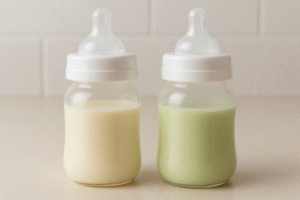
A: The yellow tint comes from Beta-carotene found in fresh grass. This is a sign of high-quality, pasture-raised milk.
Q: Can I drink raw milk if it tastes slightly sour?
A: If it’s just “soured” (thick and tangy like yogurt), many people use it for smoothies or pancakes. However, if it smells putrid or bitter, discard it immediately.
Q: Does freezing change the taste of raw milk?
A: Freezing can slightly change the texture (making it feel “grainy”), but the sweet flavor usually remains the same once thawed and shaken.
Q: Why does raw milk taste sweeter than store milk?
A: Pasteurization breaks down some of the natural sweetness. Raw milk keeps its lactose fully intact, making it naturally more sugary.
Conclusion: Nature’s Original Dairy
What does raw cow milk taste like? It is a complex, sweet, and creamy experience that tells the story of the farm it came from. While you must handle it with care and follow safety guidelines, the flavor reward is a rich, silky drink that is truly nature’s original dairy.