 Skip to content

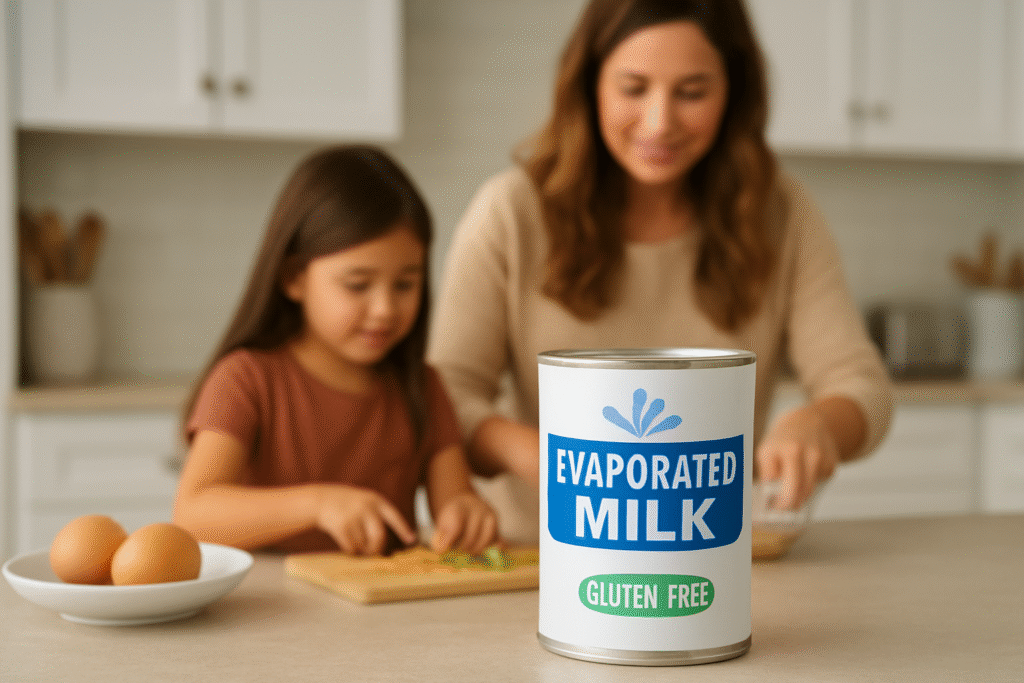
Parents managing Celiac disease or gluten sensitivity often worry about whether common pantry staples are safe for their children’s meals. So the primary question many families ask when preparing creamy recipes, soups, or baked goods is simple and critical: Is evaporated milk gluten free? The short answer is yes, pure evaporated milk is naturally gluten-free because it is made solely by removing water from whole cow’s milk. Since real dairy does not contain wheat, barley, or rye, standard commercial evaporated milk is a safe, nutrient-dense ingredient for gluten-sensitive households. However, understanding manufacturing environments and label certifications ensures your family stays completely safe.
Quick Summary
- Naturally Gluten-Free: Pure evaporated milk contains only concentrated cow’s milk and optional vitamin additives, making it 100% naturally gluten-free.
- No Wheat or Grains: Standard commercial brands do not contain wheat, barley, rye, or grain-based stabilizers.
- FDA Safety Standard: Products labeled as “Gluten-Free” follow the strict FDA limit of containing less than 20 parts per million (ppm) of gluten.
- Cross-Contamination Risk: While raw dairy is inherently safe, families with severe Celiac disease should check labels or opt for “Certified Gluten-Free” brands to rule out shared facility risks.
- Safe for Cooking & Baking: You can safely use plain evaporated milk in gluten-free soups, sauces, casseroles, and desserts.
For more practical storage guidance, read our guide on can you freeze evaporated milk to learn what happens to its texture and quality after freezing.
Is Evaporated Milk Gluten Free?
Yes. Evaporated milk is naturally gluten-free. It contains only concentrated cow’s milk with no wheat, barley, rye, or other gluten-containing additives.
According to the U.S. Department of Agriculture (USDA) guidelines on food sensitivities, pure dairy products are naturally safe for a gluten-free diet because they are sourced directly from milk and do not contain grains. Furthermore, the U.S. Food and Drug Administration (FDA) regulates gluten-free labeling standards, ensuring that plain, unflavored dairy products like evaporated milk meet the strict requirement of containing less than 20 parts per million (ppm) of gluten, making them completely safe for individuals with celiac disease or gluten sensitivity.
Understanding the Ingredients in Evaporated Milk
The Core Components of Evaporated Milk
Commercial evaporated milk contains only two ingredients:
- Milk
- A small amount of vitamin additives in some brands
There are no grains or gluten containing stabilizers. Therefore, it is suitable for gluten free cooking and baking.
For practical information on freshness and storage, read our guide on how long does evaporated milk last to learn how long it stays usable after opening and under different storage conditions.
Why Standard Milk is Naturally Gluten Free
Cow milk is naturally gluten free because it contains only proteins, fats, and natural sugars. The FDA gov food allergens gluten free labeling rule explains that gluten must come from specific grains. Since milk comes from animals that do not produce gluten, the base ingredient is safe.
The Real Concern: Cross Contamination Risk
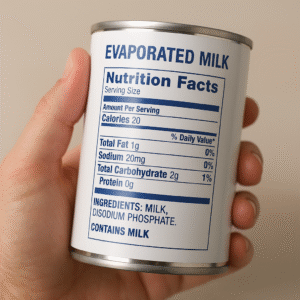
Although evaporated milk is gluten free, some parents worry about cross contamination. This happens when gluten containing ingredients share equipment or facilities.
Understanding Gluten Processing Environments
Some factories process milk products and grain based foods in the same building. This does not automatically mean contamination, but sensitive families may wish to choose brands with clear labeling or contact the manufacturer for peace of mind.
If you’re interested in making this pantry staple at home, read our guide on how to make evaporated milk for a simple overview of the process and ingredients.
When to Look for Certified Gluten Free Labels
Most evaporated milk brands are naturally gluten free even without certification. Yet parents managing Celiac disease often prefer labels that state:
- Gluten Free
- Certified Gluten Free
- Processed in a gluten free facility
These labels follow testing guidelines that verify gluten levels stay under the allowed FDA limit. If you’re interested in a dairy-free alternative, read our guide on how to make evaporated milk from coconut milk for a simple look at how coconut milk can be reduced into a thicker, more concentrated milk.
How to Verify if Evaporated Milk is Gluten Free
Reading the Ingredient List for Hidden Gluten
Checking the label is the easiest step. Look for simple ingredients such as:
- Milk
- Vitamin D
- Carrageenan in some brands
Avoid products with flavor mixes or sweeteners that may introduce unnecessary ingredients. For a closer look at what evaporated milk provides nutritionally, read our guide on evaporated milk nutrition facts to learn about its calories, protein, fat, calcium, and other nutrients.
The FDA’s Gluten Free Labeling Rule
The FDA requires that any product labeled gluten free must contain less than 20 parts per million of gluten. This is the international standard for safety. Reading labels helps parents trust the product and choose the right brand for their family.
Gluten Free Evaporated Milk Substitutes If You Have Concerns
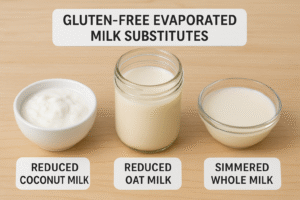
Some families prefer alternatives due to dairy sensitivity or flavor preference. These options work in recipes that call for evaporated milk.
- Coconut milk cooked until thickened
- Lactose free evaporated milk
- Whole milk simmered until reduced
- Oat milk reduced by gentle cooking
These substitutes work well in soups, sauces, and baking. However, always review labels to avoid hidden gluten in flavored plant milks.
👉 If you ever need a gluten free option for sweetened condensed milk, you can see our guide on how to make sweetened condensed milk at home. This helps you control ingredients and keep your kitchen gluten safe.
Why Trust Fooder Ghor?
At Fooder Ghor, we provide educational resources focused on understanding the safe use, handling, and storage of different types of milk, including breast milk, cow’s milk, goat milk, and raw milk, based on publicly available guidance from trusted sources such as the CDC, FDA, USDA, and AAP. Some milk-related articles, particularly those involving maternal and infant feeding topics, are reviewed for clarity and presentation by nursing students with academic training in maternal and child health to help make information easier to understand. This content is provided for learning purposes only and does not offer medical advice.
Frequently Asked Questions
Most dairy products are naturally gluten free. Always check flavored or processed items for extra ingredients.
No. It contains only concentrated milk without wheat based stabilizers.
Yes, when it comes from a trusted brand with clear labeling. Parents may choose certified gluten free options for extra reassurance.
Yes. Most brands contain only milk and sugar. Still, check labels to avoid unexpected additives.
Yes, but it is rare for evaporated milk. Parents can select brands that list gluten free processing.
Yes. It works well in casseroles, sauces, and gluten free baking because of its creamy texture.
Standard “Gluten-Free” evaporated milk meets FDA safety standards by containing less than 20 ppm (parts per million) of gluten. “Certified Gluten-Free” products are independently tested by third-party organizations (like GFCO) to meet stricter limits, often under 10 ppm, offering maximum safety for severe Celiac disease.
Not always. While plain evaporated milk is naturally gluten-free, flavored varieties (such as vanilla, chocolate, or seasonal blends) may contain thickeners, malt flavoring, or modified food starches derived from gluten-containing grains. Always check the ingredient label on flavored products.
Yes. Cross-contact can occur in your kitchen if you use a dirty can opener previously used on gluten products, or if you dip spoons that have touched wheat flour or bread into the milk. Always use clean utensils and clean can openers.
Yes. Evaporated milk contains no wheat, barley, or rye grains. However, keep in mind that a wheat allergy is different from a dairy/lactose allergy. If a child has a milk protein allergy or lactose intolerance, standard evaporated milk will still trigger a reaction.
Conclusion
So, is evaporated milk gluten free and safe for your family’s daily cooking? Absolutely. Pure evaporated milk is naturally gluten-free, containing no wheat or grain-based additives. By carefully reading ingredient labels, choosing trusted brands that follow FDA gluten-free guidelines, and being mindful of cross-contamination risks, parents can confidently use this versatile pantry staple. Whether you are baking a gluten-free dessert or simmering a rich soup, evaporated milk allows you to create delicious, creamy meals without compromising your family’s health or safety.
For a balanced look at potential concerns, read our guide on evaporated milk health side effects to learn about possible digestive issues, allergies, and other considerations.











