Skip to content



Learning how to make flavoured cream cheese allows you to elevate a plain dairy base into custom savory spreads. By applying balanced emulsification, temperature control, and proper infusion timing, you can mix garlic, fresh herbs, cheeses, and spices into vibrant spreads.
Short Summary
Base Softening: Bringing plain cream cheese to room temperature (70°F – 75°F) ensures effortless integration of dry and wet ingredients.
Moisture Balance: Patting fresh ingredients dry prevents water separation and preserves the structural body of the spread.
5 Distinct Profiles: Features step-by-step proportions for Garlic & Fine Herbs, Jalapeño Cheddar, Everything Bagel, Sun-Dried Tomato Basil, and Smoky Bacon Chive.
Resting Period: Chilling mixed blends for at least 2 hours allows fat-soluble aromatic compounds to infuse evenly.
Gentle Folding: Mixing high-moisture add-ins by hand preserves texture without overworking the fat emulsion.
For more information about proper refrigeration, storage conditions, and shelf life, see our detailed guide on How Long Does Cream Cheese Last.
Mixing Principles for Flavoring Base Cream Cheese

Incorporating raw seasonings, aromatic oils, or ground powders requires balancing moisture and lipid ratios to maintain a stable, spreadable matrix.
When preparing a savory cream cheese spread, temperature management is the first critical step. Cold cream cheese resists folding, which can lead to lumps and uneven spice pockets. Allow your plain base to warm to approximately 70°F – 75°F (18°C to 21°C) before mixing. If you are starting completely from scratch, follow our step-by-step master guide on how to make cream cheese at home.
When integrating ingredients, separate them into dry spices, oil-based pastes, and fresh botanicals:
Powders & Dry Spices: Mix ground seasonings directly into softened cheese using a food processor or paddle attachment.
Oil-Based Ingredients: Add sun-dried tomatoes or chili oils sparingly, as excess fat or oil can cause the dairy base to break or turn greasy.
Fresh Herbs & Veggies: Wash and thoroughly dry fresh aromatics using paper towels. Excess surface water weakens the emulsion, leading to liquid pooling.
5 Step-by-Step Flavor Blending Recipes

Each recipe below is calibrated for 8 ounces (225 grams) of plain, softened cream cheese.
| Blend Style | Core Add-In Ingredients | Primary Flavor Profile |
| Garlic & Fine Herbs | Fresh garlic, parsley, dill, chives | Piquant, fresh, and aromatic |
| Jalapeño & Cheddar | Minced jalapeño, sharp cheddar, cumin | Spicy, bold, and smoky |
| Everything Bagel | Sesame seeds, poppy seeds, onion flakes, garlic flakes | Crunchy, savory, and toasted |
| Sun-Dried Tomato & Basil | Chopped sun-dried tomatoes, fresh basil, garlic powder | Rich, tangy, and Mediterranean |
| Smoky Bacon & Chive | Crispy bacon bits, fresh chives, smoked paprika | Savory, smoky, and salty |
Garlic & Fine Herbs Blend Recipe
Combine 8 ounces of softened cream cheese with 1 finely minced garlic clove, 1 tablespoon chopped fresh parsley, 1 tablespoon chopped fresh dill, and 1 tablespoon minced chives. Mix on medium speed for 45 seconds or fold thoroughly with a rubber spatula.
For food safety, wash fresh herbs thoroughly before preparing them and keep the finished cream cheese mixture refrigerated at 40°F (4°C) or below. The FDA recommends washing fresh herbs under running water and storing perishable herbs in a clean refrigerator at 40°F or below.
For safety recommendations regarding ingredients and dietary sensitivities, read our guide on cream cheese side effects.
Jalapeño & Cheddar Blend Recipe
Fold 1/4 cup of finely shredded sharp cheddar cheese, 2 tablespoons of deseeded, finely diced fresh jalapeño, and 1/8 teaspoon of ground cumin into 8 ounces of softened cream cheese. For a lighter, aerated base texture before folding in heavy mix-ins, review our method on how to make whipped cream cheese.
Everything Bagel Seasoning Blend Recipe
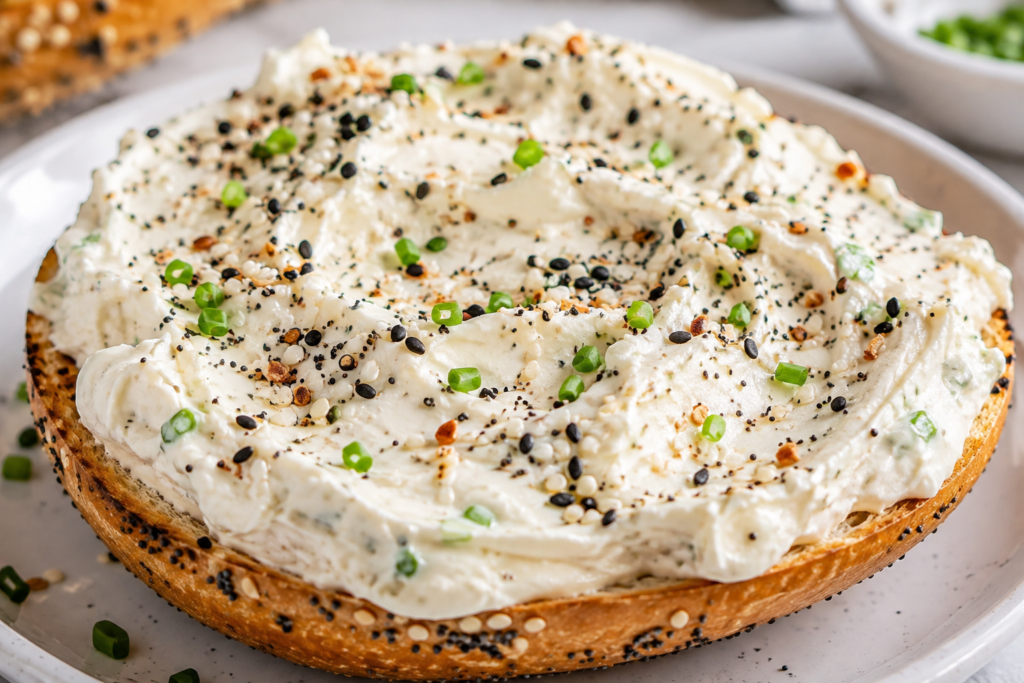
Add 1.5 tablespoons of everything bagel seasoning (a mixture of white and black sesame seeds, poppy seeds, dried minced garlic, dried minced onion, and flaked sea salt) directly to 8 ounces of softened cream cheese. Mix for 30 seconds until distributed evenly throughout the spread.
For a practical guide to preparing homemade coconut milk, see our detailed guide on How to Make Coconut Milk from Coconut Powder.
Sun-Dried Tomato & Basil Blend Recipe
Combine 3 tablespoons of oil-drained, finely chopped sun-dried tomatoes, 1 tablespoon of finely chiffonaded fresh basil, and 1/4 teaspoon of garlic powder with 8 ounces of softened base cheese. Gentle folding prevents oil from breaking the emulsion, similar to handling delicate curds in how to make cream cheese from raw milk.
Smoky Bacon & Chive Blend Recipe
Incorporate 3 tablespoons of finely crumbled, cooked crispy bacon, 1.5 tablespoons of minced fresh chives, and 1/4 teaspoon of smoked paprika into 8 ounces of softened cream cheese. Mix until uniform, ensuring the bacon bits remain evenly suspended without overworking the fat structure.
To keep your freshly mixed savory spreads safe and fresh in the refrigerator, follow the storage instructions in our guide on how to store cream cheese.
Why Trust Fooder Ghor?
At Fooder Ghor, we provide educational resources focused on understanding the safe use, handling, and storage of different types of milk, including breast milk, cow’s milk, goat milk, and raw milk, based on publicly available guidance from trusted sources such as the CDC, FDA, USDA, and AAP. Some milk-related articles, particularly those involving maternal and infant feeding topics, are reviewed for clarity and presentation by nursing students with academic training in maternal and child health to help make information easier to understand. This content is provided for learning purposes only and does not offer medical advice.
Frequently Asked Questions
Both fresh and dried herbs work well, but they require different preparation techniques. Fresh herbs yield bright, vibrant flavors and superior visual appeal, but they introduce moisture that reduces shelf life to about 3 to 5 days. Dried herbs provide concentrated flavor without added water, extending storage stability. For food safety, fresh herbs should be washed thoroughly under running water before use and stored in a clean refrigerator at 40°F (4°C) or below. Once mixed with cream cheese, the finished spread should also be kept refrigerated because dairy products require cold storage to help limit bacterial growth. Utilizing wholesome fresh ingredients also helps you make the most of the dietary advantages covered in cream cheese benefits.
Add dry spices and powdered garlic during the initial softening phase to ensure thorough distribution. Fresh herbs, crispy bacon, or shredded cheeses should be folded in at the very end by hand or processed on low speed for just 15 to 20 seconds. Heavy mechanical whipping can bruise delicate leaves, turn herbs bitter, and cause fresh vegetation to release excess moisture. You can compare this delicate moisture management to the storage needs of aged products like how long does feta cheese last.
Yes, you can easily make your own flavored cream cheese by mixing plain, softened cream cheese with fresh herbs, spices, roasted garlic, shredded cheeses, or savory meats.
Yes, making flavored cream cheese at home is simple and takes just minutes—all you need is a softened cream cheese base and your favorite finely chopped savory or sweet add-ins.
Yes, creating flavored cream cheese is completely safe as long as you use fresh ingredients, maintain clean food handling practices, and store the mixed spread in an airtight container in the refrigerator.
You can add flavor to cream cheese by folding in fresh chopped herbs (like dill, basil, or chives), minced garlic, spices, crushed seeds, citrus zest, or savory toppings like crispy bacon bits and diced peppers.
Conclusion
Mastering how to make garlic herb cream cheese and other savory blends allows you to craft restaurant-quality spreads adapted to any menu. By controlling your dairy base, balancing moisture levels, and using fresh aromatics, you can easily customize unique flavor profiles right in your home kitchen without relying on artificial additives or commercial stabilizers.
For another practical milk guide, see our detailed guide on How Long Does Evaporated Milk Last.