Skip to content


Understanding the Confusion: Pumping vs. Feeding Timing
If you’ve ever wondered, “How long after pumping can I breastfeed my baby?” you’re not alone. Many U.S. moms, especially those balancing both pumping and nursing, often feel unsure about the timing.
The good news is, you don’t need to wait long at all. In most cases, you can breastfeed immediately after pumping. Your body continuously produces milk, and pumping doesn’t “empty” your breasts completely — it just removes what’s available at that moment.
Still, understanding when and how to balance both can make a huge difference in maintaining supply and avoiding discomfort.
How Milk Production Works Between Pumping and Feeding

Your breasts operate on a supply-and-demand system — the more milk you remove (by pumping or nursing), the more your body produces. Even right after pumping, there’s still milk left in your breast, and new milk begins to refill almost immediately due to hormones like prolactin and oxytocin.
In simple terms:
- You can safely nurse right after pumping if your baby shows hunger cues.
- If your breasts feel drained, give them 30–60 minutes to refill slightly.
- Refill time depends on your milk supply, pumping efficiency, and feeding frequency.
👉 For more scientific insight into this process, see the CDC’s Breastfeeding and Milk Expression Guidelines, they explain how frequent milk removal supports long-term supply.
What Is the 555 Rule for Pumping and How It Affects Breastfeeding Routine
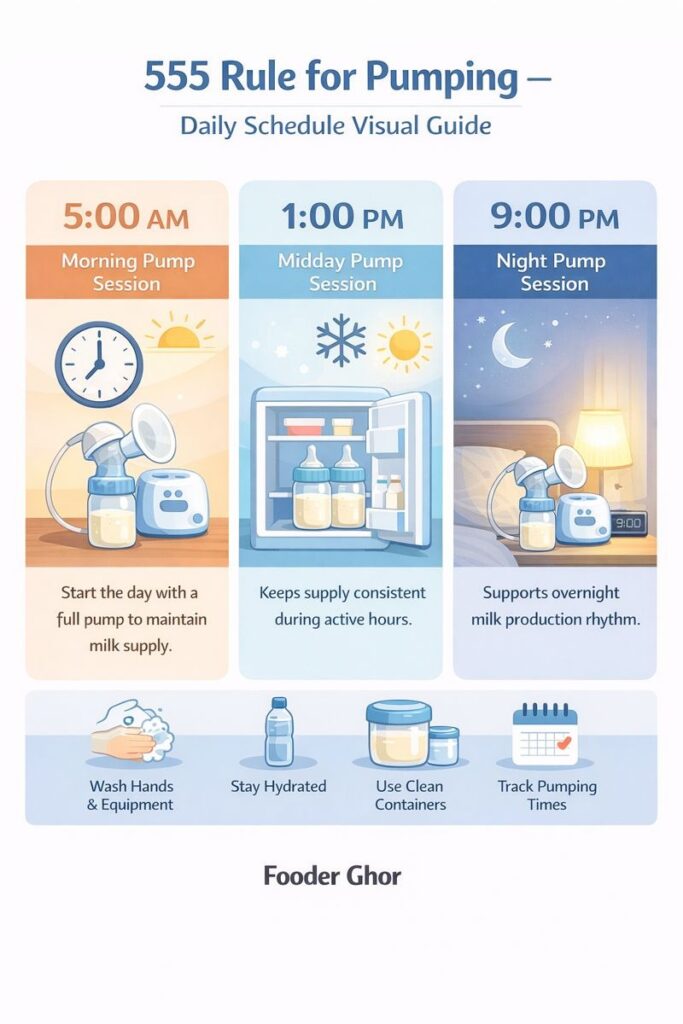
The 555 rule for pumping is a simple daily schedule designed for working moms. It suggests pumping at 5 AM, 1 PM, and 9 PM to maintain a stable milk supply.
This method works because it aligns with natural hormone cycles. Morning and evening pumps usually produce higher milk output, while the midday session helps maintain demand during the day.
Unlike breastfeeding timing confusion, this rule helps structure pumping so moms can still breastfeed normally without worrying about supply drop or timing gaps.
Breastfeeding organizations such as the CDC and American Academy of Pediatrics emphasize that frequent and consistent milk removal supports healthy milk production, regardless of the specific schedule used.
Milk production is influenced by hormone levels and feeding frequency, and regular expression helps maintain supply over time. Structured pumping routines like this are based on general lactation principles rather than official medical rules.
When to Breastfeed After Pumping (By Scenario)
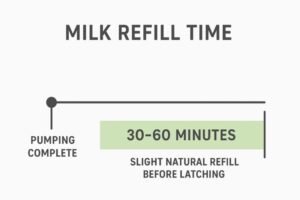
Different situations require slightly different approaches.
If you’re exclusively pumping, you can breastfeed right after pumping if your baby wants comfort feeding your milk may flow more slowly, but it’s safe.
For combination feeding moms, spacing your sessions by 1–1.5 hours helps ensure a steady flow for both nursing and pumping.
If you’re a working mom, you can nurse as soon as you reunite with your baby, no waiting needed. In fact, skin-to-skin contact after separation often triggers stronger letdowns and enhances bonding.
👉 If you’re just starting out, read our full guide on How to Start Pumping Breast Milk? (Step-by-Step for Beginners)to learn the best way to begin your pumping journey.
Pumping Rules Quick Guide for New Moms (555 Rule Explained Simply)
If you are confused about pumping schedules, here is a simple breakdown used by many U.S. moms:
- 555 Rule → 3 daily sessions (best for working moms)
- 444 Rule → every 4 hours (supply building stage)
- 333 Rule → intensive pumping for low supply recovery
- 30/30/30 Rule → emergency supply boost method
According to the CDC Breastfeeding Guidelines, frequent and effective milk removal is essential to maintain and build supply. Similarly, the AAP recommends responsive feeding and consistent expression patterns to support long-term breastfeeding success.
The 555 rule is the most balanced option for moms who also breastfeed, as it avoids over-pumping while maintaining steady milk production.
The 555 Rule for Pumping (Daily Pumping Schedule Visual)
How to Tell If Your Baby Is Getting Enough Milk After Pumping
Feeding soon after pumping may make your breasts feel softer, but that doesn’t mean your baby isn’t getting enough milk. Babies are far more efficient than pumps at drawing out milk.
You’ll know feeding is going well if you hear soft swallowing sounds, your baby looks relaxed afterward, and there are at least six wet diapers daily.
If your baby seems frustrated, offer both breasts or wait 20–30 minutes for a partial refill before nursing again.
Different Pumping Rules Explained (555, 666, 444, 333 Comparison)
Before we dive into the deep mechanics of each rule, use this master table to compare the output expectations and timings.
| Rule | Sessions/Day | Primary Timing | Best For | Output Expectation |
| 555 Rule | 3-5 sessions | 5AM / 1PM / 9PM | Working moms | 20-25oz total |
| 666 Rule | 4-6 sessions | 6AM / 12 / 6 / 12 | Night shift workers | 25-30oz total |
| 444 Rule | 6 sessions | Every 4 hours | Low supply concerns | 18-22oz total |
| 333 Rule | 8 sessions | Every 3 hours | Max production/NICU | 25+ oz total |
| 333 Night | 3 night sessions | 9PM / 12AM / 3AM | Overnight boost | 8-12oz (night only) |
| 30/30/30 | 1.5 hr cycle | 1-2x per day | Emergency supply drop | 2-3x supply boost |
Note: These pumping intervals are designed to maintain supply by mimicking infant feeding patterns as recommended by the AAP (American Academy of Pediatrics) and CDC clinical guidelines.
Tips to Balance Pumping and Breastfeeding
Lactation experts recommend a few golden rules:
- Pump after a morning feed, when your supply is highest.
- Don’t skip sessions, as missed pumping or feeding can cause engorgement.
- Use gentle suction to prevent soreness.
- Stick to a routine — consistency keeps your supply stable.
- Stay hydrated — water helps both your energy and milk production.
Maintaining Supply While Switching Between Pumping and Nursing
To maintain a healthy milk supply and avoid both oversupply and low production, consistency is key.
If you’re exclusively pumping, aim for every three hours, pumping for fifteen to twenty minutes each time. For moms who combine nursing and pumping, the best pattern is to nurse your baby first and then pump for another ten to fifteen minutes to stimulate more milk.
If you’re a working mom, pump during your baby’s usual feeding times. This helps your body stay synchronized with your baby’s natural rhythm and prevents discomfort from fullness.
Regularity tells your body to keep producing milk creating a reliable and comfortable supply that supports both you and your baby.
Frequent and effective milk removal through breastfeeding or pumping is widely supported in pediatric and lactation guidance, including recommendations from the American Academy of Pediatrics (AAP), as an important factor in maintaining milk supply and supporting comfortable breastfeeding.
Regular feeding patterns help the body maintain milk production and reduce issues that can occur when milk is not removed consistently.
Why the 555 Rule Helps Maintain Milk Supply
The 555 rule works by matching your body’s natural prolactin rhythm. Milk production is highest in early morning and evening, so pumping at those times improves output efficiency.
It also reduces stress because it avoids frequent pumping sessions throughout the day, making it easier for working moms to stay consistent.
Emergency Milk Boost: 30/30/30 Power Pumping Method
The 30/30/30 pumping method is used when milk supply drops suddenly.
It involves pumping for 30 minutes, resting for 30 minutes, and pumping again for 30 minutes. This mimics cluster feeding and signals the body to increase milk production.
This method is not for daily use but can quickly restore supply within 48–72 hours when needed.
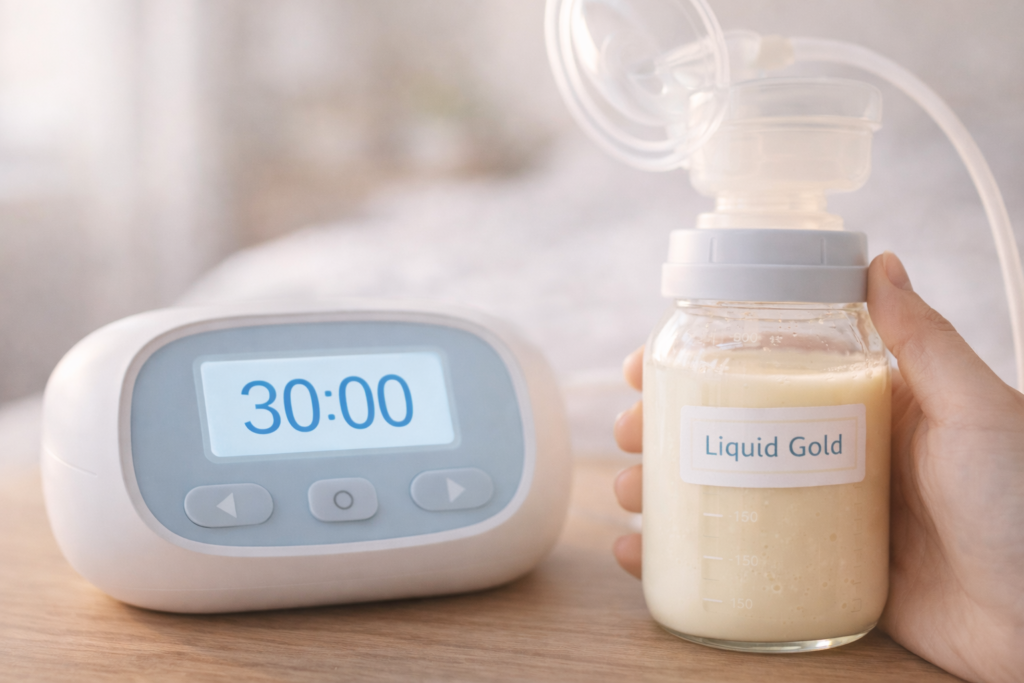
The Results: Moms often report a 2x to 3x increase in daily supply within 48 to 72 hours of doing this once per day. It mimics a “cluster-feeding” baby, sending a powerful signal to your brain to increase production immediately.
This intensive method is a widely recognized strategy by lactation consultants to trigger a prolactin surge. It aligns with the USDA WIC breastfeeding support protocols, which emphasize frequent breast emptying to overcome sudden supply drops.
Transitioning from Pumping to Safe Storage: The 5-5-5 Rule
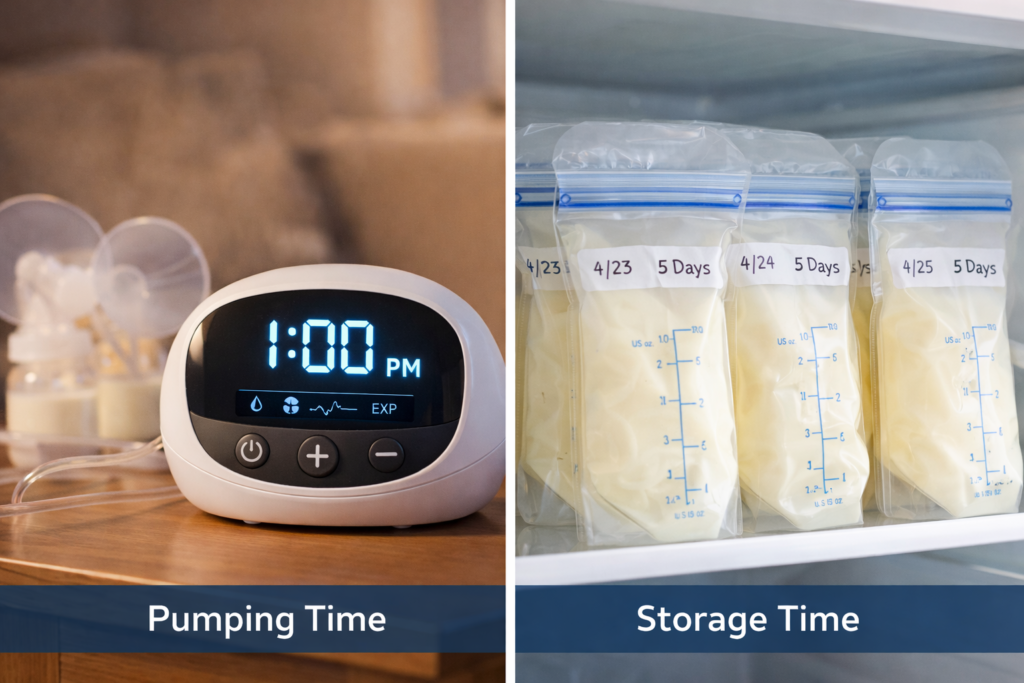
It is important to distinguish between the 555 Pumping Rule and the 5-5-5 Storage Rule. While the pumping rule focus on extraction times (5 AM / 1 PM / 9 PM), the storage rule focuses on the biological shelf life of your milk. Once you have successfully collected your ‘liquid gold,’ the priority shifts from production to safe preservation. To keep your milk free from bacteria, you must follow specific safety windows for room temperature, refrigeration, and freezing.
Common Pumping & Breastfeeding Mistakes (Avoid Supply Drop)
- Skipping early morning pumping sessions reduces total daily supply
- Thinking higher suction increases milk (pain reduces flow)
- Wrong flange size reduces output by up to 20%
- Missing night sessions can permanently lower supply in early months
- Judging supply by pump output instead of baby feeding behavior
Why Trust Fooder Ghor?
At Fooder Ghor, we provide educational resources focused on understanding the safe use, handling, and storage of different types of milk, including breast milk, cow’s milk, goat milk, and raw milk, based on publicly available guidance from trusted sources such as the CDC, FDA, USDA, and AAP. Some milk-related articles, particularly those involving maternal and infant feeding topics, are reviewed for clarity and presentation by nursing students with academic training in maternal and child health to help make information easier to understand. This content is provided for learning purposes only and does not offer medical advice.
FAQs: Common Questions from Moms
Yes! It’s safe and natural. Your baby may just need a few extra minutes to stimulate milk flow.
If you’re building supplies, pump after nursing. If balancing work, stick to your baby’s feeding times.
Absolutely, it’s called simultaneous pumpingand saves time while boosting production.
Go ahead and nurse. Your body adapts quickly and continues producing milk as needed.
Most moms expect a 20-25oz daily total, with 4-6oz coming from the morning session. This schedule mimics infant feeding patterns recommended by the AAP and CDC to maintain a reliable supply.
Conclusion: Trust Your Body’s Natural Rhythm
There’s no strict waiting period between pumping and breastfeeding. Your body naturally adjusts to your baby’s hunger cues. As long as you pump and feed regularly, your supply will remain strong.
Stay hydrated, follow your rhythm, and trust that your body is designed to nourish your baby perfectly — one session at a time.