Skip to content

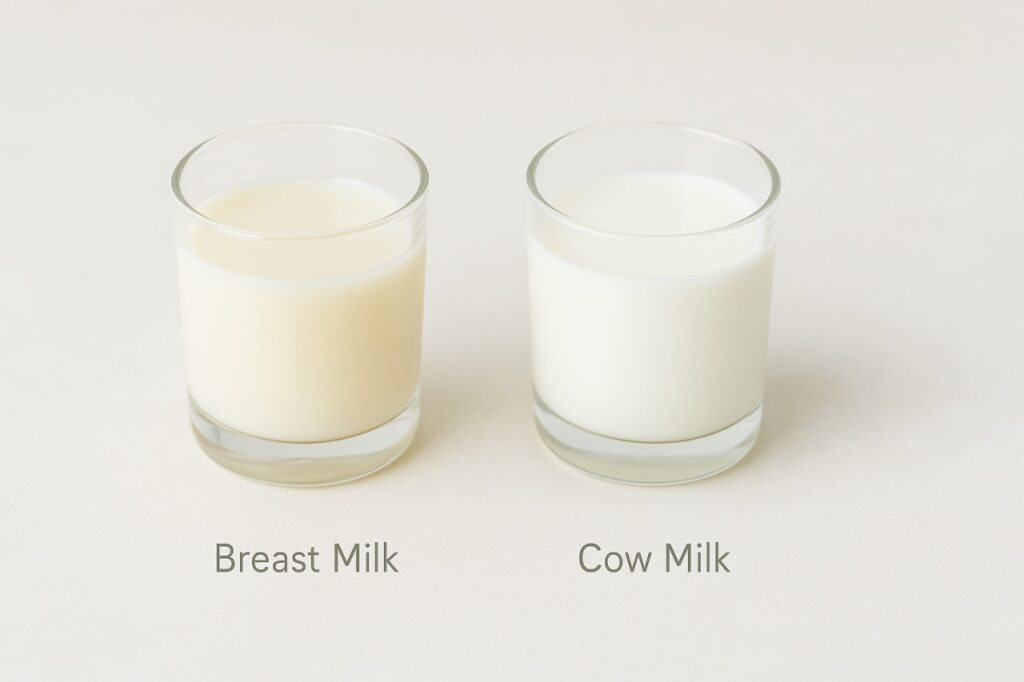
Many parents ask, does breast milk taste like cow milk? Since cow milk is a staple in most U.S. households, it’s natural to use it as a benchmark. However, the short answer is: not exactly. While both provide nourishment, breast milk is a “living food” with a flavor profile that is far more complex and dynamic.
Quick Overview for Busy Parents
Sweetness: Breast milk is significantly sweeter than cow milk due to higher lactose levels.
Consistency: It is thinner and changes texture (foremilk vs. hindmilk) during a single feed.
Dietary Influence: Unlike dairy, the flavor of breast milk changes based on what the mother eats.
Storage Factor: Frozen milk can sometimes develop a soapy taste due to lipase enzymes.
Baby’s Preference: Infants are biologically designed to prefer the unique, sweet taste of human milk.
What Does Breast Milk Actually Taste Like?
When describing the taste of a healthy breast milk, most mothers and experts agree it is surprisingly sweet and creamy.
- What is the taste of a healthy breast milk? It is often described as having a flavor similar to melted vanilla ice cream or very sweet almond milk.
- Does breast milk taste good? To babies, it is perfect! To adults, the high lactose (natural sugar) content makes it taste much sweeter than the store-bought milk we are used to.
- What does breast milk taste like to adults? Most adults find it has a thin, sugary, and slightly metallic or “cereal milk” aftertaste. While some ask does breast milk taste good to adults, it is generally considered an acquired taste since it’s biologically tailored for infants, not grown palates.
👉 If you’re comparing different natural milk flavors, see also What Does Goat Milk Taste Like? for a dairy taste comparison.
Breast Milk vs. Dairy: Is It Like Whole Milk?
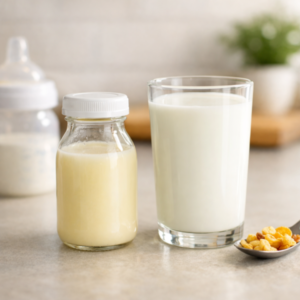
A common question is, does a woman’s breast milk taste like cow’s milk?
- Does breast milk taste like whole milk? No. Whole cow’s milk is heavy, neutral, and has a distinct “animal” undertone. Breast milk is much lighter, thinner, and significantly sweeter.
- Does breast milk taste better than cow milk? This is subjective, but for a baby, breast milk is far superior because it contains the exact balance of fats and sugars they crave.
- Texture Differences: Unlike the uniform thickness of cow milk, breast milk changes from a watery “foremilk” to a rich, fatty “hindmilk” during a single feeding session.
👉 The Centers for Disease Control and Prevention (CDC) also emphasizes that breast milk is perfectly tailored to infants’ nutritional and developmental needs, containing antibodies that protect against infections and diseases — something cow milk cannot provide.
👉 For milk flavor comparison, you can also read our latest guide about What Does Raw Cow Milk Taste Like?
Breast Milk vs. Formula: The Flavor Gap
If you are transitioning between the two, you might wonder, does breast milk taste like formula? Most formulas are designed to mimic human milk, but they often have a metallic or “vitamin-like” smell and taste. Breast milk is much fresher and lacks the processed aftertaste found in many powdered formulas.
👉 According to the La Leche League International (LLLI), human milk’s unique flavor helps babies learn to recognize and enjoy the tastes of their mother’s diet — an important step for later food acceptance.
Why Does the Taste Change? (Diet and Person-to-Person)
One of the most amazing things about human milk is that it is never the same twice.
- Does breast milk taste different from person to person? Yes! Every mother’s milk has a unique “flavor thumbprint” based on her genetics and lifestyle.
- Does breast milk taste different depending on what you eat? Absolutely. Unlike cow milk, which always tastes the same, food changes the taste of breastmilk.
- What foods change the taste of breastmilk? Strong flavors like garlic, onion, cumin, mint, and vanilla can seep into the milk. This is actually a benefit, as it introduces your baby to different flavors early on!
👉 According to the CDC, breast milk composition can reflect maternal diet, which may influence flavor exposure and early taste development in infants.
How to Make Breast Milk Taste Better and Sweeter

If you feel your baby is rejecting your milk, you might wonder how to make tasty breast milk.
- How to make breast milk taste sweet? Focus on a diet rich in natural sugars from fruits (like berries, melons, and apples).
- What to eat to make breast milk taste better? Foods like vanilla, cinnamon, and even mild spices can make the milk more appealing. Staying hydrated is also crucial for maintaining a fresh flavor.
- How to make tasty breast milk? Ensure you are eating a balanced, nutrient-dense diet. A healthy mom usually produces the best-tasting milk.
👉 The CDC explains that maternal nutrition plays a role in breast milk composition, which may influence subtle changes in flavor exposure for infants.
Dealing with Frozen and Stored Milk Flavor
Does frozen breast milk taste different? Often, yes. Many moms notice a “soapy” or “metallic” smell. This is due to lipase, an enzyme that breaks down fats. While safe, some babies dislike it.
👉 You can learn more about infant nutrition in our Breast Milk Storage & Safety Guide.
Can I Drink My Own Breast Milk? Is It Safe for Adults?
Breast milk is safe for adults to consume in small amounts, but it is not designed for adult nutrition
Yes, an adult can drink their own breast milk, and it is generally considered safe, but it is not intended as a nutritional food for adults.
Breast milk is biologically designed for infants, not adults. While it contains nutrients like lactose, fats, and antibodies, its composition is optimized for baby growth and immunity.
Adults may consume it without harm if it is hygienically expressed and stored properly. However, it does not provide any special health benefit compared to regular food or dairy milk.
Medical organizations like the CDC and FDA do not recommend breast milk as a dietary source for adults because it is not nutritionally necessary for them.
👉 Important note: If milk is improperly stored or contaminated, it can carry bacteria just like any other perishable dairy product.
How to make frozen breast milk taste better?
- Try mixing thawed milk with fresh milk to dilute the soapy flavor.
- Scald the milk (heat it until tiny bubbles form, then cool) before freezing to deactivate the lipase.
- Add a drop of alcohol-free vanilla extract (consult your pediatrician first).
Frozen breast milk sometimes changes in flavor and storage quality. To understand proper storage duration and safety, read our guide on How Long Does Breast Milk Last.
Why Trust Fooder Ghor?
At Fooder Ghor, we provide educational resources focused on understanding the safe use, handling, and storage of different types of milk, including breast milk, cow’s milk, goat milk, and raw milk, based on publicly available guidance from trusted sources such as the CDC, FDA, USDA, and AAP. Some milk-related articles, particularly those involving maternal and infant feeding topics, are reviewed for clarity and presentation by nursing students with academic training in maternal and child health to help make information easier to understand. This content is provided for learning purposes only and does not offer medical advice.
FAQs: Common Flavor Questions
A: Yes, many U.S. parents describe it this way because of its high lactose content and creamy texture. It is naturally much sweeter than any animal-based milk you buy at the store.
A: Not exactly overnight, but flavors from your diet (like garlic or vanilla) usually appear in your milk within 2 to 6 hours after consumption. Consistency in eating healthy, sweet fruits will improve the overall taste over a few days.
A: This is caused by high lipase levels, an enzyme that breaks down fats in the milk during storage. While it tastes different, it is completely safe for your baby. Scalding the milk before freezing can prevent this change.
A: Technically, yes. It is a natural human product. However, it is biologically formulated for infants. Adults often find the sweetness overwhelming or the thin consistency unusual compared to cow milk.
A: Most babies actually enjoy the subtle variety! Research suggests that exposing infants to different flavors through breast milk may make them less picky eaters when they start solid foods.
A: Milk composition changes throughout the day. Morning milk is often higher in volume and more hydrating (foremilk), while evening milk tends to be richer in fats (hindmilk), giving it a creamier and more satisfying taste.
Conclusion: A Naturally Unique Experience
So, does breast milk taste like cow milk? While it shares the “milk” name, breast milk is a dynamic, sweet, and personalized food that no farm dairy can replicate. From the food you eat to how you store it, every factor plays a role in its flavor. By understanding what to eat to make breast milk taste better and staying consistent with your habits, you can ensure your baby enjoys every drop of their “liquid gold.”
👉 If you also want to understand milk safety and spoilage signs in detail, read our guide on How to Know If Breast Milk Is Bad? for proper storage awareness.