Skip to content

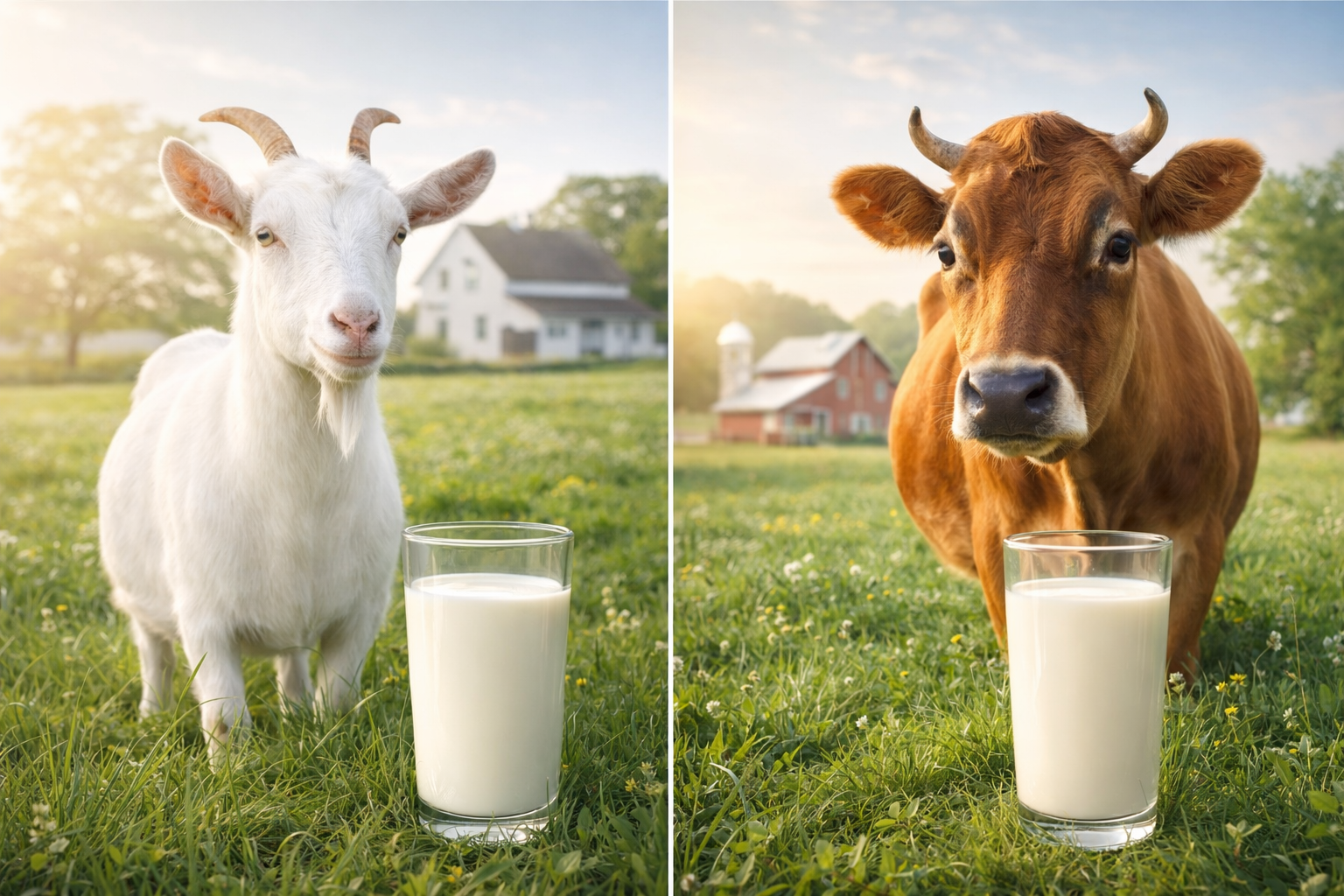
For decades, cow milk has been the staple dairy choice in the United States. However, in 2026, thousands of American parents are exploring goat milk as a gentler, more nutrient-dense alternative. This naturally raises a critical question: What is the real difference between goat milk and cow milk, and which one is better for your household?
While both are dairy products providing essential calcium and protein, they behave very differently once inside the body. From molecular digestion and lactose tolerance to skin health, infant formula, and even the “barnyard” smell, the differences are profound. This comprehensive guide covers everything you need to know to make an informed choice for your family.
Quick Summary:
- Nutrient Profile: Cow milk generally provides significantly higher amounts of certain nutrients like vitamin B12 and iodine, while goat milk contains naturally occurring minerals and a different protein structure.
- Protein and Digestion: Both provide complete dairy protein, but goat milk has smaller casein micelles and smaller fat globules, which some people find easier to digest.
- Taste and Texture: Cow milk has a familiar creamy dairy flavor, while goat milk has a stronger, slightly tangy taste with a naturally rich texture.
- Calcium Content: Both milks provide calcium that supports bone health, although exact amounts vary depending on breed, processing, and product formulation.
- Best Uses: Cow milk is widely used for drinking, coffee, baking, and everyday cooking, while goat milk is often preferred by people seeking an alternative dairy option with a distinct nutritional profile.
- Dietary Choice: Neither milk is universally healthier for everyone. The better choice depends on personal nutrition goals, taste preference, digestive comfort, and dietary needs.
Goat Milk vs Cow Milk: Which Is Healthier?
The quick answer is that goat milk may be a better choice for people who prefer a milk with a different protein structure and naturally smaller fat globules, while cow milk may be better for those looking for a widely available dairy option with a balanced nutrient profile.
Both goat milk and cow milk provide high-quality protein, calcium, vitamins, and minerals. Goat milk contains a unique fat and protein structure that some people may find easier to digest, while cow milk remains a popular everyday choice because of its availability, familiar taste, and strong nutritional value.
The healthier option depends on your individual needs, including digestive tolerance, nutrition goals, taste preference, and dietary requirements. Neither milk is universally better for everyone. If you want to explore the nutritional value of traditional dairy in more detail, check our complete guide on cow milk health benefits and how it supports a balanced diet.
Goat Milk vs Cow Milk Nutrition Facts
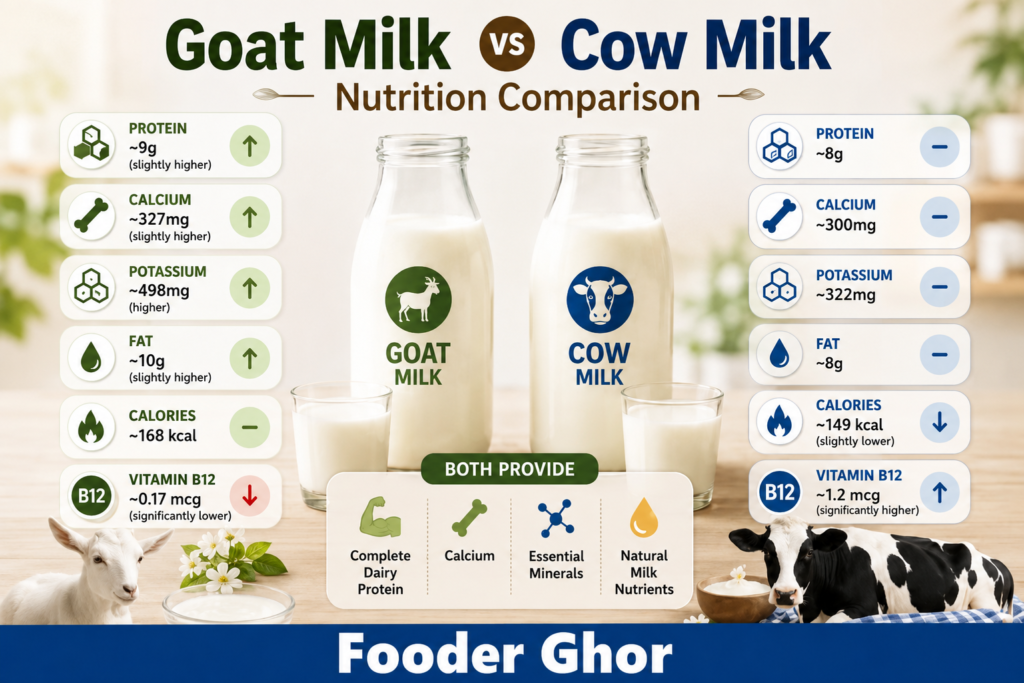
Comparing goat milk vs cow milk nutrition facts reveals that both beverages are nutrient-dense dairy products containing protein, calcium, phosphorus, potassium, and essential vitamins.
Cow milk is the most commonly consumed dairy milk worldwide and is widely available in different varieties, including whole, reduced-fat, and skim options. Goat milk provides a similar nutritional foundation but differs in its protein structure, fat composition, and mineral balance.
The exact nutrition values can vary based on factors such as animal breed, farming practices, processing methods, and whether the milk is whole or reduced-fat. For a detailed breakdown of goat milk calories, protein, vitamins, minerals, and overall nutritional value, explore our guide on goat milk nutrition facts.
Goat Milk vs Cow Milk Nutrition Chart
| Nutrient (per cup) | Goat Milk | Cow Milk | Comparison |
|---|---|---|---|
| Calories | ~168 kcal | ~149 kcal | Cow milk slightly lower |
| Protein | ~9 g | ~8 g | Goat milk slightly higher |
| Fat | ~10 g | ~8 g | Goat milk slightly higher |
| Calcium | ~327 mg | ~300 mg | Goat milk slightly higher |
| Vitamin B12 | ~0.17 mcg | ~1.2 mcg | Cow milk significantly higher |
| Potassium | ~498 mg | ~322 mg | Goat milk higher |
| Lactose | ~11 g | ~12 g | Goat milk slightly lower |
👉 According to the USDA Food Data Central, goat milk naturally provides a higher concentration of certain minerals compared to traditional dairy.
Goat Milk vs Cow Milk Protein
When comparing goat milk vs cow milk protein, both provide high-quality complete dairy protein containing all essential amino acids needed by the body. The main difference is not the protein quality, but the amount and structure of the proteins found in each milk.
Goat milk typically contains slightly more protein per cup than cow milk, while both remain excellent sources of complete animal protein. Goat milk also has a different casein structure, with smaller casein micelles that may form a softer curd during digestion compared with traditional cow milk.
Cow milk provides a similar high-quality protein profile and is widely consumed because it offers consistent nutrition, availability, and versatility in daily diets. For muscle support, growth, and overall nutrition, both goat milk and cow milk can be valuable protein sources. The better choice depends on individual preference, digestive tolerance, and overall dietary needs.
To understand the complete nutritional profile of cow milk, including its protein, vitamins, minerals, and calories, explore our guide on cow milk nutrition facts.
Goat milk vs cow milk calcium: Which is Better?
Goat milk and cow milk both provide calcium, but the exact amount can vary depending on processing, breed, and product type.
Goat milk may contain slightly higher calcium levels per serving in some comparisons, while cow milk remains a reliable calcium source and is widely consumed worldwide. Both can contribute to bone health as part of a balanced diet.
According to USDA FoodData Central, the calcium content of goat milk and cow milk can vary depending on product type and serving size. Both provide calcium that supports bone health as part of a balanced diet.
Goat Milk vs Cow Milk Calories
When comparing goat milk vs cow milk calories, both provide a similar amount of energy because they are nutrient-rich dairy beverages containing natural milk fat, protein, and carbohydrates. The exact calorie content can vary depending on whether the milk is whole, reduced-fat, or skim.
A typical cup of whole goat milk contains around 168 calories, while a cup of whole cow milk provides approximately 149 calories. Goat milk is slightly higher in calories because it generally contains a little more fat and protein per serving.
For people trying to manage calorie intake or support weight loss goals, cow milk may offer a slightly lower-calorie option, especially when choosing low-fat or skim varieties. However, goat milk can be a suitable choice for those who prefer its richer texture and higher nutrient density.
Ultimately, neither milk is automatically better based only on calories. The best choice depends on your overall diet, energy needs, and nutritional goals. For a deeper understanding of natural dairy nutrition and how milk composition can vary, explore our guide on raw milk nutrition facts.
Goat Milk vs Cow Milk Taste Comparison
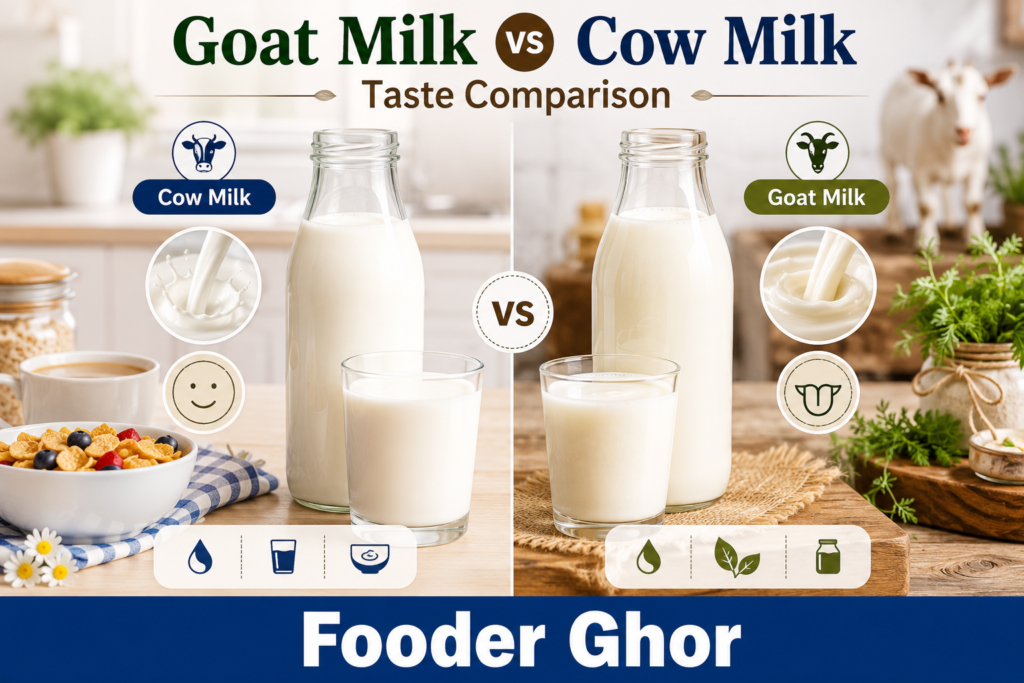
When comparing goat milk vs cow milk taste, the biggest difference comes from their natural flavor profile and fat composition. Cow milk has a familiar, mild, and creamy dairy taste, while goat milk has a richer flavor with a slightly tangy and earthy note.
Cow milk is the traditional dairy flavor most people are familiar with, making it a popular choice for drinking, coffee, cereal, and everyday cooking. Its smooth and mild taste blends easily with other foods without adding a strong flavor.
Goat milk has a naturally creamy texture but often has a more noticeable taste compared with cow milk. Some people describe it as slightly sweet, nutty, or earthy, while others may find the flavor stronger because of its unique fatty acid composition.
Taste preference is highly individual. People who prefer a classic dairy flavor may enjoy cow milk more, while those looking for a richer and more distinctive milk experience may prefer goat milk. Both can be used in beverages, baking, and cooking depending on personal taste preferences.
👉 If you are new to goat dairy, understanding what does goat milk taste like? can help set realistic expectations.
Goat Milk vs Cow Milk Coffee and Tea Comparison
When comparing goat milk vs cow milk for coffee and tea, both can create creamy and satisfying beverages, but their flavor impact is different. Cow milk is better suited for people who prefer a classic, smooth dairy taste, while goat milk is a good choice for those who enjoy a richer texture with a more noticeable dairy flavor.
Cow milk blends easily into coffee and tea because of its mild taste and balanced creamy texture. It helps create familiar beverages like lattes, milk tea, and cappuccinos without significantly changing the original flavor of the drink.
Goat milk can add extra richness and a naturally creamy mouthfeel to hot beverages. However, its slightly stronger and more distinctive flavor may be noticeable in lighter coffees or delicate teas. Some people enjoy this unique taste, while others may prefer the neutral profile of cow milk.
| Coffee & Tea Use | Goat Milk | Cow Milk |
|---|---|---|
| Coffee | Creates a rich, creamy drink with a stronger dairy character | Provides a smooth, traditional coffee flavor |
| Tea | Adds richness but may slightly change the original tea taste | Blends easily with classic milk tea recipes |
| Frothing | Can produce creamy foam depending on fat and protein content | Commonly preferred for steaming and latte-style drinks |
Overall, cow milk is often the better choice for traditional coffee and tea because of its familiar taste and versatility, while goat milk can be preferred by those looking for a richer and more distinctive beverage experience. The better option depends mainly on personal taste preference and the flavor profile you want in your drink.
If you prefer exploring homemade milk alternatives, learn how to make almond milk at home with simple ingredients and preparation steps.
Goat Milk vs Cow Milk Baking and Smoothies
Cow milk is generally better for traditional baking because of its familiar flavor and consistent performance, while goat milk can be a good option for smoothies and recipes where a richer texture and unique dairy taste are preferred.
In baking, cow milk works well in cakes, bread, pancakes, and other recipes because its mild flavor blends easily with other ingredients. Its widely available fat and protein balance helps maintain moisture, texture, and the expected taste of classic baked goods.
Goat milk can also be used in baking and may add extra creaminess and a slightly distinctive flavor. However, its stronger taste may be noticeable in delicate recipes where a neutral dairy flavor is preferred.
For smoothies, goat milk can create a naturally rich and creamy texture, while cow milk provides a familiar dairy base with balanced protein and nutrients. The better choice depends on whether you prefer a traditional taste or a more unique flavor profile.
| Application | Goat Milk | Cow Milk |
|---|---|---|
| Baking Performance | Adds richness with a slightly distinctive flavor | Provides a classic taste and reliable texture |
| Smoothie Consistency | Creates a creamy, nutrient-rich texture | Delivers a smooth and familiar dairy base |
| Flavor Impact | Stronger dairy character | Mild flavor that blends easily |
Overall, cow milk is often the preferred choice for classic baking recipes, while goat milk can be a suitable alternative for smoothies and baked foods where a richer and different flavor experience is desired.
Goat Milk vs Cow Milk Weight Loss
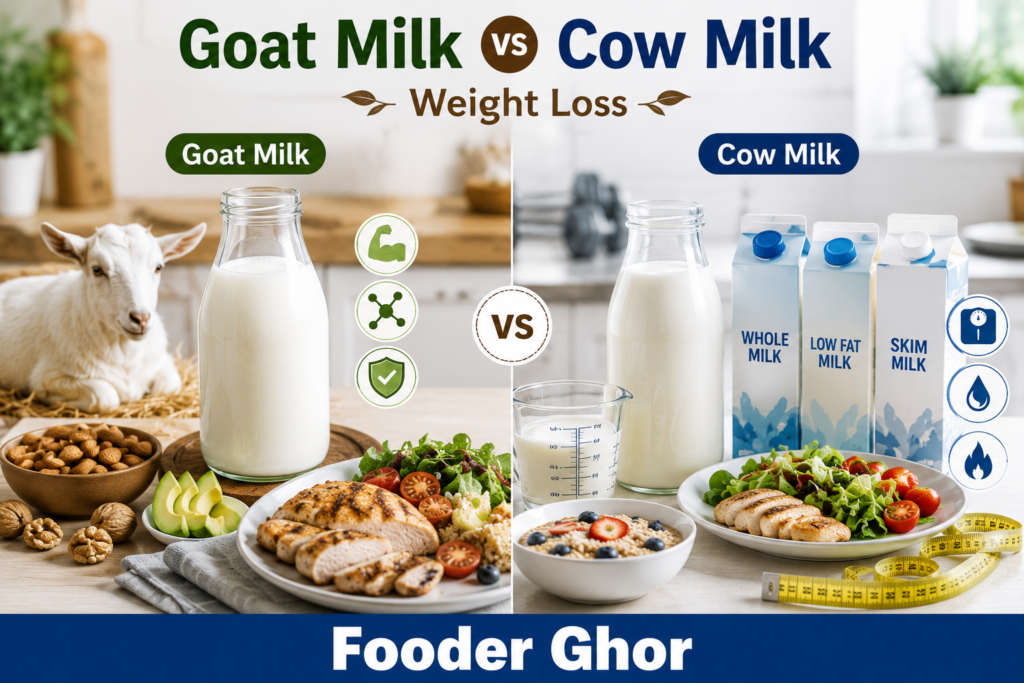
Cow milk may be a better choice for weight loss when choosing lower-calorie varieties, while goat milk can support weight management by providing slightly higher protein and a more nutrient-dense option.
Both goat milk and cow milk can be included in a balanced weight loss diet because they provide protein that helps support fullness and muscle maintenance. However, the calorie difference between them is usually small and depends on the type of milk you choose.
Goat milk generally contains slightly more calories and fat per serving compared with whole cow milk, which may make it more suitable for people who need extra energy rather than strict calorie reduction. Cow milk offers more variety, including low-fat and skim options, making it easier to reduce daily calorie intake.
| Weight Loss Factor | Goat Milk | Cow Milk |
|---|---|---|
| Calories | Slightly higher in whole milk form | Lower calorie options available |
| Protein | Provides high-quality protein for fullness | Provides complete protein with balanced nutrition |
| Fat Content | Naturally richer fat profile | Available in whole, low-fat, and skim varieties |
| Best Choice | People needing nutrient-dense dairy | People focusing on calorie control |
Overall, cow milk is often the more practical choice for weight loss because of its low-fat varieties and calorie flexibility, while goat milk can still fit into a healthy weight management plan when portion size and total calorie intake are considered.
For proper handling and freshness after purchase, learn more about how to store cow milk safely and maintain its quality during refrigeration.
Goat Milk vs Cow Milk for Diabetes
Cow milk may be a better choice for people managing diabetes when choosing low-fat and unsweetened options, while goat milk can also be included as part of a balanced diet because it provides protein and essential nutrients.
Both goat milk and cow milk contain natural lactose, which is a type of carbohydrate that can affect blood glucose levels. The impact depends on the serving size, overall diet, and individual response rather than the type of milk alone.
Cow milk is available in various forms, including low-fat and reduced-fat options, which can help people better manage calorie and saturated fat intake. Goat milk provides similar dairy nutrients but may contain slightly different fat and protein characteristics that some individuals prefer.
| Diabetes Consideration | Goat Milk | Cow Milk |
|---|---|---|
| Carbohydrates | Contains natural lactose | Contains natural lactose |
| Protein | Provides complete dairy protein | Provides complete dairy protein |
| Calorie Control | Whole goat milk may be slightly higher in calories | Low-fat varieties offer more calorie flexibility |
| Best Choice | Suitable when portion size is monitored | More options available for diabetes-friendly meal planning |
Overall, neither goat milk nor cow milk is automatically better for diabetes. The better choice depends on portion control, overall carbohydrate intake, and selecting a milk option that fits an individual’s dietary goals.
According to the American Diabetes Association, managing diabetes involves considering total carbohydrate intake, portion sizes, and overall eating patterns rather than focusing on a single food alone.
Goat Milk vs Cow Milk for IBS and Kidney Health
Goat milk may be preferred by some people with digestive sensitivity because of its different protein and fat structure, while cow milk remains a common dairy choice with a well-established nutritional profile. However, both contain lactose and may affect people with IBS differently.
For IBS, individual tolerance is the most important factor. Some people may find goat milk easier to tolerate, but it is not lactose-free and may still trigger symptoms in sensitive individuals. Cow milk can also cause digestive discomfort for people who have lactose intolerance or dairy sensitivity.
For kidney health, both milks provide nutrients like calcium and protein, but people with kidney conditions may need personalized dietary guidance based on their health status.
Overall, the better choice depends on individual tolerance, kidney health needs, and guidance from a healthcare professional when necessary. According to NIDDK, digestive symptoms related to IBS and lactose intolerance can vary from person to person, so individual tolerance is an important factor. People with kidney conditions may need personalized dietary guidance based on their health needs.
If you want to compare different dairy options with unique protein structures, explore our guide on A2 milk vs goat milk health benefits and how they differ in digestion, nutrition, and overall dairy value.
Goat Milk vs Cow Milk Cholesterol and Heart Health
Cow milk may offer more options for managing cholesterol intake because low-fat varieties are widely available, while goat milk provides a similar dairy nutrient profile but is often naturally richer in fat.
Whole goat milk and whole cow milk both contain saturated fat, which may affect cholesterol levels when consumed in excess. Goat milk contains a different fat composition with smaller fat globules, while cow milk is available in more varieties, including reduced-fat and skim options.
For heart health, choosing lower-fat versions, controlling portion sizes, and maintaining an overall balanced diet are more important than choosing one milk type over the other. According to American Heart Association, choosing healthier fat sources, limiting saturated fat intake, and maintaining a balanced diet can support heart health. The best milk choice depends on individual dietary needs and overall eating patterns.
Overall, the better choice depends on your fat intake goals, dietary pattern, and individual heart health needs. For a better understanding of possible digestive, allergy, and dietary concerns related to dairy consumption, explore our guide on cow milk health side effects.
Goat Milk vs Cow Milk for Baby and Pregnancy
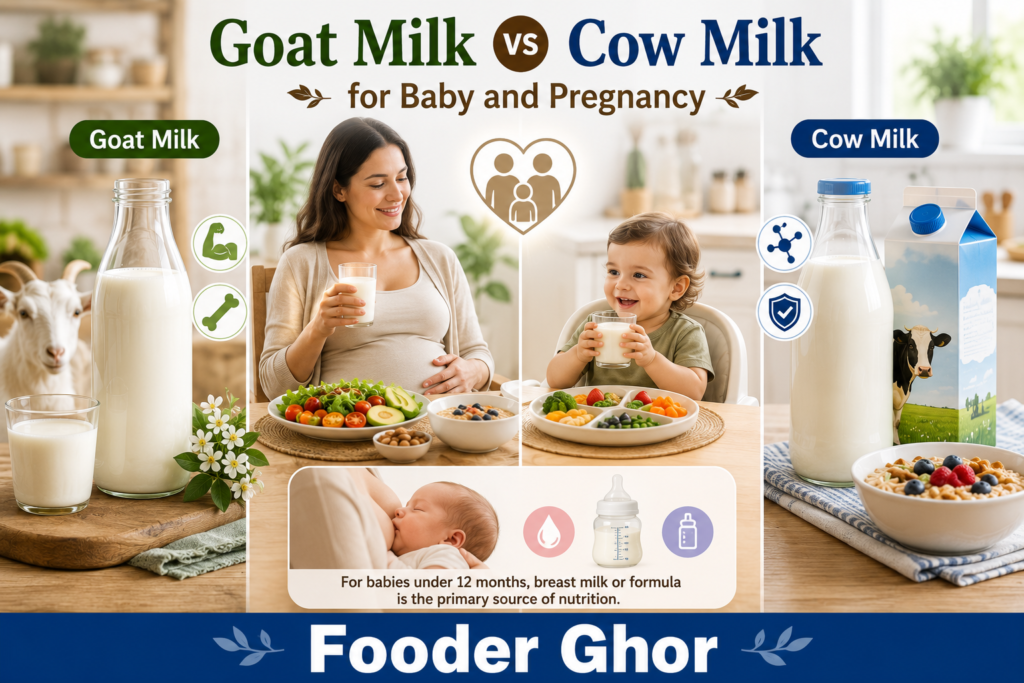
Cow milk is generally the more common choice during pregnancy and after infancy because of its availability and established nutritional role, while goat milk can provide similar dairy nutrients but is not automatically a better option.
During pregnancy, both goat milk and cow milk can provide important nutrients like protein, calcium, and other minerals. The best choice depends on overall diet, nutritional needs, and individual tolerance.
For babies, neither goat milk nor cow milk should replace breast milk or infant formula during the first 12 months unless recommended by a healthcare professional. After 12 months, milk choices can be included as part of a balanced diet based on a child’s nutritional needs.
Overall, cow milk is often preferred for everyday family use, while goat milk may be an alternative dairy option for families who prefer its taste or tolerate it well. According to American Academy of Pediatrics, cow’s milk and other milk beverages should not replace breast milk or infant formula during the first 12 months. After 12 months, milk can be included as part of a balanced diet based on a child’s nutritional needs.
Goat Milk vs Cow Milk for Skin and Face
Goat milk may be preferred by some people because of its unique nutrient profile and creamy texture, while cow milk provides familiar dairy nutrients that can also support overall nutrition related to healthy skin.
Both goat milk and cow milk contain nutrients such as protein, vitamins, and minerals that contribute to a balanced diet. There is currently no strong clinical evidence showing that drinking goat milk is consistently better than cow milk for skin health or acne prevention.
Goat milk contains a different protein and fat structure, while cow milk is widely consumed and provides nutrients like protein and vitamin B12 that support normal body functions.
Overall, skin health depends more on overall diet, hydration, lifestyle, and individual response than choosing goat milk or cow milk alone. If you are interested in plant-based options for skin-focused nutrition, explore our guide on rice milk benefits for skin and how its nutrients can support a balanced diet.
Goat Milk vs Cow Milk for Lactose Intolerance
Goat milk and cow milk both contain lactose, but some people may find goat milk easier to tolerate because of differences in its protein and fat structure. However, goat milk is not a lactose-free alternative.
For people with lactose intolerance, the amount of lactose and individual digestion ability are the main factors that determine tolerance. Goat milk contains slightly less lactose than cow milk, but the difference is not enough to make it suitable for everyone with lactose intolerance.
Cow milk remains a common dairy choice, and many people with lactose intolerance can tolerate small amounts or choose lactose-free dairy products. Overall, neither goat milk nor cow milk is a guaranteed better option for lactose intolerance. Individual tolerance and portion size play the biggest role.
According to NIDDK Lactose Intolerance Information, people with lactose intolerance may experience digestive symptoms because their bodies have difficulty digesting lactose. Tolerance levels can vary from person to person.
If you are looking for a lactose-free dairy alternative, explore our guide on almond milk vs cow milk to understand their differences in nutrition, digestion, and everyday use.
Goat Milk vs Cow Milk Storage & Shelf Life Comparison
| Storage Stage | Goat Milk | Cow Milk |
|---|---|---|
| Unopened (Refrigerated) | Usually stays fresh until the expiration date when properly refrigerated | Usually stays fresh until the expiration date when properly refrigerated |
| After Opening (Refrigerated) | Best used within about 5–7 days for freshness | Best used within about 5–7 days for freshness |
| Room Temperature | Should not be left out for extended periods | Should not be left out for extended periods |
| Frozen Storage | Can be frozen, but texture may change after thawing | Can be frozen, but texture may slightly change after thawing |
Both goat milk and cow milk require proper refrigeration to maintain freshness and reduce the risk of spoilage. Storage time can vary depending on pasteurization, packaging, handling, and refrigerator temperature.
For detailed storage guidelines, refrigeration tips, and freshness timelines, explore our complete guide on goat milk storage and shelf life.
Goat Milk vs Cow Milk Price Comparison
Cow milk is generally more affordable and widely available, while goat milk is usually more expensive because of lower production volume, farming costs, and limited availability.
Cow milk is produced on a larger scale worldwide, making it easier to find in supermarkets at a lower price. It is available in many varieties, including whole, low-fat, and skim options, which gives consumers more choices based on budget and nutrition goals.
Goat milk often costs more because goat farming typically has smaller production systems, and the milk is considered a specialty dairy product in many markets. The price can also vary depending on whether it is fresh, organic, or locally produced.
| Price Factor | Goat Milk | Cow Milk |
|---|---|---|
| Average Cost | Usually higher | Usually lower |
| Availability | More limited | Widely available |
| Product Variety | Fewer options | More varieties available |
| Best Value | For those who prefer goat milk benefits and taste | For affordable everyday dairy use |
Overall, cow milk is the more budget-friendly choice for regular household use, while goat milk may be worth the higher price for people who specifically prefer its taste, texture, or nutritional profile. For more information about maintaining freshness and quality after purchase, explore our guide on goat milk storage tips and proper handling methods.
Goat Milk vs Cow Milk: Which Is Better for You?
Goat milk may be a better fit for people who prefer a richer flavor and unique dairy composition, while cow milk may be a better choice for those looking for a familiar, affordable, and widely available option.
Both milks provide quality protein, calcium, vitamins, and minerals. The better choice depends on personal preferences, digestive tolerance, nutrition goals, and lifestyle needs.
Choose goat milk if you prefer:
- A richer and more distinctive dairy taste
- A different protein and fat profile
- An alternative to traditional cow milk
Choose cow milk if you prefer:
- A familiar dairy flavor
- More options like whole, low-fat, and skim milk
- An affordable everyday milk choice
Overall, both goat milk and cow milk can be healthy options when they fit your individual dietary needs. If you are interested in exploring other types of nutrient-rich dairy, learn more about camel milk health benefits and its unique nutritional profile.
Who Should Choose Which Milk?
Who Should Choose Goat Milk?
- Prefer a richer and distinctive milk flavor
- Want an alternative dairy option
- Prefer its different protein and fat structure
- Enjoy a creamier texture
Who Should Choose Cow Milk?
- Prefer familiar dairy taste
- Need widely available milk options
- Want more variety (whole, low-fat, skim)
- Prefer an everyday family milk choice
Goat Milk vs Cow Milk Digestion
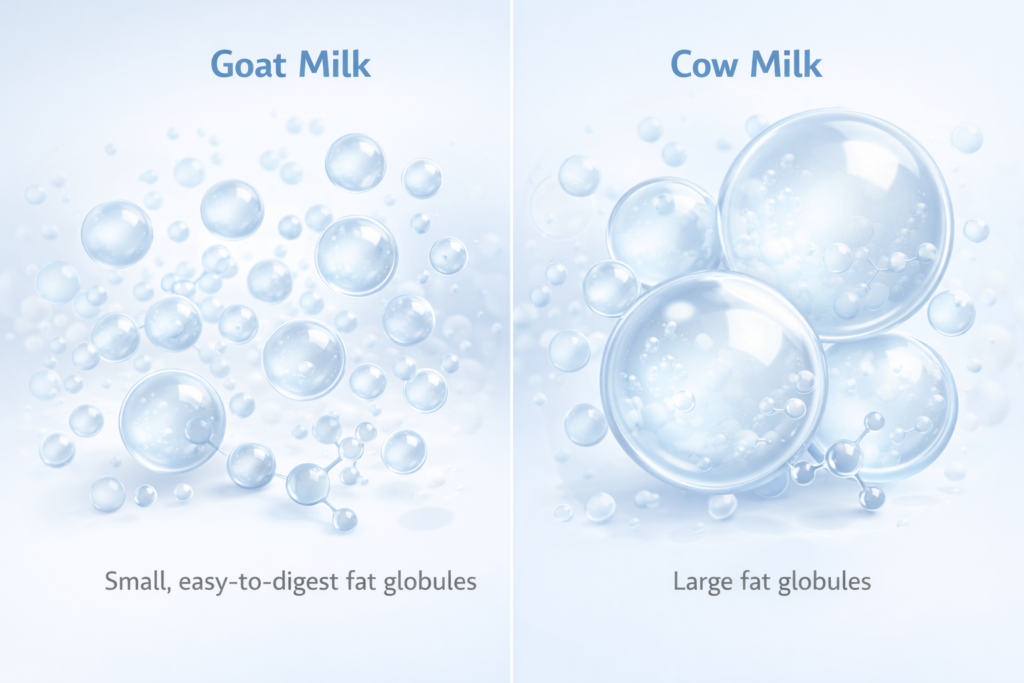
Some people report that goat milk feels easier to digest because of differences in its fat globules and protein structure. However, individual tolerance varies, and both goat milk and cow milk contain lactose.
Both milks contain lactose, so neither is automatically easier for everyone. Digestive response depends on individual tolerance, lactose sensitivity, and overall diet.
| Digestion Factor | Goat Milk | Cow Milk |
|---|---|---|
| Fat Structure | Smaller fat globules | Larger fat globules |
| Lactose | Contains lactose | Contains lactose |
| Individual Response | Some people prefer its texture | Many people tolerate it well |
Overall, the better option depends on personal digestion and tolerance rather than choosing one milk as universally easier to digest.
👉 Parents who want deeper insight into digestion, skin support, and immunity can explore the full health benefits of goat milk explained in our detailed guide.
Why Trust Fooder Ghor?
At Fooder Ghor, we provide comprehensive, research-backed educational resources on all types of milk including breast milk, dairy (cow, goat, camel, sheep, buffalo), and plant-based alternatives (oat, soy, almond). Our guides cover everything from nutrition, taste, and health benefits to proper storage, shelf life, and safety handling, aligned with official guidance from the CDC, FDA, USDA, and AAP. To maintain the highest standards of scientific accuracy, this article has been medically reviewed by a Public Health Expert (MPH). This content is for educational purposes only and does not substitute for professional medical advice.
Frequently Asked Questions
Goat milk and cow milk are both nutritious dairy options. Goat milk has a different protein and fat structure that some people find easier to digest, while cow milk is widely available and provides substantially more vitamin B12 (nearly 7 times the amount found in goat milk). The better choice depends on individual nutrition needs and digestive tolerance.
A: In general, goat milk contains slightly more calcium per cup than whole cow milk, although the exact amount varies by product and processing. USDA FoodData Central lists approximately 327 mg for whole goat milk and about 300 mg for whole cow milk.
Nubian milk is significantly creamier (6% butterfat) than standard cow milk.
Yes, both work well for baking, though goat milk adds a richer, creamier texture.
Conclusion
Goat milk and cow milk are both nutrient-rich dairy choices that provide complete protein, calcium, vitamins, and minerals.
Goat milk has a different protein and fat structure that some people may find easier to digest, while cow milk remains an affordable, widely available source of dairy nutrition with Significantly higher vitamin B12 content, providing nearly seven times more than goat milk.
The better choice depends on your taste preference, digestive tolerance, nutrition goals, and overall dietary needs rather than one milk being universally healthier than the other.
If you are comparing dairy and plant-based milk options, explore our guide on soy milk vs cow milk to understand their differences in nutrition, taste, and everyday use.