Skip to content
Why U.S. Moms Ask About Freezing Goat Cheese
If you have ever found yourself with a surplus of delicious chèvre and wondered, Can you freeze goat cheese?, the answer is a resounding yes. For many U.S. moms, freezing is the ultimate hack to save money and cut kitchen waste while ensuring a steady supply of cheese for family meals. However, while it is safe to do so, maintaining that signature creamy texture requires a specific approach to avoid the common pitfall of crumbly, dry cheese.
While freezing is a brilliant solution for long-term storage, it may not be necessary if you plan to use your cheese within the week. For immediate use, understanding the daily refrigeration safety window is key; you can check our Goat Cheese Shelf Life & Fridge Storage Guide for those specific timelines.
In this guide, you’ll learn how to freeze and thaw goat cheese safely, with a focus on texture preservation and freezer best practices, based on trusted U.S. food safety standards from the USDA and insights from the Good Housekeeping Institute.
If you also store goat milk at home, check out our full guide on how to freeze goat milk safely for longer use.
Quick Summary: Can You Freeze Goat Cheese?
-
Yes, You Can Freeze: Goat cheese is freezer-safe for 2–6 months, depending on the variety (soft vs. hard).
-
Texture Changes: Expect soft chèvre to become slightly crumbly; semi-hard types hold their texture much better.
-
Thawing Process: Always thaw overnight in the fridge to prevent bacterial growth and maintain quality.
-
Restoration Hack: Use the “Whipping Method” (adding a splash of milk/cream) to restore smoothness to thawed soft cheese.
-
Best Use: Thawed goat cheese performs best in cooked dishes like pastas, quiches, or sauces where it can melt evenly.
Can You Freeze Goat Cheese? Freezing, Texture & Thawing Visual Guide
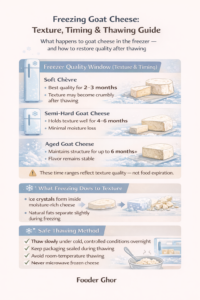
This visual explains what happens when you freeze goat cheese. If you’re looking for refrigerator storage timelines or proper storage methods, explore our other guides.
How to Store Goat Cheese Properly Before Freezing
Proper storage keeps goat cheese fresh, moist, and odor-free.
Before freezing, proper refrigeration is essential to maintain goat cheese quality. Due to its high moisture content, goat cheese can dry out quickly or absorb strong odors if not stored correctly.
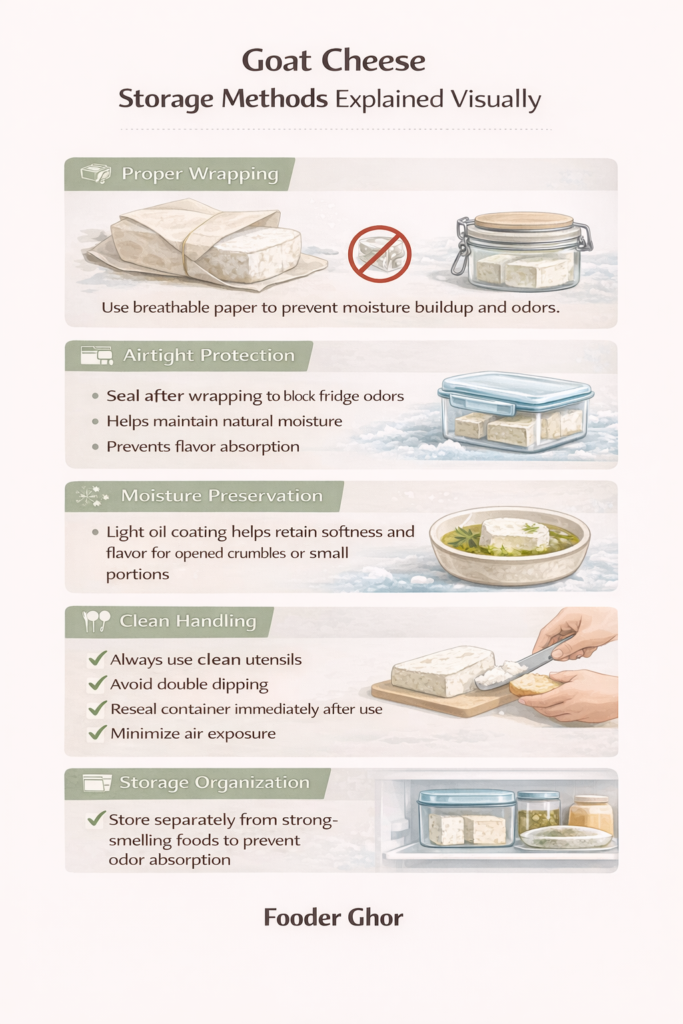
To keep it fresh, always wrap the cheese in parchment or wax paper instead of plastic wrap. This allows the cheese to breathe and prevents trapped gases that can cause sour smells. After wrapping, place it in an airtight container or glass jar to protect it from odor contamination.
For best results, store goat cheese in the vegetable drawer where temperature and humidity remain stable around 39°F (4°C).
How to Store Goat Cheese Properly: Visual Storage Best Practices
Understanding Goat Cheese Types Before Freezing
Not all goat cheese freezes the same way and knowing the difference helps you keep the right texture.
Soft, spreadable cheeses like chèvre are rich in moisture, which means they can become slightly crumbly after thawing. Semi-hard and aged goat cheeses, on the other hand, freeze beautifully and retain their texture and flavor for months.
For best results:
- Freeze soft chèvre for up to 2–3 months.
- Store semi-hard cheese for 4–6 months.
- Keep aged goat cheese frozen for up to 6 months or longer without major flavor loss.
👉 Always freeze cheese while it’s still fresh. Waiting too long reduces both quality and taste. These time ranges refer to texture quality during freezing, not overall expiration or refrigerator safety. For complete shelf life guidance outside the freezer, see our guide on How Long Does Goat Cheese Last.
Advanced Storage Methods to Extend Freshness
Oil or brine storage can extend freshness and protect texture.
For longer freshness, advanced storage methods like oil preservation or light brine can help maintain moisture and flavor.
Submerging goat cheese in olive oil creates a barrier that protects it from air exposure and slows down drying. This method also enhances flavor when herbs are added.
For semi-hard varieties, storing in a light saltwater brine helps maintain internal moisture and prevents the cheese from becoming chalky.
How to Store Crumbled Goat Cheese Without Drying Out
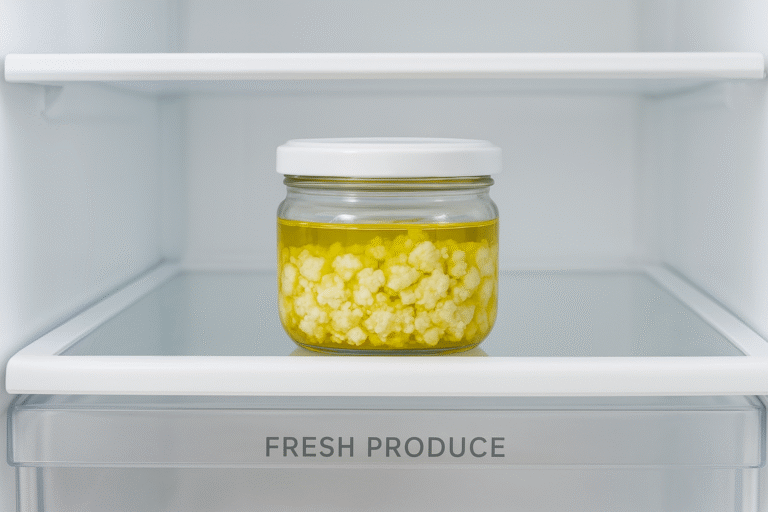
Crumbled goat cheese dries fast and needs airtight moisture control.
Once opened, crumbled goat cheese loses moisture quickly. To keep it fresh, transfer it to a small airtight glass container.
Adding a light drizzle of olive oil over the surface helps lock in moisture and prevent drying. Store it at the back of the fridge instead of the door to maintain consistent temperature.
This method keeps crumbles fresh and creamy for up to 7–10 days. To see how refrigeration habits influence freshness and safe handling, explore our in-depth fridge care guide.
How to Freeze Goat Cheese Like a Pro
Freezing works best when cheese is stored properly beforehand.
Proper storage before freezing helps prevent moisture loss and texture damage. If goat cheese is already drying out or exposed to air, freezing will worsen the texture and flavor after thawing.
Always ensure the cheese is freshly wrapped and properly sealed before placing it in the freezer.
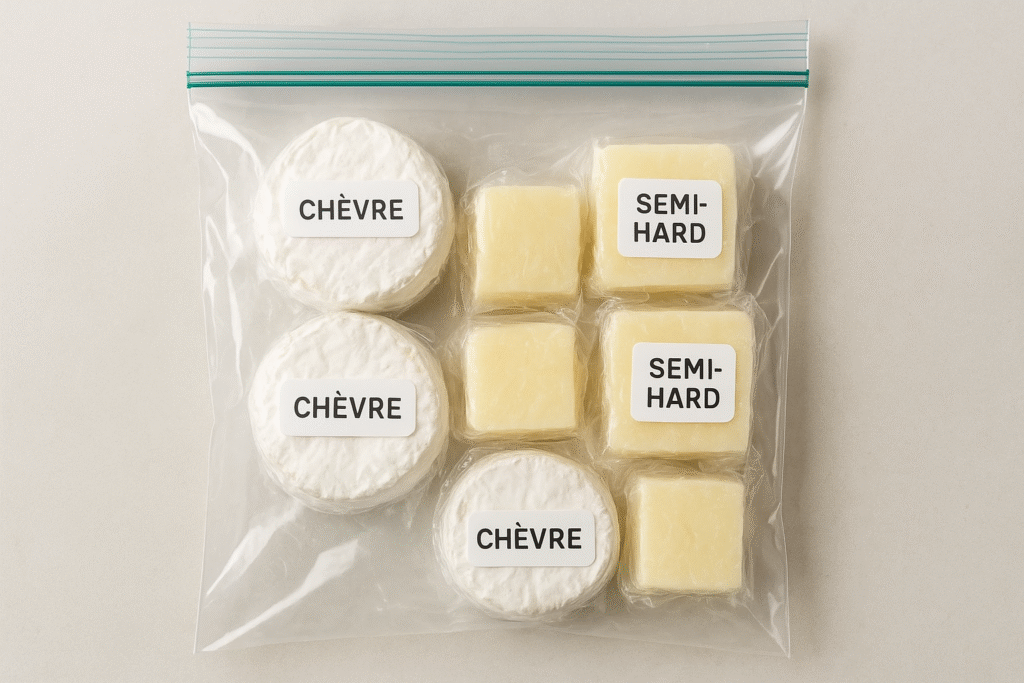
Freezing cheese properly helps lock in flavor and texture. Here’s the step-by-step process U.S. moms swear by:
- Divide into portions: Slice or cube cheese into small, one-meal servings.
- Wrap securely: Use cling wrap, then seal inside a freezer-safe bag or airtight container.
- Label clearly: Include the cheese type and date — just like you would when labeling frozen breast milk or leftovers.
- Freeze fast: According to the USDA Food Safety and Inspection Service (FSIS), keeping your freezer at a consistent 0°F (-18°C)is essential to keep food safe indefinitely by deactivating any bacteria,yeasts,and molds.Place the cheese in the coldest part of your freezer for the best preservation of its molecular structure.
Pro Tip for Moms: Freezing is only effective if your initial storage steps were handled correctly. Before you begin the freezing process, ensure your cheese was wrapped and sealed to prevent oxidation and freezer burn.
The Right Way to Thaw Goat Cheese
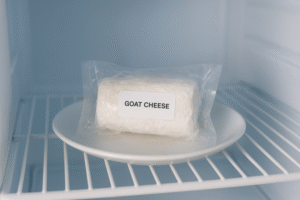
When you’re ready to use your cheese, thaw it gently — not fast. Move it from the freezer to the fridge and let it rest overnight.
If you’re in a hurry, place the sealed package in cool (not hot) water for 30–60 minutes. Avoid microwaving or heating directly, as that can damage both nutrients and texture.
Once thawed, goat cheese should be consumed within 3–4 days, and never refrozen. Thawed cheese spoils faster than fresh cheese. For clear refrigerator handling rules and freshness timing, review our detailed fridge safety guide.
Proper storage after thawing prevents quick spoilage and waste.
After thawing, goat cheese should always be stored in airtight containers and consumed within a few days. Improper handling after thawing can lead to faster spoilage compared to fresh cheese.
Expert Tips: Restoring Creamy Texture After Freezing

One of the biggest concerns for U.S. moms is the crumbly texture that occurs after thawing. To bring your goat cheese back to its original velvety state, follow this restoration hack:
-
The Whipping Method: Once thawed, place the cheese in a small bowl. Add a teaspoon of full-fat cream or a small splash of warm dairy liquid to help rebind the fats naturally. Use a fork or a small whisk to gently whip the mixture until the crumbles re-incorporate into a smooth paste.
-
The Warm Bath: If the cheese feels too firm, Always keep the container sealed during warming to prevent moisture or bacteria exposure to soften the dairy fats before mixing.
-
Best Use for Thawed Cheese: While restored cheese works for spreads, it performs best in warm recipes like stuffed chicken breasts, quiches, or creamy pasta sauces, where gentle heat helps stabilize texture after freezing.
👉 According to USDA Food Safety recommendations, cheese frozen for up to six months remains safe if stored in airtight conditions, though the best taste is within the first few months. The Good Housekeeping Institute also confirms that semi-hard and aged varieties hold up better than soft ones during freezing.
Common Mistakes to Avoid
❌ Freezing cheese without wrapping — leads to freezer burn.
❌ Keeping it near strong-smelling foods — absorbs unwanted odors.
❌ The CDC and USDA strictly warn against thawing perishable foods like soft cheese on the counter. Room temperature falls within the “Danger Zone” (40°F – 140°F), where bacteria can multiply rapidly. Always thaw in the refrigerator.
❌This ruins the texture permanently. FDA food safety principles suggest that once a food is thawed and its cell structure has changed, refreezing significantly degrades quality and increases the risk of contamination.
How to Tell If Goat Cheese Has Gone Bad
Spoiled goat cheese shows smell, texture, and color changes.
Before using stored or frozen goat cheese, always check for signs of spoilage. A strong sour or ammonia-like smell is one of the first indicators.
A slimy texture, yellow discoloration, or visible mold also signals that the cheese is no longer safe to eat. Extremely dry or cracked surfaces can indicate quality loss.
If you notice any of these signs, it is best to discard the cheese to avoid food safety risks.
According to the U.S. Food & Drug Safety Administration (FDA), soft cheeses like goat cheese are more prone to bacterial contamination if stored improperly, especially during warm months.
FAQ About Can You Freeze Goat Cheese
A: Yes. Keep them sealed in an airtight bag and use within 2–3 months.
A: A bit. Soft cheeses become more crumbly, but they’re perfect for cooking and baking.
A: Yes, but mix it gently after thawing to bring back its creamy consistency.
A: Definitely! Cooked meals like pasta, quiche, or lasagna freeze and reheat beautifully.
Wrap in paper, then seal in an airtight container. This prevents moisture loss and protects against strong fridge odors.
Yes, oil helps preserve moisture and enhance flavor. Keep it refrigerated and consume within two weeks.
Store in the vegetable drawer for stable temperature and humidity. Avoid placing it near strong-smelling foods.
Why Trust Fooder Ghor?
At Fooder Ghor, we provide educational resources focused on understanding the safe use, handling, and storage of different types of milk including breast milk, cow’s milk, goat milk, and raw milk based on publicly available guidance from trusted sources such as the CDC, FDA, USDA, and AAP. Some milk-related articles, particularly those involving maternal and infant feeding topics, are reviewed for clarity and presentation by nursing students with academic training in maternal and child health to help make information easier to understand. This content is provided for learning purposes onlyand does not offer medical advice.
Conclusion: Smart Freezing, Zero Waste
If you’ve ever wondered, can you freeze goat cheese safely without ruining its texture, the answer is yes — as long as you follow the right freezing and storage practices. Freezing goat cheese is a simple, mom-approved way to reduce waste and save money while keeping your favorite cheese ready for any recipe.
Choose firmer varieties when possible, store them airtight, and thaw slowly in the refrigerator to preserve flavor and consistency. With the right technique, you can confidently extend the life of your goat cheese without sacrificing quality or safety.
If you’re curious about goat cheese flavor and pairing ideas, explore our full article on what goat cheese tastes like and how to enjoy it best.
👉 For more expert advice, see USDA’s cheese storage recommendations.
Expand Your Skills: The Complete Goat Dairy Mastery
Once you’ve mastered the art of freezing and restoring the texture of your goat cheese, you’re only one step away from becoming a true dairy expert. Proper preservation is the foundation for creating incredible meals while ensuring you never waste a single ounce of high-quality dairy.
-
Cook Like a Pro: Now that you have a steady supply of perfectly frozen cheese, put it to use in our curated collection of Goat Milk Recipes for U.S. Families.
Daily Freshness Standards: Not every leftover needs to be frozen; some are best kept fresh. Understand the exact safety windows for your non-frozen logs in our guide on How Long Goat Cheese Lasts in the Fridge?
-
Master the Timeline: To see a full side-by-side comparison of how freezing extends life compared to standard refrigeration, check out the Ultimate Goat Cheese Shelf Life Guide.