Skip to content


Skim milk nutrition is a vital topic for every modern American family looking to maintain a balanced and healthy kitchen. When walking down the bright dairy aisle of your local supermarket, comparing containers can sometimes feel like a massive math puzzle for busy parents. Many households naturally look for practical options that balance daily energy needs with pure wholesome elements for their fast growing children.
Quick Summary: Skim Milk Nutrition
Understanding skim milk nutrition helps families make smart, daily dietary decisions. Here is a quick look at what you need to know:
Zero Saturated Fat: The cream is completely skimmed away to provide a clean, fluid product with 0% fat content.
High Muscle Support: It delivers a powerful amount of pure protein, including slow digesting casein components.
Excellent Bone Strength: It offers an abundant supply of natural calcium to support daily skeletal development.
Controlled Energy Intake: It contains significantly fewer calories compared to traditional whole fat dairy options.
What Is the Real Skim Milk Nutritional Information?
The exact nutritional content of skim milk provides a massive layout of vital liquids without any of the heavy saturated fats found in standard dairy products. This fluid serves as a dense source of everyday wellness properties that support active adult lifestyles and growing children beautifully.
In every modern kitchen, keeping track of daily values is a fantastic way to ensure your household stays energized. According to official dietary data from the USDA, a standard serving of this beverage contains vital elements like potassium, phosphorus, and vitamin D alongside its core properties.
Another reason people adore it is that the processing methods preserve the foundational elements while safely extracting the thick cream layers. For everyday cooking, it offers a beautifully clean and reliable base that enhances your traditional family recipes seamlessly.
Decoding the Skim Milk Nutrition Facts Label
Reading a standard skim milk nutrition facts label reveals a beautifully clear breakdown of everyday energy, pure proteins, and zero dietary fats. This official packaging guide helps shoppers quickly identify how a single serving fits into their daily dietary limits.
When you flip a standard container around in the grocery aisle, you will notice that the numbers are strictly regulated for consistency. The FDA states that standardized labeling must clearly display the lack of fat alongside the exact percentages of daily values for calcium and essential vitamins.
In many homes, understanding these panels makes it much easier to plan weekly meals for kids who need consistent daily support. If you regularly buy extra cartons for long term storage, it is also useful to learn can you freeze skim milk safely without affecting texture or freshness. By learning to scan these blocks quickly, you can ensure your kitchen always remains stocked with top tier options.
Comprehensive 1 Cup Skim Milk Nutrition & Facts
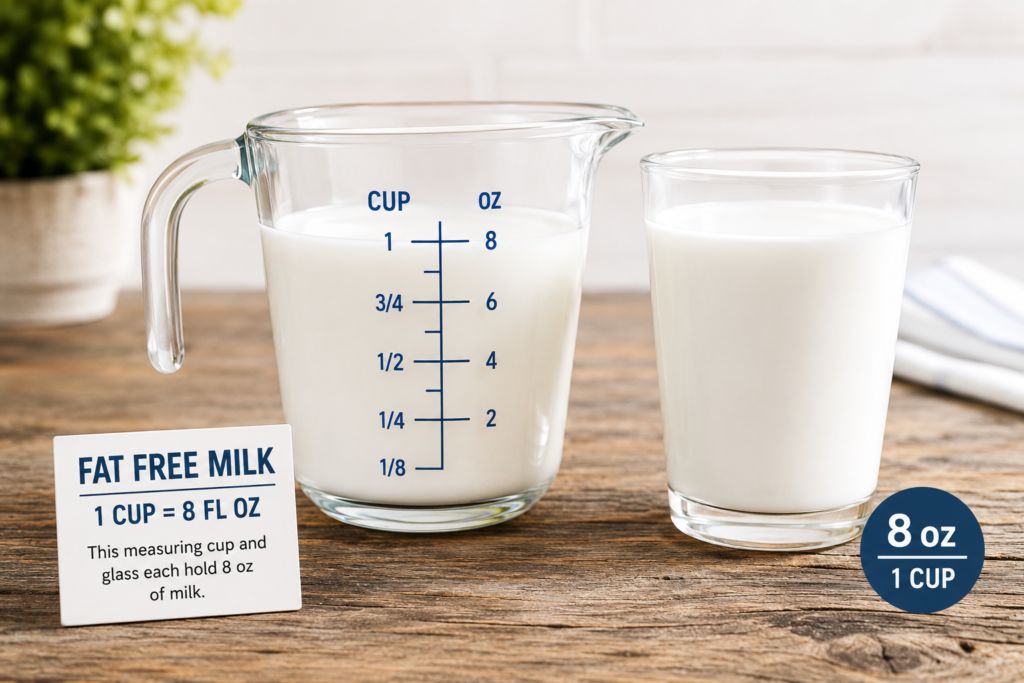
Looking closely at a single 1 cup skim milk nutrition & facts layout reveals exactly how much value is packed into an 8 oz skim milk nutrition & facts serving. This specific measurement is the standard foundation for most traditional American baking and cooking guidelines.
To make things incredibly simple for your daily kitchen routines, here is a complete breakdown of the physical elements found in a standard eight ounce cup or a 250 ml skim milk nutrition & facts portion based on official guidelines.
| Nutritional Component | Value Per 1 Cup (8 oz / 250 ml) | Daily Value Percentage |
| Skim Milk Calories | 80 Calories | 4% |
| Total Fat Content | 0 Grams | 0% |
| Carbs in Skim Milk | 12 Grams | 4% |
| Protein in Skim Milk | 8 Grams | 16% |
| Calcium in Skim Milk | 300 Milligrams | 25% |
For larger or smaller measurements, you can easily calculate that a 100 ml portion contains roughly 34 calories, while a 500 ml fluid serving delivers double the cup amounts. If you ever find yourself running low on fresh liquid during a busy baking day, you might wonder about alternative dry storage options, so feel free to read our detailed guide on is powdered skim milk good for you to see how shelf stable alternatives compare.
Calories in Skim Milk vs Whole Milk
The overall skim milk nutrition calories are significantly lower than standard options because the calorie content of skimmed milk is entirely free from fat energy. This dramatic difference explains why so many individuals prefer calories for skim milk when managing their daily fitness goals.
When you look closely at the numbers, a single cup of whole dairy delivers about 150 calories, while 1 cup skim milk calories stay strictly at a light 80 calories. Based on weight management guidelines from the CDC, swapping high calorie beverages for low calorie options like fat free milk is a practical way to manage energy limits.
For parents tracking the calories in 8 oz skim milk for their household, this simple switch cuts the energy density nearly in half. It allows your family to enjoy the familiar taste of traditional dairy while keeping daily meals light and clean.
Carbs in Skim Milk: Does Skim Milk Have Carbs?
Many people often ask does skim milk have carbs when transitioning away from traditional whole fat dairy products. The simple answer is yes, as it contains naturally occurring milk sugars that provide a steady source of daily energy.
When checking the exact layout, the carbs in 1 cup skim milk measure exactly 12 grams, which is identical to the carbohydrate profile of whole dairy. The reason for this is that the physical separation of the cream only removes fat, leaving the water soluble lactose sugars completely untouched.
If you are managing a busy family meal plan, knowing how many carbs in 8 oz of skim milk is essential for balancing your daily carbohydrate limits. For a closer look at how these natural sugars behave in early infant development, you can check out our comprehensive analysis on does breast milk have lactose to understand how dairy sugars function across different age groups.
Calcium in Skim Milk: Is Skim Milk High in Calcium?
The calcium content in skim milk is exceptionally high, making it one of the most reliable dietary sources for building strong teeth and bones. Many parents happily discover that this fat free beverage delivers an abundant supply of skeletal support without any unwanted heaviness.
In fact, the calcium in 1 cup skim milk provides roughly 300 milligrams of this essential mineral, which easily fulfills a massive portion of your daily requirements. According to nutrition studies shared by the USDA Agricultural Research Service, calcium resides safely within the watery milk solids rather than the floating cream layers, meaning that removing the fat does not reduce the mineral value at all.
This makes it a fantastic, family friendly option for keeping your household bones healthy and resilient. For everyday baking and morning smoothies, a single glass of skim milk serving ensures your kids get the traditional support they need. If you are curious about its flavor profile, you can also explore what does skim milk taste like to understand how it compares with whole milk in everyday use.
How Much Protein Is in Skim Milk?
The skimmed milk protein content is incredibly high, providing all nine essential amino acids that your body requires for daily cellular repair and muscle development. This makes it a stellar choice for fitness enthusiasts and growing toddlers who need consistent structural support.
Ultra filtered fat free milk is an excellent, premium option because the specialized filtration process concentrates the milk liquid while removing most of the lactose sugar. If you are comparing different dairy options, it can also help to understand is skim milk lactose free before choosing the right milk for your diet.
When evaluating a single 1 cup skim milk protein serving, you get a solid 8 grams of pure, high quality protein. A massive portion of this density consists of how much casein protein in skim milk is retained, which is a slow digesting protein that keeps you feeling satisfied for longer periods.
If you prefer using dry ingredients for your lifestyle, knowing how much protein in skim milk powder is available can help you boost the protein density of everyday homemade breads and creamy soups.
Is Skim Milk Fat Free or 1 Percent?
Skim milk is exactly the same as fat free milk, meaning it goes through a thorough separation process to ensure the skim milk fat percentage stays below 0.2% fat content. Many shoppers often wonder is low fat milk the same as skim milk, but low fat dairy actually contains 1% fat, whereas skim is entirely fat free.
To put it simply, when you see a bottle labeled as 0 fat free milk skim milk, it means the cream content and label indicate zero grams of total fat. The American Academy of Pediatrics (AAP) notes that once children reach two years of age, transitioning to fat free options is a safe and reliable way to reduce saturated fat intake.
This clear separation helps parents distinguish between the clean, thin texture of 0% milk and the slightly richer body of low fat alternatives. In most American households, keeping this distinction clear makes grocery shopping much smoother.
Almond Milk Nutrition vs Skim Milk
Almond milk nutrition vs skim milk shows a massive contrast in protein density, calorie content, and how these liquids behave in your favorite family recipes. While nut alternatives provide a super light experience, they do not naturally match the traditional structural properties of animal dairy.
Plant vs Dairy Nutrition Guide Infographic
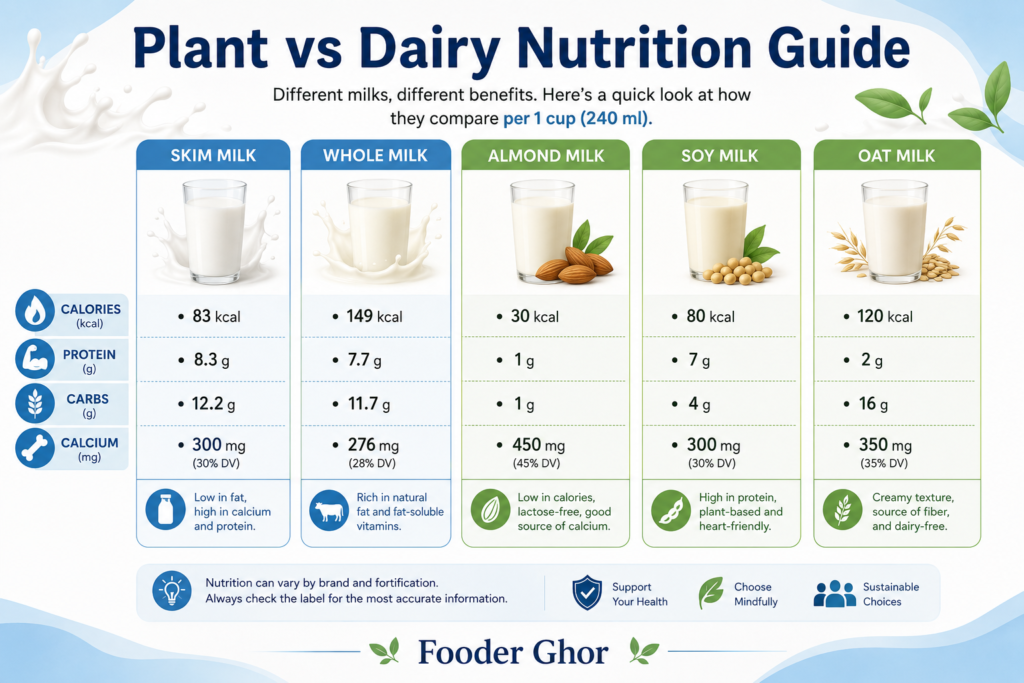
When comparing the nutritional value of skim milk vs almond milk, standard dairy delivers 8 grams of protein, whereas unsweetened almond alternatives usually offer only 1 gram. Additionally, almond milk vs skim milk calories are lower, but the calcium in almond milk vs skim milk is often artificially added through fortification rather than occurring naturally. For a detailed look at how other unique animal options compare to standard cow choices, you can explore our practical guide on is goat milk good for you to see alternative kitchen solutions.
Soy Milk vs Skim Milk Nutrition & Facts
Soy milk vs skim milk nutrition & facts & label comparisons reveal that soy is the closest plant based equivalent to traditional cow dairy in terms of total protein delivery. It offers a much smoother consistency and a slightly nuttier flavor profile that works beautifully in modern cooking.
According to comprehensive dietary guidelines published by the USDA, fortified soy beverages are the only plant alternatives officially categorized within the dairy group due to their comparable nutrient profiles. This makes it an excellent, family friendly alternative for households dealing with lactose sensitivities or vegan preferences.
While it matches the protein delivery nicely, the natural carbohydrate and fat structures will differ slightly from standard fat free dairy. For people who enjoy richer dairy options, understanding evaporated milk nutrition can help you compare concentrated milk varieties with plant based alternatives more effectively. Keeping a carton of each in your fridge is a versatile way to satisfy everyone at your breakfast table.
Oat Milk vs Skim Milk Nutrition
Oat milk vs skim milk nutrition profiles indicate that oat alternatives are generally higher in total carbohydrates, calories, and natural sugars. It has quickly become a modern kitchen staple due to its incredibly rich richer texture and smoother consistency in hot morning beverages.
However, when analyzing oat milk vs skim milk calories, oat liquids contain roughly 120 to 130 calories per cup compared to the light 80 calories found in fat free dairy. It also lacks the natural, high density protein structure that makes standard cow milk a traditional favorite for growing children.
To ensure every drop of liquid in your household remains completely safe, it is always wise to monitor freshness signs across all varieties. For those exploring plant-based options, understanding coconut milk nutrition can also help you compare different dairy and non-dairy choices more effectively.
Semi Skimmed Milk Nutrition, Facts, & Label
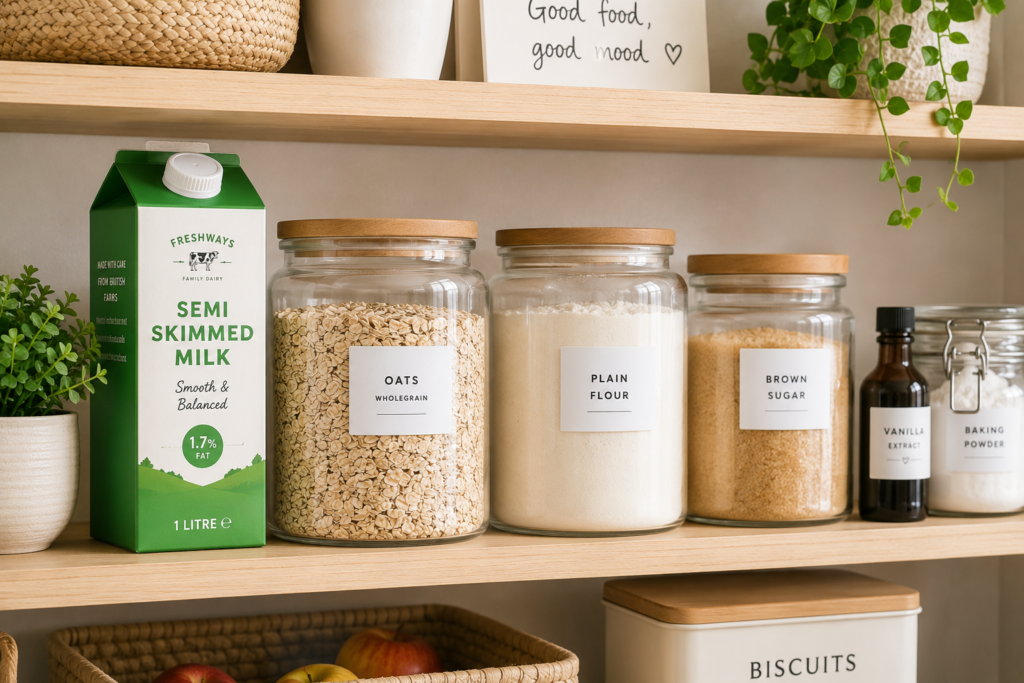
The calorie content of semi skimmed milk offers a perfect middle ground for families who want a moderate fat content without the full thickness of whole dairy. On a standard label, the calories of semi skimmed milk measure around 120 calories per cup due to its 1.5% to 2% fat levels.
When checking how many carbs are in semi skimmed milk, it remains identical to fat free dairy, but the small amount of remaining cream alters the texture profile beautifully. It delivers a wonderful amount of protein, which is easily seen when tracking how much protein in a glass of semi skimmed milk is consumed.
Whether you are calculating how much protein in a pint of semi skimmed milk or evaluating small doses like how much protein in 200/500ml of semi skimmed milk, it remains a highly reliable source of daily nourishment. For long term storage planning, you can also look into alternative options by checking out our guide on powdered goat milk to see how different dry options can diversify your pantry layout.
Why Trust Fooder Ghor?
At Fooder Ghor, we provide educational resources focused on understanding the safe use, handling, and storage of different types of milk, including breast milk, cow’s milk, goat milk, and raw milk, based on publicly available guidance from trusted sources such as the CDC, FDA, USDA, and AAP. Some milk-related articles, particularly those involving maternal and infant feeding topics, are reviewed for clarity and presentation by nursing students with academic training in maternal and child health to help make information easier to understand. This content is provided for learning purposes only and does not offer medical advice.
Most Common Frequently Asked Questions
A: No, low fat milk typically contains about 1% dietary fat, whereas standard skim dairy undergoes thorough separation to ensure it remains completely fat free at 0% fat content.
A: Since a standard 8 oz cup contains 80 calories, a larger 16 oz glass will deliver exactly 160 calories while maintaining zero grams of saturated fat.
A: Not at all, because calcium resides entirely within the watery portions of the dairy solids rather than the cream layers, meaning fat free options retain all their bone building strength.
A: Yes, dehydrated dairy retains almost all its original protein, including essential casein components, making it a highly reliable and convenient pantry staple for daily baking.
A: Nut alternatives are naturally diluted with water and lack the natural lactose sugars found in animal dairy, resulting in lower calories but significantly less protein.
Conclusion
In summary, mastering skim milk nutrition is a wonderful way to ensure your household receives top tier protein and calcium without any unwanted saturated fats. Depending on your family’s personal fitness goals and daily energy needs, checking the official labels helps you choose the most reliable kitchen staples with ease. Always look for the option that best supports the unique lifestyle habits of your growing family.
👉 To keep your entire household fully prepared for any busy day ahead, feel free to check out our practical guide on how to store breast milk on the go to ensure your youngest family members stay safe during travel.