Skip to content

Many new moms worry about their milk’s nutritional density. While we have discussed the visual aspects of watery breast milk before, today we are answering a deeper question: Why is my breast milk not fatty enough to keep my baby full? This concern is one of the most common reasons moms doubt their breastfeeding journey. However, the visual thickness of your milk is often a poor indicator of its true nutritional value. In this comprehensive 2026 guide, we will explore why your milk appearance changes, how to identify if your baby is getting enough calories, and the science-backed ways to ensure a balanced, high-fat feed every single time.”
Short Summary: Quick Facts for Busy Moms
-
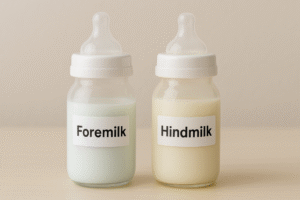
Appearance vs. Quality: Thin or watery-looking milk (foremilk) is normal and provides hydration; the fat (hindmilk) arrives toward the end of the session.
-
Baby’s Health: If your baby is gaining weight and has 6+ wet diapers daily, your milk is fatty enough, regardless of its color.
-
Night Advantage: Breast milk is naturally fattier at night and in the early morning due to peak prolactin levels.
-
The “Cream Line”: Chilling milk reveals a “fat plug” or cream layer at the top—this is the best way to visualize fat content.
Is My Breast Milk Not Fatty Enough for My Baby?
It is easy to fall into the trap of comparing your milk to “cream-top” photos on social media. Many U.S. moms worry that breast milk not being fatty enough will hinder their baby’s growth. However, clinical studies from the AAP (American Academy of Pediatrics) show that even milk that looks “thin” is packed with essential antibodies, proteins, and carbohydrates.
The real question isn’t just about appearance, but about satiety. Can breast milk not be fatty enough for baby? Technically, your body is biologically programmed to produce exactly what your infant needs. While the fat percentage might fluctuate based on your hydration, pumping frequency, and the time of day, it is extremely rare for a healthy mother to produce “low-fat” milk that is nutritionally insufficient.
How to Reach the Fatty Hindmilk: A Quick Guide for Moms

Why Is My Breast Milk Not Fatty? (Top 5 Root Causes)
Understanding the “why” is the first step toward gaining confidence. If you consistently notice that your why is my breast milk not fatty search leads to concerns about your pumping routine, you are likely looking at a “process” issue rather than a biological one.
1. The Foremilk-Hindmilk Imbalance

Your breast stores milk in a way that the “thirst-quenching” milk (foremilk) comes out first. The fat globules stick to the walls of the milk ducts. As the breast empties, these globules are displaced and enter the milk, creating the calorie-dense hindmilk. While getting enough fat is vital for weight gain, the lactose-rich foremilk is equally important for your baby’s brain energy. To understand how lactose affects your baby’s digestion, read our guide on Does Breast Milk Have Lactose?.
2. Short Pumping or Nursing Sessions
If you stop pumping after 5-8 minutes because the flow slows down, you are likely only collecting the foremilk. To get to the fat, you must continue until the breast is soft.
3. Overactive Letdown
Some moms have a very fast milk ejection reflex. The baby gulps down the watery foremilk quickly and feels full before they can ever reach the fatty hindmilk.
4. Inefficient Pump Suction
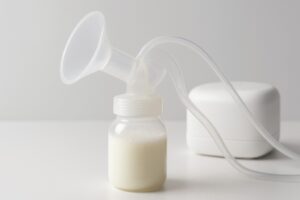
If your pump’s duckbill valves are worn out or the suction is too low, the machine cannot pull the “heavier” fat-rich milk from the deep tissues.
5. Long Intervals Between Sessions
The longer milk sits in the breast, the more the fat separates. If you go 6-8 hours without pumping, the initial milk expressed will look significantly more watery.
How to Know If Your Breast Milk Is Fatty Enough

If you are wondering how to know if breast milk is fatty enough, stop looking at the bottle and start looking at your baby. Pediatricians at the Mayo Clinic use specific markers to determine if a baby is receiving adequate fat and calories.
Physical Signs of Fatty Milk Intake:
-
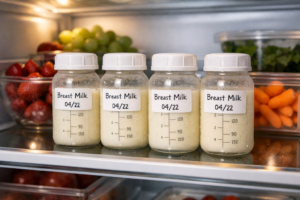
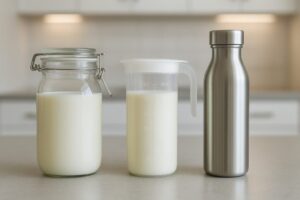
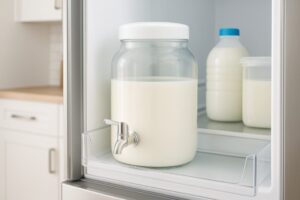
The “Cream Line”: If you let a bottle sit in the fridge for 2 hours, a thick white layer should form at the top. This is a clear way how to tell if breast milk is fatty.
-
Satiety Duration: A baby getting enough fat will usually stay satisfied for at least 2 hours. If they are “snacking” every 30 minutes, they might be getting too much foremilk.
-
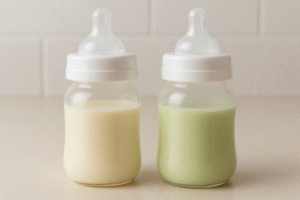
Stool Color: Seedy, mustard-yellow stools indicate a good balance. Green, frothy stools can sometimes signal a foremilk/hindmilk imbalance.
The “Cream Line” test: Seeing the fat separation after chilling

When you notice your milk separating in the fridge, don’t worry. The CDC Breast Milk Storage & Handling guidelines state that it is normal for breast milk to separate into a cream layer and a watery layer. To redistribute that essential fat before feeding, gently swirl the bottle—never shake it, as shaking can damage the delicate nutritional structures.
Is Some Breast Milk Fattier Than Others? (The Science of Variation)
The short answer is yes. Is some breast milk fattier than others? Absolutely. Every mother’s milk is a unique biological “fingerprint.”
Is Breast Milk Fattier at Night?
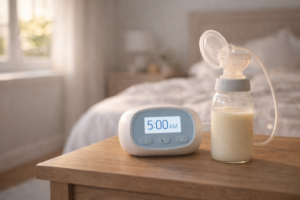
Research published via National Institutes of Health (NIH) continues to confirm that is breast milk fattier at night? is a resounding yes. Circadian rhythms influence prolactin levels, making night milk and early morning milk (3 AM – 6 AM) significantly higher in fat and sleep-inducing hormones like melatonin.
Does Breast Milk Get Fattier as Baby Grows?
Many moms ask, does breast milk get fattier as baby grows? As your baby gets older and begins to move more (crawling, pulling up), your body intelligently increases the calorie density of your milk. The milk you produce for a 6-month-old is naturally more calorie-dense than the milk produced for a newborn.
The Color Mystery: Is Yellow Breast Milk More Fatty?
Often, moms ask, is yellow breast milk more fatty? While yellow milk (especially colostrum) is high in beta-carotene and immunoglobulins, a white or bluish tint doesn’t mean it’s “bad.” However, a deep yellow “cream plug” at the top of a chilled bottle is a sign of high fat content. For more on color variations, see our guide on Why Is My Breast Milk Blue?.
Step-by-Step: How to Ensure a Balanced, Fatty Feed
If you want to optimize your output, follow this clinical process used by lactation consultants across the United States.
-
Hands-On Pumping: Use your hands to massage and compress your breasts while the pump is running. This physically “pushes” fat globules into the milk stream.
-
The “Finish One Side” Rule: Whether nursing or pumping, ensure one breast is completely drained (feeling like a “soft balloon”) before moving to the other.
-
Optimize Your Pumping Time: Do not rush. Most moms need 15–20 minutes to trigger the second or third “letdown” where the fattiest milk resides. 👉 Check our guide: How Long Do I Pump Breast Milk?
-
Heat Application: Applying a warm compress for 2 minutes before pumping helps dilate milk ducts, allowing thick fat to flow easier.
Diet & Nutrition: Foods to Make Breast Milk Fattier

While your body will pull nutrients from your own stores to feed your baby, eating a balanced diet helps optimize the types of fat in your milk.
What to Eat to Make Breast Milk Fatty:
-
Healthy Omega-3s: Salmon, chia seeds, and walnuts.
-
Monounsaturated Fats: Avocados and olive oil.
-
Proteins: Eggs and Greek yogurt.
-
Supplements: Many U.S. moms find that supplements to make breast milk fattier, like Sunflower Lecithin, help by reducing the “stickiness” of the fat, allowing it to exit the breast more easily.
According to the USDA’s MyPlate for Breastfeeding guidelines, a nursing mother doesn’t need a “perfect” diet to produce quality milk, but incorporating healthy fats is vital. While your body ensures the caloric density is there, the USDA recommends a balance of seafood (low in mercury), nuts, and seeds to optimize the DHA and healthy fatty acids your baby receives.
👉 You can also learn the full routine in How to Produce Fatty Breast Milk Naturally?
Note: Eating a high-fat diet doesn’t instantly make your milk 10% fattier, but it ensures your breast milk fatty acid composition is rich in DHA and ARA, which are vital for your baby’s brain development.
Comparison: Is Breast Milk Fattier Than Formula?
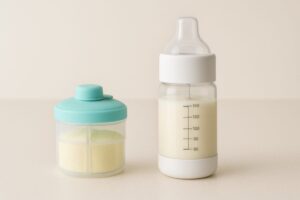
This is a common debate. Is breast milk fattier than formula? While formula has a standardized, static amount of fat (usually from vegetable oils), breast milk fat is live, bioactive, and highly absorbable. Formula may look “thicker” because of emulsifiers, but the human body is designed to absorb nearly 100% of the fat found in breast milk, making it superior for infant growth.
The Biology of Milk Fat
Fatty Acid Composition When we analyze the breast milk fatty acid composition, we find a complex mix of long chain fatty acids and breast milk fatty acid metabolites. These are not just “fat”; they are the building blocks for your baby’s brain and retina. Understanding what kind of fatty acids are in breast milk helps us realize why even a small amount of hindmilk is so powerful.
| Myth | Fact |
| Watery milk is “skim” milk and useless. | Foremilk is vital for brain energy and hydration. |
| You must eat junk food to make milk fatty. | Only healthy fats improve the quality of milk fatty acids. |
| If milk isn’t yellow, it’s not fatty. | White or bluish milk can be extremely calorie-dense. |
FAQ: Frequently Asked Questions
A: No. Even if your why is my breast milk not fatty worry stems from its watery look, it still contains high levels of protein, lactose for energy, and life-saving antibodies.
A: Yes! If you pump a “watery” session in the morning and a “fatty” one at night, you can mix them (after they are at the same temperature) to create a balanced bottle.
A: Diet affects fat quality more than quantity. Whole foods support healthy fat balance.
A: Milk appearance can change based on overnight feeding patterns and breast fullness.
A: Yes. Fat supports brain growth, energy needs, and healthy weight gain.
A: No. Biology ensures every mother produces calorie-dense milk. Variations are usually due to the feeding process, not your DNA.
A: Not necessarily. Both are essential. Thin milk provides hydration and brain-fueling lactose, while creamy milk provides long-term satiety and weight gain.
A: No. What matters is the total fat intake over 24 hours. Your baby will naturally balance their needs across different feeding sessions.
Why Trust Fooder Ghor?
At Fooder Ghor, we understand the unique pressures of U.S. parenting in 2026. Our guides are built on the latest CDC, AAP, and WHO clinical protocols. We don’t just give advice; we provide science-backed reassurance so you can feed your baby with confidence. Every piece of content is reviewed for medical accuracy and semantic relevance to ensure you get the most up-to-date information available.
Conclusion: Why Is My Breast Milk Not Fatty?
In conclusion, asking why is my breast milk not fatty is a sign that you are a caring, attentive mother. However, as we have explored, thin milk is rarely a sign of poor nutrition. By focusing on emptying your breasts fully, utilizing hands-on pumping techniques, and maintaining a diet rich in healthy fats, you can ensure your baby receives the best balance of foremilk and hindmilk. Trust your baby’s growth and your body’s incredible ability to adapt.