Skip to content

Why Timing Matters for Expressing Breast Milk
For new mothers, one of the most common questions after giving birth is “When should I start expressing breast milk?” The timing depends on your situation whether your baby latches well, you’re preparing to return to work, or you need to build a freezer stash.
Expressing too early can sometimes cause oversupply or discomfort, while waiting too long may make it harder to establish a steady flow. This guide helps you find the right balance. So, you can start expressing milk confidently and safely.
👉 For long-term storage ideas, check our guide on How to Organize Breast Milk in Freezer? (Flat-Freezing & FIFO Guide).
Quick Summary for New Moms
-
Standard Start: For healthy, full-term babies, wait 2–3 weeks after birth to let supply stabilize.
-
Early Start: If the baby is in the NICU or can’t latch, start within 1–6 hours after delivery.
-
Hand Expression: This is more effective than pumping in the first 3 days for collecting colostrum.
-
Antenatal Collection: Can be done around 37 weeks of pregnancy if cleared by your doctor.
How to Express Breast Milk (Methods)
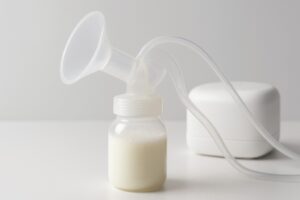
Expressing breast milk means removing milk from your breasts — either manually or using a breast pump. So, your baby can be fed later.
- Manual expression: Using your hands to gently squeeze and collect milk.
- Pumping: Using an electric or manual breast pump to extract milk more efficiently.
Both methods are safe, but which one you choose depends on your comfort and daily routine.
When to Start Expressing Breast Milk if You’re a New Mom
For most healthy, full-term babies who breastfeed well, experts recommend waiting about 2–3 weeks after birth before you start pumping or expressing regularly.
This period allows:
- Your milk supply to stabilize naturally.
- Your baby needs to learn proper latching and feeding rhythm.
- Your body needs to adjust to milk production.
However, occasional expression in the first week can help relieve engorgement or store small amounts of milk for emergencies.
If your baby is premature or unable to latch, lactation consultants may recommend expressing within 1–6 hours after delivery to stimulate milk flow.
Early Expression for NICU or Low-Supply Moms
For mothers with premature infants (NICU babies) or low milk supply, early pumping is essential. Hospitals often encourage moms to start expressing milk as soon as possible after birth, typically pump very frequently (matching a newborn’s needs) for the first few weeks.
This early routine helps:
- Build and maintain milk supply.
- Ensure the baby receives antibody-rich colostrum.
- Reduce the risk of blocked ducts and mastitis.
Even if your baby can’t breastfeed directly, expressed milk provides the same immune and nutritional benefits.
Antenatal Expression: Collecting Colostrum Before Birth
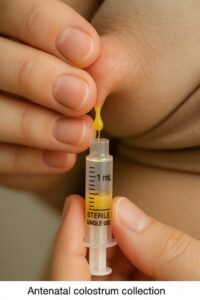
Some hospitals and lactation consultants in the U.S. now recommend antenatal expression for high-risk or diabetic mothers around 37 weeks of pregnancy. This process involves collecting small amounts of colostrum — often called “liquid gold” — before birth and freezing it for later use.
Antenatal colostrum collection can:
- Help maintain stable blood sugar levels in newborns.
- Ensure the baby receives nutrient-dense milk immediately after birth.
- Reduce early feeding challenges.
If your doctor approves, you can hand-express colostrum and store it in sterile syringes or small containers in the freezer.
💡 Pro-Tip for Colostrum Storage: Colostrum is incredibly concentrated. Since you’ll likely collect small amounts (droplets) at first, using sterile syringes is much more effective than storage bags. For a step-by-step on how to save every drop, see our guide: How Do You Store Colostrum?.
Manual Hand Expression: Why It’s Vital in the First Week
In the first few days after birth, hand expression is often more effective than electric pumping. Colostrum (the first milk) is thick and sticky, making it easier to collect by hand than with a pump.
Benefits include:
- Helping your body establish milk flow naturally.
- Stimulating milk supply in the early days.
- Reducing engorgement and preventing blocked ducts.
Many lactation experts suggest learning hand expression during pregnancy so you feel comfortable using it right after delivery.
For Working Moms: Planning Ahead
If you’re planning to return to work, start expressing about 2–3 weeks before your return date. This gives you time
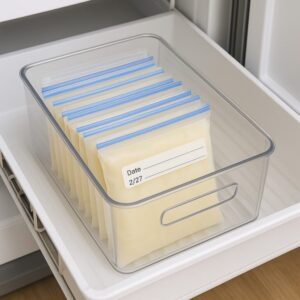
- Build a freezer stash (1–2 bags per day).
- Practice pumping at scheduled times similar to your work hours.
- Learn how your body responds to different pumps and suction levels.
This routine ensures your baby has enough milk supply even when you’re away, and your body maintains consistent production. While building your stash 2–3 weeks before work is key, knowing your exact daily routine is even more vital. For a complete time-based timetable for the office, check our master guide: How Often Should I Pump Breast Milk?.
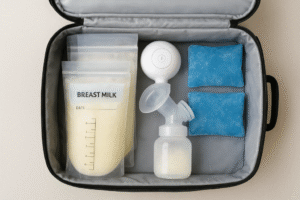
👉 Learn practical tips for portable pumping in our post How to Store Breast Milk on the Go?.
Best Times of Day to Express Milk
Morning is generally the best time for expression since milk volume tends to be highest after overnight rest. However, consistency is more important than timing — choose a routine that suits your body and lifestyle.
Tips:
- Express milk after your baby’s morning feeding.
- If you’re away from home, try to maintain a regular schedule to support your supply.
- Stay hydrated and relaxed — stress can affect the letdown reflex.
How to Store and Label Early Expressed Milk?
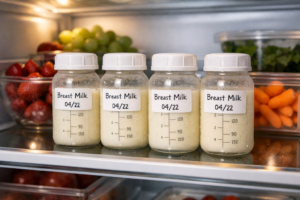
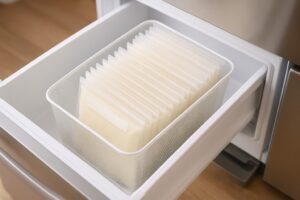
Once you begin expressing, always label your milk with the date and time of expression. This ensures you are using the oldest milk first (FIFO method).
-
Refrigerate immediately if you’ll use it within 4 days.
-
Freeze it if you plan for longer storage.
-
Use BPA-free storage bags or glass containers and avoid overfilling (milk expands when frozen).
Early Expression Storage Quick-Guide
Since colostrum (your first milk) has a different composition than mature milk, its storage needs are slightly more specific. Here is a quick reference for U.S. safety standards:
| Milk Type | Room Temp (77°F) | Refrigerator (40°F) | Freezer (0°F) |
| Colostrum | Up to 4 Hours | Best used in 24 Hours | 6 Months (Recommended) |
| Fresh Mature Milk | 4 Hours (Optimal) | Up to 4 Days | 6–12 Months |
| Thawed Milk | 1–2 Hours | 24 Hours | Never Refreeze |
👉 For detailed storage guidance, check our guide on Non-Plastic Breast Milk Storage Solutions: Glass Jars, Silicone Bags, and Steel Containers.
Common Mistakes to Avoid
- Pumping too early — may cause oversupply and discomfort.
- Skipping sessions — irregular pumping reduces supply.
- Not cleaning pump parts properly — bacteria can contaminate milk.
- Storing milk incorrectly — follow temperature guidelines strictly.
- Ignoring breast fullness or pain — may lead to blocked ducts.
👉 For official handling advice, visit the CDC’s Breast Milk Storage and Handling Guide.
👉 You can also review Mayo Clinic’s Breastfeeding and Milk Expression Recommendations for professional guidance.
FAQ: Common Questions About Expressing Breast Milk
Q: Is it safe to start expressing in the first week after birth?
Yes, but only if your baby can’t latch or your doctor recommends it. Otherwise, wait 2–3 weeks.
Q: Can early expression affect my baby’s feeding habits?
If you pump too early and too often, it can cause oversupply, making latching difficult.
Q: Can I build a freezer stash before going back to work?
Absolutely — start 2–3 weeks before returning to work to reduce stress.
Q: Does pumping hurt when you first start?
It should never be painful. If it is, check your technique and flange fit immediately.
Why Trust Fooderghor?
At Fooderghor, we simplify parenthood with research-backed guides tailored for U.S. families. Our advice on expressing milk is vetted against clinical standards from the CDC, AAP (American Academy of Pediatrics), and the Mayo Clinic. We empower you with safe, expert-verified strategies to start your pumping journey with confidence.
Conclusion: Start When You’re Ready, Stay Consistent
Every mom’s journey is unique — the right time to start expressing depends on your baby’s needs, your health, and your lifestyle. Adding gentle hand expression and colostrum collection can make a huge difference in building a strong milk supply early on.
Start slow, stay consistent, and follow your body’s cues. With proper timing, hygiene, and confidence, you can ensure your baby gets the best nutrition from day one.