Skip to content

What Is the 5 5 5 Rule for Breast Milk? For many American parents, figuring out how to store liquid gold safely can feel overwhelming, but this simple memory tool ensures your baby gets the freshest nutrients while minimizing waste. While you might hear about different methods like the 6-6-6 or 4-4-4 rules, the 5-5-5 guidelines remain a widely trusted standard in U.S. households.
This comprehensive 2026 guide explains everything you need to know about breast milk safety windows, aligning strictly with CDC and AAP standards. Whether you are a first-time mom or an experienced pumper, understanding these storage limits is essential for your busy daily routine. Note: If you are looking for the 5 5 5 pumping schedule to boost your supply, please see our dedicated guide on the 5 5 5 pumping method.
Quick Summary: Which Rule Should You Follow?
If you’re short on time, here is a quick breakdown of the most common breast milk storage rules used in the U.S. today:
- The 5-5-5 Rule: 5 hours out, 5 days in fridge, 5 months in freezer. (Best for generally healthy babies).
- The 3-3-3 Rule: 3 hours out, 3 days in fridge, 3 months in freezer. (Best for premature or sensitive infants).
- The 6-6-6 Rule: 6 hours out, 6 days in fridge, 6 months in freezer. (A flexible approach for healthy infants in cool climates).
- The 4-4-6 Method: 4 hours out, 4 days in fridge, 6 months in freezer. (Strictly follows the latest CDC updates).
- The 1-1-1 Rule: 1 hour to finish, 1 time to warm, 1 session to discard. (The feeding safety limit).
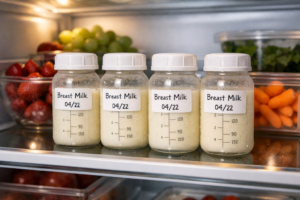
The 5-5-5 Rule for Breast Milk (Quick Visual Chart)

ALL Breast Milk Storage Rules Compared (Master Table)
| Rule | Room Temp | Fridge | Freezer | Deep Freezer | Best For |
|---|---|---|---|---|---|
| 555 Rule | 5 hours | 5 days | 5 months | 12 months | General healthy babies |
| CDC Official | 4 hours | 4 days | 6 months | 12 months | Maximum official limits |
| 666 Rule | 6 hours | 6 days | 6 months | – | Cool climates |
| 444 Rule | 4 hours | 4 days | 4 months | – | Daycare/NICU |
| 333 Rule | 3 hours | 3 days | 3 months | – | Premature babies |
| 111 Rule | 1 hour | 1 day | 1 month | – | High-risk infants |

Why Breast Milk Storage Rules Matter
Across the United States, moms are pumping more than ever. Whether you are returning to work or building an emergency stash, breast milk storage is a critical skill. Breast milk is a “living fluid” full of antibodies and enzymes that can degrade if not handled correctly.
These numerical rules (like 555 or 666) were created by lactation experts to simplify the complex guidelines provided by the CDC (Centers for Disease Control and Prevention) and AAP (American Academy of Pediatrics). Instead of checking a chart every time, you can rely on these easy-to-remember patterns to keep your milk fresh and bacteria-free.
👉 While understanding these rules is vital, you can find our complete technical guide on Breast Milk Storage Tips here.
What Is the 5 5 5 Rule for Breast Milk?
The 5-5-5 Rule is the most widely recognized memory tool used by American hospitals and lactation consultants. It provides a safe middle ground that ensures both safety and high nutrient retention for healthy, full-term babies.
- 5 Hours at Room Temperature: Freshly expressed milk stays safe for up to 5 hours if your home is below $77^{\circ}\text{F}$ ($25^{\circ}\text{C}$).
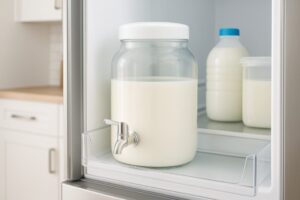
- 5 Days in the Refrigerator: Keep it in the back (the coldest zone), not the door, for up to 5 days at $\le 40^{\circ}\text{F}$.
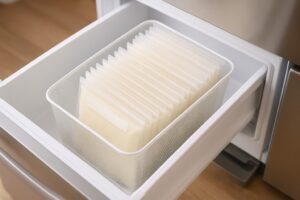
- 5 Months in the Freezer: While it can technically last longer, using it within 5 months ensures the best taste and antibody count.
The 6 6 6 Rule for Breast Milk: A Flexible Alternative
Many modern lactation consultants in the U.S. now advocate for the 6-6-6 Rule. This is often used by parents who prefer a bit more flexibility in their storage routine without sacrificing safety.
Is the 6-6-6 Rule Safe?
Yes, for most healthy, full-term infants. Research shows that the antibacterial properties in breast milk are strong enough to keep it stable for these slightly extended windows.
-
6 Hours Out: Ideal for moms who pump and leave milk out for the next feeding.
-
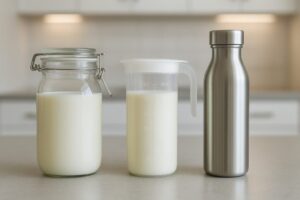
6 Days Chilled: Perfect for weekend meal-prepping or “pitcher method” users.
-
6 Months Frozen: Aligns with the CDC’s “ideal” limit for standard refrigerator freezers.
Planning Your Collection for Long-Term Storage
While the 5-5-5 safety rule helps you store milk correctly, your success starts with having a consistent supply to store. For many U.S. working moms, maintaining that ‘liquid gold’ production while at the office is the biggest hurdle.
A well-planned collection routine helps you:
-
Maintain Supply: Frequent milk removal signals your body to keep producing for your freezer stash.
-
Prevent Engorgement: Staying on schedule keeps you comfortable during your shift.
-
Maximize Storage: Effective pumping sessions allow you to manage your fridge and cooler space efficiently.
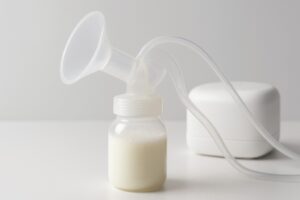
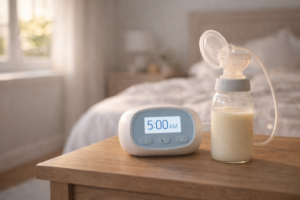
👉 Master Your Timing: To learn the exact 5 AM / 1 PM intervals specifically designed to boost your milk production, check our detailed guide: What Is the 555 Rule for Pumping?
Pro-Tip for Beginners: If you are just starting to build your stash, having a schedule is only half the battle. To ensure your sessions are painless and your pump is set up correctly, don’t miss our Step-by-Step Guide on How to Start Pumping.
The 4-4-4 and 3-3-3 Rules: When Caution is Key
For some families, a more conservative approach is necessary. This is especially true if you are handling milk for a vulnerable infant.
What is the 3-3-3 Rule for Breast Milk?
The 3-3-3 Rule is often taught in Neonatal Intensive Care Units (NICUs). It is the most conservative guideline: 3 Hours Room Temp / 3 Days Fridge / 3 Months Freezer. It is recommended for:
- Premature babies.
- Infants with weakened immune systems.
- Moms living in very hot U.S. climates without consistent air conditioning.
What is the 4-4-4 Rule for Breast Milk?
The 4-4-4 Rule (4 hours, 4 days, 4 months) is a popular “safe-bet” used by many daycare centers across the country. It ensures that milk never reaches the point of even minor bacterial growth, keeping it ultra-fresh for the baby.
What is the 4-4-6 Rule for Breast Milk?
If you want to follow the CDC Breast Milk Handling Guidelines to the letter, the 4-4-6 Rule is your best choice. This hybrid model emphasizes the highest quality of milk while allowing for longer freezing.
- 4 Hours at Room Temp: CDC suggests that while 4-6 is okay, 4 is “optimal.”
- 4 Days in Fridge: Using milk within 4 days ensures the fat and proteins are at their best.
- 6 Months in Freezer: Aligns with the standard recommendation for home freezers.
The 1-1-1 Rule: The “Golden Limit” for Feeding Safety

While the 555 and 666 rules focus on storage, the 1-1-1 Rule focuses on the moment the bottle touches your baby’s lips.
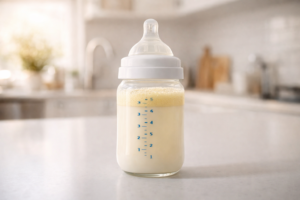
- 1 Hour: Once a baby starts drinking, the enzymes and bacteria from their mouth enter the bottle. You must finish or discard the milk within 1 hour.
- 1 Time: You should only warm breast milk once. Re-warming destroys delicate immunoglobulins.
- 1 Session: Never save leftover milk from a finished feeding session for later.
Step-by-Step: How to Follow These Rules Safely

To ensure you are staying within the U.S. safety standards, follow these pro-tips:
1. Preparation & Labeling
Always wash your hands and pump parts. Use BPA-free bottles or specialized breast milk storage bags. Crucial Tip: Always label with the date and time of pumping.
2. Cooling Before Mixing
When combining milk from different pumping sessions, ensure the fresh milk is cooled in the refrigerator before adding it to the already cold milk. This prevents the overall temperature from rising and encouraging bacterial growth.
3. Strategic Thawing
The safest way to thaw is in the refrigerator overnight. If you need it quickly, place the sealed container in a bowl of lukewarm water. Never use boiling water or a microwave.
📌 Related Reading: Thawing milk incorrectly can lead to bacterial growth. For a complete breakdown of all methods, read our guide: How to Thaw Out Frozen Breast Milk Safely?
Common Storage Mistakes to Avoid
- The “Door” Mistake: Never store milk on the refrigerator door. The temperature drops every time you grab the butter or juice. Store it in the very back.
- Leaving Milk Out Overnight: Even if the room is cool, 8+ hours is too long. Discard it to be safe.
- Refreezing: Once breast milk is thawed, it should never be put back into the freezer.
👉 You can learn more about extended freezer storage in our guide How Long Does Breast Milk Last in Deep Freezer?
Expert Note on Nutrient Safety
Breast milk’s immunoglobulins (IgA) and lipase enzymes are delicate and represent what the USDA WIC guidelines describe as a “living fluid” that provides essential immunity to your baby. These vital components begin degrading if heated above $104^{\circ}\text{F}$ ($40^{\circ}\text{C}$).
That’s why gentle warming is key to maintaining the biological benefits of your milk. According to the FDA safety standards for handling human milk, avoiding high heat or microwave use is critical to prevent “hot spots” that can destroy these antibodies and cause potential burns.
Most Common Questions For Understanding Breast Milk Rules
A: Simplified version of CDC 4-4-6 guidelines. Safe and widely used by US hospitals.
A: Both are safe. 555 = conservative daily use. 666 = cool climate flexibility.
A: Deep freezer (-20°C): 12 months OK. Use within 6 months for the best quality.
A: Lipase enzyme activity. Safe for the baby. Scald before freezing to prevent.
A: 24 hours with ice packs (CDC/Medela verified).
A: Yes, but safety is key. You should cool the freshly pumped milk in the refrigerator for about 10–15 minutes before adding it to an already cold batch. This prevents the warm milk from raising the overall temperature and encouraging bacterial growth.
👉 For a complete step-by-step guide on pooling milk safely, check our post: Can You Mix Refrigerated Breast Milk with Fresh?
A: 444 Rule or 333 Rule for extra caution.
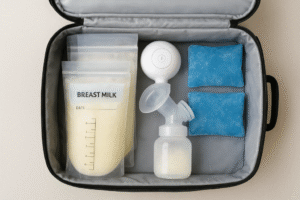
A: A cooler bag with ice packs keeps milk safe for 24 hours. Per TSA guidelines, you can carry pumping equipment and breast milk in any quantity through airport security. To make your journey stress-free, follow the tips in our detailed guide: How to Travel with Breast Milk?
A: Scald fresh (145°F/30 sec) before freezing.
A: Deep (-20°C): 12 months. Regular (-18°C): 6 months max.
Why Trust Fooder Ghor?
While memory rules like 5-5-5 are simplified tools created by lactation experts, the storage limits mentioned here are strictly cross-referenced with CDC, AAP, and USDA safety protocols. Our team ensures that every guideline aligns with official U.S. clinical standards to provide the safest nutrition for your baby. To understand how we verify our data, visit our Editorial Process page.
Conclusion: Peace of Mind for U.S. Moms
Whether you choose the 5-5-5, 6-6-6, or the conservative 3-3-3 rule, the key is consistency. By following these CDC-aligned patterns, you can ensure your baby receives the highest quality nutrition every time. Trust your senses—if the milk smells sour or has a curdled texture, always choose safety and toss it out. This complete guide gives you all the rules, tables, and schedules in one place. Safe storage = happy baby + stress-free parenting.
👉 For complete storage organization, read Breast Milk Storage Containers: Complete U.S. Mom’s Guide (2026 Edition).
Complete Your Breast Milk Safety Knowledge
Storing your “liquid gold” is just one part of the journey; explore these specialized guides to ensure every bottle is safe, fresh, and perfectly handled.
-
The Ultimate Guide to Breast Milk Storage: As our Core Storage Pillar, this guide provides the foundational safety standards for every U.S. parent building a freezer stash.
The 555 Pumping Method for Supply: While this guide covers how long milk lasts, our Extraction Cluster explains the exact 5 AM / 1 PM intervals needed to fill your storage bags efficiently.
-
How to Know if Breast Milk Is Bad? Even within the 5-5-5 window, quality can change; use this Quality Control Guide to identify sour smells or curdled textures before feeding.
-
Can You Mix Refrigerated Breast Milk with Fresh? Master the art of Pooling Milk safely by learning why temperature consistency is critical before adding new milk to your stored batch.