Skip to content

If you are breastfeeding and wondering whether your milk contains lactose, you are not alone. Many U.S. parents worry about gas, fussiness, or lactose intolerance and often question whether something in breast milk could be the cause.
The short answer is yes. Breast milk naturally contains lactose, and it is both normal and essential for your baby’s growth. Understanding how lactose works can ease fear and help you make confident feeding decisions.
Quick Answer
Yes, breast milk contains lactose. Lactose is the primary carbohydrate in human milk, making up about 7 percent of its composition. It provides energy for brain development, supports gut health, and helps babies absorb minerals like calcium. Breast milk lactose is naturally designed for infants to digest.
Short Summary: Key Takeaways
- Breast milk naturally contains lactose at about 7 percent
- Lactose supports brain growth, digestion, and calcium absorption
- Babies are born with the enzyme needed to digest lactose
- A mother’s diet does not change the lactose level in breast milk
- True lactose digestion disorders in infants are extremely rare
What Is the Role of Lactose in Breast Milk?
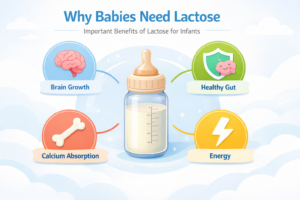
Lactose is a natural milk sugar and the main source of energy in human milk. It plays several important roles in infant development.
First, lactose fuels rapid brain growth during the first year of life. Second, it helps beneficial gut bacteria grow, which strengthens the immune system. Third, lactose improves the absorption of calcium and other minerals that support strong bones.
Human milk contains more lactose than most other mammal milks because human babies rely heavily on brain development during early life.
How Babies Digest Lactose: The Role of Lactase
Lactose is the sugar. Lactase is the enzyme that digests it.
Healthy babies are biologically prepared to digest breast milk. They are born with high levels of lactase in their intestines. This enzyme breaks lactose into glucose and galactose, which the body easily absorbs.
Because of this natural design, most breastfed babies digest lactose without difficulty.
Does Breast Milk Have Lactose if Mom is Dairy Free?
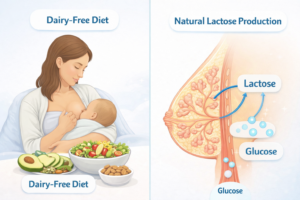
This means your milk contains lactose even if a mother avoids all dairy products.
Being dairy free does not remove lactose from breast milk and does not reduce its quality or safety.
Does Lactose Cross Into Breast Milk From Mother’s Diet?
Many parents ask if lactose passes into breast milk from what the mother eats.
The answer is no. Lactose does not come from dairy foods in a mother’s diet. It is produced inside the mammary glands using glucose from the bloodstream.
What Do Health Authorities Say About Breast Milk Lactose?
Health organizations consistently describe breast milk as the gold standard for infant nutrition.
The American Academy of Pediatrics explains that breast milk carbohydrates are ideally suited for infant digestion and development. Lactose plays a central role in this process and supports healthy gut function and brain growth.
Also, The World Health Organization emphasizes that breast milk is uniquely designed to meet an infant’s nutritional needs during the first six months of life.
Lactose Sensitivity vs Congenital Lactase Deficiency
| Feature | Lactose Overload (Common) | Lactose Intolerance (Rare) |
| Cause | Too much foremilk (high lactose). | Lack of lactase enzyme from birth. |
| Stool Type | Green, frothy, or explosive stools. | Severe watery diarrhea. |
| Weight Gain | Baby usually gains weight well. | Poor weight gain or weight loss. |
| Solution | Ensure baby drains one breast fully. | Medical intervention/special formula. |
Parents often confuse normal digestion changes with lactose problems. Congenital lactase deficiency is an extremely rare genetic condition present from birth. Babies with this condition cannot digest lactose at all and experience severe diarrhea and dehydration shortly after feeding.
This condition is very uncommon. Most gassy or fussy babies do not have a lactose digestion disorder. Many of these ‘normal digestion changes’ are actually linked to a lack of fat in the baby’s intake. If your baby is fussy or having green stools, check our guide on Why Is My Breast Milk Not Fatty? to see if a milk imbalance is the true cause.
Foremilk, Hindmilk, and Lactose Balance
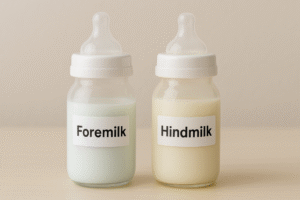
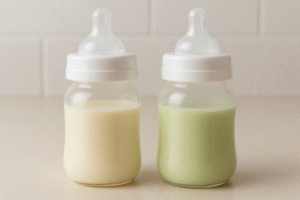
Breast milk changes during a feeding session. Foremilk is thinner and higher in lactose, while hindmilk contains more fat.
If a baby receives large amounts of foremilk without reaching hindmilk, they may experience gas or green stools. This is sometimes called lactose overload, but it is not lactose intolerance.
Ensuring good latch and allowing the baby to fully empty one breast before switching usually resolves the issue. Parents should not stop breastfeeding because of this temporary imbalance. While balancing lactose is key for digestion, ensuring your baby gets enough healthy fats is equally important for growth. To learn more about increasing the fat quality in your milk, see our detailed guide on Why Is My Breast Milk Not Fatty?.
Lactose Comparison: Breast Milk vs Other Milks
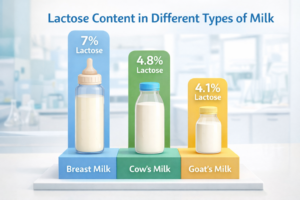
Human milk has a higher concentration of this milk sugar than cow or goat varieties, but it remains much easier for babies to digest.
👉 If you want a detailed breakdown of animal milk differences, you can read our guide on the Difference Between Goat Milk and Cow Milk, which explains how milk composition varies across species.
Formula milk often contains lactose as well, but breast milk remains superior due to its enzymes, antibodies, and bioavailability.
Does Freezing or Heating Affect Lactose in Breast Milk?
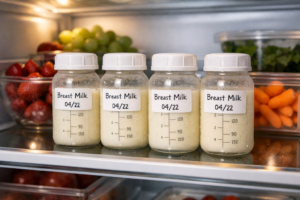
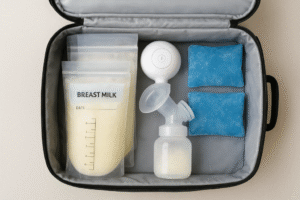
Lactose is a stable carbohydrate. Freezing or gently warming breast milk does not destroy lactose or reduce its nutritional value. Proper storage protects overall milk quality.
If you want to understand safe long term storage, see our detailed guide on How Long Breast Milk Lasts in a Deep Freezer.
When Should You Talk to a Pediatrician?
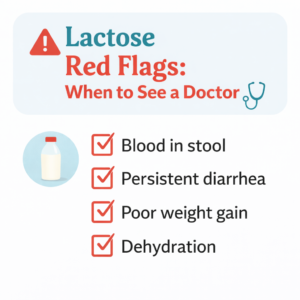
Most feeding concerns are normal, but medical advice is important if you notice:
- Blood in your baby’s stool
- Persistent watery diarrhea
- Poor weight gain
- Severe dehydration symptoms
These signs are not typical lactose issues and should be evaluated by a pediatrician.
Frequently Asked Questions
A: Yes. Human milk naturally contains lactose as its primary carbohydrate.
A: No. Lactose is made in the breast, not transferred from food.
A: Yes. Dietary dairy intake does not affect lactose levels.
A: Yes. Breast milk contains a higher percentage of lactose, designed for infant brain development.
A: Breast milk contains small amounts of lactase, but babies mainly rely on their own digestive enzymes.
A: No. Lactose levels in breast milk are constant and are not affected by the mother’s diet or whether she consumes dairy products.
A: No. Freezing and thawing breast milk does not affect the amount or quality of lactose; it remains safe and nutritious for your baby.
Why Trust Fooder Ghor?
At Fooder Ghor, we simplify complex health information for U.S. parents. Our guides are strictly based on the latest CDC, AAP, and USDA clinical protocols. We don’t just summarize; we fact-check every detail against official government resources to provide science-backed reassurance. Our goal is to ensure you have access to accurate, up-to-date, and easy-to-understand information to feed your baby with confidence.
Conclusion and Medical Disclaimer
Human milk does contain lactose, and this is a normal and vital part of infant nutrition. Lactose supports brain growth, gut health, and mineral absorption while being naturally suited to a baby’s digestive system.
Gas or fussiness does not usually mean lactose intolerance, and most parents can continue breastfeeding with confidence.
This content is for educational purposes only and does not replace professional medical advice. Always consult your pediatrician for personalized guidance.