Skip to content

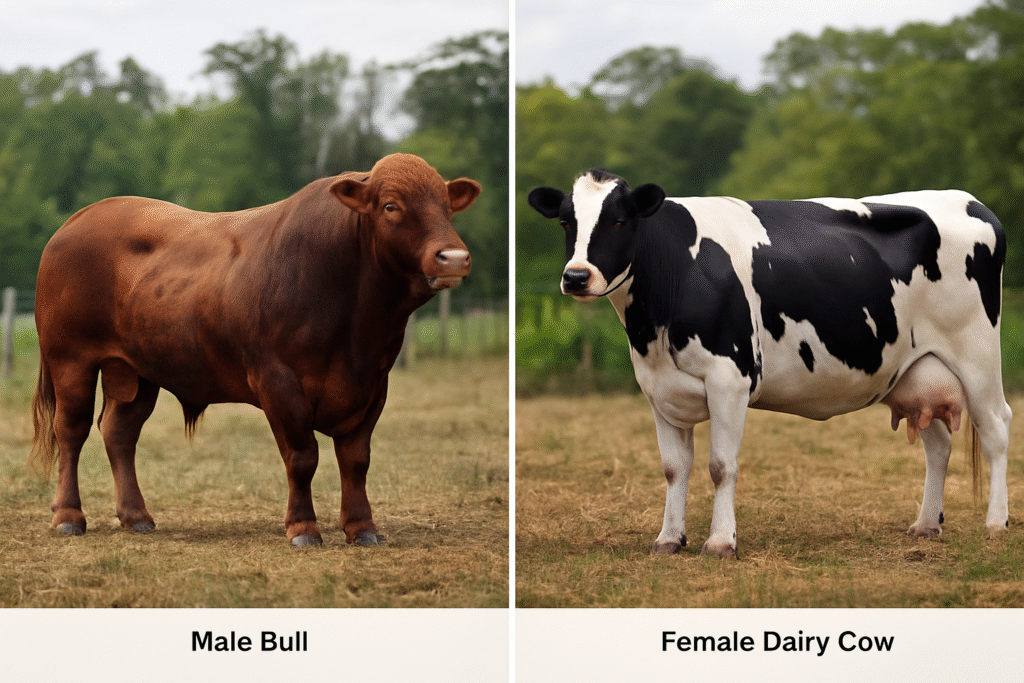
If you have ever seen cattle in a field and wondered, “can a male cow produce milk?”, you are not alone. Many parents ask this simple but surprisingly common biology question.
In this complete parent-friendly guide, we will dive deep into the biology of cattle, the specific roles of male cattle on U.S. farms, and why the term “cow” often leads to confusion. By the end of this article, you’ll be able to answer your child’s curious questions with total confidence.
Quick Takeaways for Busy Parents
-
Biological Fact: No, male cows (bulls or steers) cannot produce milk because they lack mammary glands and lactation hormones.
-
Terminology Matters: Only female cattle that have given birth are technically called “cows” and can be milked.
-
Role on the Farm: Male cattle are essential for breeding (bulls) and providing beef (steers) for the U.S. food supply.
-
The Pregnancy Rule: Just like humans, a cow must give birth to start her lactation cycle—a rule that applies to all dairy mammals.
Can Male Cows Produce Milk?
No, male cows cannot produce milk because they lack udders, mammary glands, and the pregnancy-related hormones needed for lactation.
Male cows, also called bulls or steers, are biologically unable to lactate. Only female cows that have given birth can produce milk because lactation depends on pregnancy, hormonal changes, and fully developed milk-producing tissue.
Once a female cow gives birth and begins lactation, milk output can vary significantly depending on breed, diet, and stage of lactation. Learn more in our guide on how much milk a cow produces per day.
What Is a Male Cow? Decoding Cattle Terminology
The biggest reason people ask “do male cows produce milk” is a simple misunderstanding of words. In the United States, we often use the word “cow” as a general term for all cattle, but in the dairy industry, names are gender-specific.
-
Bull: An adult male cow that is uncastrated. Bulls are kept primarily for breeding. They are muscular, often aggressive, and definitely cannot be milked.
-
Steer: A male cow that has been castrated. These are typically raised for beef production.
-
Heifer: This is a young female that hasn’t had a calf yet. Many parents ask, “can a heifer produce milk?” Even though she is female, the answer is still no—not until she gives birth.
-
Cow: Technically, a “cow” is only a female that has already given birth to at least one calf.
👉 For more on how U.S. farms classify cattle breeds and gender roles, you can refer to the USDA Economic Research Service on dairy sector structures.
The Biological “Why”: Why Male Cows Cannot Produce Milk
To understand why male cattle produce nothing in the way of dairy, we have to look at the three pillars of lactation: Anatomy, Hormones, and Pregnancy.
A. The Anatomy of an Udder
Female cows have an organ called an udder, which consists of four mammary glands. Male cattle (bulls and steers) do not have udders. While they have rudimentary teats (similar to male humans having nipples), they do not have the internal glandular tissue needed to store or create milk.
B. The Hormonal Trigger
Lactation is not an “on” switch that is always active. It requires a specific cocktail of hormones:
-
Estrogen & Progesterone: These prepare the body during pregnancy.
-
Prolactin: The “milk-making” hormone.
-
Oxytocin: The “let-down” hormone that allows milk to flow.
Since male cows cannot get pregnant, they can never trigger the hormonal cycle required to start lactation. For a deeper look into the science of how this process begins, you can read our guide: Do cows have to be pregnant to produce milk?
Bulls have high levels of Testosterone, which biologically inhibits the development of milk-producing systems. Detailed research from the National Institutes of Health (NIH) confirms that male hormonal profiles in mammals biologically inhibit the development of milk-producing glandular tissue.
C. The Role of Pregnancy
Pregnancy is the biological engine that starts it all. Since male cows cannot get pregnant, they can never trigger the hormonal cycle required to start lactation. Learn more in our detailed guide on pregnancy and milk production in cows.
Can You Milk a Bull?
No, you cannot milk a bull. Bulls do not have udders or functional mammary glands, so there is no milk to collect.
Many children and first-time dairy learners assume all cattle can be milked, but only female cows that have calved produce milk. Bulls may have small teats, but these are non-functional and do not produce dairy.
Can Male Dairy Cows Produce Milk?
No. Even male cattle from dairy breeds like Holstein or Jersey cannot produce milk. While they carry genetics linked to milk production, they only pass those traits to future female offspring.
A Common Myth About Milk Types
Some U.S. parents interested in the different types of milk available in the market wonder if male cows produce a different type of fluid.
Let’s be clear: There is no such thing as “male milk.” Any liquid obtained from a male animal is not milk. When parents research dairy options like raw milk, they are looking at unpasteurized milk from female cows. Male cows contribute to the dairy industry through breeding, ensuring that the female cows have the genetics to produce high-quality milk for the herd.
The U.S. Food and Drug Administration (FDA) and the CDC provide essential safety guidelines regarding the consumption of pasteurized vs. raw dairy products to protect families from foodborne illnesses.
What Do Male Cows Produce Instead of Milk?
If they aren’t providing the milk for your morning cereal, what is their purpose?
-
Sperm for Breeding: If you are wondering “do male cows have sperm,” the answer is yes. Bulls are the genetic backbone of the farm. A single high-quality bull can father hundreds of calves, ensuring the continuation of the milk supply.
-
Beef Production: Most male cattle in the U.S. are part of the beef industry. Steers provide the steaks and burgers found in grocery stores.
-
Herd Protection: In some natural grazing systems, bulls play a role in protecting the herd from predators.
Can Male Cows Have Milk?
Male cows can drink milk as calves, but they cannot naturally have or produce milk as adult cattle.
This question often comes from confusion around the phrase “have milk.” Male calves drink their mother’s milk when young, just like female calves. However, adult male cows never develop the biological systems needed to make milk themselves.
Like all young mammals, both male and female calves rely on their mother’s milk during early development before transitioning to solid feed. The USDA provides educational resources on calf nutrition and early feeding practices.
Can Both Male and Female Cows Produce Milk?
Across the dairy world, the rule is universal: Only female cows produce milk. Whether you are looking at Goat Milk vs. Cow Milk, the biology remains the same. Female goats (does) produce milk, and female cows (cows) produce milk. Their male counterparts (bucks and bulls) do not. This is a great way to teach children about the consistency of nature.
Can a Heifer Produce Milk?

This is a critical distinction to avoid confusion. A heifer is a female, but she is essentially in a “pre-milk” stage of life.
-
The Rule: No pregnancy = No milk.
-
The Transition: Once a heifer gives birth, her body undergoes a massive hormonal shift. This is the moment she technically becomes a “cow” and starts her first Lactation Cycle.
Learn more about the cow lactation cycle in our complete guide on milk production after calving.
Which Male Animal Produces Milk?
To be scientifically thorough, parents often ask: “Which male animal produces milk?” In the world of livestock (cows, goats, sheep, horses) and animals commonly raised for food and farming, no male produces milk. Milk production in these mammals is strictly a female function tied to the birth of offspring.
Teaching Kids: “Can a Boy Cow Make Milk?”
If your child asks this question, here is a simple, parent-friendly script: “Just like human families, only mamas have the special equipment to make milk for their babies. Boy cows (bulls) are strong and help the mamas have babies, but the mama cow is the one who provides the milk!”
Ethical Farming and Male Cattle
Many U.S. parents care about the treatment of male calves. Since they don’t produce milk, ethical farms ensure they are raised healthily for breeding or transitioned into the beef industry with high welfare standards. Understanding this helps you choose dairy brands that align with your family’s values.
👉 According to dairy science guidelines from U.S. agricultural research institutions, milk production in mammals is biologically limited to females after birth. Many U.S. dairy farms follow veterinary monitored breeding, proper housing, and humane transition plans for male calves.
👉 For insights into animal welfare standards, parents can explore resources from the American Veterinary Medical Association (AVMA), which outlines ethical care for both male and female cattle on dairy farms.
Why Trust Fooder Ghor?
At Fooder Ghor, we provide educational resources focused on understanding the safe use, handling, and storage of different types of milk, including breast milk, cow’s milk, goat milk, and raw milk, based on publicly available guidance from trusted sources such as the CDC, FDA, USDA, and AAP. Some milk-related articles, particularly those involving maternal and infant feeding topics, are reviewed for clarity and presentation by nursing students with academic training in maternal and child health to help make information easier to understand. This content is provided for learning purposes only and does not offer medical advice.
Frequently Asked Questions
A: No. Despite what you might see in some cartoons or simplified media, in real-world biology, male cows (bulls) never produce milk.
A: No. Breed does not change basic anatomy. A Holstein bull is just as incapable of milking as an Angus bull.
A: Yes, bulls produce sperm which is essential for breeding the next generation of dairy cows.
A: They are primarily used for breeding or are raised for beef production.
A: Explain that cows are like humans: only moms can make milk for babies. It’s a gentle, accurate way to teach biology.
A: No. Bulls do not have functional udders or mammary glands, making milk collection impossible.
A: Male calves can drink milk, but adult male cows cannot produce or store milk.
Conclusion: Trusting the Science of Dairy

To summarize, male cows do not produce milk because they lack the anatomy, hormones, and pregnancy process required for lactation. Only female cows that have given birth can naturally produce milk, making dairy production a biologically female function.
If you’re interested in different types of milk and how they are stored safely, you can also read our guide on how long goat milk lasts.